
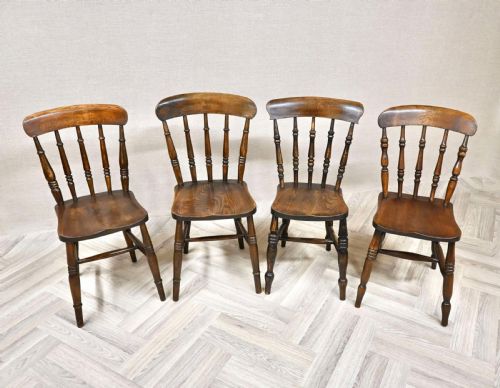
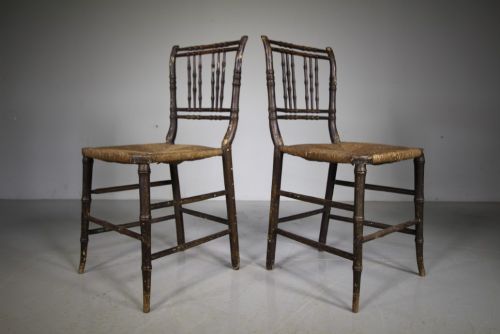
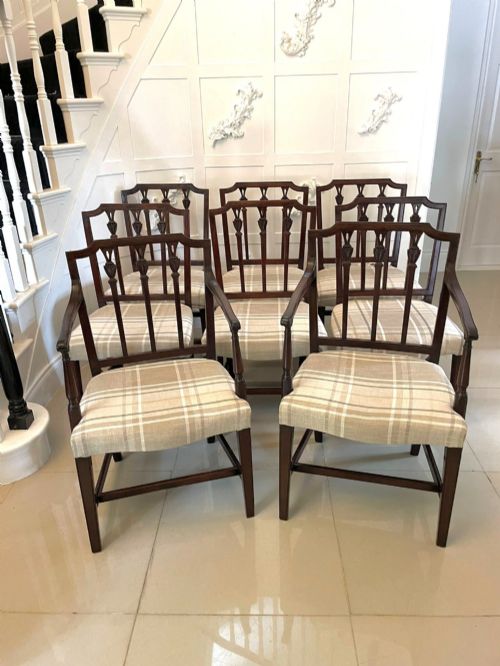
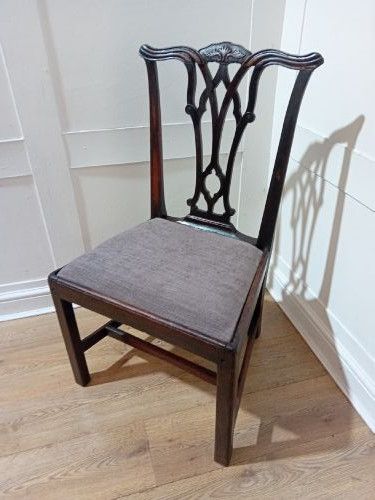
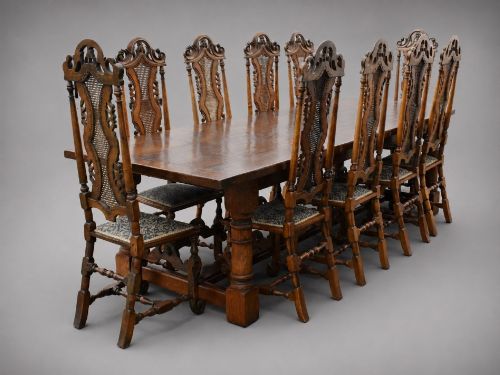
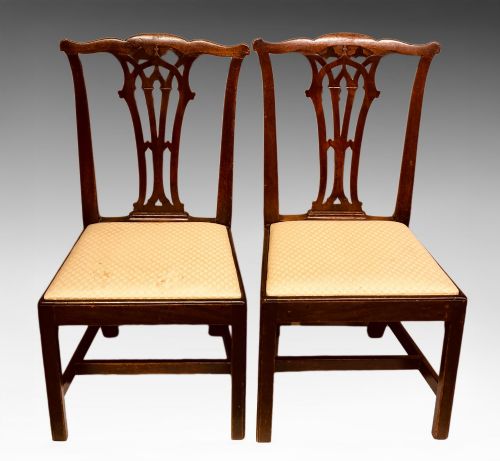
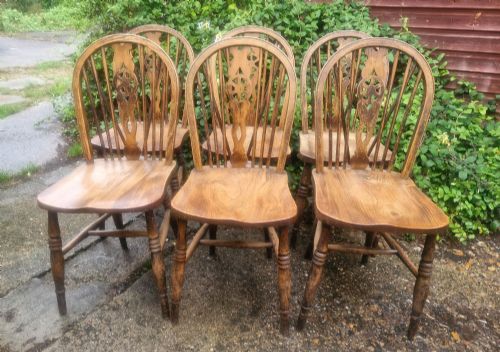
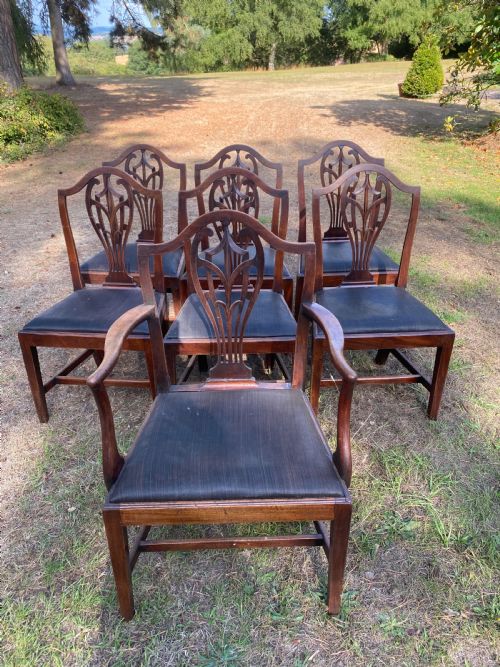
Dark Brown Dining Chairs
Dark brown dining chairs bring deep wood tones and historical form to the table, ranging from robust kitchen seating to formal mahogany sets.
Dark Brown Dining Chairs
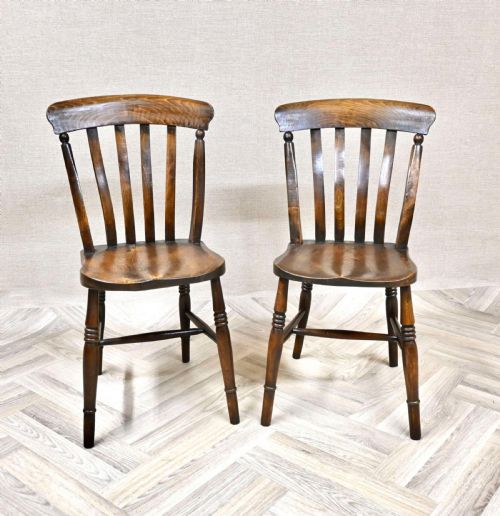
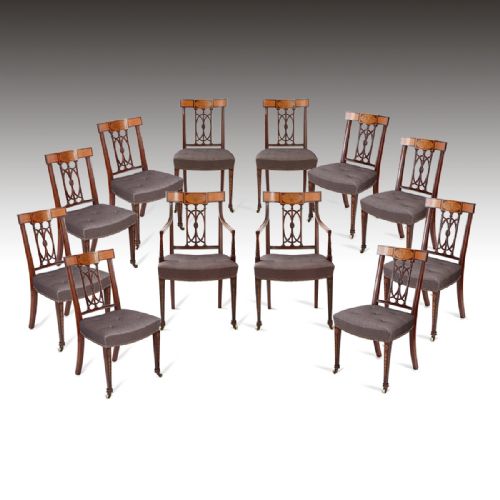
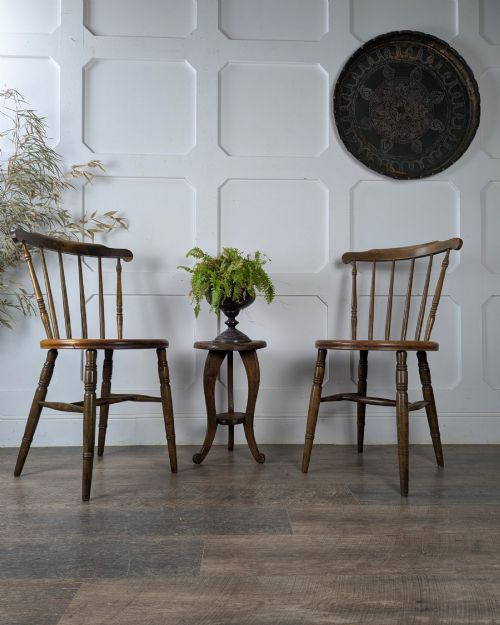
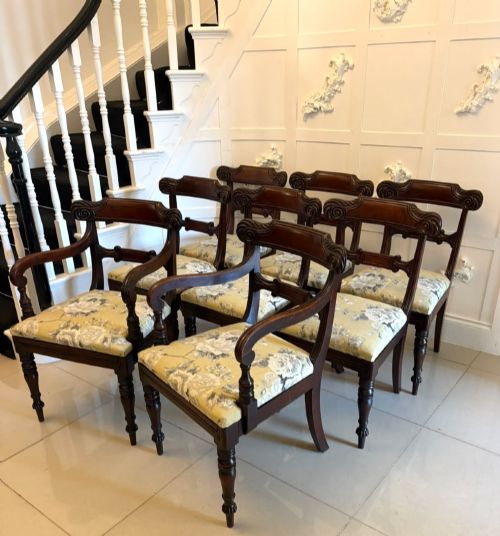
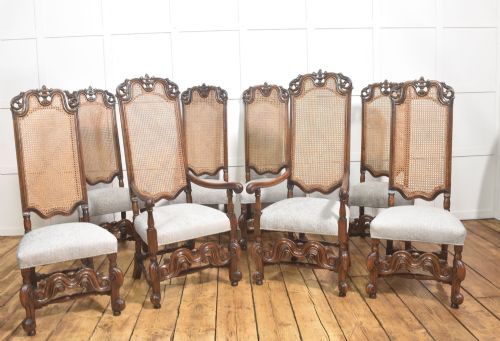
Dark brown dining chairs encompass seating built from dense hardwoods like mahogany and oak, spanning periods from the eighteenth century through the twentieth. When searching for dark brown dining chairs, buyers encounter everything from modest farmhouse windsors to grand matching sets of eight or ten.
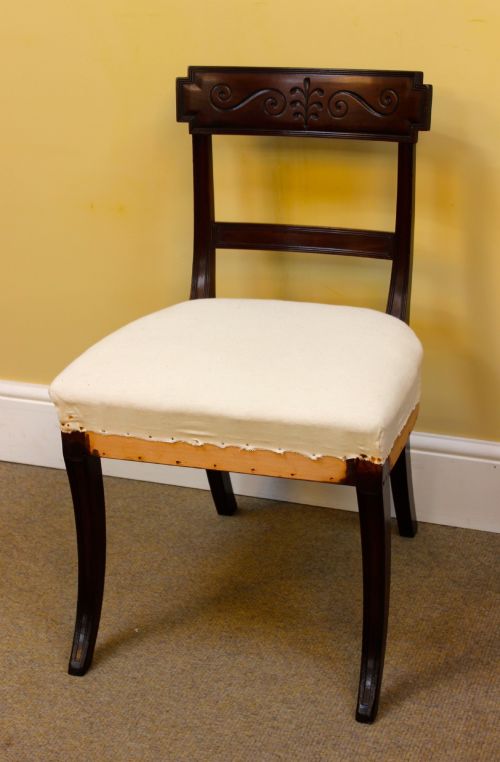
Most examples rely on the natural dark hues of polished mahogany, walnut, and aged oak to deliver traditional presence. Form follows historical style, taking cues from Regency, Georgian, and Victorian design.
How they were made
Construction relies heavily on traditional timber framing using solid mahogany, oak, walnut, and elm. Joinery involves pegged mortise and tenon joints in country chairs, alongside refined cabinetmaking techniques in formal examples.
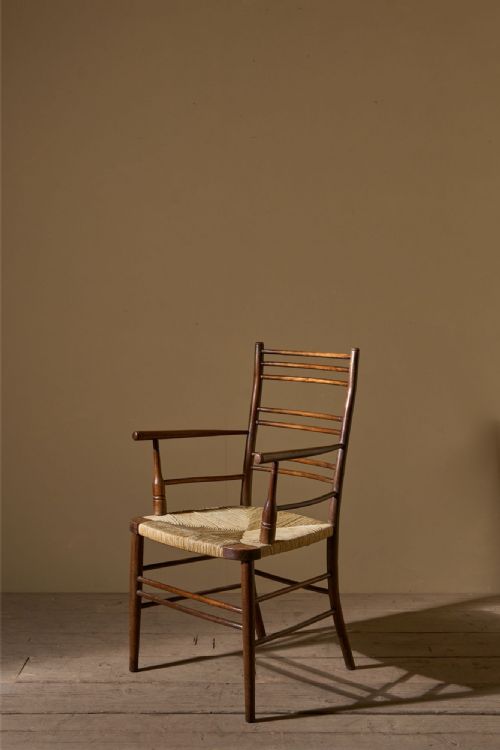
Surface finishes range from polished mahogany veneers and kingwood parquetry to simple wax coatings on oak and pine. Seating elements incorporate timber panels, woven rush, cane, and period upholstery fabrics.
Decorative details are achieved through hand carving, barley twist turnings, and brass mounts. Windsor and stick-back variants utilise steam-bent wood for structural curved components.
Dark Brown Dining Chairs Retail Price Guide 2026
Typical asking prices for dark brown dining chairs among the pieces listed under this phrase on Sellingantiques today, from the lower quarter to the upper quarter. They describe what is for sale here now, not the wider market.
Listings span the eighteenth, nineteenth, and early twentieth centuries, featuring mahogany, oak, walnut, and rush.
What varies in quality
Quality separates grand dining sets that remain uniform across eight or ten pieces from assembled groups that match only by approximate tone. Timber selection dictates the baseline, with dense figured mahogany and quarter-sawn oak representing the superior end.
The crispness of hand-carved details on shield backs and ladder backs distinguishes master cabinetmaker output from simpler regional production. Original surface patination and minimal structural alteration preserve the integrity of older pieces.
Codina
The Dark Brown Dining Chairs Glossary
- Carver
- An armchair designed with armrests, traditionally placed at the head of a dining table.
- Shield back
- A chair back shaped like a heraldic shield, popular in late eighteenth-century dining chair design.
- Windsor
- A wooden chair built with a solid saddle-seat into which legs and back spindles are wedged.
- Parquetry
- Geometric wood mosaic work used for decorative surface patterns on furniture.
- Barley twist
- A type of turned furniture leg or stretcher resembling a spiral rope.
Dark Brown Dining Chairs: Frequently Asked Questions
How do I match chairs to a table?
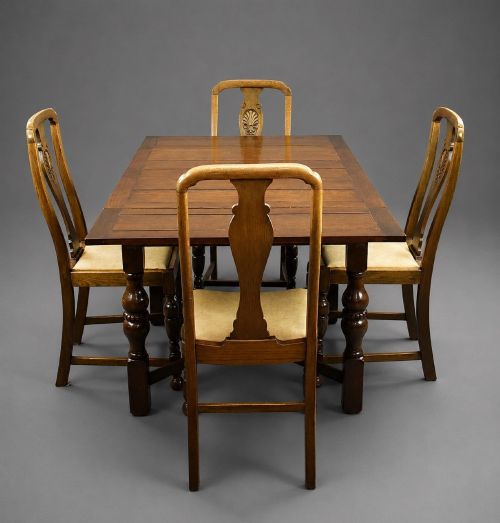
Matching dark brown dining chairs to a table depends on balancing timber tones and period styles rather than demanding an exact wood grain match. Mahogany pieces harmonize well through shared warm undertones.
Mixing formal eighteenth-century chairs with a simpler table creates a layered interior, while uniform sets provide formal symmetry.
Are these chairs suitable for daily use?
Antique timber dining chairs are built for daily dining, utilising robust hardwoods like oak and mahogany. Solid construction handles regular sitting without issue.
Care should be taken with antique upholstery or delicate cane seats, which require gentler handling than modern foam pads.
What is a carver chair?
A carver is an armchair styled to match a set of dining side chairs. They were traditionally positioned at the head and foot of the dining table.
These pieces feature wooden armrests integrated into the back support design.
How do I identify a George III chair?
George III dining chairs typically feature rich mahogany construction with carved details such as pierced splats or subtle fluting. Proportions are elegant and structurally refined.
Dating relies on stylistic markers from the late eighteenth century combined with timber characteristics.