



Dark Brown Corner Chair
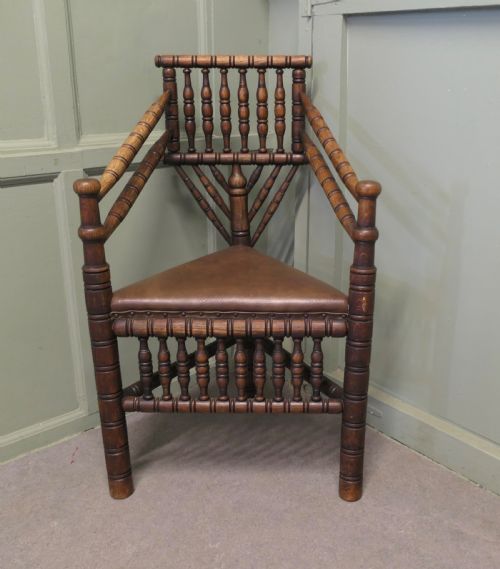
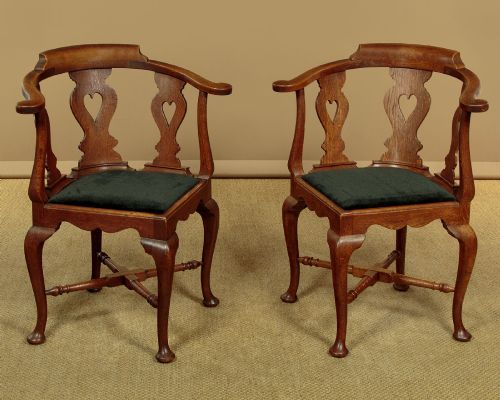
A dark brown corner chair anchors a room with rich timber tones and clever geometry designed to fit right into the angle of a wall.
Dark Brown Corner Chair
The dark brown corner chair is a specialised seating form built to occupy room angles efficiently while offering a distinctive profile. These pieces emerge across periods spanning the Georgian era through to the Edwardian decades and early twentieth century.
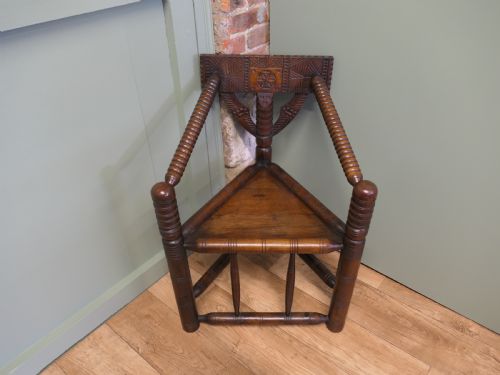
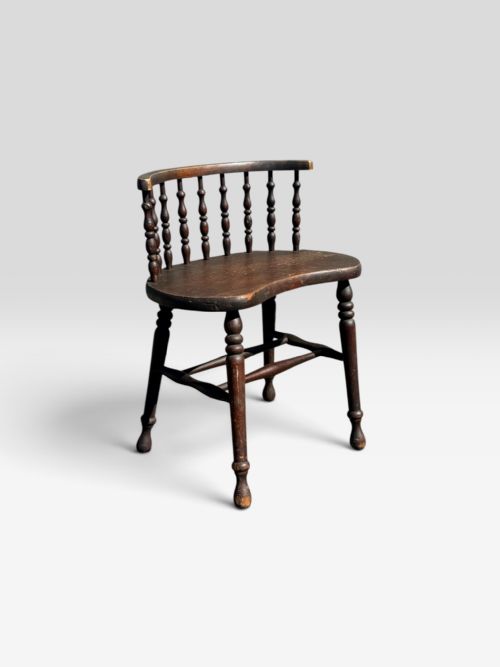
Most examples encountered here take the form of corner armchairs or turners chairs rendered in deep-toned timbers like oak, walnut, and mahogany. They function equally well as accent chairs, desk chairs, or fireside seating.
Makers historically produced these sturdy seats in styles ranging from plain country vernacular to carved Victorian revival and Arts and Crafts designs. The form provides a welcoming seat while breaking up the monotony of flat walls.
Construction and Materials
Makers utilised dense native and imported hardwoods including oak, walnut, mahogany, beech, and elm to build these rigid frames. Joinery relied heavily on traditional turning, pegged mortise and tenon joints, and sturdy corner bracing to support the diagonal load.
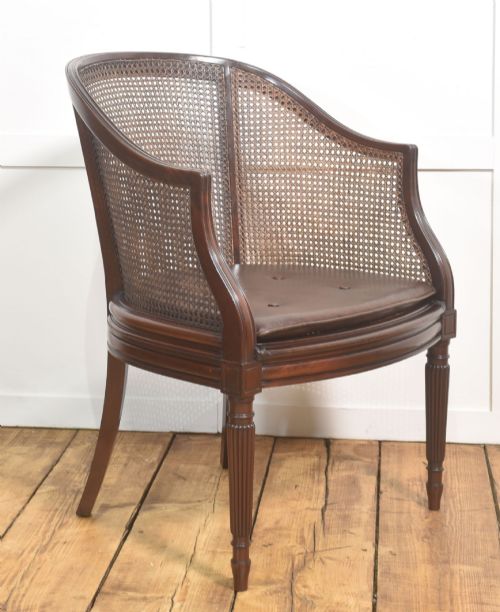
Surface treatments often enhanced the natural grain of the timber with dark polish, wax, or oil finishes that deepen over centuries. Secondary materials like woven cane, leather, and turned spindle work added texture and comfort to the substantial wooden structures.
Several turns-of-the-century pieces carry the label 'Old Saxon', showing that Victorians loved a bit of medieval marketing just as much as we do.
Evaluating Quality
Superior examples display crisp hand-carving and well-proportioned turned spindles that remain rigid and secure within the frame. The choice of timber grain and depth of colour significantly elevate the visual weight of the piece.
Finer construction is evident in tight, seamless joints and original upholstery methods rather than replacement fasteners. Pieces that retain their balanced proportions without feeling heavy or clumsy represent the better end of the range.
The Dark Brown Corner Chair Glossary
- Corner chair
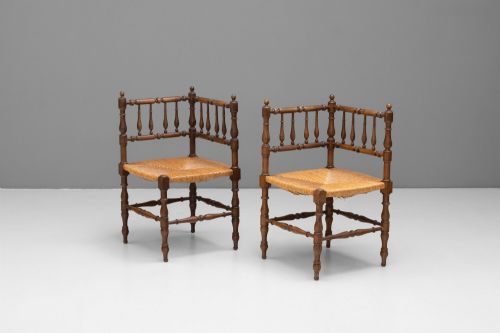
- A chair specifically designed with a diagonal orientation to fit snugly into the ninety-degree angle of a room. These typically feature a semicircular backrest supported by turned pillars.
- Turned chair
- A seating form constructed largely from cylindrical wooden components shaped on a lathe. They often display intricate patterns of spindles and knobs reminiscent of medieval designs.
- Bergère chair
- An enclosed upholstered armchair featuring cane or wicker work on the sides and back. The wooden frame is usually exposed and polished to a dark finish.
- Glastonbury chair
- A distinctive type of folding or X-framed armchair inspired by medieval church furniture. They feature sloping armrests and a plank seat.
Dark Brown Corner Chair: Frequently Asked Questions
What is a corner chair used for?
These chairs served historically as comfortable seating in studies, bedrooms, and parlours where space was at a premium. Their unique shape allowed them to utilise awkward wall angles efficiently.
Today they function effectively as accent seating or desk chairs that draw the eye toward neglected corners of a modern interior.
How do I identify a Georgian corner chair?
Georgian examples usually display restrained elegance, featuring cabriole legs, drop-in seats, and polished mahogany or walnut surfaces. Their carving is typically crisp and classical in motif.
Later Victorian interpretations tend to be heavier, incorporating rustic elements, turned spindles, or revival styles like the Old Saxon form.
Are these chairs comfortable to sit in?
Their supportive semicircular backrests and sturdy wooden arms provide a surprisingly secure and upright seating posture. Many were originally designed as reading or writing chairs.
Adding a small scatter cushion can further adapt the timber seat for modern relaxation without obscuring the historic woodwork.
What woods were used for these chairs?
Oak and elm appear frequently in country and vernacular pieces, offering robust strength and visible grain patterns. Walnut and mahogany were favoured for more formal Georgian and Victorian town furniture.
Beech also appears often as a secondary framing timber, frequently turned to mimic more expensive woods under dark finishes.