
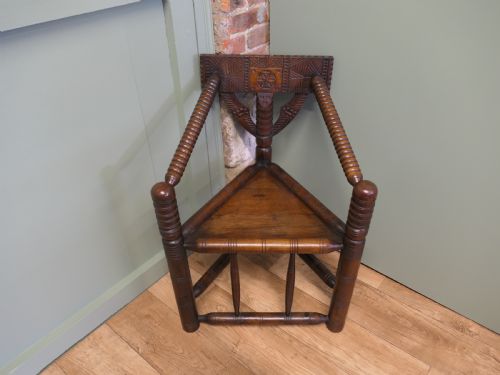

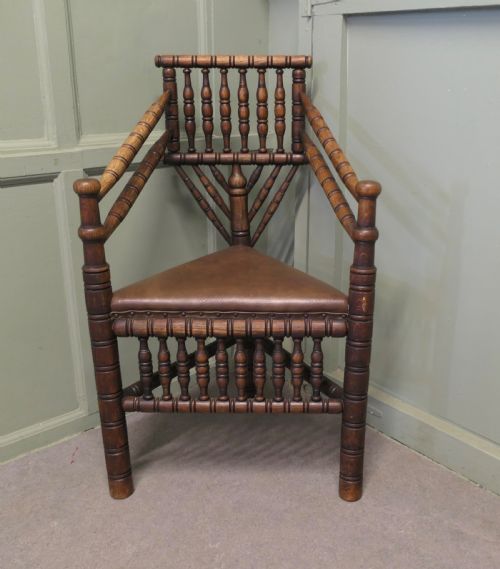


Triangular Oak Armchair
A triangular oak armchair brings centuries of vernacular seating history straight to your room with its distinctive three-legged geometry and turned spindle frame.
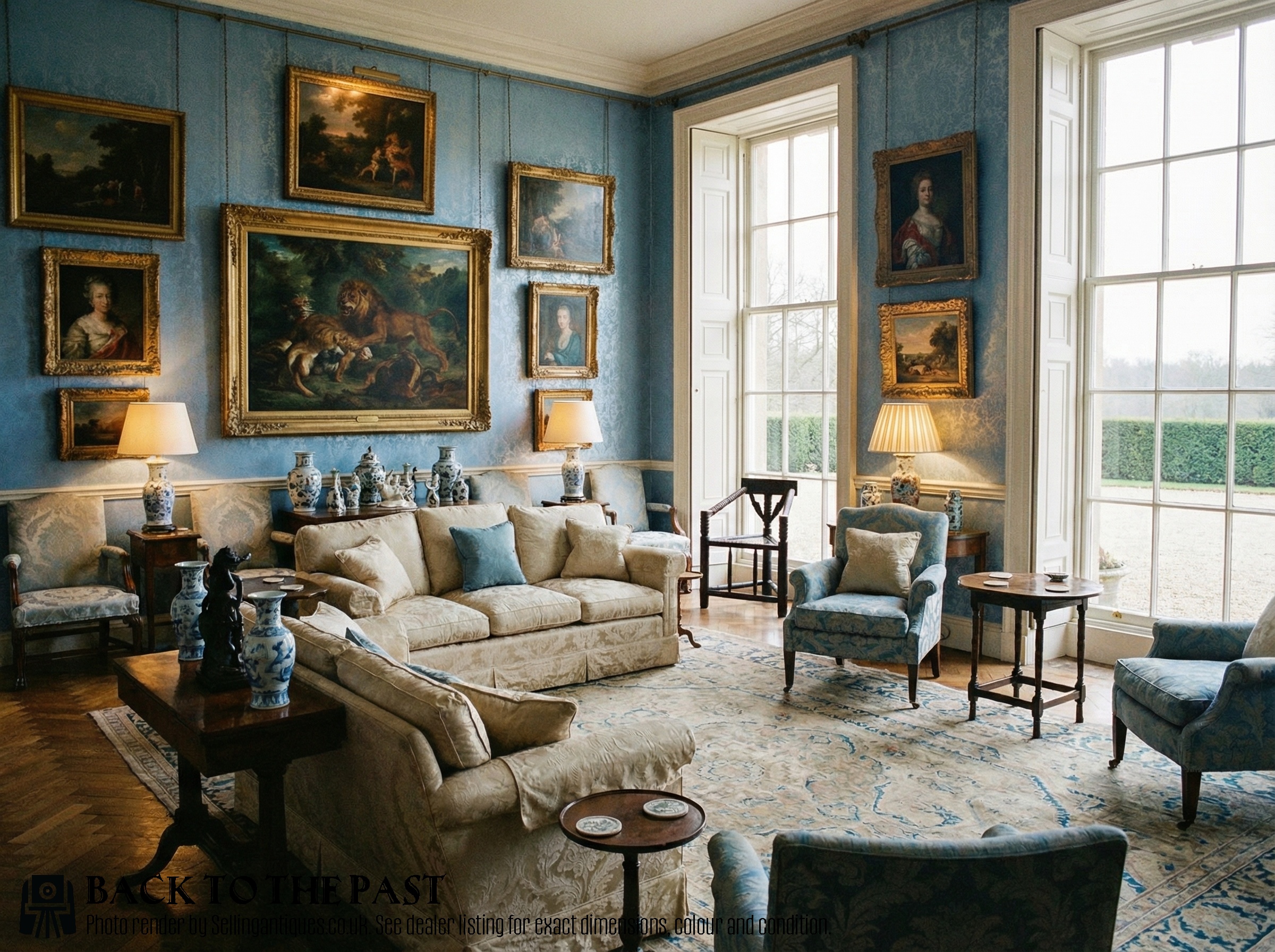
Triangular Oak Armchair
A triangular oak armchair is a solid vernacular seat built upon a three-legged triangular plan, often referred to historically as a turner's chair or old Saxon chair. These pieces draw immediate attention for their unusual geometry and sturdy architectural presence in domestic interiors.
You are most likely to meet Victorian interpretations on this page, spanning the nineteenth century up to nineteen hundred, alongside English vernacular and Gothic revival stylistic influences. Makers of these pieces utilised traditional turning techniques to shape spindles and rails into robust, commanding forms.
The evidence shows these seats frequently incorporate elbow rests and compact footprints, making them practical accent chairs as well as conversation pieces. English oak forms the primary structural substance across the inventory, occasionally accompanied by beech or rush elements.
How these chairs were made
Joiners and turners constructed these chairs using dense English oak and secondary woods like beech, shaping components on a lathe before assembling the frame with pegged mortise and tenon joints. This turning method produces the rhythmic series of spindles that define the back and arms of the seat.
The triangular seat frame supports three legs positioned at the corners, distributing weight efficiently while maintaining a rigid structure without modern adhesives. Craftsmen selected timber for its grain pattern and strength, ensuring the turned members could withstand daily use over generations.
Materials recorded across the inventory include solid English oak, beech, leather, and rush seating components.
What varies in quality
The distinction between standard examples and superior specimens rests upon the complexity of the spindle turnings and the depth of the timber's patina. Richer patination and crisper execution in the turned details elevate an armchair from a simple utility seat to an accomplished piece of vernacular art.
Proportion and structural integrity also dictate the standing of a piece, with finer examples maintaining balanced geometry across their three-sided frames. The choice of solid English oak throughout, rather than mixed timbers, marks out the more substantial offerings in this seating tradition.
The Triangular Oak Armchair Glossary
- Turner's chair
- A type of armchair constructed primarily from turned wooden spindles and rails, built upon a triangular seat plan. These pieces are often associated with vernacular traditions and the nineteenth century.
- Old Saxon chair
- A nineteenth-century revival term used by makers and retailers to describe heavy turned armchairs with medieval or Anglo-Saxon aesthetic inspirations. The style leans heavily into Gothic and Saxon revival motifs.
- Vernacular furniture
- Domestic pieces made by local craftsmen for everyday use, following regional traditions rather than high-style metropolitan fashions. Oak and beech are typical materials found in these regional works.
- Elbow seat
- A traditional descriptor for an armchair featuring low arms designed to support the elbows rather than full-length padded armrests. This form keeps the chair compact while providing structured support.
Triangular Oak Armchair: Frequently Asked Questions
What is a triangular oak armchair?
A triangular oak armchair is a distinctive seating form built on a three-sided plan with turned wooden spindles forming the back and arms. These pieces derive from older vernacular traditions and were frequently produced during the Victorian period in revival styles.
The design allows the chair to fit neatly into corners while offering a commanding visual presence due to the intricate turned woodwork. English oak serves as the predominant material across these historic pieces.
How were turner's chairs used historically?
Turner's chairs served as functional seating in studies, libraries, and parlours, often positioned to make use of awkward corners thanks to their three-legged footprint. Their sturdy construction made them reliable everyday seats for household members.
Over time, these chairs transitioned from utilitarian furniture to decorative accent pieces prized for their architectural lines and historic associations with early vernacular craftsmanship.
How can I tell a Victorian revival piece from an earlier one?
Victorian interpretations of turner's chairs often exhibit nineteenth-century tool marks, specific lathe techniques characteristic of the period, and timber conditioning typical of Victorian workshops. The revival pieces listed here frequently carry stylistic tags such as Gothic Revival or Saxon Revival.
Examining the turning precision and the joining methods helps contextualise the manufacturing era, as nineteenth-century joiners emulated earlier Tudor and seventeenth-century forms with distinct technical consistency.
Where should I place a triangular armchair in a room?
The unique three-sided geometry of a triangular armchair makes it exceptionally well suited for placement in room corners or as an accent seat beside a fireplace. Its compact footprint ensures it does not overwhelm smaller spaces while still drawing the eye.
Pairing the chair with neutral backgrounds allows the turned oak spindles and structural grain to stand out as a focal point in both traditional and contemporary interiors.