
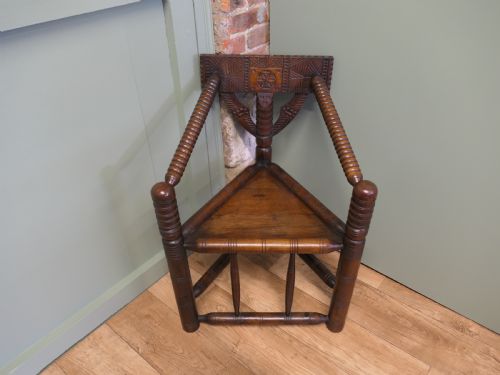
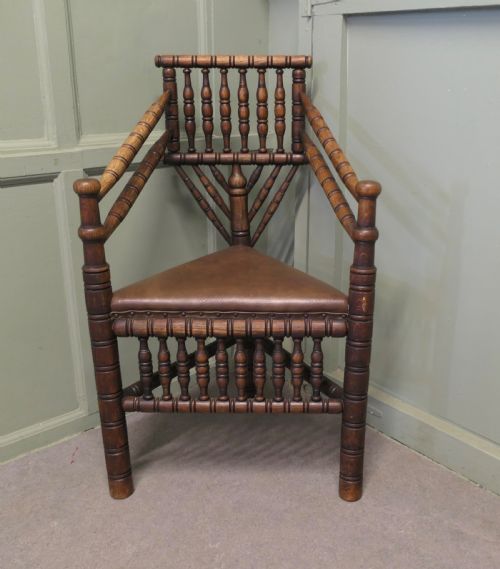


Carved Triangular Armchair
These carved triangular armchair examples are sturdy timber seats built with three legs, offering a robust historical seating choice for any room.
Carved Triangular Armchair
A carved triangular armchair takes the form of a three-legged wooden seat designed with distinct historical revival influences. These chairs are often known as turner's chairs or old saxon chairs, drawing on centuries-old construction methods.
Visitors browsing this page will most commonly encounter Victorian period interpretations of these designs. The pieces span the nineteenth century up to nineteen hundred, showcasing revival styles such as Gothic and Saxon.
The characteristic triangular footprint uses three corner posts rather than four, supporting a shaped wooden seat and an enclosing spindle or turned back rail. Armrests typically curve around the upper frame to create an enclosed elbow seat.
How they were made
Makers constructed these frames using solid English oak or beech, relying on turned wooden spindles and heavy corner posts. Joints were carefully pegged and fitted to handle the stress placed on a three-legged framework.
Carving and turning formed the core decorative techniques, with spindles shaped on a lathe and structural members embellished with traditional motifs. Some examples incorporate leather elements alongside the carved timber framework.
The furniture forms recorded here include accent chairs and armchairs spanning the period up to nineteen hundred.
What varies in quality
The calibre of a carved triangular armchair depends heavily on the crispness of the turning and the density of the timber selected. Heavier native woods like English oak provide a more substantial presence than lighter alternatives.
Proportion and execution distinguish superior workshop production from simpler output. The balance of the three-legged frame and the complexity of the spindlework dictate the overall success of the piece.
The Carved Triangular Armchair Glossary
- Turner's chair
- A traditional seat constructed primarily from turned wooden spindles and structural posts. This form dates back to medieval times and was revived during the Victorian era.
- Saxon revival
- A nineteenth-century design movement that reinterpreted early English and Anglo-Saxon forms. Furniture in this style mimics ancient timber building traditions.
- Elbow seat
- A historical term for an armchair that provides enclosed armrests for the user. These seats were often made as single accent pieces rather than part of large dining suites.
- Beech
- A dense, pale hardwood utilised by cabinet makers for turned furniture components. It accepts detailed lathe work very cleanly.
Carved Triangular Armchair: Frequently Asked Questions
What is a carved triangular armchair?
A carved triangular armchair is a three-legged wooden seat featuring turned spindles and a distinctive corner-facing design. These chairs draw heavily on medieval turning traditions.
Most examples found here date to the Victorian period and showcase revival styles like Gothic and Saxon. They function well as statement accent pieces.
How do I date a turner's chair?
Dating relies on examining the timber species, tool marks, and overall construction wear. Victorian revival pieces often combine nineteenth-century manufacturing methods with historical motifs.
Checking for English oak versus beech and noting the specific style of the turned spindles helps narrow down the production era between eighteen fifty and nineteen hundred.
Where should I place this armchair?
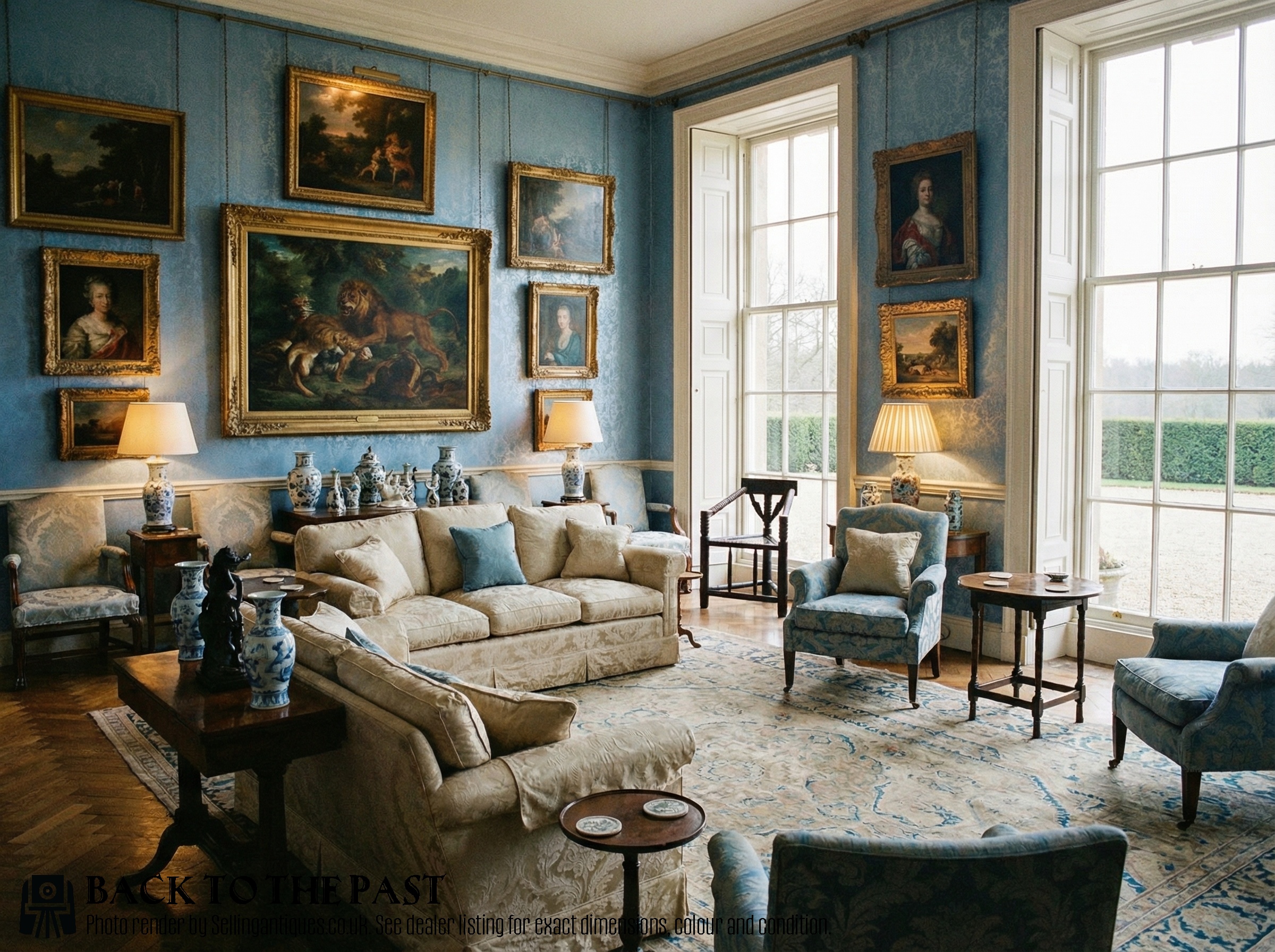
These chairs suit hallways, studies, or corners where a compact footprint is beneficial. Because they feature a triangular base, they fit neatly into angles of a room.
They serve primarily as decorative accent seats rather than heavy lounging chairs. Pairing them with traditional interiors highlights their architectural timber frame.
What woods were used for these chairs?
Makers predominantly utilised English oak and beech to build these sturdy frames. Oak provided the heavy structural members and rich grain required for revival pieces.
Beech frequently appeared in the turned spindle components due to its suitability for detailed lathe work. Leather was occasionally incorporated into the seating elements.