


Dark Brown Chest
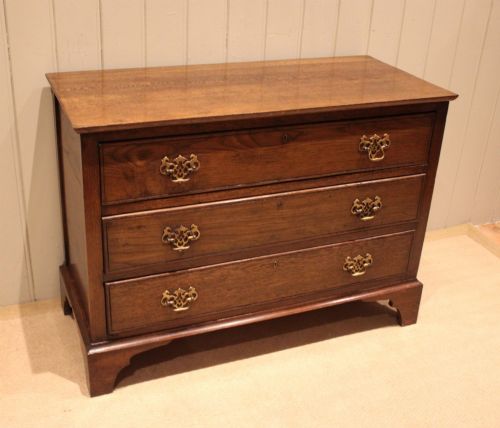
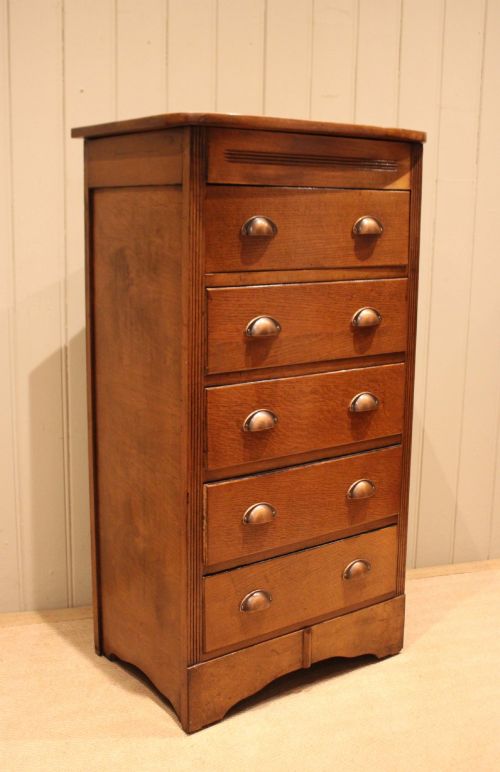
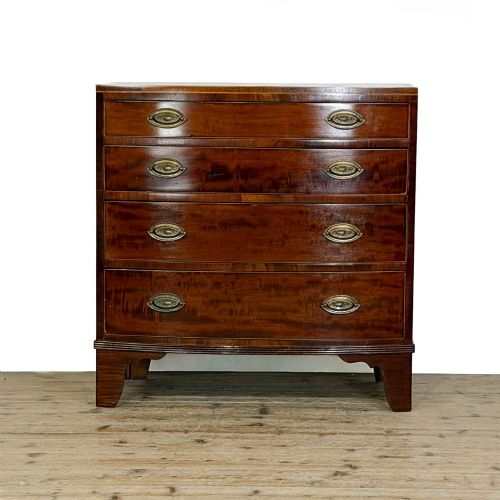
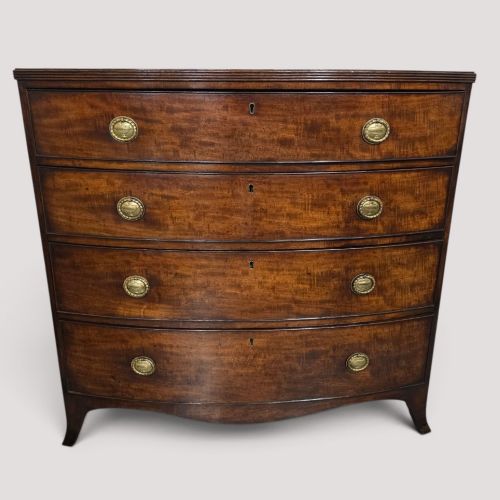
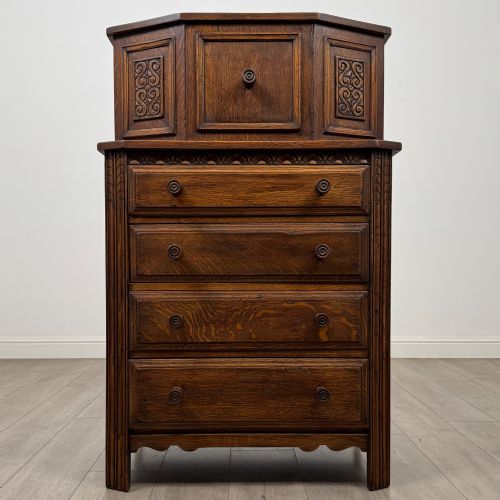
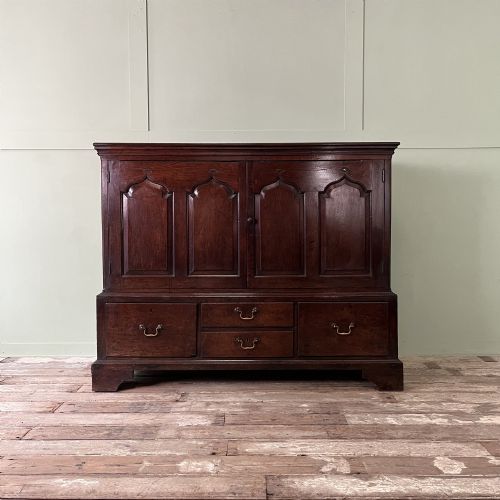
A dark brown chest brings centuries of practical storage and rich timber into a room, spanning solid oak coffers to polished mahogany drawer units.
Dark Brown Chest
A dark brown chest encompasses utilitarian storage vessels, robust coffers, and drawer units designed to hold household goods. When searching for a dark brown chest, buyers encounter utilitarian forms shaped by centuries of woodworking traditions.
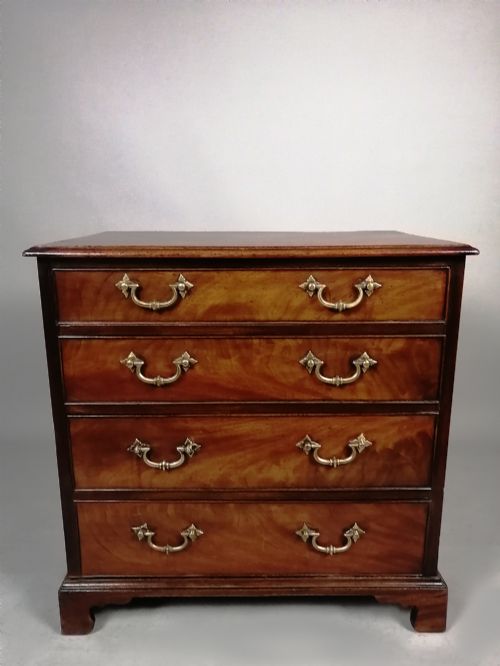
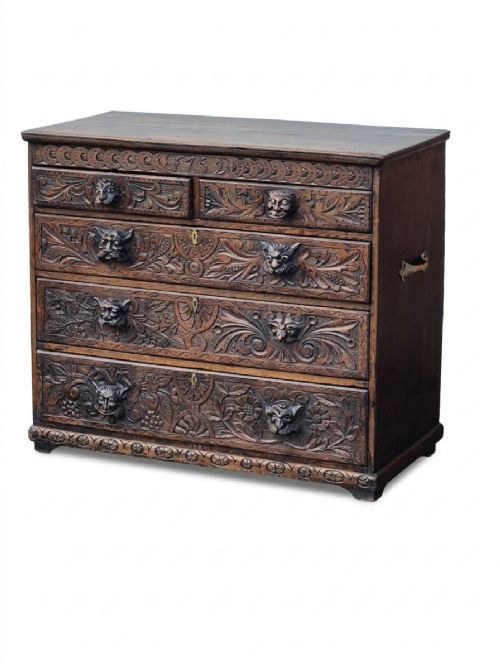
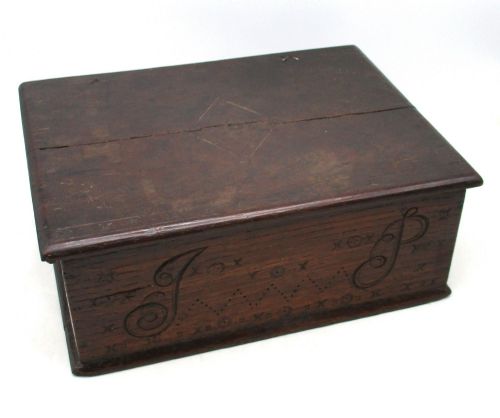
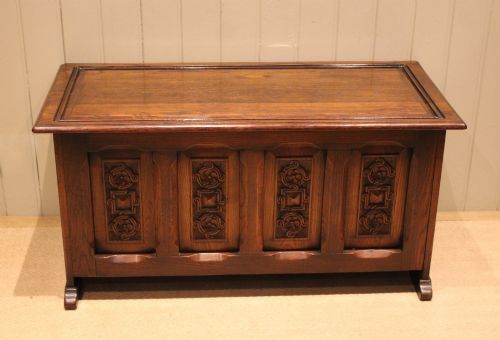
The pieces appearing on this page span several distinct eras, stretching from the sixteenth century through the Georgian, Victorian, and Edwardian periods. Oak and mahogany dominate the selection, appearing across coffers, document boxes, and chests of drawers.
Buyers most frequently meet oak coffers from the seventeenth and eighteenth centuries alongside mahogany drawer units from the Georgian and Victorian eras. These items served functional roles in domestic interiors, evolving from simple storage boxes into sophisticated case furniture.
How they were made
Craftsmen utilised heavy timbers such as oak, mahogany, elm, and satinwood to construct these pieces, often combining solid boards with decorative veneers. Iron and brass hardware, including hinges, studs, and drawer pulls, provided structural reinforcement and functional operation.
Joinery techniques ranged from simple six-plank construction in early coffers to complex geometric mouldings, panel framing, and dovetailed joints in later drawer units. Surfaces were finished to highlight the natural grain and deep colour of the wood, sometimes incorporating leather binding or carved details.
Listings feature woods including oak, mahogany, satinwood, elm, and pine across periods spanning the sixteenth century to the Edwardian era.
What varies in quality
The calibre of a dark brown chest depends upon the integrity of its timber, the precision of its joinery, and the preservation of its original surface. Pieces featuring dense, well-figured mahogany or richly patinated early oak stand apart from later reproductions.
Subtleties in carving execution, the presence of period brassware, and the retention of original structural elements dictate the standing of an individual piece within its respective period.
Samuel Pratt
The Dark Brown Chest Glossary
- Coffer
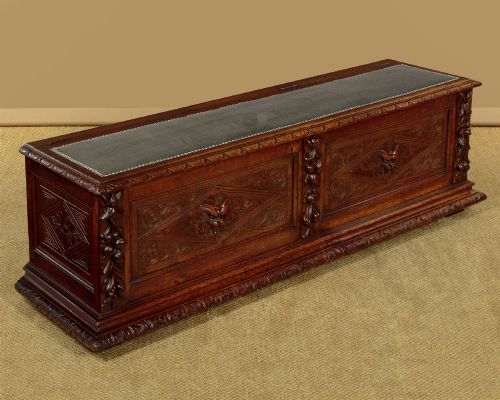
- A large wooden chest used historically for storing valuables, linen, or documents. These storage boxes often feature hinged lids and robust panel construction.
- Bow front
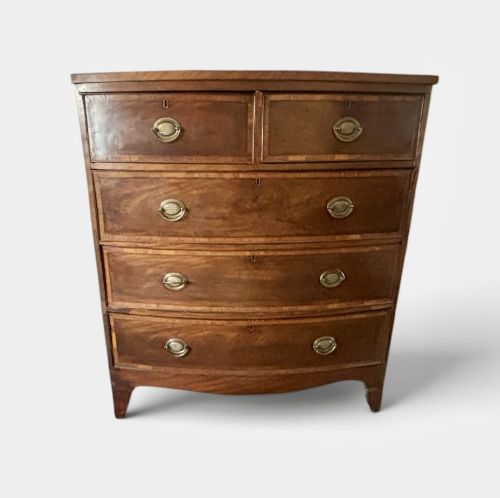
- A cabinet or chest of drawers featuring a convex, curved front facade. This design became particularly popular during the Georgian and Regency periods.
- Chest on chest
- A tall case furniture piece comprising one chest of drawers stacked directly upon a larger base chest. This form maximised vertical storage space in bedrooms.
- Secretaire
- A desk disguised as a chest of drawers or cabinet, featuring a drop-down writing flap that conceals small compartments. It combines writing utility with conventional storage.
- Six-plank coffer
- An early form of storage chest constructed from six principal boards joined at the edges. This minimalist technique represents some of the earliest surviving domestic woodwork.
Dark Brown Chest: Frequently Asked Questions
How do I date an oak chest?
Dating an oak chest relies upon examining the construction methods, tool marks left by makers, and the style of any carved ornamentation. Six-plank joints and pegged frames typically point towards earlier centuries.
Secondary woods, nail types, and hinge styles provide further clues to narrow down the decade of production. Comparing the panel layout with documented examples helps confirm the era.
Where should I place a chest?
A chest fits well in a hallway, at the foot of a bed, or serving as a focal point in a living room. Their substantial storage capacity makes them useful for stowing blankets, linens, or bulky items.
Keeping wooden furniture away from direct heat sources and strong sunlight preserves the finish and prevents the timber from splitting. Allowing adequate airflow around the piece maintains the condition of antique wood.
How do I care for mahogany surfaces?
Maintaining mahogany requires dusting with a soft, dry cloth and occasionally applying traditional beeswax to nourish the timber. Avoiding moisture and synthetic sprays protects the polish from degrading over time.
Gentle cleaning preserves the deep reddish-brown tone characteristic of the wood. Regular care ensures the surface develops a healthy sheen without building up excessive residue.