

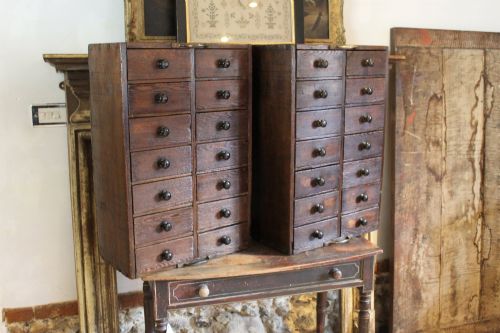


Filing Style Chest
A filing style chest organises papers with practical structure, combining the capacity of a cabinet with domestic proportions.
Filing Style Chest
A filing style chest provides structured storage for documents, bringing utility to period interiors through dedicated drawer arrangements. These pieces range from tall formats to shallow banks designed for papers, folios and correspondence.
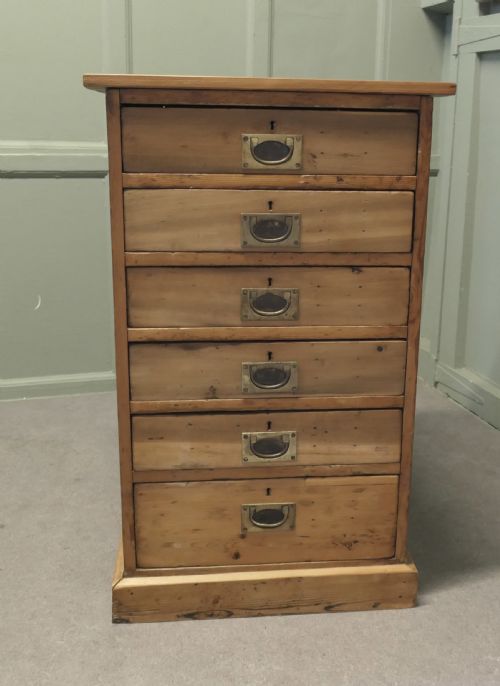
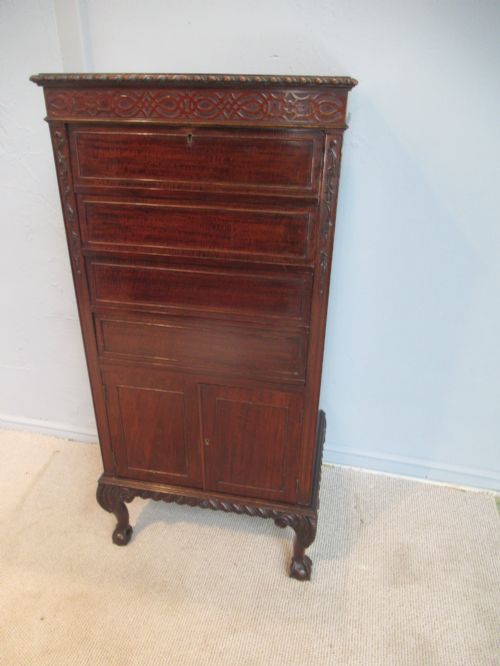
The selections encountered here span multiple decades and design traditions, including Victorian pieces, Edwardian examples and French industrial items. Oak, mahogany, pine and kingwood form the primary carcasses of these functional containers.
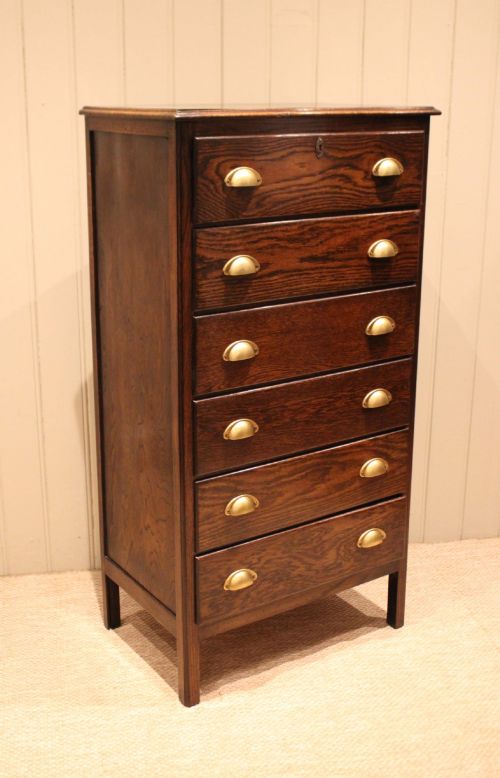
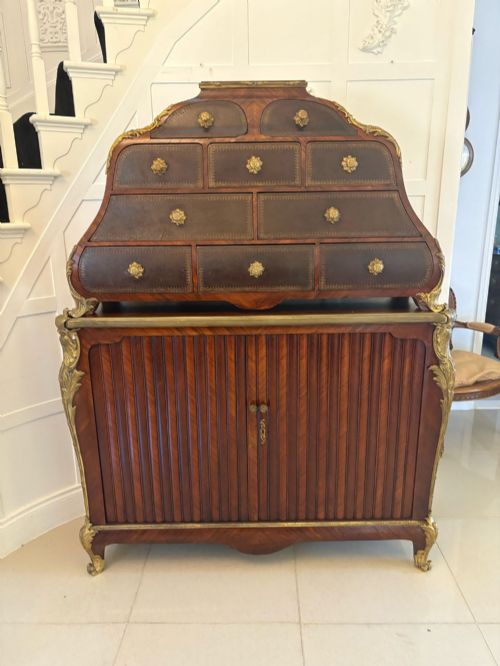
Makers adapted traditional case furniture formats to meet administrative needs, resulting in tall oak chests of drawers, music cabinets and cartonnier cabinets. Such pieces suit studies and offices while maintaining the character of antique furniture.
Materials and construction
Cabinet makers utilised dense hardwoods such as mahogany and oak alongside softwood pine for internal and external structures. Kingwood veneers appear on grander French examples, paired with cast brass handles and ormolu mounts.
Joinery techniques matched the intended function, ensuring smooth operation of multiple shallow drawers designed to hold paper sheets and folios. Leather inserts occasionally line specific compartments, adding texture and protection to the writing or filing surfaces.
Filing Style Chest Retail Price Guide 2026
Typical asking prices for filing style chest among the pieces listed under this phrase on Sellingantiques today, from the lower quarter to the upper quarter. They describe what is for sale here now, not the wider market.
The listings demonstrate a span of periods from the mid nineteenth century through to the nineteen twenties, featuring oak, mahogany and kingwood.
Markers of distinction
Quality rests upon the selection of timbers and the precision of the drawer construction, which governs daily utility. Finer examples display figured mahogany or carefully matched kingwood veneers, complemented by substantial brass or ormolu mounts.
Proportion and decorative restraint separate standard utility items from ambitious cabinet work, such as French cartonnier chests or Chippendale revival pieces. The integration of period hardware and secondary timbers reveals the standard of the workshop.
The Filing Style Chest Glossary
- Cartonnier
- A freestanding cabinet fitted with numerous horizontal compartments or drawers designed specifically for holding loose papers, documents and cartons.
- Ormolu
- Gilded bronze ornamentation applied to furniture, frequently seen on mid nineteenth century French pieces to highlight structural corners and mounts.
- Folio cabinet
- A piece of furniture constructed to store large flat sheets of paper, prints or musical scores within shallow horizontal drawers.
- Kingwood
- A dense, heavily figured exotic timber utilised as a veneer on decorative cabinet work during the nineteenth century.
Filing Style Chest: Frequently Asked Questions
What is a filing style chest?
A filing style chest is a piece of furniture designed with multiple shallow drawers to organise papers and documents.
These items bridge domestic cabinetry and office utility, appearing in woods like mahogany, oak and pine.
How do I date these cabinets?
Dating relies on timber selection, construction methods and stylistic hints such as Victorian or Edwardian revival details.
Makers adopted prevailing period aesthetics, from Georgian proportions to industrial metal and oak finishes.
Where should I place one?
These chests suit home studies, libraries and living spaces requiring organised storage with period character.
The vertical format makes efficient use of floor space while keeping documents accessible.
What woods were used?
Common timbers include oak, mahogany and pine, while French pieces utilise decorative kingwood veneers.
Brass and ormolu hardware frequently accentuates the exterior construction of the finer examples.