

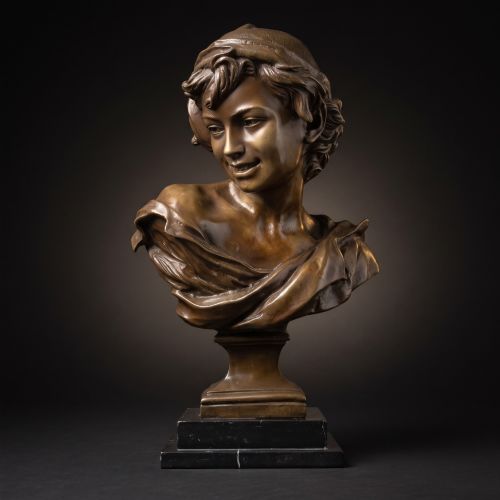
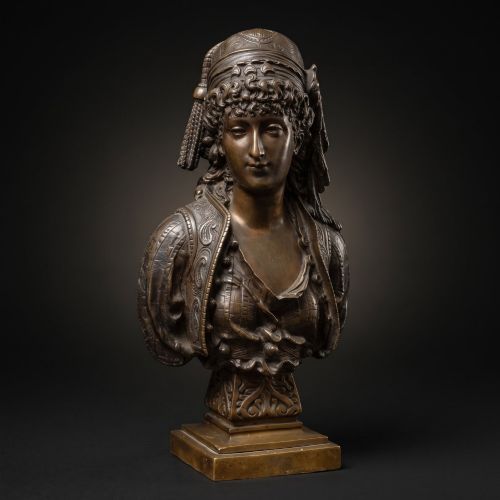


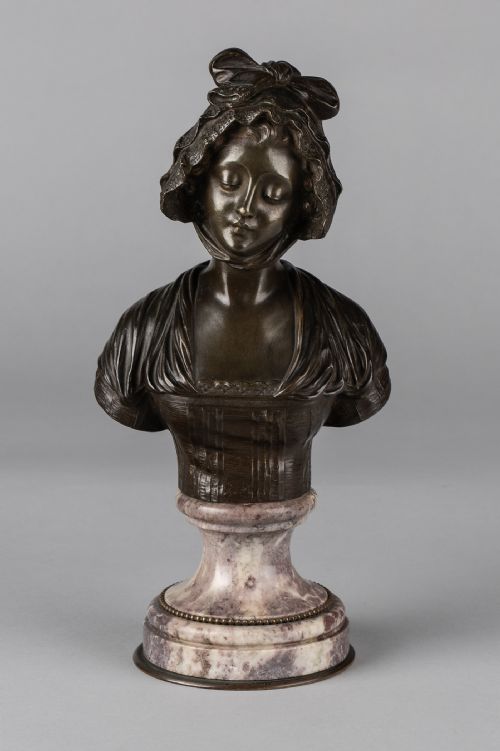


Dark Brown Bronze Bust
A dark brown bronze bust brings weighty presence to a room, cast in metal and patinated to deep, moody tones.
Dark Brown Bronze Bust
A dark brown bronze bust is a sculptural portrait focusing on the head and shoulders, modelled in metal with deep patination. These works capture specific individuals, from historical figures to anonymous youths, rendered with striking physical immediacy.
The selections span distinct historical moments, including Victorian examples, pieces from the nineteenth century, and later twentieth-century interpretations. French academic realism and neoclassical influences appear frequently alongside expressive portraiture.
Most examples depict human subjects mounted on solid bases, often incorporating marble plinths to elevate the metalwork. Collectors encounter both signed artist pieces and unsigned works of comparable sculptural ambition.
Materials and casting methods
Bronze forms the primary medium, shaped through traditional casting techniques and treated with dark patination to achieve rich, chocolate or near-black surface tones. Alternative materials such as terracotta with pigment, plaster, and cast iron also appear across the selection.
Marble frequently serves as a contrasting base material for the metal portraits, adding structural weight and visual balance. Surface finishes range from smooth, polished patinas to textured, expressive treatments applied directly to the cast.
Dark Brown Bronze Bust Retail Price Guide 2026
Typical asking prices for dark brown bronze bust among the pieces listed under this phrase on Sellingantiques today, from the lower quarter to the upper quarter. They describe what is for sale here now, not the wider market.
Portraits span the Victorian era, the nineteenth century broadly, and specific dated works up to the mid-twentieth century.
Distinctions in craftsmanship
Quality reveals itself in the crispness of the casting and the sensitivity of the chisel work applied after the metal leaves the mould. Finer pieces retain subtle anatomical transitions and expressive facial nuances rather than flat, uniform surfaces.
The depth and consistency of the patination contribute significantly to the visual success of the piece, enhancing the sculptural contours. Heavier material selection for both the bust and its supporting base further distinguishes superior examples.
Jean-Baptiste Carpeaux·Giuseppe Moretti·Alajos Strobl·Pietro Calvi·Leonhard Posch·Henri Plé·Eugene Laurent·Georges Van Der Straeten
The Dark Brown Bronze Bust Glossary
- Patina
- The surface coloration and chemical treatment applied to bronze, ranging from deep brown to near black. This finish protects the metal and defines the sculptural highlights.
- Plinth
- The solid base or pedestal upon which the bust rests, frequently fashioned from contrasting marble. It provides physical stability and elevates the sculptural portrait.
- Terracotta
- Fired clay used as an alternative sculptural medium, often finished with pigment or paint. It allows for direct, highly textured modelling by the artist's hand.
- Academic Realism
- A nineteenth-century artistic style prioritising strict anatomical accuracy, polished technique, and adherence to classical traditions. Works in this manner display meticulous attention to physical detail.
Dark Brown Bronze Bust: Frequently Asked Questions
How should I display a bronze bust at home?
Place the sculpture on a sturdy surface like a heavy sideboard or a dedicated column where its weight and presence can be appreciated from multiple angles. Ensure it sits away from direct heat sources to protect any patinated surfaces.
Good lighting makes a significant difference to how the dark metal reads in a room. Side lighting tends to emphasise the modelling of the face and the depth of the brown patina.
What is the difference between bronze and cast iron busts?
Bronze is a copper alloy that accepts chemical patination readily and allows for sharp, refined details during the casting process. It feels heavier and smoother to the touch than iron.
Cast iron offers a grainier texture and a heavier, more industrial character. Iron pieces from the nineteenth century are typically painted or finished to mimic darker metals.
How do I care for a patinated bronze surface?
Dust the sculpture regularly with a soft, dry brush to prevent dirt accumulation in the crevices of the casting. Avoid using water, polishes, or chemical cleaners, which can strip the patination.
Applying a very light touch of microcrystalline wax can protect the surface if handled frequently. However, undisturbed bronze requires very little intervention beyond gentle cleaning.
How can I tell the age of a nineteenth-century bust?
Examine the casting quality, the method of attachment to the base, and any signatures or foundry marks stamped into the metal. Nineteenth-century pieces often display hand-chased surface details that later reproductions lack.
The materials used for the base, such as specific types of marble, and the style of the clothing or hair on the subject also provide strong chronological clues.