


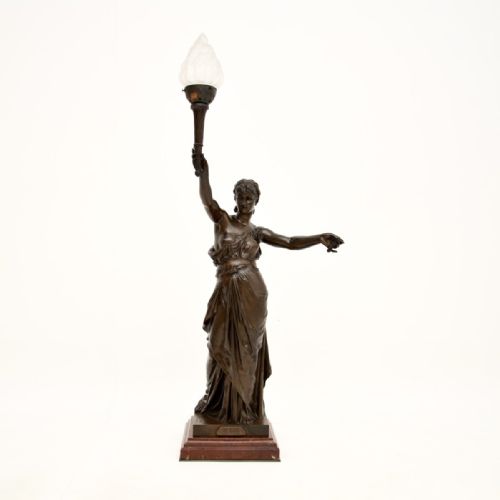


Dark Bronze Torchere
A dark bronze torchere brings striking vertical presence and classical illumination to a room, offering both sculptural weight and atmospheric light.
Dark Bronze Torchere
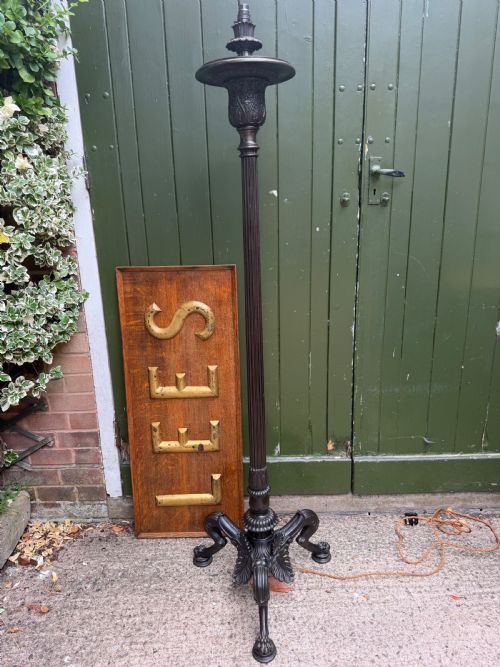
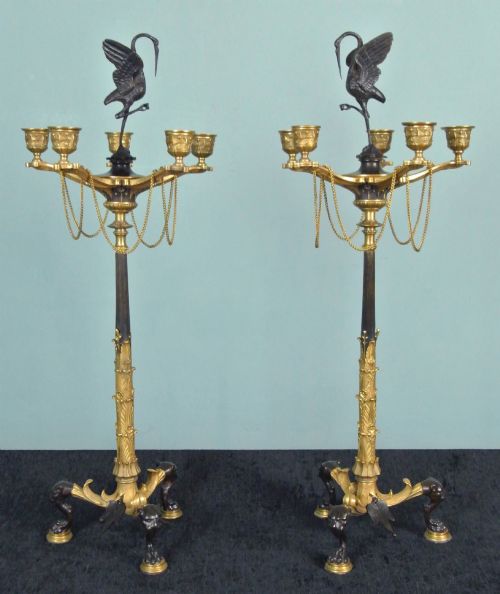
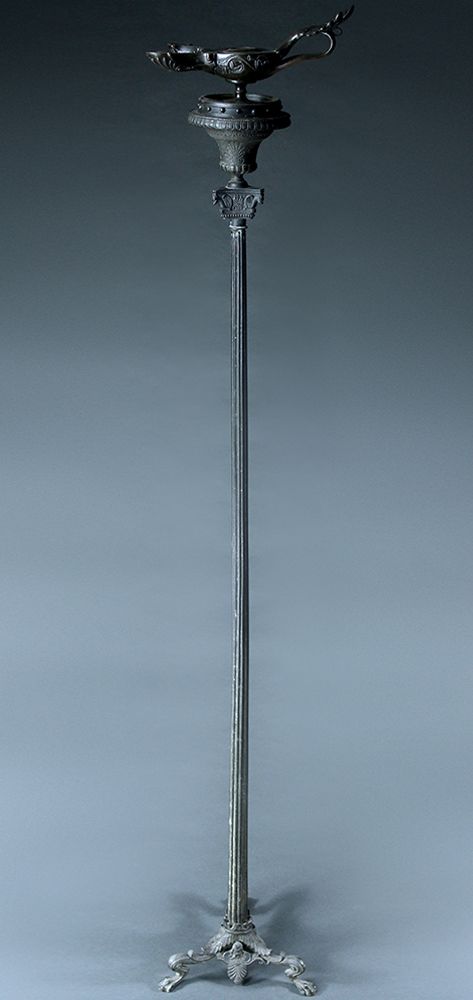
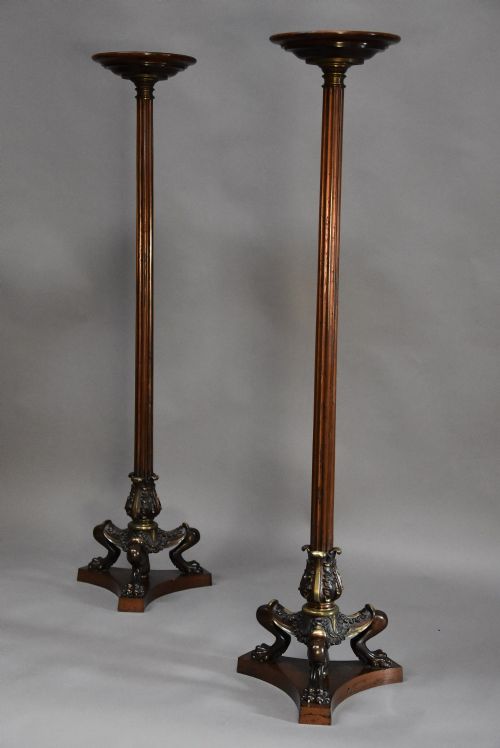
When you search for a dark bronze torchere, you encounter substantial lighting fixtures and pedestals designed to elevate a room, frequently taking the form of floor standing lamps, standard lamps, and figural lampbases. These pieces emerge primarily from the nineteenth century, including Victorian examples, alongside later creations from the early twentieth century reaching into the art deco period.
The versions most commonly met on this page lean heavily into neoclassical, French nineteenth-century, and Regency styles. They frequently incorporate classical Grecian, Neo-Pompeian, or figural motifs, ranging from cherubs and mythical mermaid bases to signed sculptural works by makers such as Emile Picault and Jean-Jules Cambos.
What varies in quality
The refinement of the casting and the crispness of detail in figural elements distinguish the superior examples from standard production. Sculptural pieces bearing signatures of known artists or workshops display a markedly higher degree of chiselling and anatomical precision in the bronze work.
The choice of secondary materials dictates overall heft and luxury, with dense marbles, onyx, and ormolu mounts elevating the piece well above simpler metal or spelter alternatives.
One exceptional nineteenth-century piece combines a mythical mermaid base with a glowing rock crystal column.
Barbedienne·George Smith·Thomas Hope·Emile Picault·Humphrey Hopper·Jean-Jules Cambos·Coutan·Moreau
The Dark Bronze Torchere Glossary
- Torchere
- A tall ornamental stand, floor lamp, or candle holder designed to carry a light source aloft. Originally intended to illuminate hallways or corners.
- Ormolu
- Gilded bronze, where finely ground gold is applied to a bronze base using mercury amalgamation or electrochemical techniques. It adds bright golden highlights to dark bronze surfaces.
- Spelter
- A zinc alloy frequently used as a cheaper substitute for bronze in decorative metalwork. It takes patination well but possesses less structural strength than true bronze.
- Grand Tour
- A cultural journey undertaken by wealthy young Europeans in the eighteenth and nineteenth centuries to collect classical antiquities and statues. Such pieces often inspired later nineteenth-century floor lamps and pedestals.
- Patination
- The surface coloration and sheen developed naturally over time or applied chemically to bronze and metal. A dark bronze patination gives these torcheres their characteristic moody depth.
Dark Bronze Torchere: Frequently Asked Questions
Where should I place a torchere?
A dark bronze torchere works best in corners, entrance halls, or flanking large pieces of furniture where its height can command the space. It provides ambient vertical illumination rather than direct task lighting.
Ensure there is a suitable floor socket or discreet pathway for the cord if the piece has been electrified for modern use.
How do I distinguish bronze from spelter?
Bronze is heavier, colder to the touch, and yields a more resonant sound when gently tapped compared to softer spelter. Examination of the underside often reveals the darker, denser grain characteristic of cast bronze.
Spelter will also show lighter grey metal beneath worn areas of patination, whereas bronze reveals a warm golden-brown base metal.
What is the difference between a torchere and a standard lamp?
A torchere traditionally refers to an ornate stand or tall light fixture derived from classical candle holders, often featuring sculptural figural shafts. A standard lamp is a more general term for any freestanding floor lamp.
In nineteenth-century design, however, the terms frequently overlap when elaborate bronze stands are fitted with lamp or candelabra fittings.