
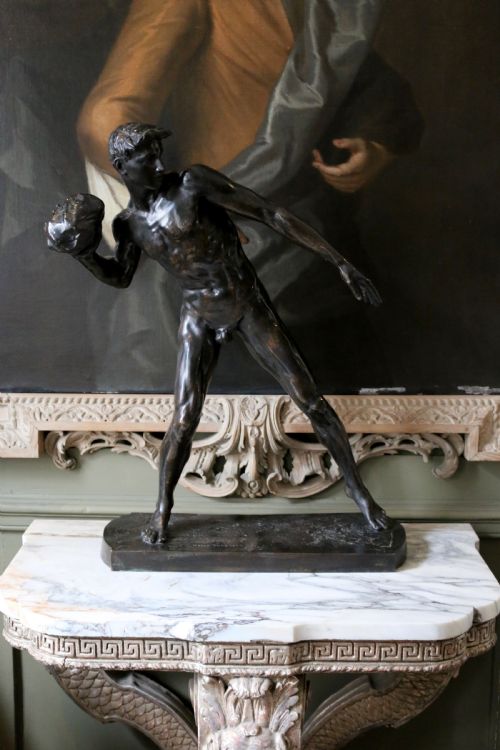
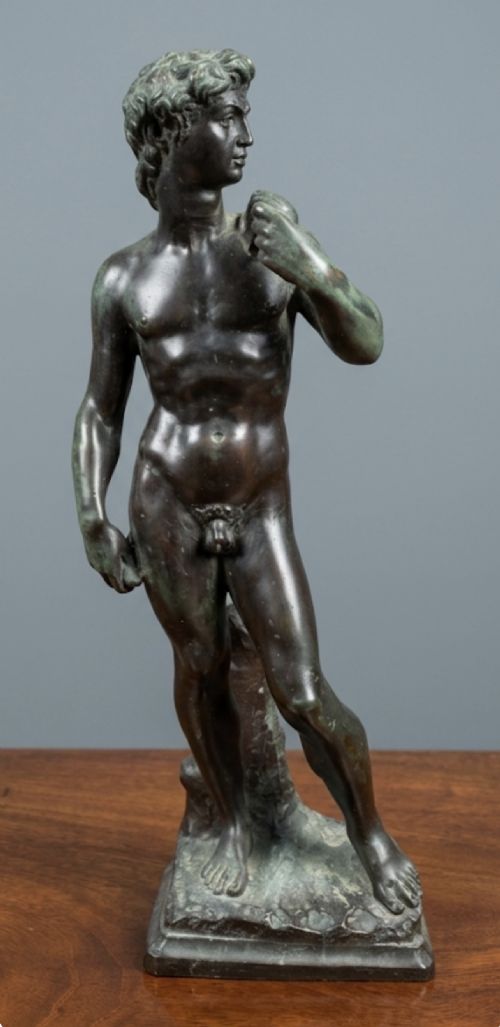
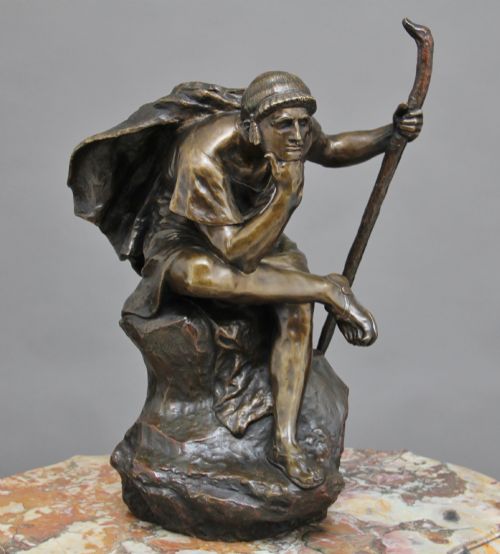
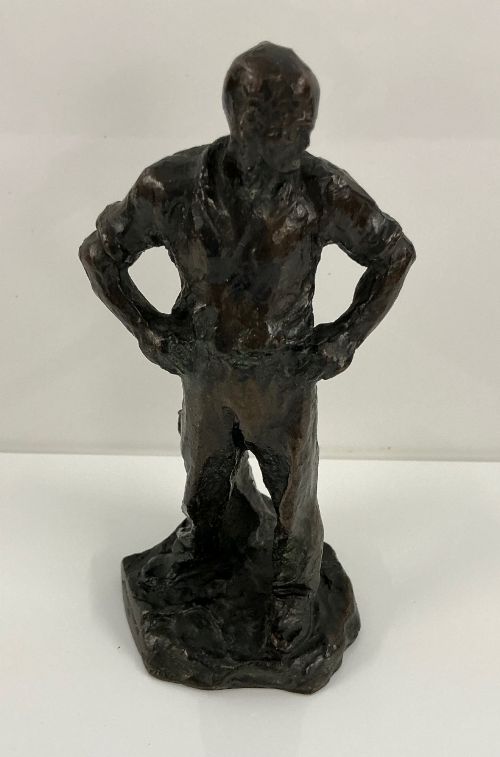
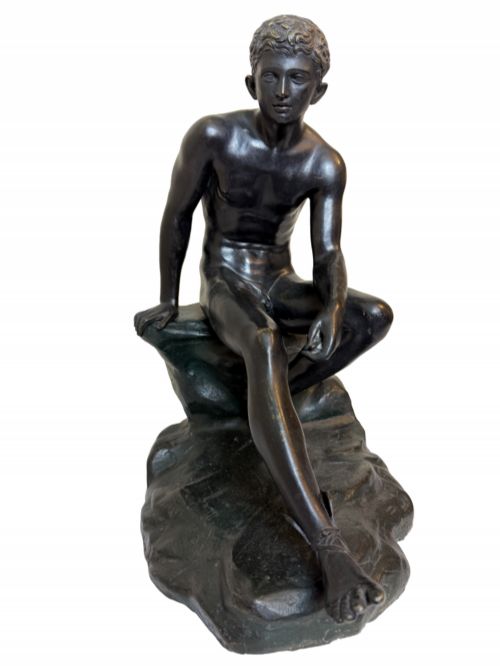

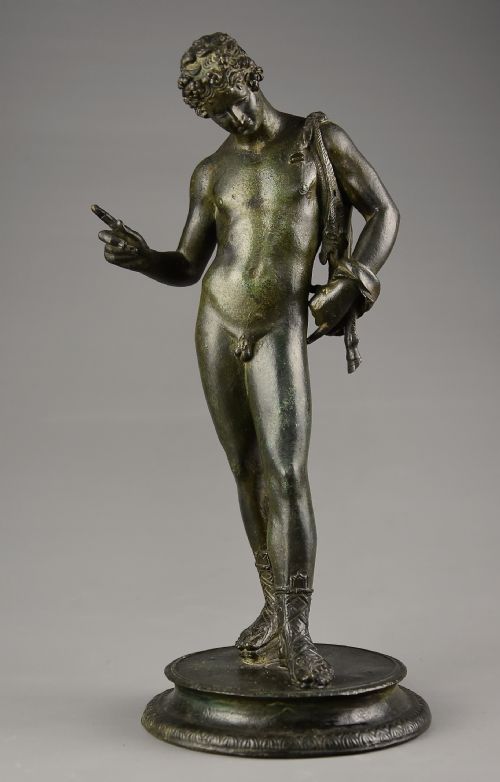
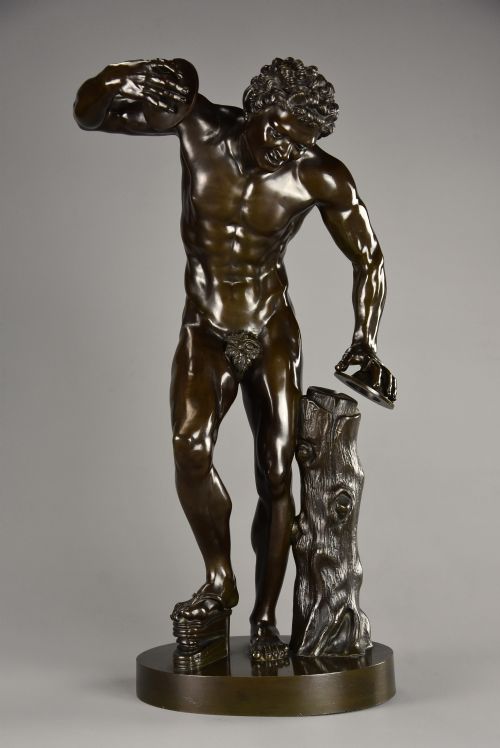


Dark Bronze Male Figurine
A dark bronze male figurine brings classical mythology and heroic form into a room through cast metal work from the nineteenth and early twentieth centuries.
Dark Bronze Male Figurine
A dark bronze male figurine represents subjects drawn from classical antiquity, mythology, and historical narratives, rendered in cast metal. Buyers encounter figures of gods, athletes, warriors, and dancers originating largely from nineteenth century French workshops and Grand Tour travels.
The objects take the form of tabletop sculptures, studies, and statuettes, often standing on bases of marble, brass, or ebonised wood. Many pieces adapt antique discoveries from Pompeii or works by canonical sculptors for private interiors.
The category spans diverse cultural movements including Neoclassicism, French Realism, the Victorian New Sculpture, and Art Deco. These pieces range from modest cabinet figures to monumental sculptural studies.
Materials and Construction
The primary medium is cast bronze, frequently treated with chemical agents to produce a dark patina ranging from near black to deep green. This metallic body is often paired with plinths or bases made from carved marble, stone, brass, or ebonised wood.
Foundries employed traditional casting techniques to capture musculature, drapery, and fine detail. Many works received finishing touches through chasing and hand-applied patination before being signed or stamped by the maker.
Listings feature periods from the nineteenth and early twentieth centuries, utilising materials such as bronze, marble, patinated bronze, and ebonised wood.
Factors That Determine Quality
Quality rests upon the crispness of the casting and the sensitivity of the subsequent hand-chasing work. Superior examples preserve anatomical precision, sharp details in hair and drapery, and a stable, evenly applied dark patina.
The skill of the original sculptor dictates the vitality of the pose and the proportions of the figure. Foundries that maintained rigorous standards produced pieces with well-balanced composition and substantial physical presence.
Hamo Thornycroft·Jules Dalou·Julien Lorieux·Emile Louis Picault·Sir Thomas Brock·Desire Grisard·Raoul Francois Larche·Bruno Zach·Salmson·Franz Iffland·E Drouot·Eden Antony Paul Noel
The Dark Bronze Male Figurine Glossary
- Grand Tour
- A traditional trip through Europe undertaken by upper-class scholars and collectors to acquire antiquities and classical souvenir sculptures. These objects were often cast in Italian or French foundries during the nineteenth century.
- Patina
- A thin layer that forms on the surface of bronze through oxidation or chemical treatment. Dark patination provides a deep, matte finish that highlights sculptural contours.
- Lost-wax casting
- A metalworking process where a molten metal is poured into a mould that has been created by melting away a wax model. This technique allows for intricate detail and undercut forms.
- Chasing
- The manual finishing of a metal casting using hammers and punches to refine surfaces and sharpen details. Skilled chasing distinguishes high-grade studio bronzes from commercial reproductions.
- Neoclassical
- A style inspired by the classical art and culture of ancient Greece and Rome. Figures from this movement emphasise heroic poses, clean lines, and mythological subjects.
Dark Bronze Male Figurine: Frequently Asked Questions
What periods do these bronzes come from?
The listings span the nineteenth and early twentieth centuries, encompassing Victorian production, Grand Tour tourism, and Art Deco design.
Dates range from the early eighteen-hundreds through the nineteen-thirties, reflecting diverse European foundry traditions.
How were these figurines displayed originally?
Figures were typically placed on desks, mantelpieces, or dedicated pedestals within studies and libraries. Collectors mounted them on stone or wooden bases to elevate the work and provide stability.
They served as decorative items that signalled classical learning and artistic taste in a home.
How can I identify a Grand Tour bronze?
Grand Tour bronzes often copy famous classical statues seen by travellers in Italy, such as works from Pompeii or Roman museums. They frequently feature characteristic dark patination and are mounted on marble or slate bases.
These pieces were produced as high-end souvenirs for collectors touring European cultural sites during the nineteenth century.
What does patination mean on these sculptures?
Patination refers to the coloration achieved on the bronze surface through natural ageing or chemical treatments. A dark patina was deliberately applied by founders to emulate aged antiquities and accentuate musculature.
Variations in the tone range from deep brown to dark green, depending on the foundry methods used.