


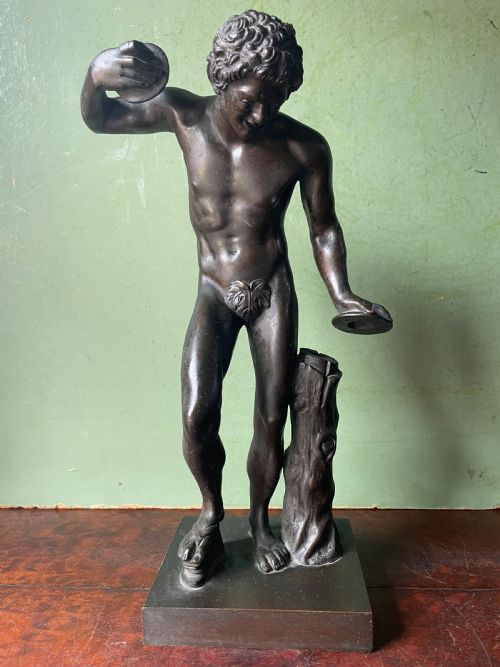


Dark Bronze Faun
These dark bronze faun figures bring classical mythology straight into the room as small bronze sculptures and plaster souvenirs.
Dark Bronze Faun
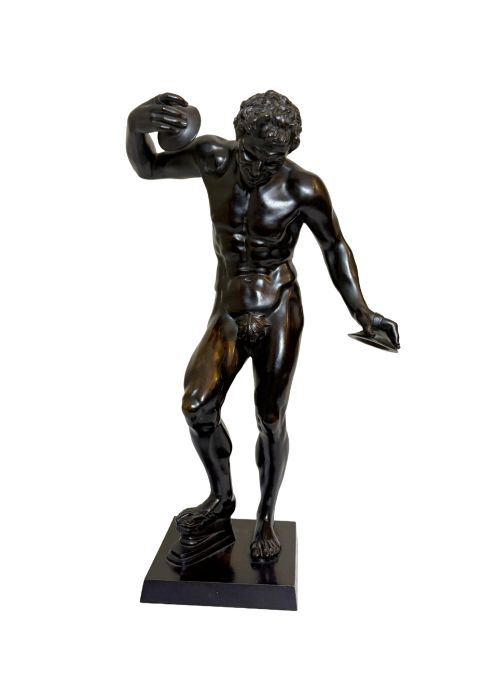
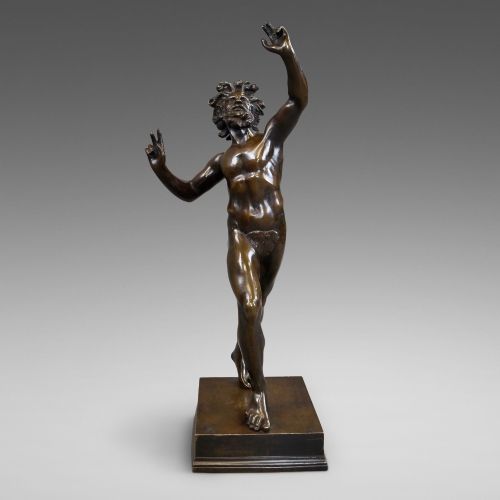
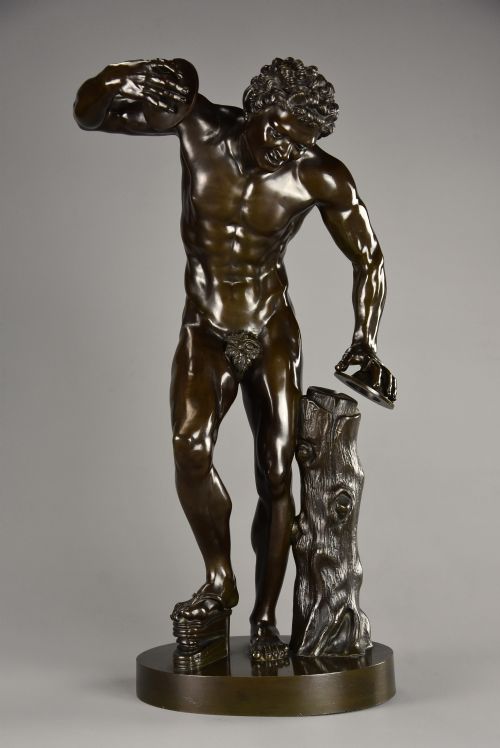
When you search for a dark bronze faun, you are looking at nineteenth-century sculptures and statuettes rooted in classical antiquity. These pieces draw heavily on the famous discoveries at Pompeii, capturing mythological figures in energetic poses such as dancing with cymbals or playing pipes.
The versions you will most commonly meet on this page span the Victorian period and the wider nineteenth century. They appear as Grand Tour souvenirs, Neoclassical studies, and French or Italian reductions made after ancient bronzes.
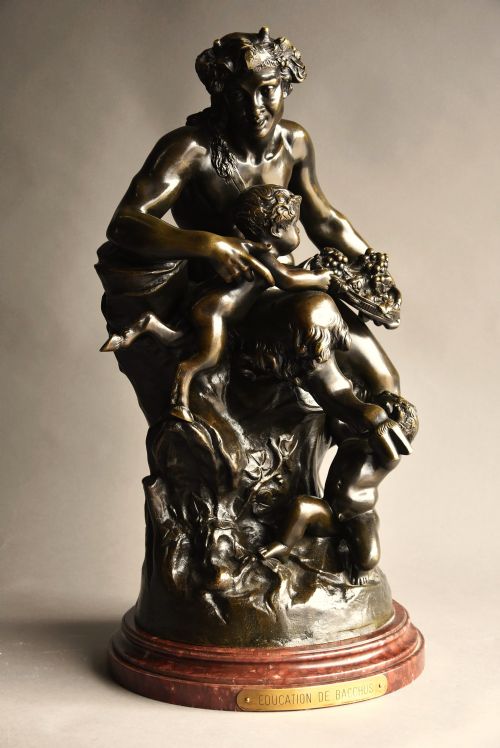
The formats range from single figures of dancing fauns and satyrs to groups featuring Pan and the infant Bacchus. Most rest upon integral bases or marble plinths, reflecting their origins as cabinet bronzes for nineteenth-century collectors.
How they were made
Makers produced these sculptures using traditional metal casting techniques to capture fine anatomical details and expressive postures. The resulting metal forms received deliberate surface treatments to achieve dark patinated bronze finishes that mimic ancient artefacts.
Alternative materials such as plaster also appear among the listings for these subjects, offering tactile studies of the same classical prototypes. Sculptures frequently incorporate marble components, particularly for the bases that support the metal figures.
Materials documented across the site include bronze, patinated bronze, metal, plaster, and marble, often styled as Grand Tour and Neoclassical souvenirs.
What varies in quality
The distinction between standard souvenirs and exceptional pieces lies in the crispness of the casting and the sensitivity of the chasing. Superior sculptures retain sharp details in the hair, muscles, and facial expressions, whereas lesser examples lose definition in the finishing stages.
The depth and richness of the patination also dictate quality, with skilled founders achieving nuanced dark tones across the bronze surfaces. Furthermore, the weight and quality of associated marble plinths or stamped foundry marks contribute to the standing of an individual piece.
Claude Michel Clodian·Duchemin·Augusto Rivalta
The Dark Bronze Faun Glossary
- Grand Tour
- A traditional trip undertaken by European aristocrats to study classical art and antiquities. Souvenirs purchased during these travels inspired many nineteenth-century bronze sculptures.
- Neoclassical
- A style reviving the classical ideals of ancient Greece and Rome. It emphasises balance, proportion, and mythological subjects.
- Patinated bronze
- A metal sculpture treated with chemical solutions to produce a specific surface colour. Dark finishes were particularly favoured to emulate buried antiquities.
- Reduction
- A small-scale copy of a larger monumental sculpture. These cabinet pieces allowed collectors to own miniature versions of famous museum statues.
- Plaster
- A workable medium used for sculptural casts and studies. Plaster figures provided an affordable alternative to bronze while preserving fine details of the antique model.
Dark Bronze Faun: Frequently Asked Questions
What is a dark bronze faun?
A dark bronze faun is a nineteenth-century sculpture depicting a mythological creature from classical antiquity, often modelled after famous discoveries at Pompeii.
These pieces typically show the figure dancing, playing cymbals, or holding pipes, rendered in patinated metal as a decorative cabinet statuette.
How were Grand Tour souvenirs used?
Nineteenth-century travellers collected these small bronzes as tangible reminders of their educational journeys through Italy and France.
Displayed in libraries and studies, they signalled a gentleman's classical education and refined taste in art.
How do I date a nineteenth-century bronze faun?
Dating relies on stylistic clues, casting techniques, and the character of the dark bronze patina applied to the metal. Most examples on this page date from the Victorian era and the latter half of the nineteenth century.
Foundry marks or signatures, where present, can also narrow down the period and origin of the sculpture.
Why do some figures have marble bases?
Many nineteenth-century cabinet sculptures incorporated marble plinths to elevate the artwork and provide a stable foundation. This combination mirrored the presentation of classical antiquities seen in European museums.
The colour and veining of the marble often reflect the preferences of French and Italian workshops of the period.