


Dark Bronze Equine Statue
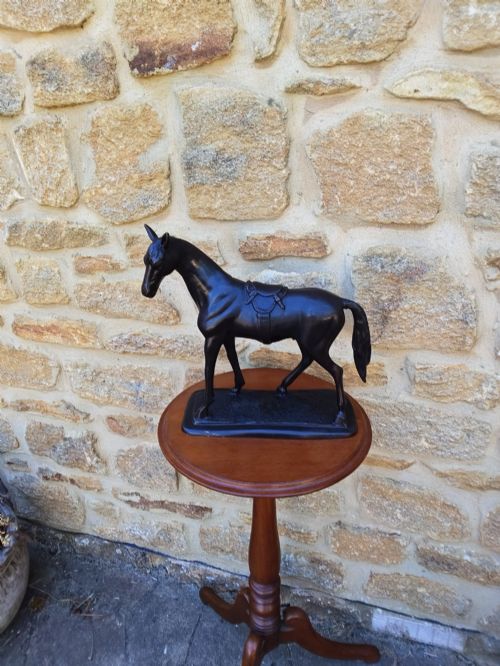
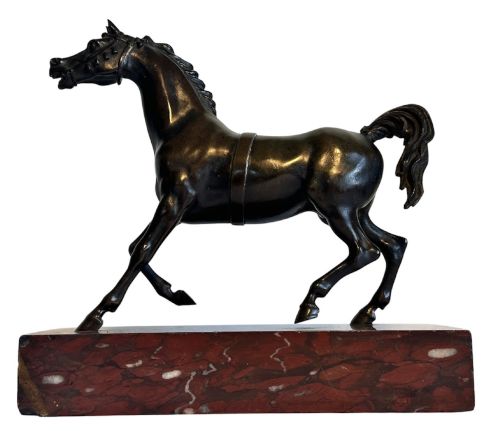
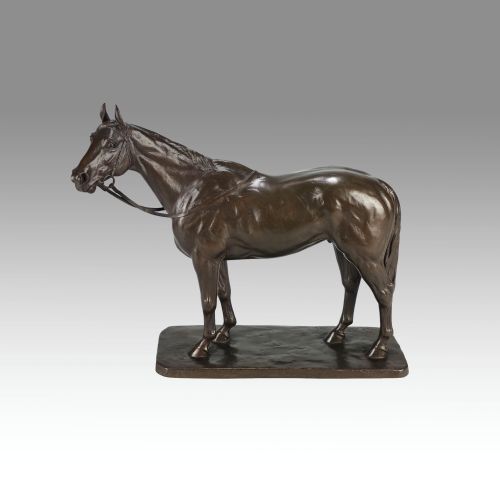
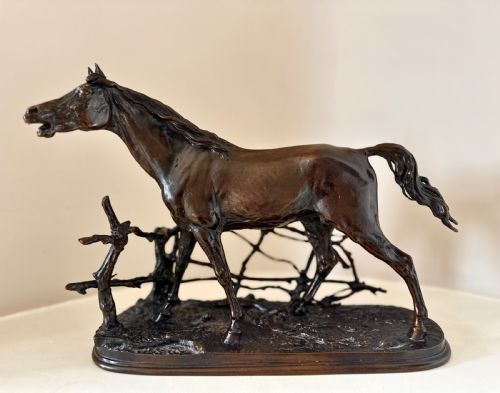
These dark bronze equine statue examples capture muscular energy and movement, making them commanding centrepieces for any room.
Dark Bronze Equine Statue
A dark bronze equine statue represents horses through various sculptural styles ranging from realism to animalier and Art Deco. These pieces span the nineteenth and twentieth centuries, originating from European foundries as well as Japanese periods like the Meiji and Taisho eras.
Buyers will encounter subjects such as standing stallions, rearing horses, and figures on horseback mounted on stone or marble bases. The selection includes both European animalier studies and Japanese foundry works from Tokyo.
The forms vary from modest desk studies to large life-size statues and pairs such as the Marley horses. Most examples on this page date from the nineteenth century up through the nineteen-forties.
How they were made
Foundries produced these sculptures primarily using casting techniques in bronze or patinated bronze, alongside alternative metals like spelter and bronzed metal. Many figures underwent careful surface treatment to achieve dark patination.
Sculptors mounted finished metal castings securely onto heavy plinths of marble or hardwood to provide stability and visual contrast.
Some horses come accompanied by nude male riders, proving that even bronze stallions occasionally need company.
What varies in quality
The degree of anatomical precision and muscular definition separates superior castings from standard commercial production. Master sculptors captured tension and movement with acute observation.
The richness of the dark patina and the quality of the chased surface details indicate the level of craftsmanship applied at the foundry.
Kunio Itô·P. J. Mêne·Sakai Kōzan·Pierre Jules
The Dark Bronze Equine Statue Glossary
- Animalier
- A nineteenth-century artistic movement dedicated to the realistic portrayal of animals. Sculptors in this tradition focused closely on anatomical accuracy.
- Patina
- The surface coloration and sheen developed naturally over time or applied chemically to metal. Dark patination is typical for these equine bronzes.
- Spelter
- A zinc alloy commonly used as a less expensive substitute for bronze in decorative figures. It often receives a bronze-like coating.
- Taisho Period
- A period in Japanese history spanning from nineteen-twelve to nineteen-twenty-six. Foundries during this era produced sophisticated bronze sculptures.
- Cire perdue
- The lost-wax casting method used to create detailed metal sculptures from a wax model. This technique allows for complex undercuts and fine textures.
Dark Bronze Equine Statue: Frequently Asked Questions
What is an animalier bronze horse?
An animalier bronze horse is a nineteenth-century sculpture focused on realistic animal anatomy and behaviour.
These works were created by specialised sculptors who studied horses in motion.
How do I identify a Japanese bronze horse?
Japanese bronze horses often feature distinct foundry marks and stylistic influences from the Meiji or Taisho periods.
They frequently display traditional casting techniques and refined surface patination.
What is the difference between bronze and spelter?
Bronze is a durable copper alloy that takes fine detail and patination well.
Spelter is a softer, lighter zinc-based metal used for more economical decorative castings.
Where should I place a bronze horse statue?
These statues suit prominent locations such as a desk, mantelpiece, or console table where their form is visible.
Ensure the heavy marble or hardwood base rests on a stable surface.