
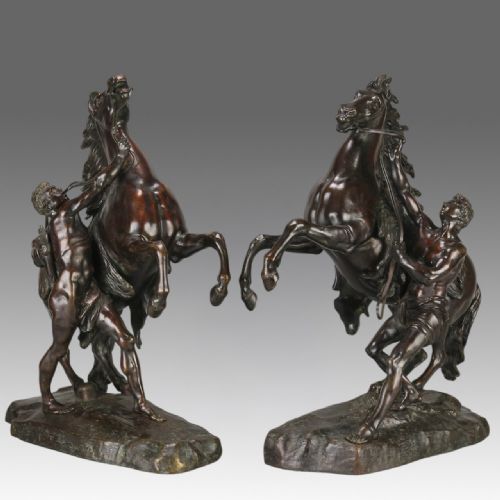
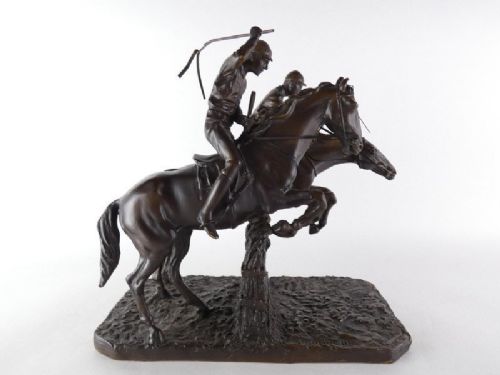


Dark Bronze Equestrian Sculpture
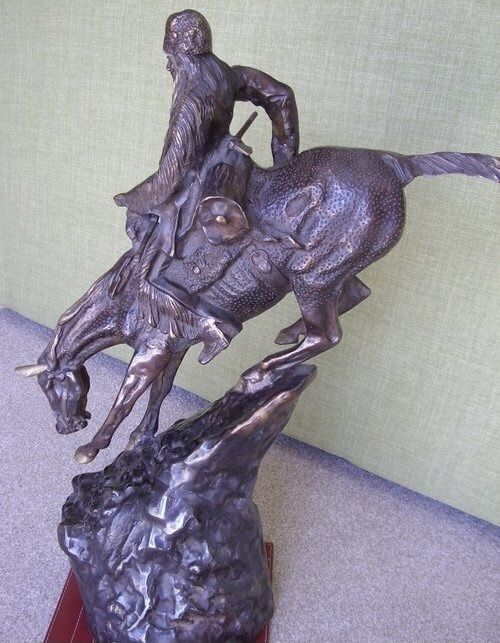
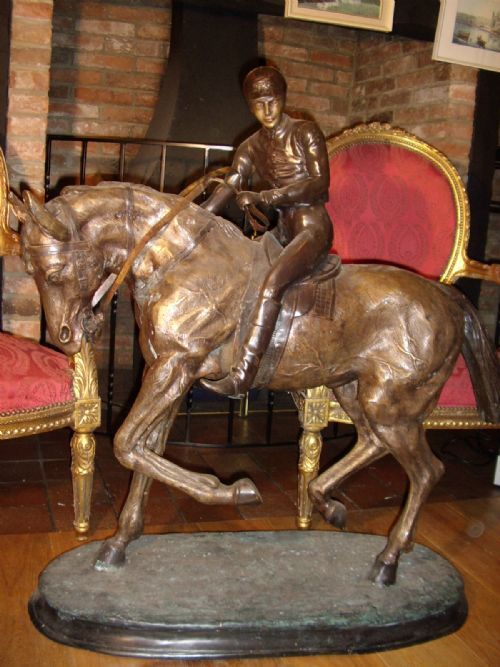
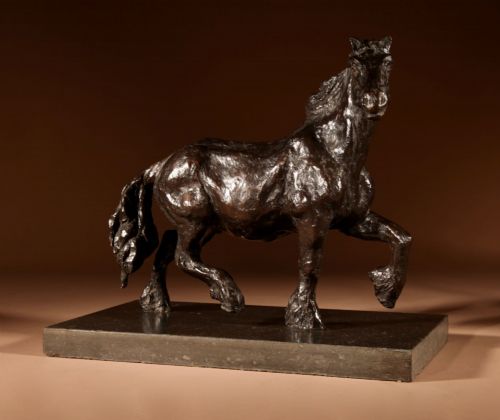
Dark bronze equestrian sculpture captures horse and rider through intricate metalwork spanning the nineteenth and twentieth centuries.
Dark Bronze Equestrian Sculpture
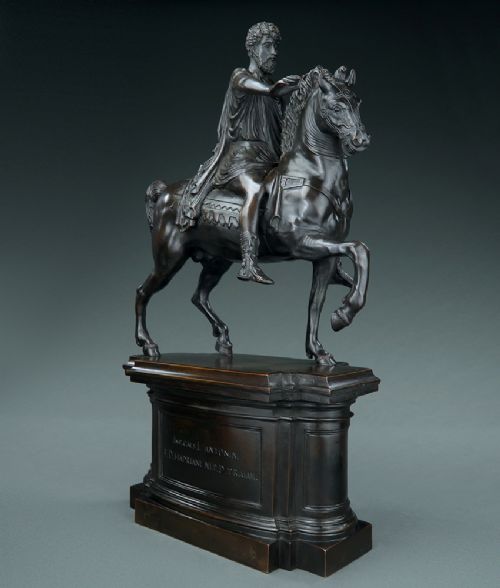
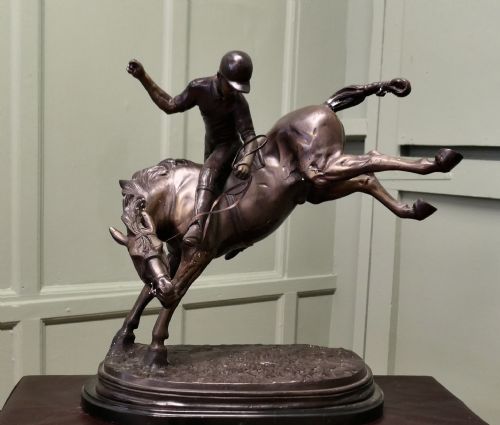
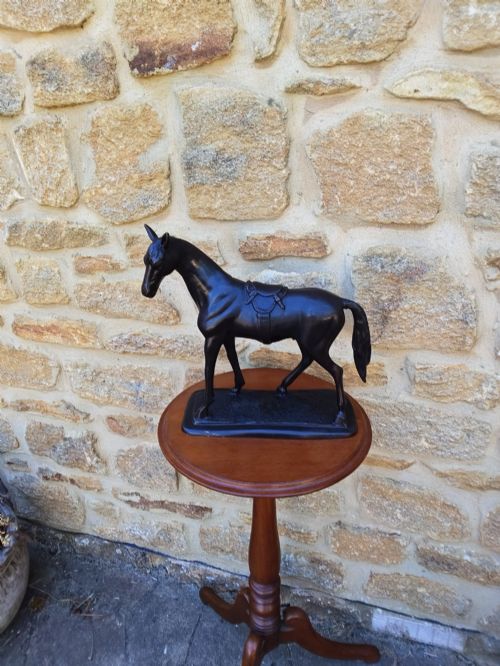
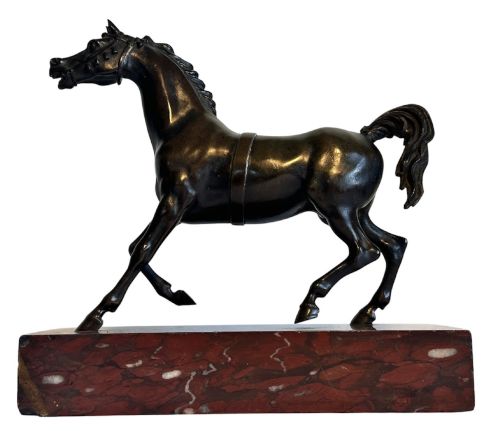
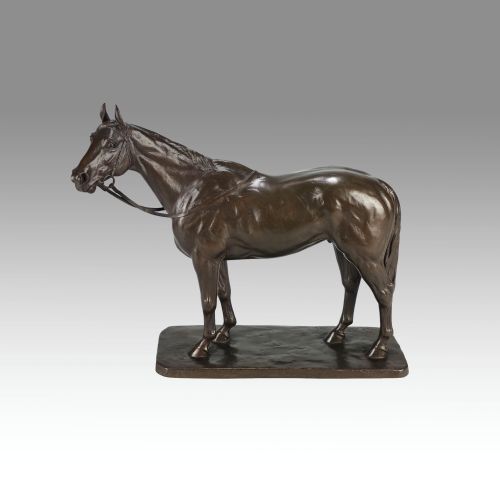
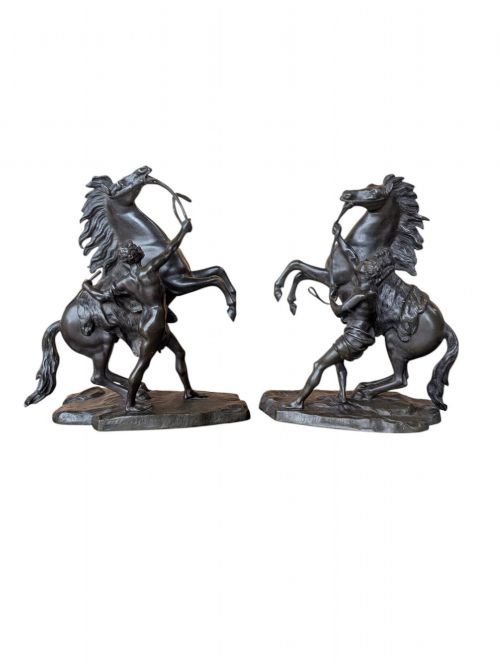
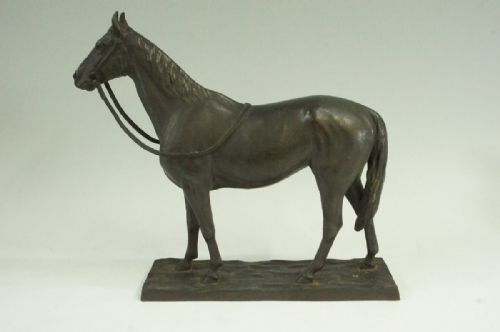
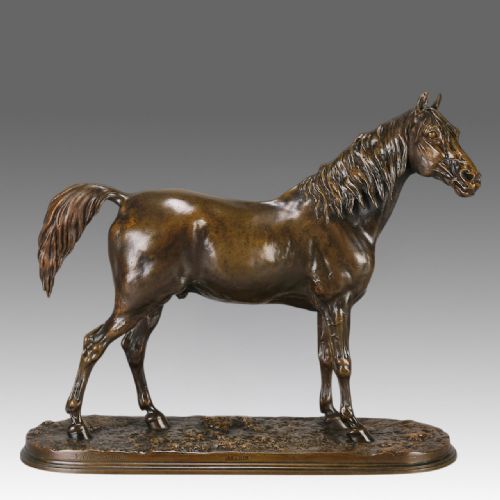
Dark bronze equestrian sculpture depicts horses and riders, racehorses, and mythological pairings cast in metal across the nineteenth and twentieth centuries. These pieces emerge from French Animalier traditions, Italian Grand Tour souvenirs, and Japanese foundry work, reflecting diverse global aesthetics.
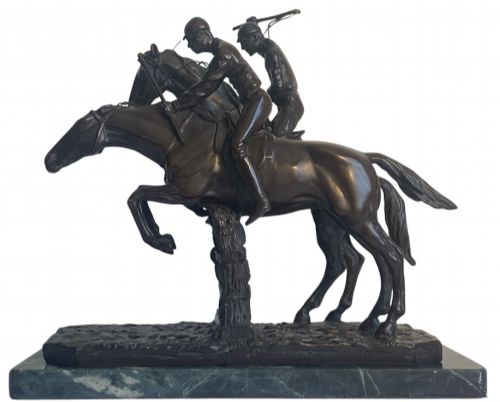
Collectors encounter figures mounted on marble bases, painted finishes, and relief plaques showing subjects from steeplechase racers to classical charioteers. The dominant forms include mid-nineteenth-century French subjects and early twentieth-century depictions of riders.
The selection ranges from cabinet-sized studies to large decorative figures produced in Europe and Asia. Each piece demonstrates specific regional techniques applied to metal casting and surface patination.
Materials and casting methods
Foundries utilised bronze alloys, pouring molten metal into moulds to capture muscular detail in horses and human figures. Artisans often applied dark patination to the finished metal surface to simulate age and enhance depth.
Many sculptures incorporate plinths of green or white marble, stone, or wood as foundational mounts. Cold-painted variants received manual pigment applications over the metal surface after initial casting.
Several bronzes immortalize specific historical horses, ensuring stout steeds outlive their human jockeys by centuries.
Distinctions in execution and finish
The integration between the bronze figure and its marble or stone base indicates the care taken during assembly. Rich patination and well-preserved signed signatures further distinguish finer works.
Pierre Jules Mene·Kunio Ito·Franz Bergman·Bruno Zach·John Willis Good
The Dark Bronze Equestrian Sculpture Glossary
- Animalier
- A nineteenth-century artistic movement focusing on the realistic depiction of animals. Practitioners specialised in capturing dynamic movement in bronze.
- Patina
- The surface coloration and sheen developed on bronze over time or applied chemically by the foundry. This finish protects the metal and defines the visual tone.
- Grand Tour
- A cultural journey undertaken by wealthy Europeans in the eighteenth and nineteenth centuries, commemorated through small-scale bronze sculptures and antiquities.
- Cold-painted
- A technique where paint is applied to a cold bronze surface rather than fired in a kiln. This finish appears frequently on early twentieth-century works.
Dark Bronze Equestrian Sculpture: Frequently Asked Questions
What is an animalier bronze sculpture?
Animalier bronzes focus specifically on realistic animal forms, often capturing horses in motion, resting, or participating in sporting events like steeplechase.
These pieces emerged strongly in nineteenth-century France and showcase detailed muscular accuracy.
How do you identify a grand tour bronze?
Grand Tour bronzes typically represent classical subjects, historical figures, or famous monuments collected as souvenirs during European travels.
They are frequently mounted upon marble plinths and date predominantly from the nineteenth century.
What does cold-painted bronze mean?
Cold-painted bronze refers to metal sculptures painted by hand with natural pigments without the application of heat.
This method was widely utilised by Viennese foundries in the early twentieth century to add vibrant coloration.
Why are marble bases used on sculptures?
Marble bases provide structural stability and architectural weight to balance the dynamic postures of heavy bronze figures.
They frequently feature green or white stone varieties that contrast with the dark patinated metal.