

Damask Upholstered Armchair
A damask upholstered armchair brings patterned elegance to a room, offering a structured seat wrapped in rich historic textiles.
Damask Upholstered Armchair
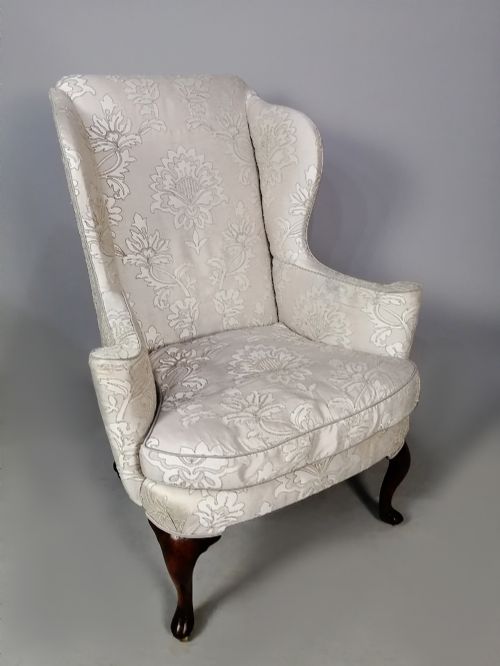
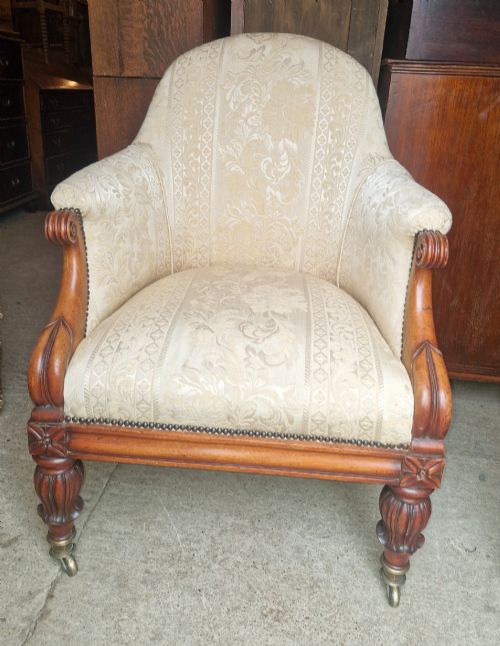
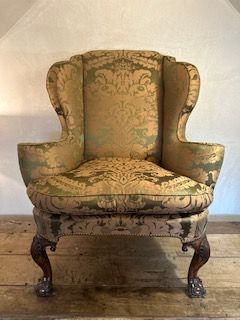
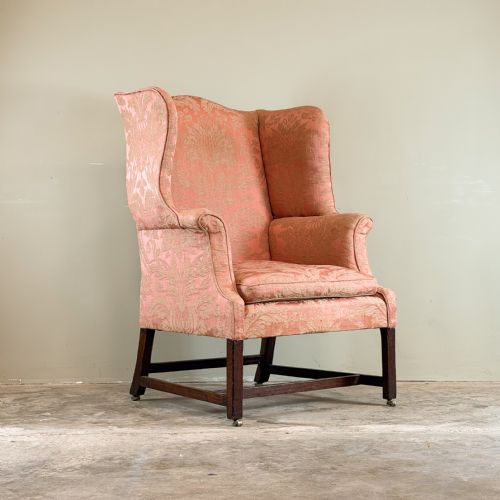
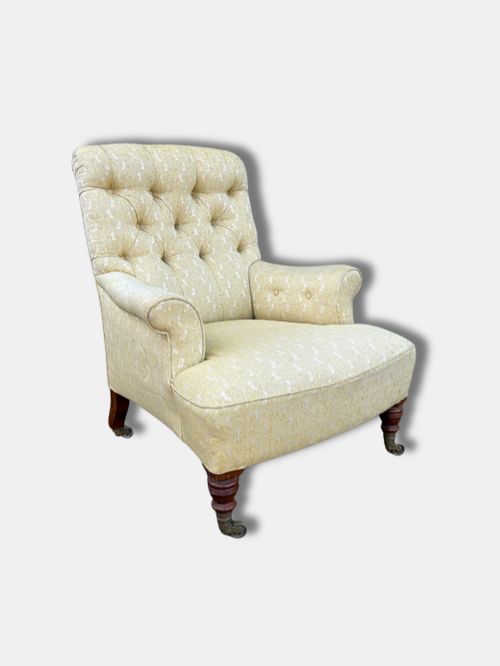
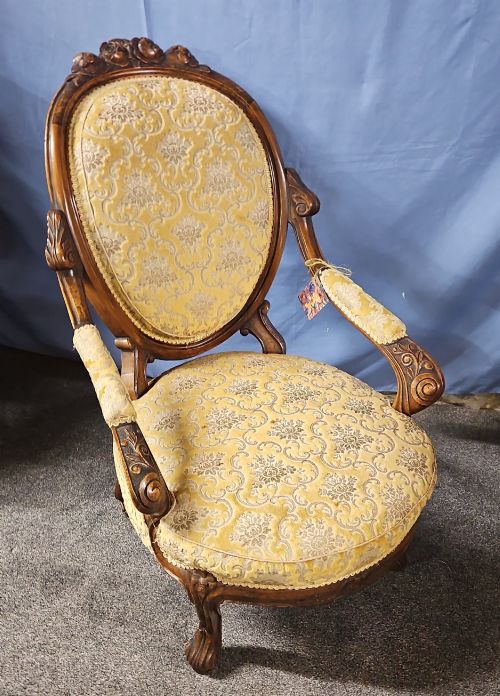
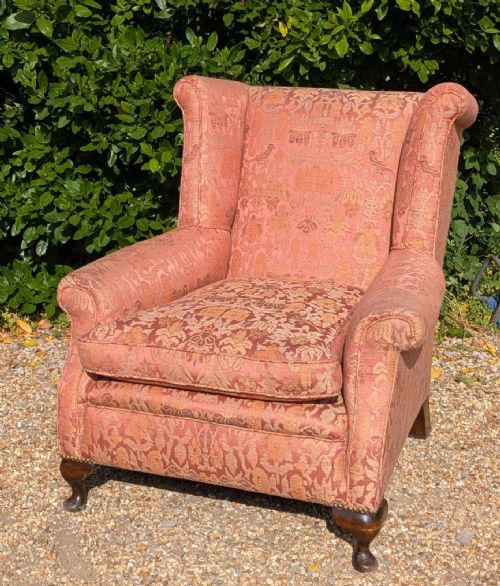
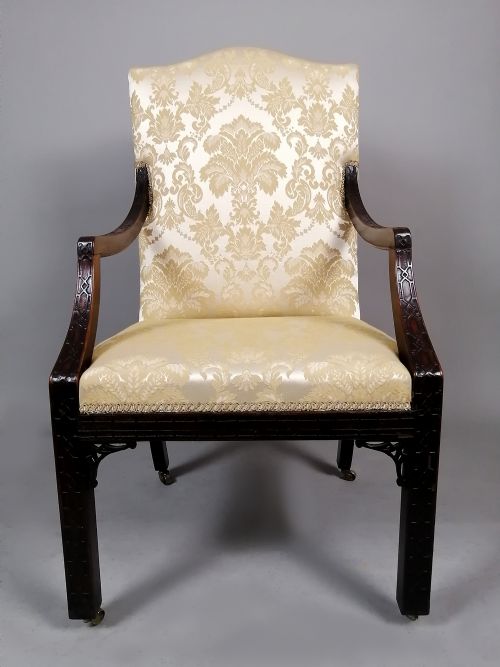
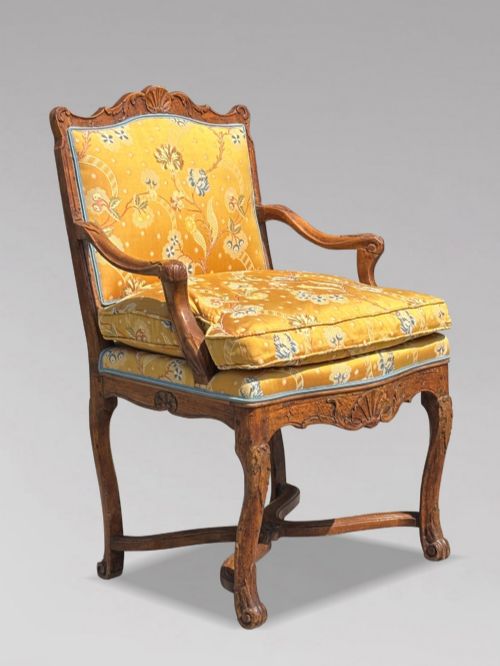
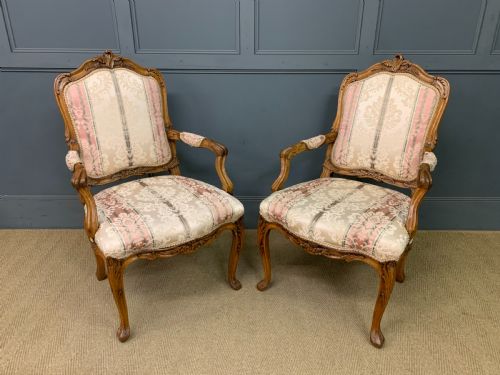
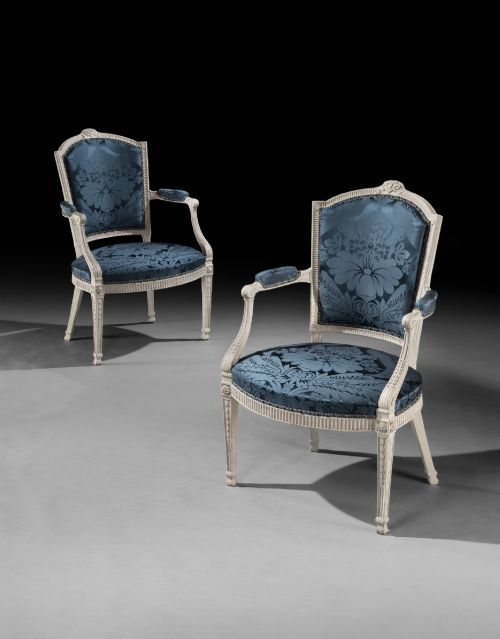
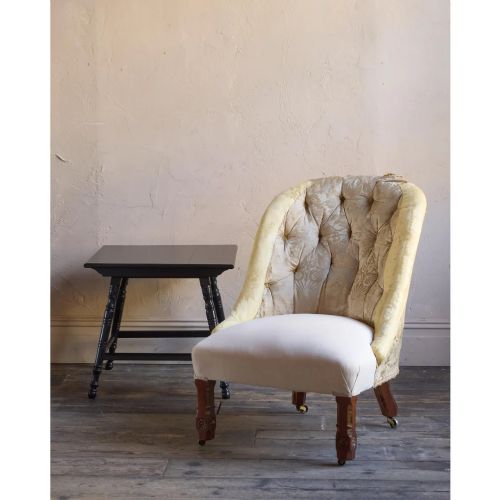
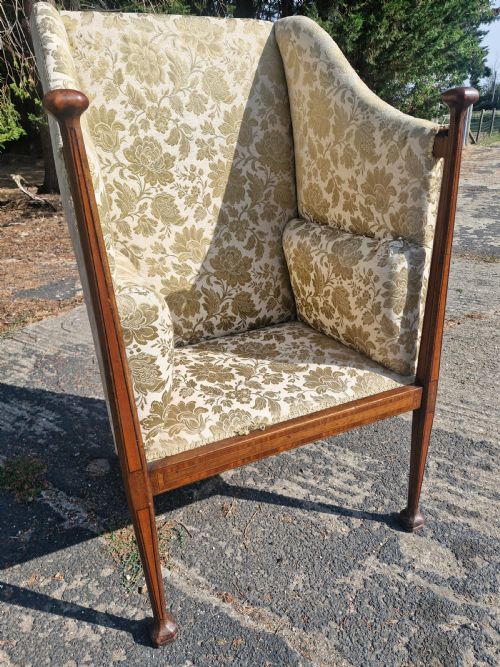
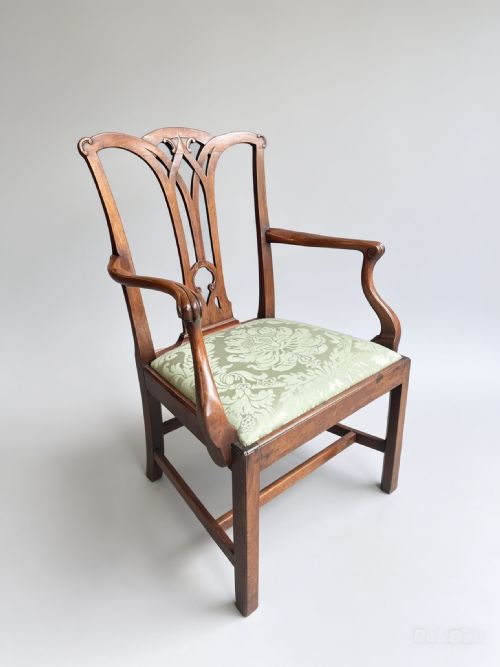
A damask upholstered armchair combines traditional wooden framing with patterned fabric coverings, ranging from deep-seated Victorian designs to earlier Georgian wing chairs. When searching for a damask upholstered armchair, buyers encounter pieces spanning the eighteenth, nineteenth, and early twentieth centuries, with French revival and English country styles appearing frequently.
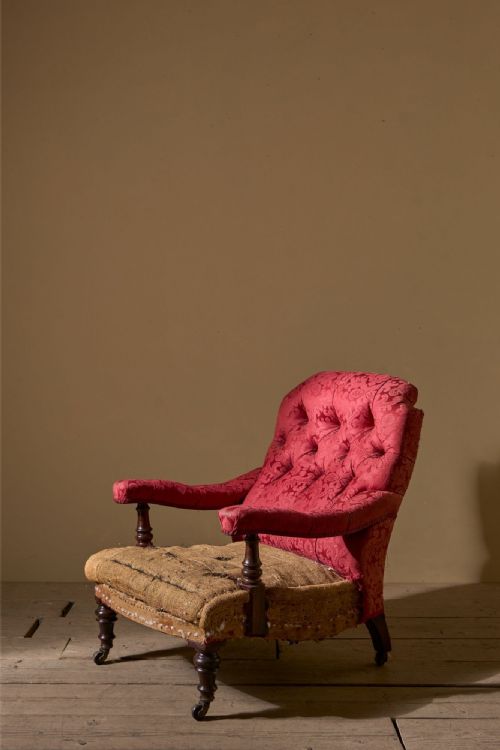
The selections include open armchairs, library chairs, and high-backed wing chairs constructed in walnut, mahogany, and giltwood. Many examples reflect specific historical revivals, such as Louis XVI, Carolean, and Federal styles, often paired with matching settees or salon suites.
How they were made
The frames rely on dense hardwoods such as mahogany and walnut, alongside carved giltwood, providing a sturdy architectural skeleton for the upholstery. Woodcarvers shaped cabriole legs, elbow rests, and crest rails by hand before applying traditional joinery methods.
Textiles like damask and silk cover the padded components, which historically utilised natural fillings such as feathers. Artisans secured the outer fabric directly to the wooden framework using tacks, pairing structural carpentry with textile craftsmanship.
Listings feature mahogany, walnut, and giltwood frames paired with damask fabric across the eighteenth, nineteenth, and early twentieth centuries.
What varies in quality
The distinction between tiers rests upon the crispness of the wood carving and the proportions of the frame, where fluid cabriole legs and well-defined details signal superior craftsmanship. Pieces featuring substantial library proportions or intricate giltwood work demonstrate higher ambition from the maker.
The integrity of the structural timber and the precision of the joinery dictate the longevity of the seating. Finer examples retain harmonious lines across the backrest and arms, whereas simpler iterations display more utilitarian construction.
Howard and Sons·Blaise Maucuy
The Damask Upholstered Armchair Glossary
- Damask
- A reversible figured fabric traditionally woven on a jacquard loom, featuring patterns formed by contrasting warp and weft threads. This material provides the distinct textured surface seen on the upholstery.
- Cabriole leg
- A furniture leg that curves outward at the knee and tapers inward toward the ankle, ending in a pad or foot. This form derives from classical animal legs and appears frequently on eighteenth-century seating.
- Wing chair
- An armchair with side panels or wings attached to the back, designed originally to block draughts and trap fireplace heat. These high-backed seats offer substantial upholstered coverage.
- Giltwood
- Wood that has been coated with a thin layer of gold leaf or gold paint over a prepared ground. This treatment adds a reflective, decorative finish to carved frames.
Damask Upholstered Armchair: Frequently Asked Questions
How do I clean damask upholstery?
Vacuum the fabric gently using a soft brush attachment to remove surface dust without snagging the woven threads. Professional textile cleaning is recommended for deeper maintenance to preserve the integrity of antique fibres.
Avoid applying water or standard cleaning agents directly to the damask surface, as moisture can damage both the historic textile and the underlying padding.
Are these armchairs comfortable for daily use?
Many period pieces feature deep seating and feather fillings designed for relaxation, though support levels vary by age and construction style. Wing chairs and library chairs offer substantial back support suitable for reading or prolonged sitting.
Upholstery firmness depends on the internal stuffing used during restoration or original manufacturing, which can range from plush softness to firmer traditional padding.
How do I date an antique armchair?
Examine the secondary woods, joinery techniques, and leg shapes to align the construction with known historical periods like the Georgian or Victorian eras. Stylistic clues, such as cabriole legs or specific revival motifs, help narrow down the decade of origin.
Makers' marks or stamps on the wooden frame can also provide definitive evidence regarding the workshop and manufacturing date.
Can I place these chairs in direct sunlight?
Direct sunlight causes natural wood finishes to fade and damages fragile silk and damask textile fibres over time. Positioning the seating away from bright windows protects the fabric colours from premature degradation.
Rotating the armchair periodically ensures even exposure to ambient light within the room.