
Cylinder Roll Top Desk
A cylinder roll top desk brings concealed mechanics and refined timber surfaces together into a working piece of furniture that conceals the clutter of correspondence.
Cylinder Roll Top Desk
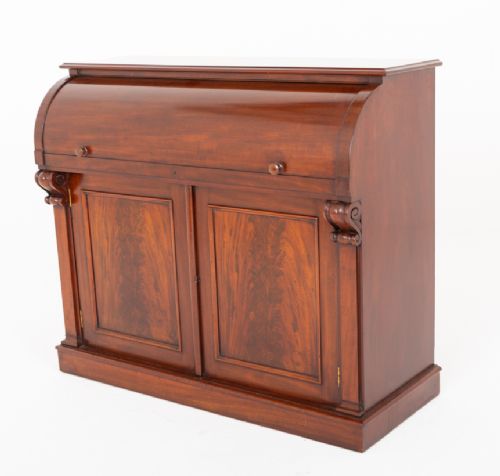
A cylinder roll top desk combines a curved shutter mechanism with a pull-out writing slide to enclose fitted compartments and drawers within a single architectural housing.
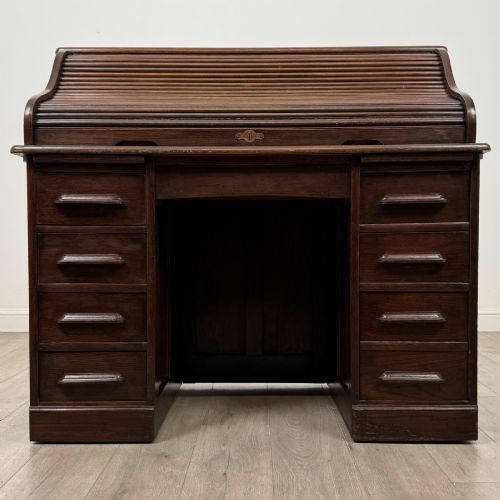
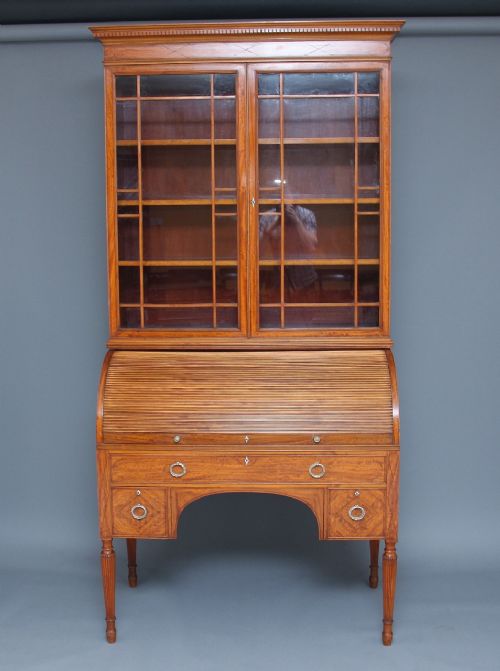
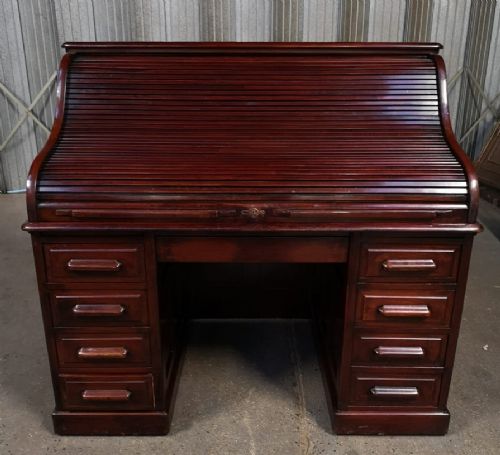
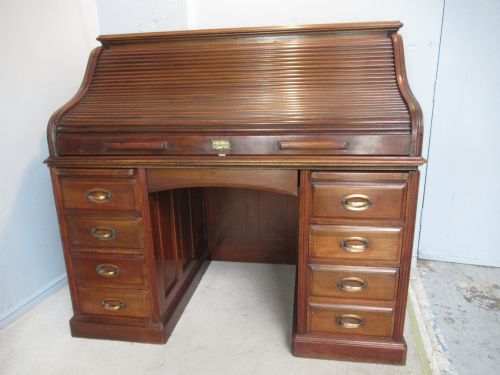
The cylinder roll top desk appears across eighteenth, nineteenth and early twentieth century periods, taking forms ranging from modest oak office pieces to grand satinwood and mahogany library pieces.
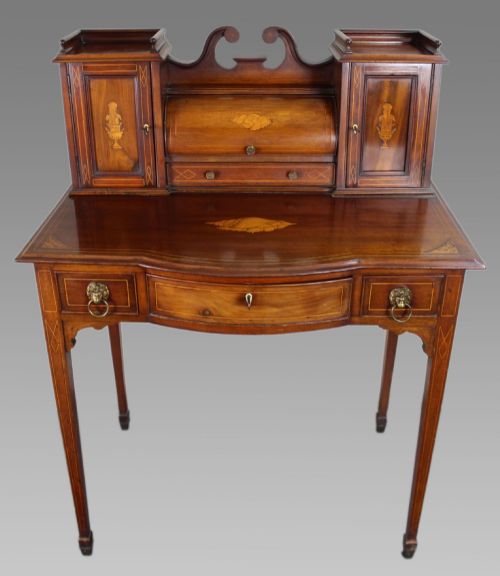
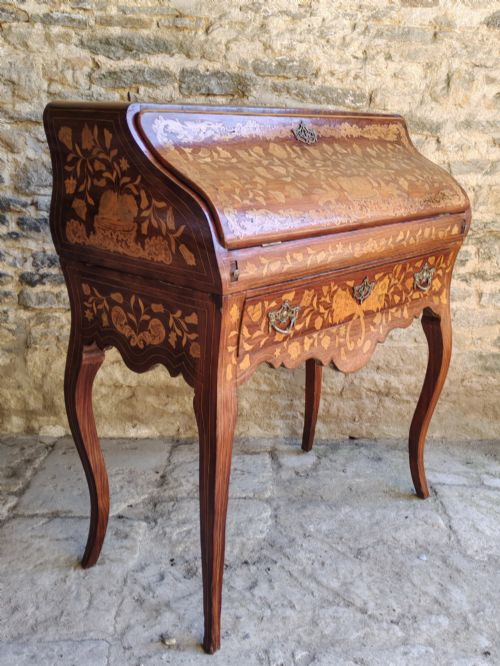
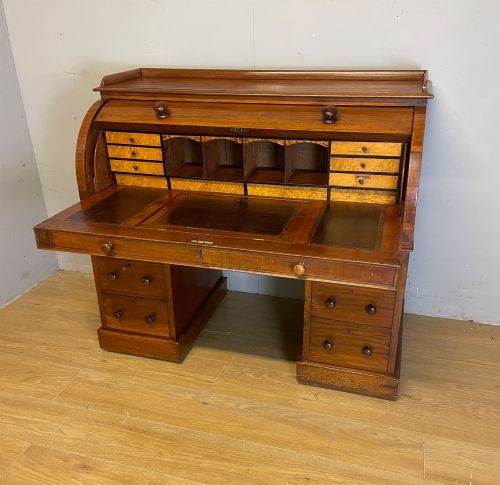
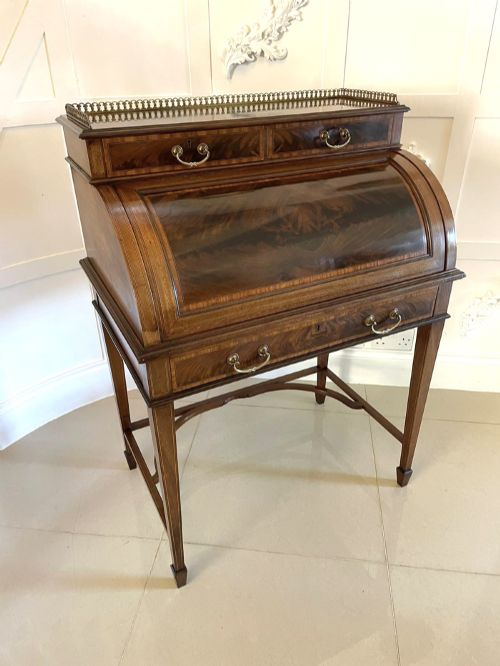
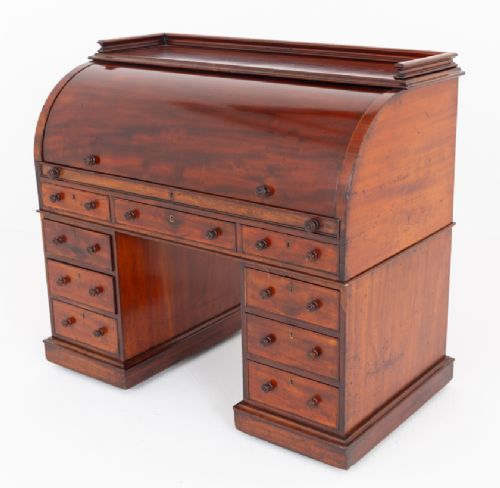
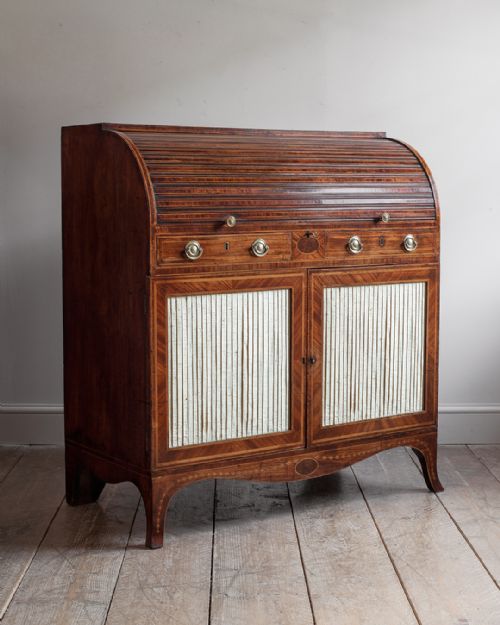
Buyers encounter variations spanning Georgian tambour fronts, Victorian pedestals and Edwardian inlaid ladies desks, reflecting shifts in domestic and commercial working habits.
Materials and Construction
Cabinetmakers constructed the curved roll tops using tambour slats or solid bent cylinders of mahogany, oak, walnut and satinwood, often pairing primary cabinet timbers with secondary structural woods.
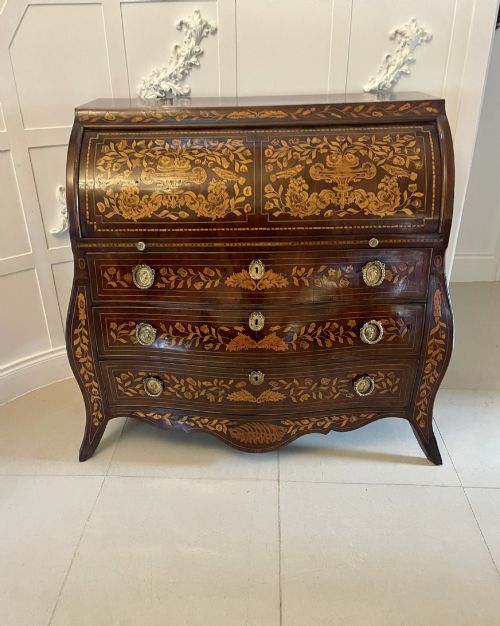
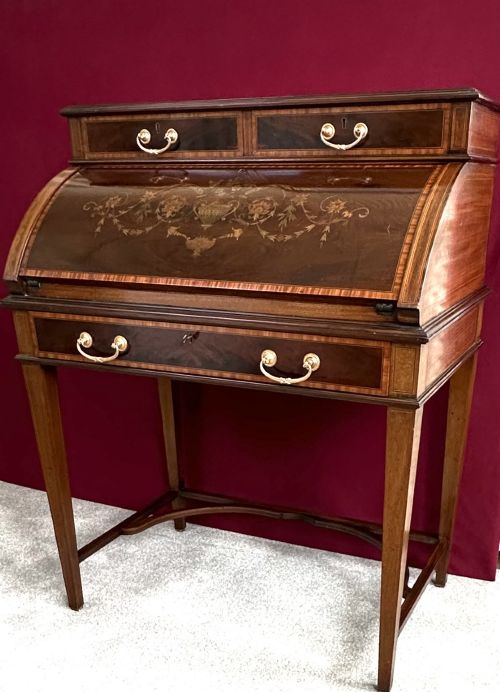
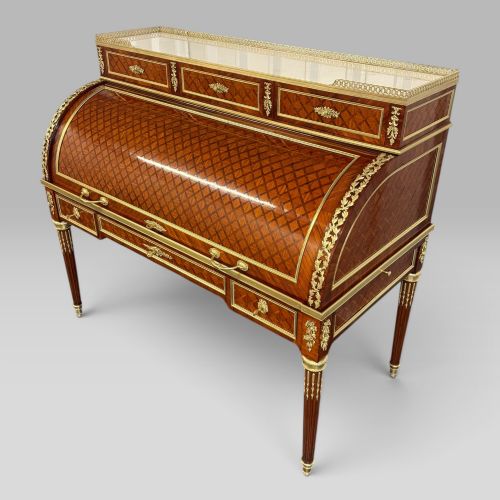
Makers embellished surfaces through floral marquetry, parquetry patterns and contrasting stringing, mounting the drawers and falls with brass handles, key escutcheons and occasional ormolu accents.
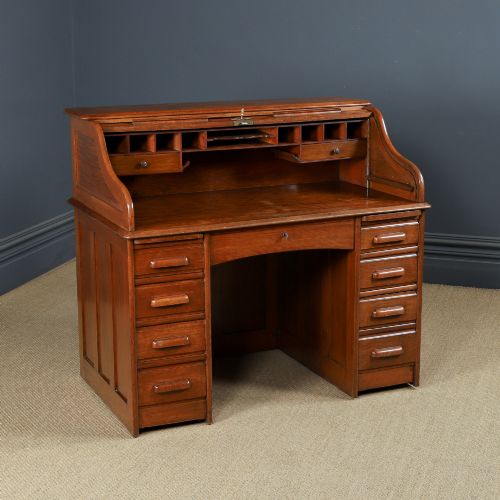
Internal partitions, pigeonholes and small drawers utilised fine dovetail joinery while supporting writing surfaces incorporated inset panels of leather or fabric.
Some nineteenth-century makers concealed ingenious secret spring-loaded drawers behind the stationery pigeonholes.
Design and Execution
Superior examples distinguish themselves through the smoothness of the curved mechanism and the precision with which internal pigeonholes and secret compartments align with the main housing.
The choice of timber grain, particularly figured mahogany, satinwood or rich walnut, dictates the visual harmony of the piece alongside the fineness of floral marquetry and inlay work.
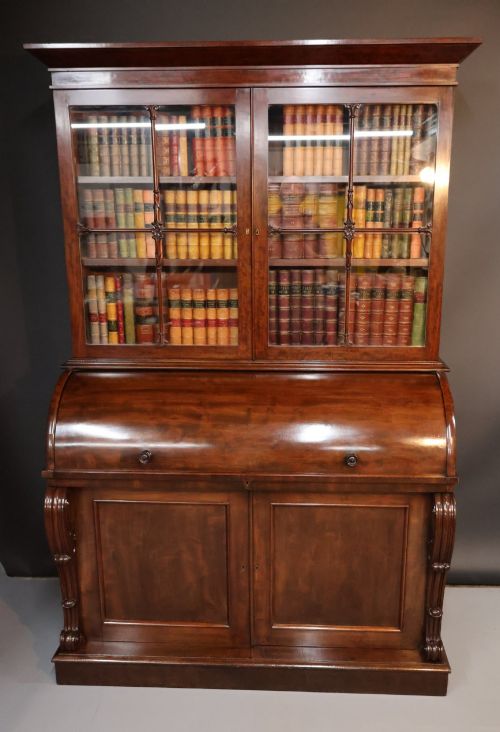
Maker attribution and documented origins elevate certain pedestals and cylinder bureau bookcases above standard commercial workshop production.
Edwards & Roberts·Maple & Co. London·Tudor & Burrey
The Cylinder Roll Top Desk Glossary
- Cylinder
- A rounded, quarter-circle wooden shutter that slides back in curved tracks to reveal the interior writing surface and pigeonholes.
- Tambour
- A flexible surface constructed from narrow vertical strips of wood glued to a canvas backing, allowing the top to glide around a curve.
- Marquetry
- Decorative patterns formed by fitting together thin veneers of different coloured woods and materials into a prepared background.
- Secretaire
- A desk or cabinet containing a fitted writing drawer or a drop-front writing surface.
- Pedestal desk
- A heavy freestanding writing table supported on two banks of drawers rather than four separate legs.
Cylinder Roll Top Desk: Frequently Asked Questions
How do cylinder desks work?
The curved wooden cylinder runs in concealed side grooves, sliding smoothly backward into the body of the desk when pulled.
Opening the roll top simultaneously draws forward the internal writing slide to provide a convenient kneehole or surface.
Where were they used?
These pieces served as private writing desks in grand libraries, drawing rooms and private studies during the eighteenth and nineteenth centuries.
Later Edwardian versions adapted the form for domestic correspondence and early twentieth-century home administration.
How do I identify periods?
Georgian and Regency versions typically display fine mahogany, subtle stringing and balanced proportions associated with cabinetmaker workshops.
Victorian and Edwardian iterations often feature heavier proportions, oak construction or extensive marquetry and satinwood contrast.
Can I use one daily?
The internal compartments and pull-out slides accommodate modern writing implements, stationery and laptop computers while concealing work when closed.
Placing the desk away from direct heat sources helps preserve the movement of the wooden cylinder shutter.