



Cut Glass Wine Stems
Cut glass wine stems are drinking vessels shaped by wheel and hand, prized for how deeply their facets catch the light on a dining table.
Cut Glass Wine Stems
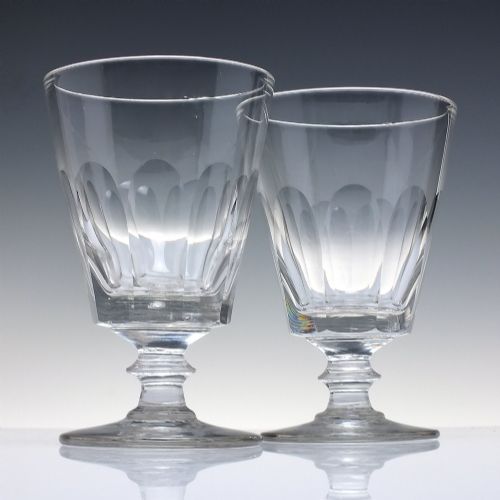
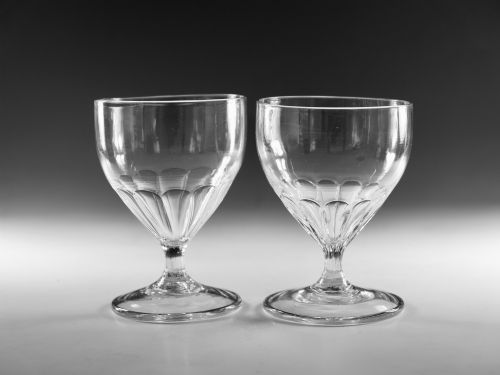
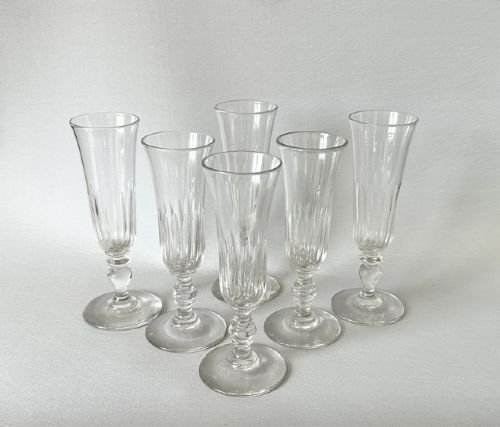
When you search for cut glass wine stems, you encounter vessels that span the eighteenth and nineteenth centuries, taking the form of wine glasses, rummers, cordials, and champagne flutes. The inventory relies heavily on Georgian and Victorian English examples alongside continental European pieces.
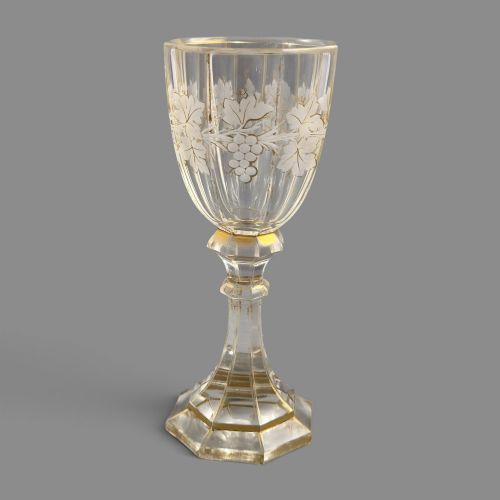
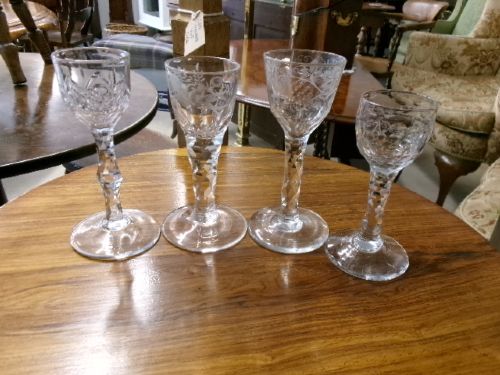
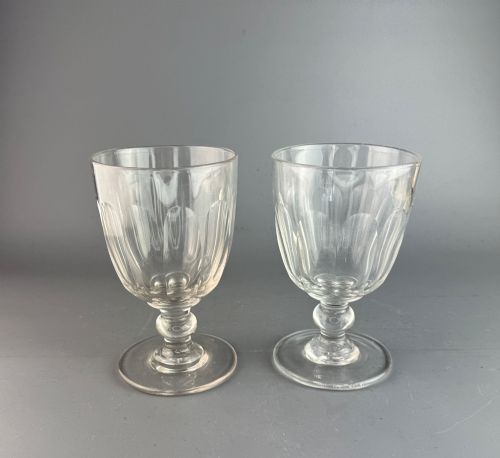
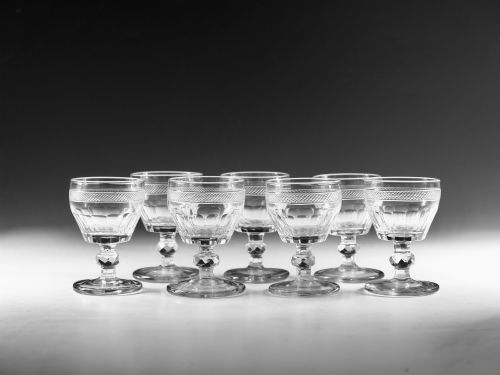
You meet heavy lead glass rummers, delicate facet-stemmed drinking glasses, and coloured glass vessels originating from Bohemia and Vienna. These pieces range from single goblets to matched sets suitable for formal service.
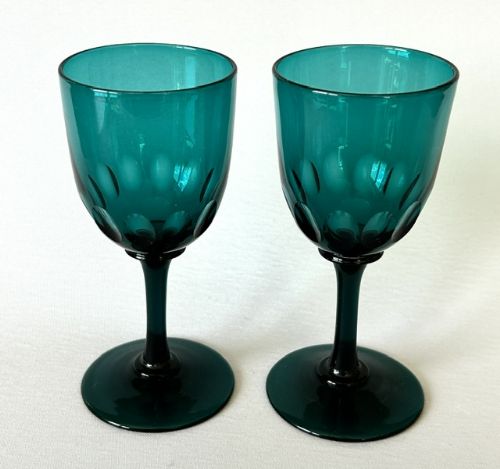
The domestic and celebratory drinking customs of past centuries generated these particular forms, from small port glasses to large decorated goblets. English and continental workshops produced them in clear lead crystal, flint glass, and vibrant shades of green and cranberry.
Judging quality and execution
Quality rests in the crispness of the wheel-cut facets and the optical purity of the metal itself. Superior examples display sharp, clean edges to every cut and lack the grey streaks or cloudiness found in lesser material.
Proportion and balance distinguish finer stems, where the weight of the foot supports the heavy bowl without tipping. The depth of engraving and the deliberate placement of facets demonstrate the maker's skill and control over the medium.
The listings span the Georgian, Victorian, Biedermeier, and Vienna Secession periods, executed in lead crystal, flint glass, and coloured glass.
Moser·Meyr’s Neffe·Otto Prutscher
The Cut Glass Wine Stems Glossary
- Facet stem
- A stem shaped with multiple flat planes ground into the glass by a wheel, common in eighteenth-century English drinking vessels. This technique creates geometric patterns that refract light from every angle.
- Rummer
- A large, sturdy drinking glass introduced in the eighteenth century, typically featuring a short stem and a capacious bowl. These pieces served heavy wines, beer, and punch.
- Flint glass
- An early British term for high-quality clear glass containing lead oxide, noted for its brilliance and weight. It provided the ideal medium for deep decorative cutting.
- Baluster stem
- A thick, swelling stem form reminiscent of architectural balusters, seen frequently on mid-nineteenth-century rummers and heavy goblets. This profile adds substantial weight to the lower half of the vessel.
- Gilding
- The application of gold leaf or gold paint to the rim, foot, or engraved details of a glass vessel. It appeared frequently on continental and high-end Victorian presentation pieces.
Cut Glass Wine Stems: Frequently Asked Questions
What is a rummer?
A rummer is a heavy, robust drinking glass featuring a short stem, a wide foot, and a capacious bowl designed for everyday table use in the eighteenth and nineteenth centuries.
These versatile vessels handled ales, ciders, and strong wines during communal meals and evening gatherings.
How do I date a facet stem?
Facet stems appearing on English drinking glasses typically date from the mid-eighteenth to the early nineteenth century. The sharpness of the cutting and the composition of the metal help determine the period.
Earlier examples often display longer, narrower stems with precise diamond or hexagonal faceting before styles shifted toward heavier proportions.
Are coloured wine glasses antique?
Many coloured wine glasses originate from the Victorian period and continental European centres such as Bohemia and Biedermeier workshops. Colours including green, cranberry, and aqua green gained popularity during the nineteenth century.
These pieces were produced using metallic oxides added to the molten glass batch prior to blowing and cutting.
Can I use antique wine stems?
These historical drinking vessels are robust enough for occasional modern use if handled with care. Hand washing in warm water preserves the lead glass and prevents thermal shock.
Many collectors prefer to display them or reserve them for special toasts to protect the fragile rims and historical surfaces.