



Victorian Cut Glass Stemware
Victorian cut glass stemware brings heavy lead crystal and brilliant optical facets to the dining table, offering weight and sparkle that collectors prize.
Victorian Cut Glass Stemware
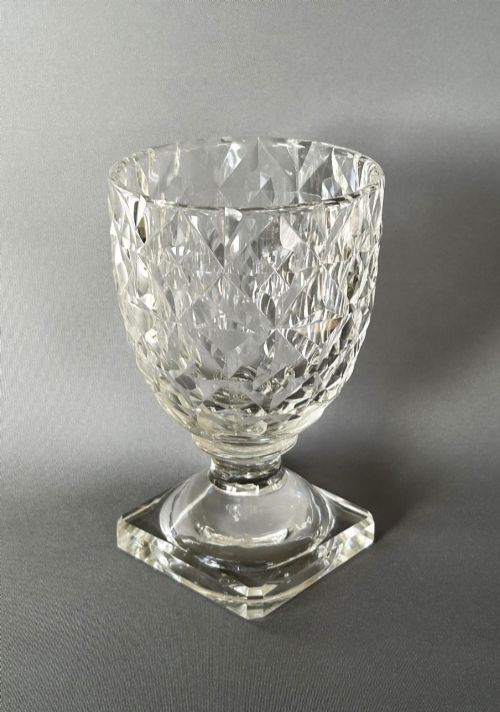
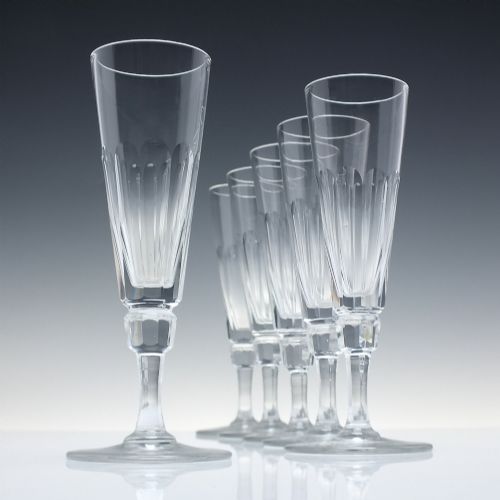
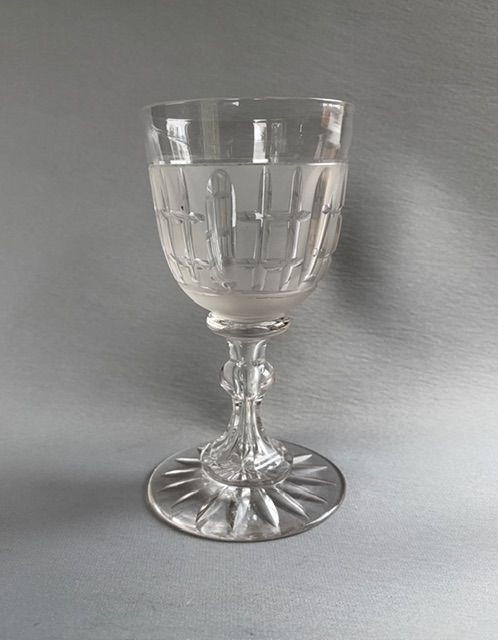
Victorian cut glass stemware comprises wine glasses, champagne coupes, flutes, and goblets originating primarily from the nineteenth century. These drinking vessels combine heavy lead crystal or clear glass with deep mechanical cutting or hand engraving along the bowls and stems.
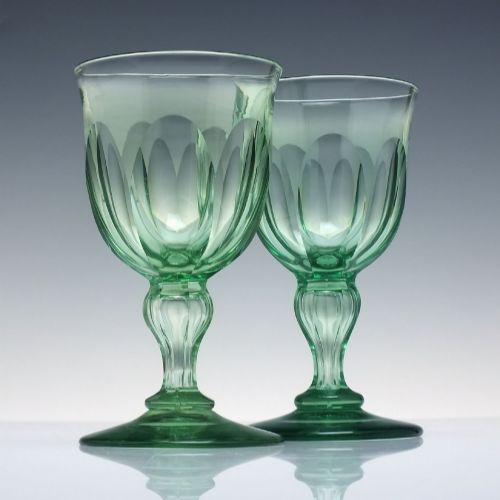
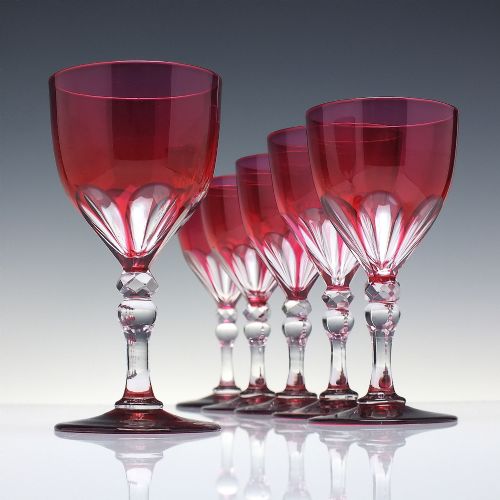
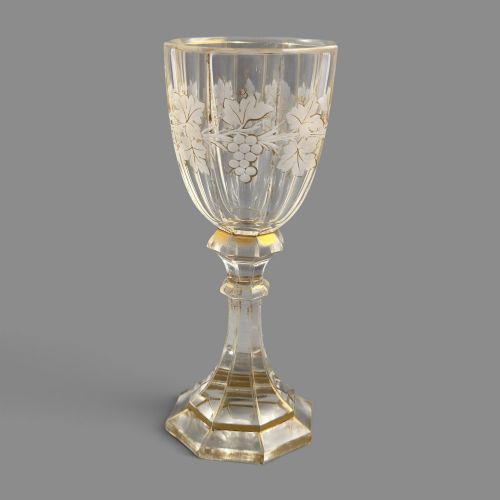
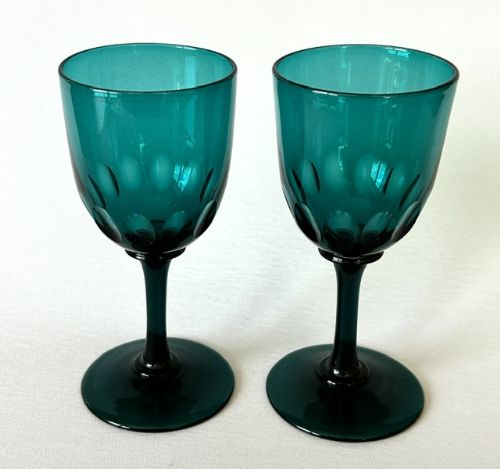
Buyers encountering this group will frequently find matching sets of wine glasses and champagne coupes alongside individual goblets. The designs span simple facet cuts to elaborate cranberry and green overlay bowls embellished with gilding or floral motifs.
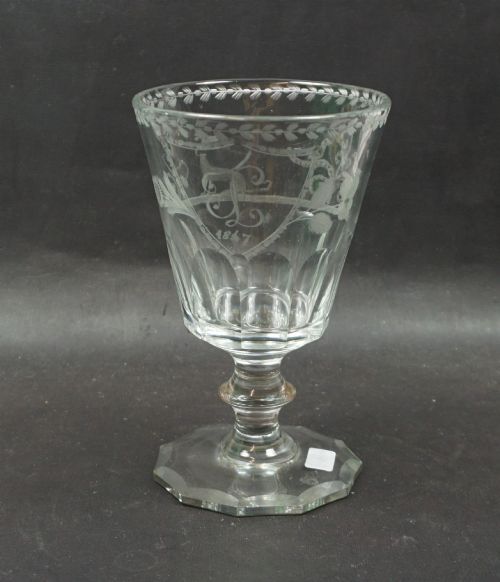
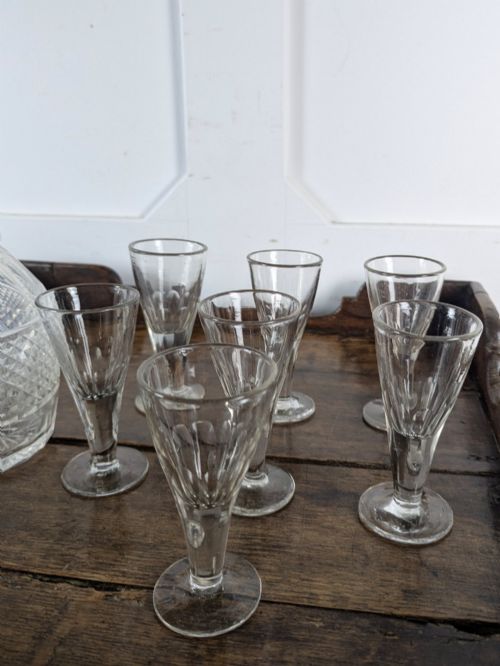
Origins represented in these items include English production alongside continental examples such as Bohemian Biedermeier pieces. Forms range from modest thumb-cut sherry flutes to large engraved dessert wine glasses.
Materials and production techniques
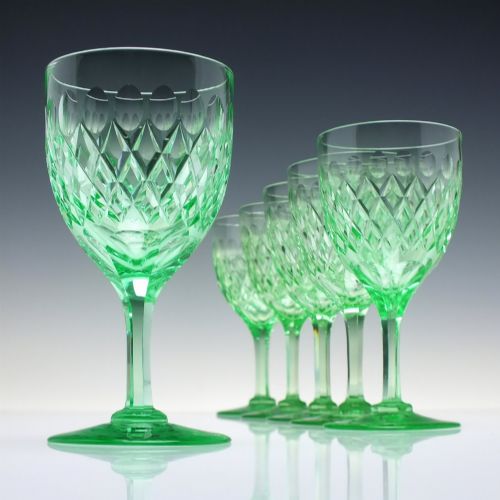
These pieces rely heavily on lead crystal and clear glass, frequently manipulated through hot-forming and subsequent cold-working with rotating stone and metal wheels. Glassmakers also utilised coloured layers, including cranberry and vaseline glass, allowing artisans to cut back the outer hue to reveal the clear crystal beneath.
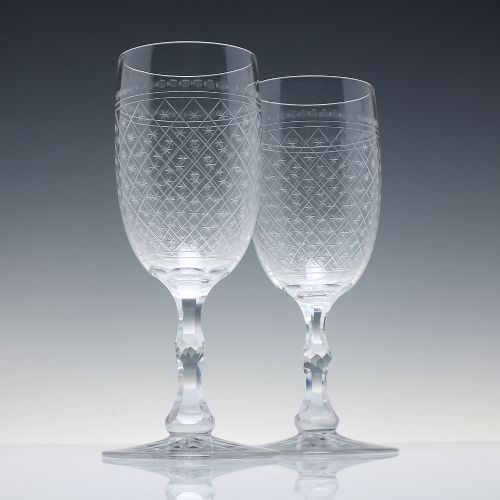
Decoration involved intaglio engraving, acid etching, and surface gilding applied to create contrasting textures against the polished facets. The stems were often formed with multi-faceted surfaces to catch the candlelight during nineteenth-century dining.
Victorian Cut Glass Stemware Retail Price Guide 2026
Typical asking prices for victorian cut glass stemware among the pieces listed under this phrase on Sellingantiques today, from the lower quarter to the upper quarter. They describe what is for sale here now, not the wider market.
Victorian diners admired vaseline glass wine glasses that glow under ultraviolet light due to their uranium content.
Assessing quality in cut glass
Quality rests upon the crispness of the wheel-cut facets and the clarity of the underlying metal. Superior examples exhibit sharp, clean edges to the geometric cuts without rounded shoulders, alongside a resonant ring when the bowl is gently struck.
The depth and control of the engraving or overlay work further distinguish finer work, where botanical motifs like convolvulus are rendered with botanical precision rather than generic scratching. Heavy lead content provides the substantial weight expected in the top tier of nineteenth-century table glass.
Moser Bohemian·Stevens & Williams
The Victorian Cut Glass Stemware Glossary
- Lead crystal
- Glass containing a significant proportion of lead oxide, which increases density, refractive index, and the clarity of the material.
- Thumb-cut
- A decorative pattern consisting of shallow, concave ovoid depressions resembling a thumbprint, often found encircling the lower bowl or stem.
- Cranberry glass
- Transparent red glass coloured using gold chloride, highly popular for Victorian tablewares and decorative pieces.
- Intaglio
- A technique where the design is sunk below the surface of the glass by wheel-engraving, creating a frosted recessed motif.
- Champagne coupe
- A shallow, broad-bowled stemmed glass traditionally used for sparkling wines during the nineteenth century.
Victorian Cut Glass Stemware: Frequently Asked Questions
Can I use Victorian stemware for daily dining?
These historical glasses require careful handling and must be washed by hand in lukewarm water rather than placed in a modern dishwasher. The delicate rims and historical lead crystal are susceptible to thermal shock and chipping.
Storing them securely away from heavy knocks preserves the cut facets and any delicate gilding for future use on special occasions.
How do I distinguish 19th-century crystal from later reproductions?
Examine the base of the stem for a polished pontil mark or subtle wear consistent with decades of gentle friction on wooden tables. Nineteenth-century pieces frequently display slight irregularities in the hand-cut facets that machine-made replicas lack.
The weight of the lead crystal and the specific tone of the glass under daylight also offer strong indicators of period manufacture.
Why do some wine glasses feature coloured glass overlays?
Coloured overlays involve casing a clear lead crystal body in a thin layer of coloured glass, such as cranberry or green. Artisans then cut through the exterior coloured stratum to expose the clear crystal underneath, producing high-contrast patterns.
This demanding technique was favoured by Victorian and Biedermeier glasshouses to add visual richness to formal dessert services.
How should I store large sets of antique stemware?
Store the glasses upright on sturdy shelving with adequate space between each piece to prevent rim collisions. Avoid stacking them vertically, as the delicate bowls and stems cannot support the weight of another glass.
Using a dedicated cabinet with glass doors protects the crystal from dust accumulation while allowing the cut facets to catch the ambient light.