
Cut Glass Spirit Glass
These cut glass spirit glass pieces range from Georgian dram glasses to Edwardian decanters, prized for their weight and clarity.
Cut Glass Spirit Glass
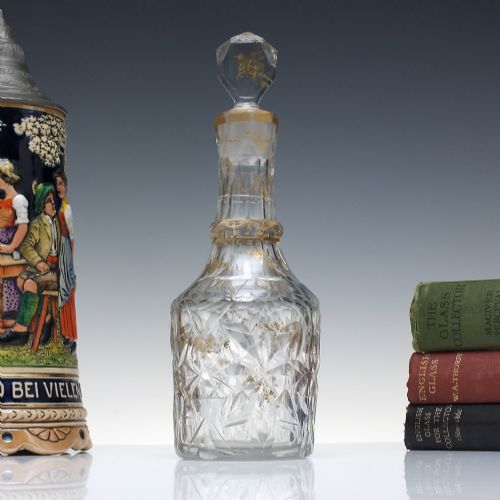
When searching for a cut glass spirit glass, buyers encounter a variety of drinking vessels, decanters, and tantalus sets spanning the Georgian, Victorian, and Edwardian eras. The selection on this page leans heavily toward nineteenth-century decanters, tumblers, and dram glasses shaped from heavy lead crystal.
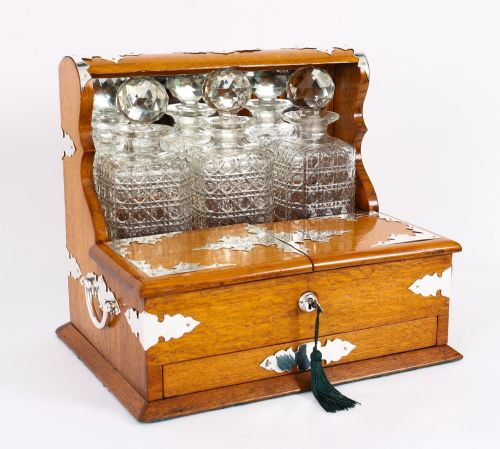
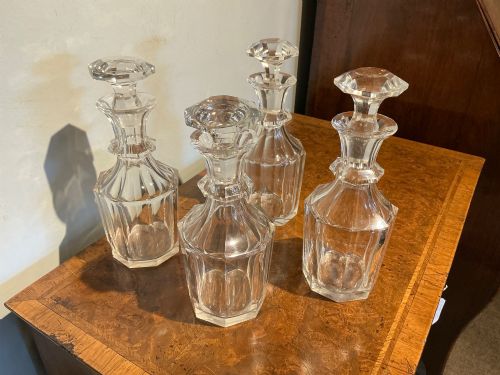
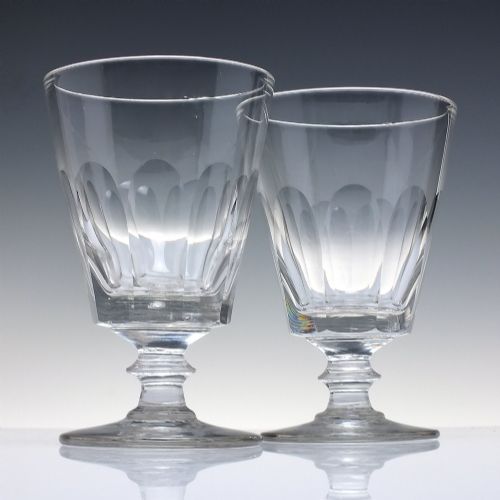
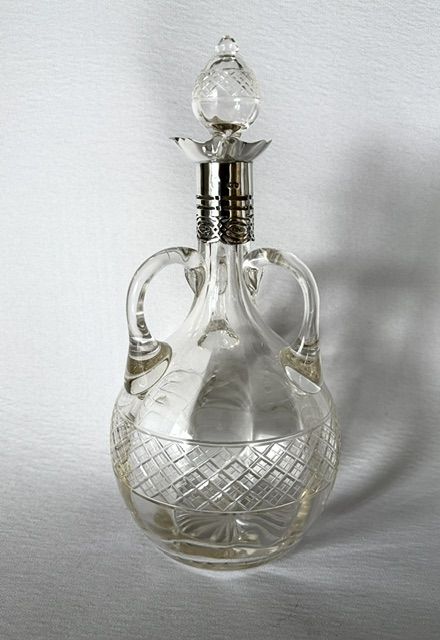
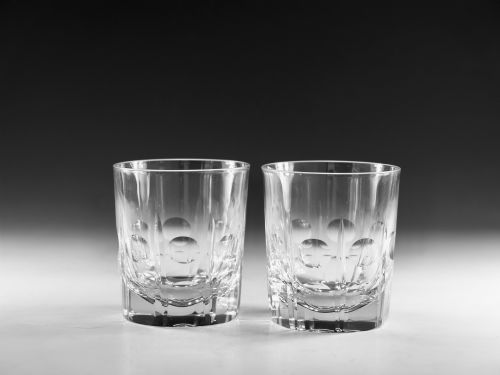
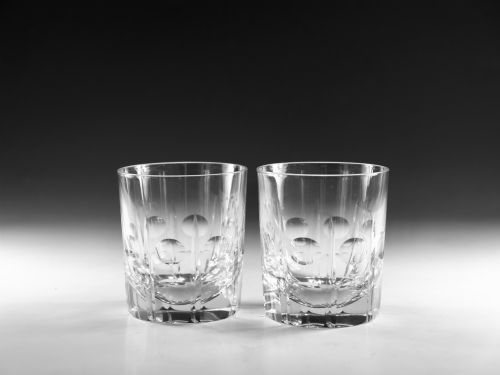
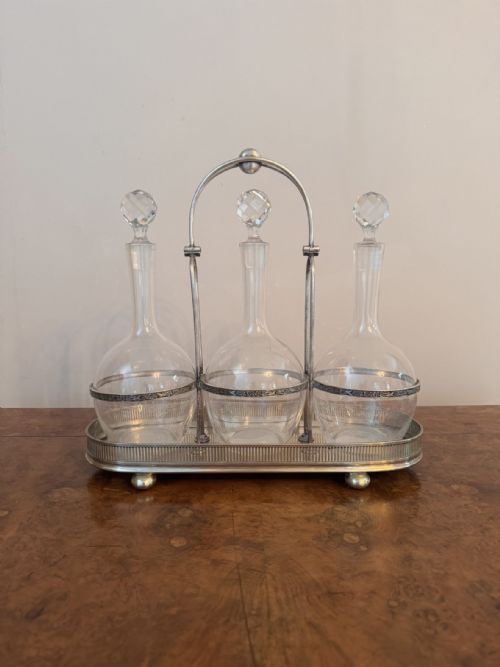
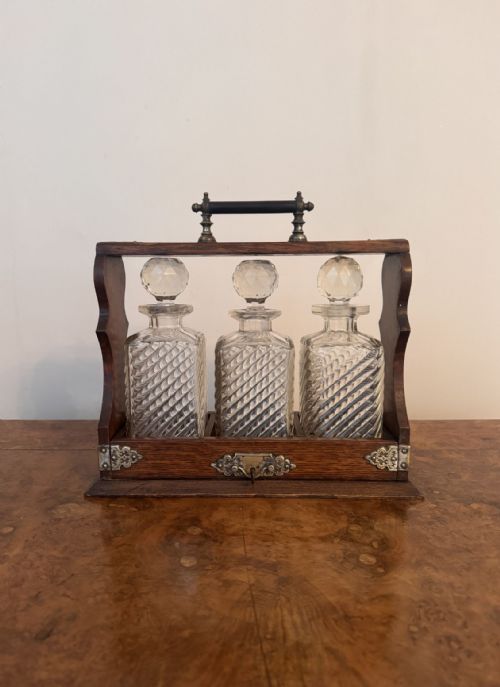
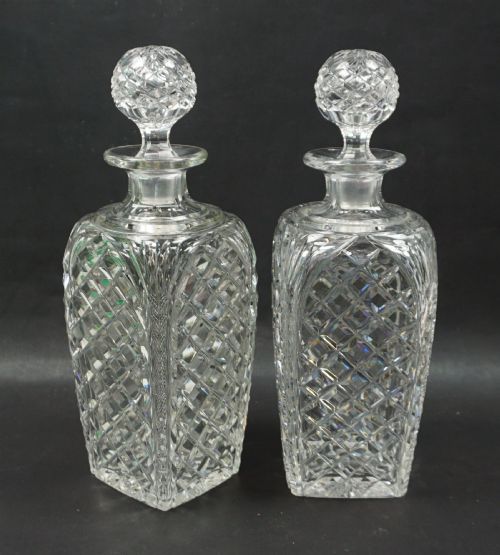
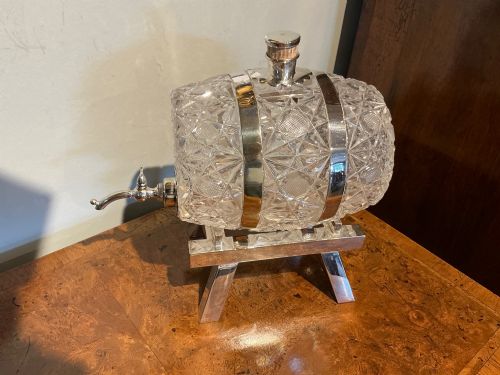
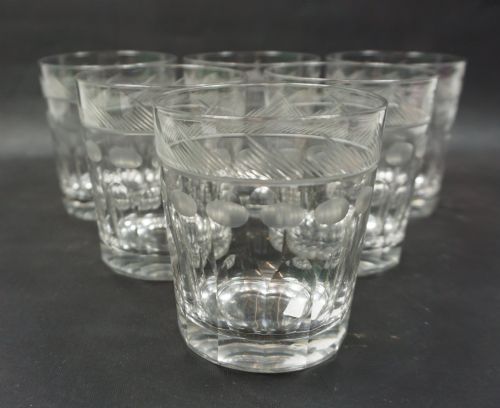
Forms include square section tapered decanters, ships decanters, spirit barrels, and smaller whiskey tumblers designed for neat spirits. Makers often paired these glass vessels with silver collars, mounts, or fitted oak and mahogany tantalus frames.
Materials and technique
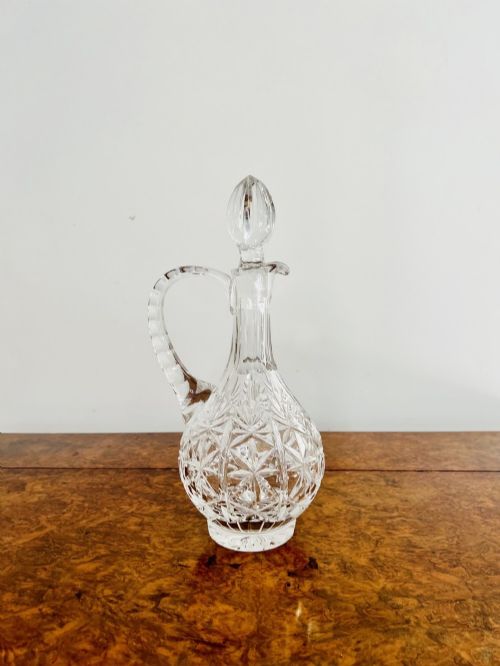
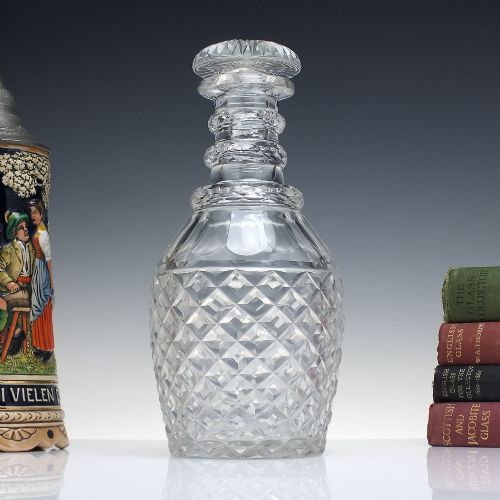
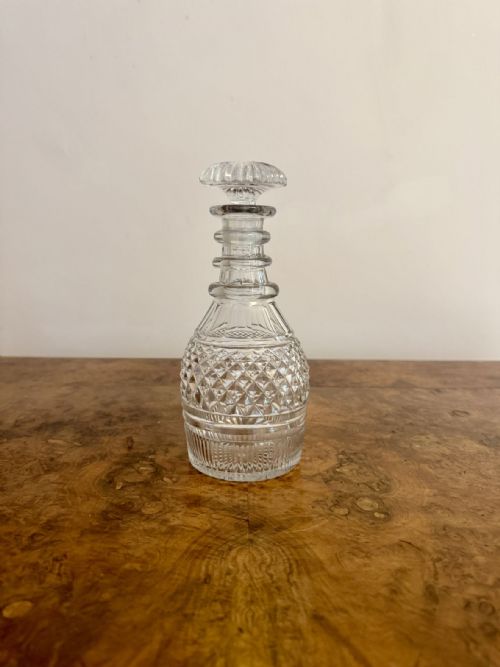
The objects combine heavy lead crystal or cut glass with mounts of sterling silver, silver plate, brass, and woods such as oak, satinwood, and coromandel. Artisans shaped the vessels using wheel-cutting techniques to create deep facets, hobnail patterns, and prismatic designs.
Precious metal elements frequently feature hallmarks from assay offices like Birmingham and London, alongside maker marks, while glass bodies range from clear crystal to coloured bohemian overlays.
Listings feature lead crystal vessels spanning the Georgian, Victorian, and Edwardian periods, mounted in oak, mahogany, and sterling silver.
Evaluating quality
Quality rests in the crispness of the wheel-cut facets and the weight of the lead crystal, which gives the vessel a dense, resonant feel. Superior pieces display precise symmetry in their geometric patterns and clear, unclouded glass surfaces.
The integration of secondary materials also dictates the tier of the piece, where fully hallmarked sterling silver collars, intact original stoppers, and solid timber tantalus frames distinguish finer examples from simpler glassware.
James Giles·Charles James Fox·Finnigans of Bond Street
The Cut Glass Spirit Glass Glossary
- Tantalus
- A locked wooden cabinet holding decanters to prevent unauthorized access to the spirits within. These frames typically feature sterling silver or plated locking bars and often incorporate games compendiums.
- Hobnail cut
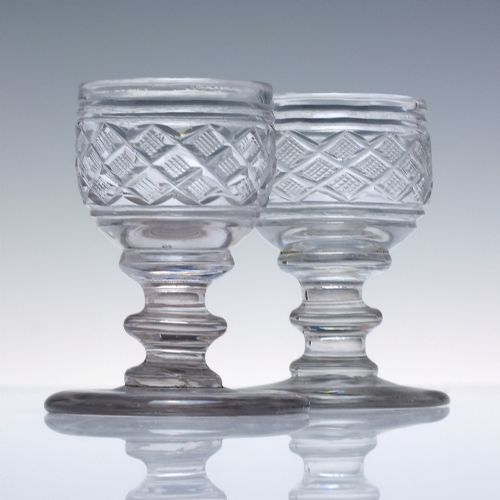
- A raised, multi-faceted diamond pattern carved into the surface of the glass. This heavy texturing provides a secure grip on spirit decanters and personal flasks.
- Dram glass
- A small historical drinking vessel intended for a single measure of spirits. Georgian and Victorian examples often feature thick bases and simple cut decoration.
- Ships decanter
- A spirit vessel with a wide flat base and conical body designed to prevent tipping at sea. The broad base keeps the decanter stable on rolling dining tables.
- Prism cut
- Linear facets ground into the neck or body of a glass vessel to refract light. This technique was widely utilised on Regency and Georgian decanters.
Cut Glass Spirit Glass: Frequently Asked Questions
How do I date an old decanter?
Dating relies on examining the shape, the depth of the pontil mark on the base, and any accompanying silver hallmarks. Georgian and Regency pieces often feature distinct hand-polished pontils and heavier lead content.
Later Victorian and Edwardian examples frequently incorporate machine stamping, silver plate, or factory assay marks that narrow down the exact year of production.
Are old decanters safe for modern spirits?
Most antique cut glass vessels use lead crystal, which can leach lead into liquids if left stored for long periods. Using them for serving during a single evening poses minimal risk.
Collectors generally avoid storing whiskey or spirits in antique decanters permanently, preferring to use them for display or occasional hosting.
What is the difference between crystal and glass?
Lead crystal contains a percentage of lead oxide, which increases the weight, brilliance, and refractive index of the material. Standard glass lacks this metallic oxide content and feels lighter.
When tapped, genuine lead crystal produces a clear, resonant ring rather than a dull thud.
Why do some decanters have matching stoppers?
Original stoppers were ground by hand to fit the specific neck of each decanter during production. Finding a matched pair ensures the airtight seal remains intact and preserves the historical integrity of the piece.
Replacement stoppers often show slight grinding discrepancies or colour variations under close inspection.