


Cut Glass Pedestal Dish
A cut glass pedestal dish brings heavy, light-catching sparkle to a table, and these pieces span simple fruit bowls to grand centrepieces.
Cut Glass Pedestal Dish
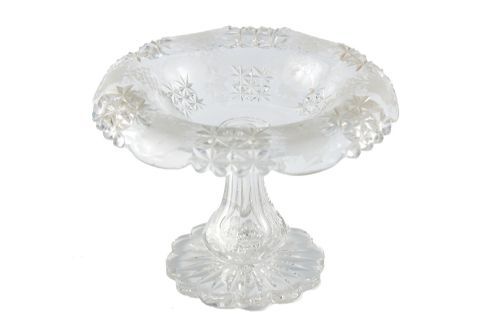
A cut glass pedestal dish serves as an elevated vessel for fruit, sweetmeats or table decoration, drawing the eye with brilliant facets and heavy proportions. When you search for a cut glass pedestal dish, you encounter forms ranging from low tazzas and fruit bowls to grand table centrepieces and covered sweet jars. These items appear across the eighteenth century, Georgian and Victorian eras, extending into Edwardian and later twentieth-century production.
The pieces on this page lean heavily toward Victorian and Georgian examples, alongside Edwardian fruit bowls and late nineteenth-century centrepieces. You will find Irish turnover bowls, etched lead crystal tazzas, and items mounted in gilt bronze or Dutch silver. Their origins span English and Irish workshops, showcasing traditional cutting techniques intended for display or dining.
How they were made
These items rely on heavy lead crystal and cut glass, shaped by blowing into moulds or free-blowing before artisans applied deep wheel-cut facets. The glass often incorporates cased layers, seen in examples like yellow over crystal, which allowed cutters to carve through a coloured exterior to reveal clear glass beneath.
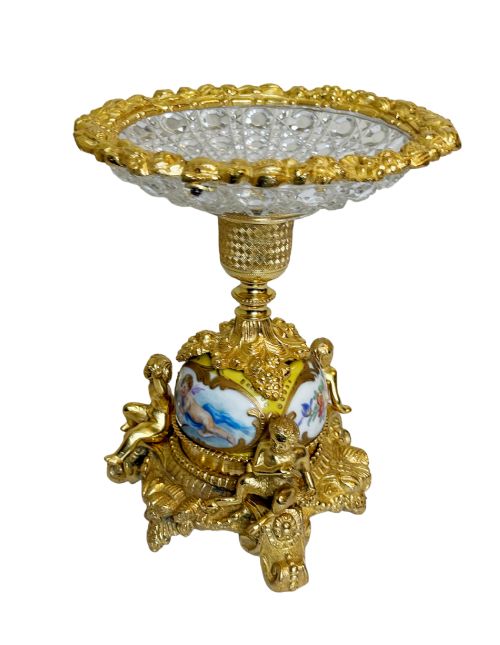
Some elaborate forms combine glass vessels with cast metal mounts, integrating gilt bronze or Dutch silver fittings around the rims and bases. This multi-material construction required precise metalwork to secure the heavy crystal bowls and stands without damaging the fragile edges.
Some nineteenth-century sweetmeat jars were designed with lids so tight they whisper when you lift them.
What varies in quality
The sharpness and depth of the wheel-cut facets dictate much of the visual impact, separating crisp, hand-cut geometric patterns from softer, shallower moulding. Superior weight and clarity in the crystal body also elevate a piece, alongside the brilliance of the metal mounts when bronze or silver is present.
Proportion and stability matter significantly in pedestal forms, where a heavy top must balance securely on its stem and foot. Finer examples display harmonious scaling between the bowl and the base, whereas lesser items can appear clumsy or heavy-handed in their assembly.
The Cut Glass Pedestal Dish Glossary
- Tazza
- A shallow bowl or dish raised on a high foot or pedestal. These pieces were traditionally used for serving fruit or sweetmeats at the end of a meal.
- Sweetmeat
- A small confection such as candied fruit, nuts or dried sweet paste. Jars and bowls made for these treats often include fitted covers.
- Lead crystal
- Glass containing metallic lead oxide, which increases the weight, refractive index and brilliance of the material. This composition allows for deeper and sharper cutting.
- Cased glass
- A vessel made of two or more distinct layers of glass of different colours. Cutters grind away the outer layer to expose the contrasting colour underneath.
- Turnover bowl
- A large bowl with a rim folded or flared outward during manufacture. Irish examples from the eighteenth century are particularly noted for this form.
Cut Glass Pedestal Dish: Frequently Asked Questions
What is a cut glass pedestal dish used for?
These elevated vessels were traditionally utilised to serve fruit, sweetmeats or small confections during formal dining. Their height and reflective facets also made them popular as decorative centrepieces on sideboards and dining tables.
Over time, many of these dishes transitioned into purely decorative objects. Their heavy crystal construction allows them to catch light effectively when placed near windows or on display surfaces.
How do I date a cut glass dish?
Dating relies on examining the weight of the glass, the style of the cutting, and the form of the pedestal or foot. Georgian and eighteenth-century pieces often exhibit deeper, hand-polished facets and slightly irregular pontil marks on the base.
Victorian and later items tend to feature more uniform machine polishing and heavier lead crystal content. Associated metal mounts, such as gilt bronze or Dutch silver, also provide stylistic clues aligned with nineteenth-century revival periods.
Are Irish cut glass bowls different from English ones?
Irish glass from the late eighteenth and nineteenth centuries is frequently distinguished by a dark, heavy metal with a distinct blueish or greyish tint. The cutting on traditional Irish crystal tends to be deep, bold, and exceptionally sharp.
While English workshops produced similar forms, Irish pieces often command specific attention for their material density and distinctive turnover or pedestal shapes. Many pieces attribute their origin to prominent Irish houses like Waterford.