






Curved Leg Side Table
A curved leg side table brings fluid movement and compact utility to a room, appearing across styles from Art Deco walnut to 18th century Italian walnut.
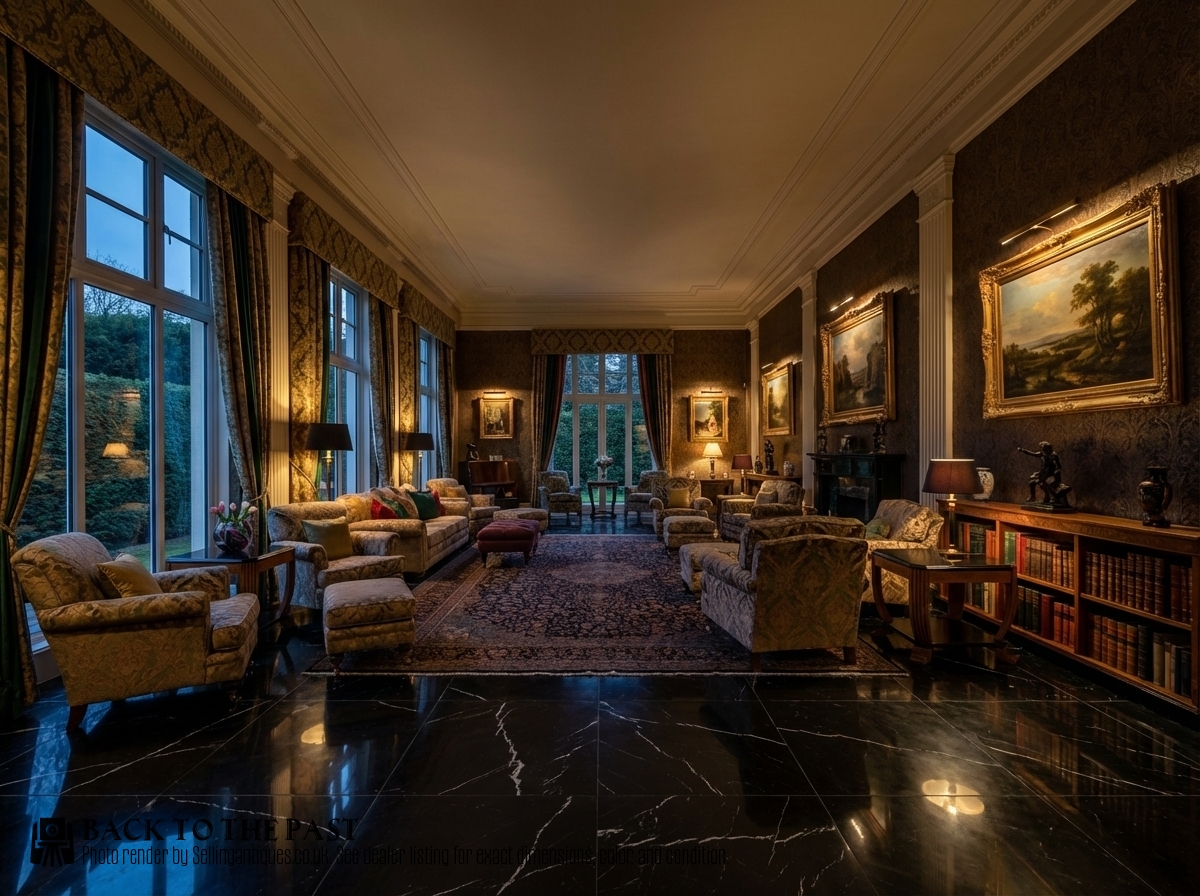
Curved Leg Side Table
When searching for a curved leg side table, you encounter a diverse group of compact furniture designed for smaller spaces, hallways and bedside placement. The selections span console tables, occasional tables, coffee tables, writing tables and bedside tables.
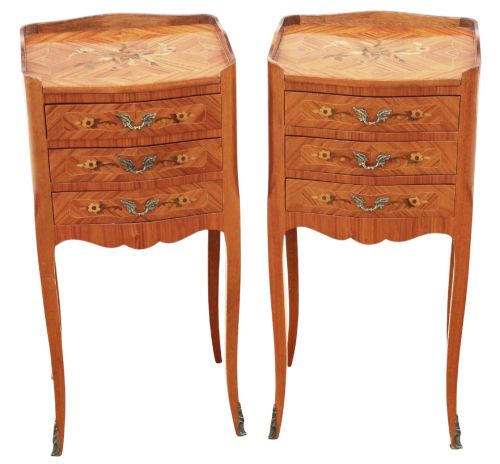
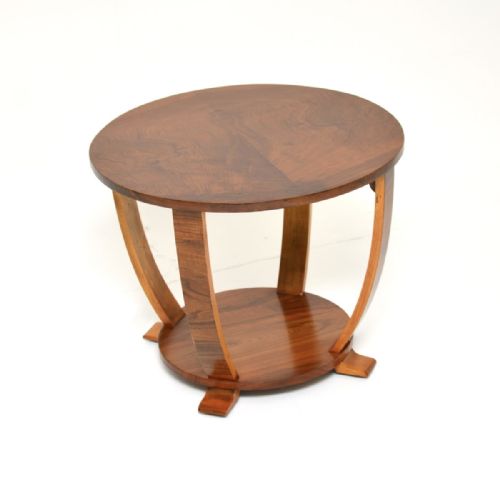
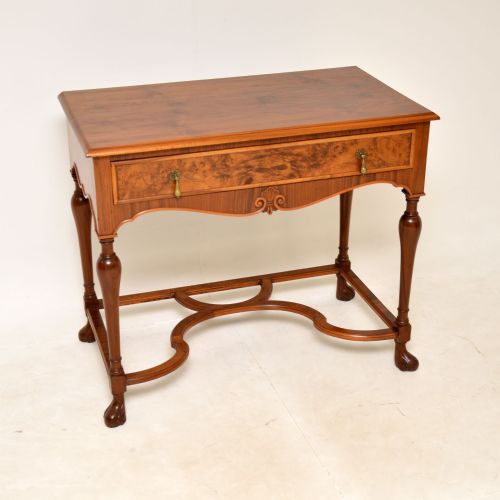
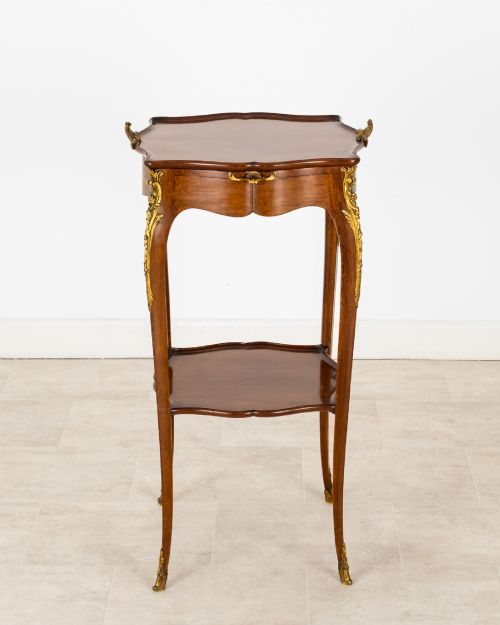
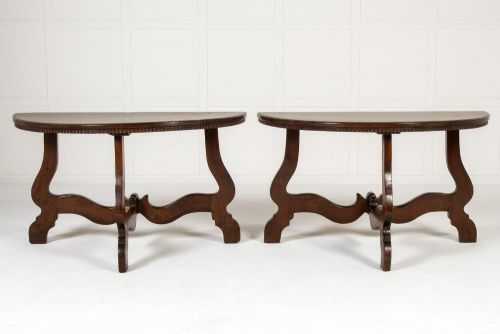
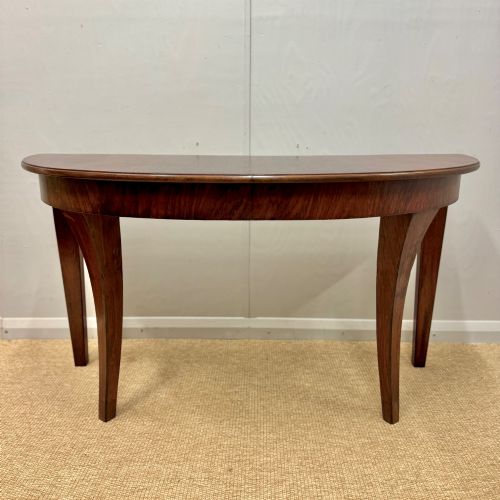
The pieces originating on this page bridge multiple centuries and design movements, from 18th century Italian walnut demi lune console tables to 1930s Art Deco burr walnut designs. You meet pieces shaped with cabriole legs, concave supports and serpentine forms.
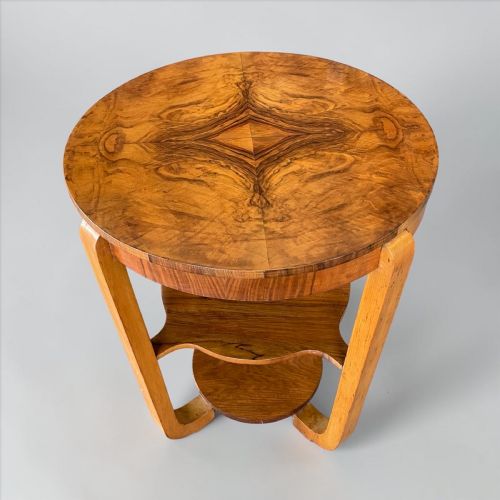
Makers and workshops utilised various formats, including triangular bentwood, kidney shapes and three tier occasional tables. The overarching feature remains the sweeping curve of the structural support, whether carved from solid timber or bent with steam.
How they were made
Cabinetmakers constructed these tables primarily in hardwoods like mahogany, walnut, oak, satinwood and rosewood, frequently applying burr walnut and walnut veneers to create rich grain patterns on top surfaces. Marquetry inlay, ormolu mounts and brass detailing appear on specific French and English pieces to accent the timber.
Techniques varied from traditional joinery and hand carving on 18th and 19th century consoles to steam bending used in pieces like Thonet bentwood card tables. Marble inserts also provide durable tops on select early 20th century console tables, complementing iron and brass frameworks.
Curved Leg Side Table Retail Price Guide 2026
Typical asking prices for curved leg side table among the pieces listed under this phrase on Sellingantiques today, from the lower quarter to the upper quarter. They describe what is for sale here now, not the wider market.
Periods represented on the site range from 18th century Georgian pieces through Victorian, Edwardian, and Art Deco eras.
What varies in quality
Quality in these tables rests upon the selection of timber figures, such as matched burr walnut or flamed mahogany veneers, alongside the crispness of hand-carved or moulded curves. Superior examples demonstrate balanced proportions between the curved support and the tabletop, whether finished with marquetry or polished brass mounts.
Construction integrity distinguishes standard production from exhibition or attribution pieces, visible in the precision of joints, the stability of the legs, and the retention of original brass or ormolu hardware without replacement.
Hille·François Linke·Thonet
The Curved Leg Side Table Glossary
- Demi lune
- A half moon shape used for tables designed to sit flush against a wall. These console tables frequently feature curved legs and veneered tops.
- Ormolu
- Gilded bronze ornamentation applied to furniture mounts. This technique was favoured by French makers to decorate mahogany and walnut surfaces.
- Marquetry
- The art of applying pieces of veneer to a structure to form decorative patterns. It appears on French bedside tables and cabinet work.
- Cabriole
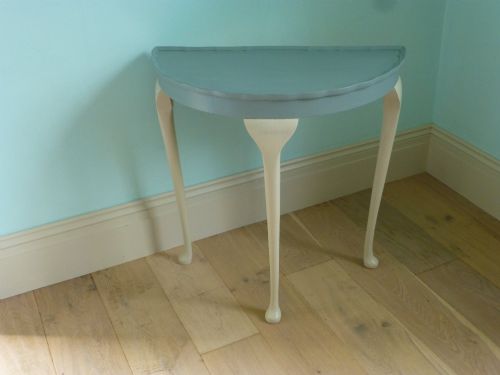
- A furniture leg that bends outward and then tapers inward, mimicking an animal's leg. This shape defines many antique side and console tables.
- Bentwood
- Wood made pliable by steam and bent into curved forms. This technique produced light, durable frames for occasional and card tables.
Curved Leg Side Table: Frequently Asked Questions
Where should I place a curved leg side table?
These tables fit well in narrow hallways, living room corners, or beside a bed where floor space is limited. Their organic silhouettes soften rigid architectural lines in a room.
Console and demi lune variants anchor flat against walls, while freestanding occasional and centre tables work effectively behind sofas or in open spaces.
How do I identify an Art Deco side table?
Art Deco pieces typically feature geometric simplicity paired with luxurious materials like burr walnut, blonde oak, or figured walnut veneer. They often date around 1930 and emphasise streamlined horizontal or vertical lines.
Unlike ornate 19th century styles, Art Deco relies on the natural pattern of the wood grain rather than heavy carving for its visual impact.
What is the difference between a console table and an occasional table?
A console table is traditionally designed to stand against a wall, sometimes secured with brackets or balanced on front curved legs like demi lune variants. They function well for display and entryways.
An occasional table is a smaller, movable piece intended for casual use around a living space, which explains formats like three tier coffee tables and octagonal side tables.
How do I care for walnut veneer surfaces?
Keep veneered walnut furniture away from direct sunlight and heat sources to prevent the wood from drying and the veneer from lifting. Dust regularly with a soft, dry cloth.
Avoid silicone polishes and excess moisture; occasional application of a suitable wax preserves the lustre of the timber.