
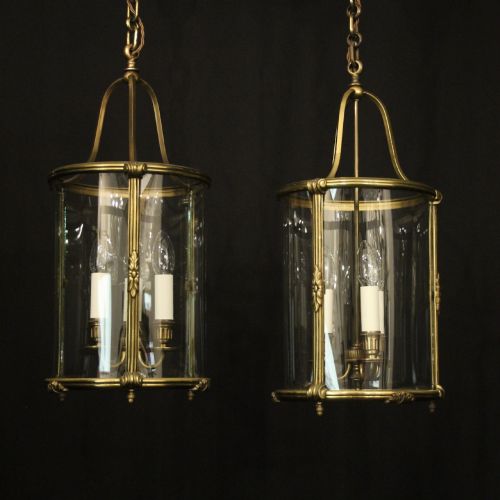
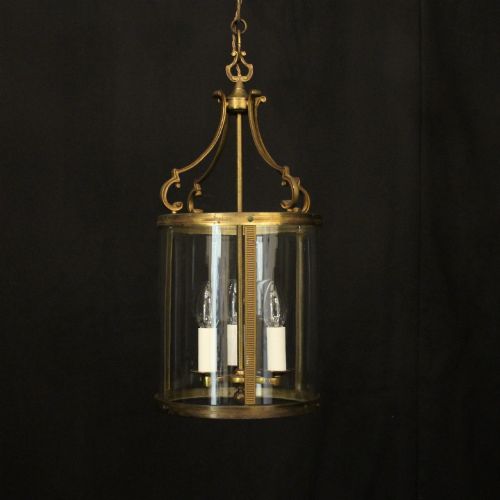
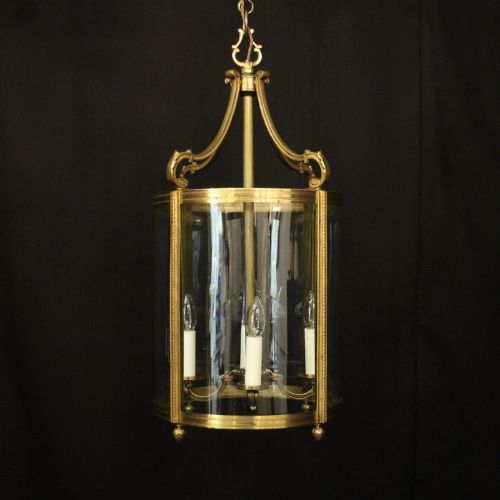


Curved Glass Hanging Light
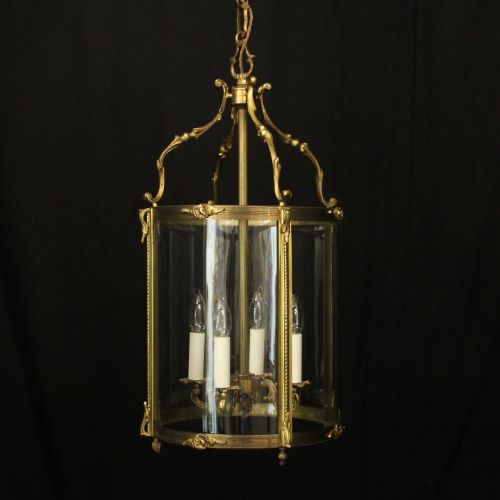
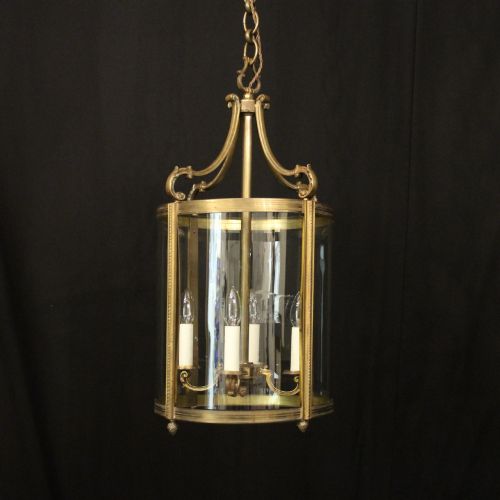
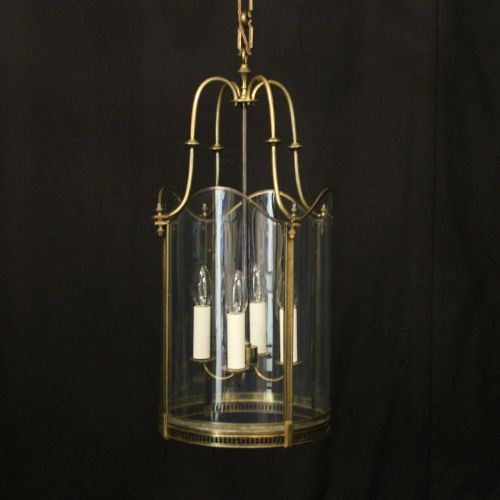
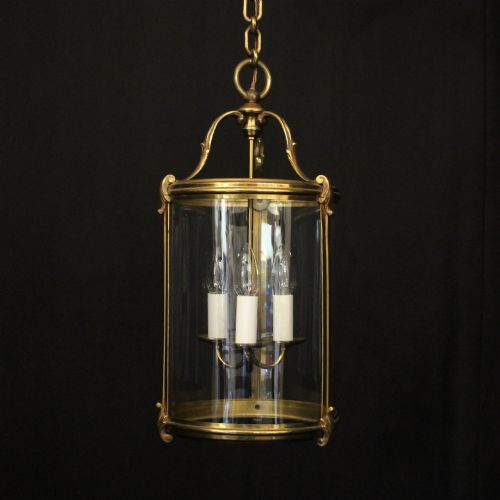
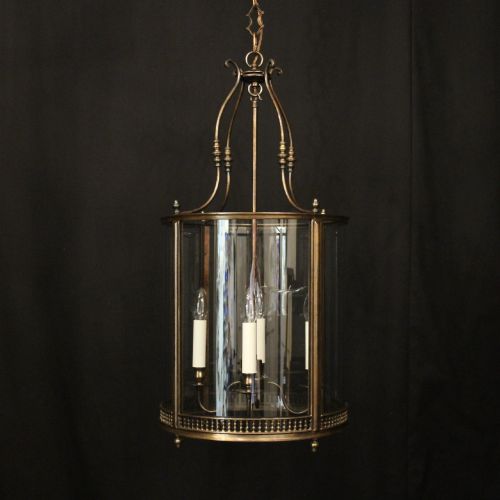
A curved glass hanging light brings warmth and old character to a hallway or landing, casting soft light through moulded panels of convex glass.
Curved Glass Hanging Light
When you search for a curved glass hanging light, you encounter hall lanterns and ceiling lights originating predominantly from the nineteenth century, 1920, and 1930. These pieces primarily take the form of hall lanterns and ceiling lighting, often housing multiple light fittings inside protective glass panels.
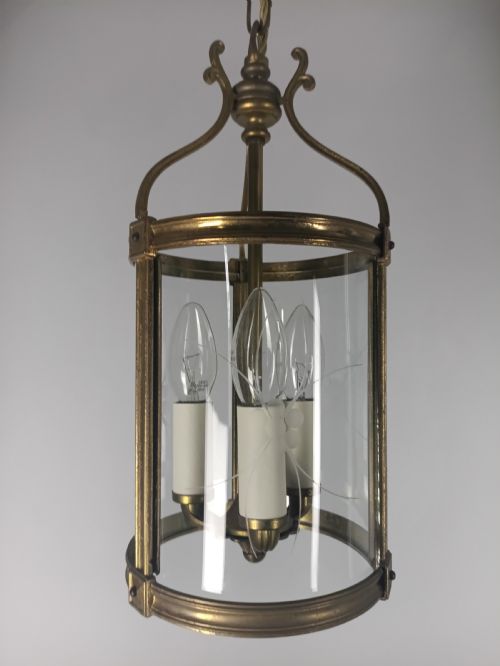
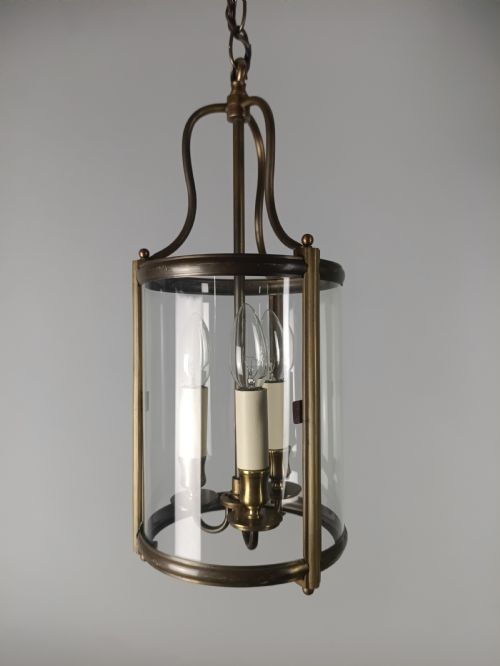
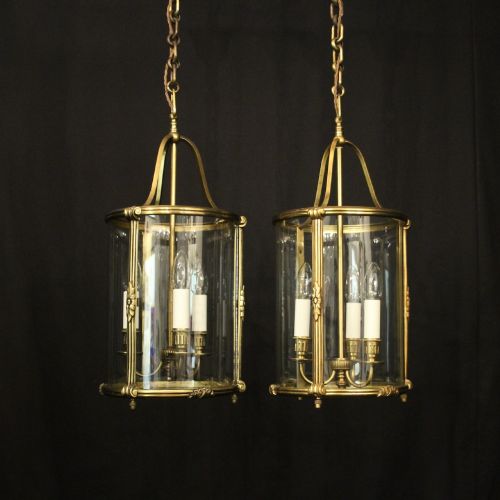
The selection on this page leans heavily towards French and English designs, particularly those styled in the French Neoclassical, Louis XVI, Rococo, and English Regency traditions. You are most likely to meet convex hall lanterns featuring brass, bronze, or gilt metal frames that hold curved glass panels in place.
How they were made
Makers constructed these lanterns using robust metal frameworks of brass, bronze, and gilt bronze to support the weight of the glass and internal fittings. The metalwork often displays cast or chased details characteristic of periods like the Grand Regency and Rococo Revival.
The defining feature is the curved or convex glass, mouth-blown or slumped into rounded shapes to fit snugly within the metal frames. Some panels feature subtle etching, while others remain clear to maximise the illumination from twin, triple, or four-light internal clusters.
Several lanterns include etched glass, proving that even eighteenth-century sensibilities appreciated a subtle doodle on the windows.
What varies in quality
Quality in a curved glass hanging light lies in the weight and finish of the metal frame, whether solid cast bronze or plated brass. Finer examples show crisp chasing on the mounts and substantial metal gauge rather than thin pressed sheet.
The integrity and clarity of the curved glass panels also separate standard pieces from superior ones. Original glass panes that fit seamlessly into their bezels without distortion represent the higher tier of these ceiling lights.
The Curved Glass Hanging Light Glossary
- Convex glass
- Glass that curves outward, providing a rounded profile that diffuses light more broadly across an entryway. This form is central to the design of many period hall lanterns.
- Gilt bronze
- Bronze metal treated with a layer of gold leaf or gilt finish, often seen in French neoclassical lighting. It provides a rich, enduring metallic lustre.
- Hall lantern
- A ceiling-hung light fixture specifically designed for narrow entrance spaces and corridors. These fixtures usually feature enclosed glass sides to protect the flame or bulbs from drafts.
- Rococo Revival
- A nineteenth-century design style drawing on eighteenth-century asymmetrical scrollwork, floral motifs, and organic curves. Pieces from this movement exhibit playful and elaborate cast metal details.
Curved Glass Hanging Light: Frequently Asked Questions
Where should I hang a curved glass hanging light?
These lanterns suit entrance halls, stairwells, and landings where their downward illumination and decorative metal frames can be appreciated from multiple angles. They provide a welcoming focal point upon entering a home.
Ensure you hang the fixture at a height that allows adequate clearance beneath while remaining proportional to the ceiling height of the room.
How do I clean a convex glass lantern?
Remove the glass panels carefully if the frame design permits, or clean them in situ using a mild glass cleaner and a soft cloth. Take care around any etched patterns or aged metal surfaces.
Dust the bronze or brass framework gently with a dry brush to preserve the patination without stripping the original finish.
How can I tell the period of a lantern?
Examine the construction methods of the metal frame, the fixings used, and the style of casting. Nineteenth-century examples often feature heavier bronze castings and hand-finished details compared to later twentieth-century iterations.
The wiring and bulb holders, though frequently updated for modern safety, can also offer clues regarding the age of the internal electrical components.
Can these lights be used with modern wiring?
Most antique lanterns require rewiring to meet contemporary electrical standards before installation in a modern home. Many pieces arrive having already undergone rewiring by specialists.
Consult a qualified electrician to ensure the ceiling mount and internal bulb fittings safely support current household voltage.