
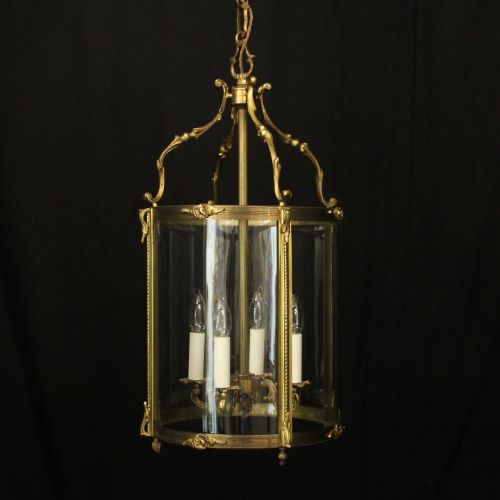
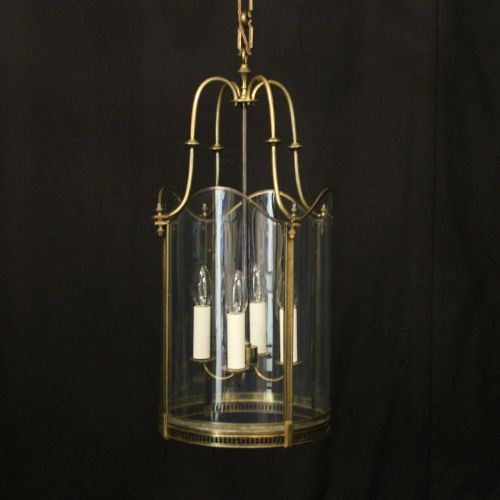
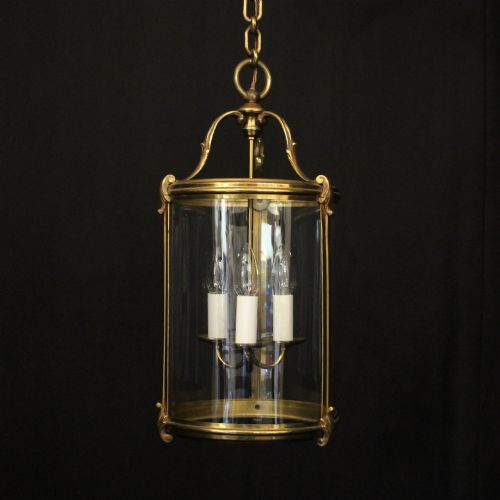
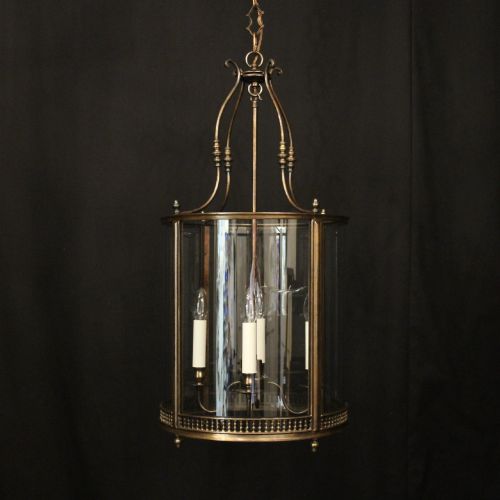
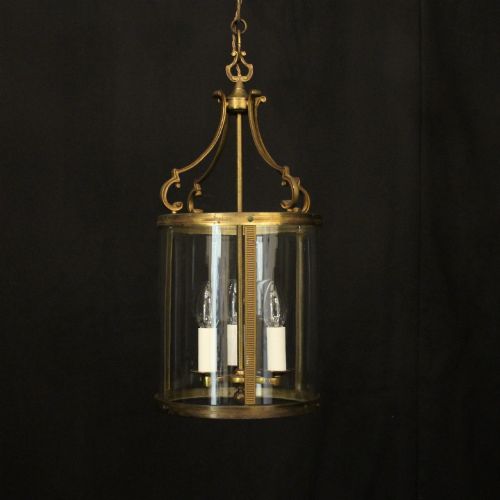


Convex Glass Hall Lantern
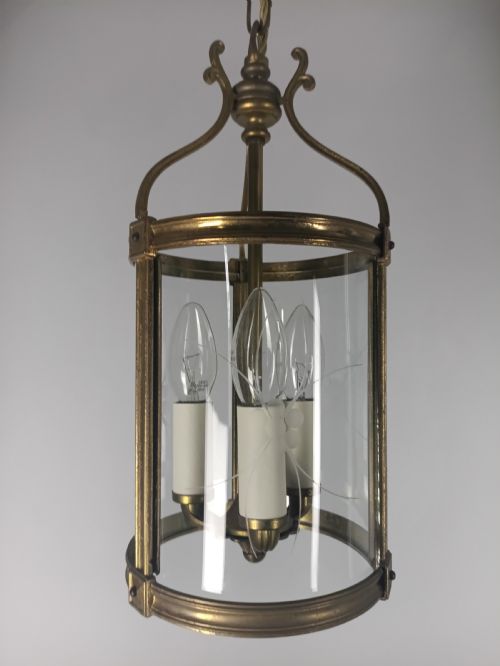
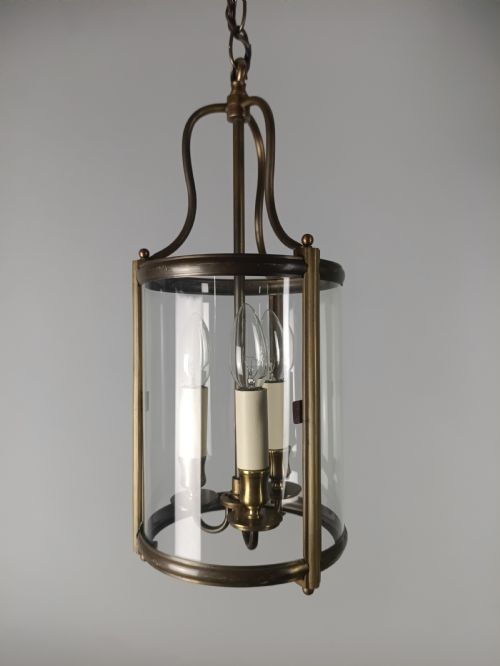
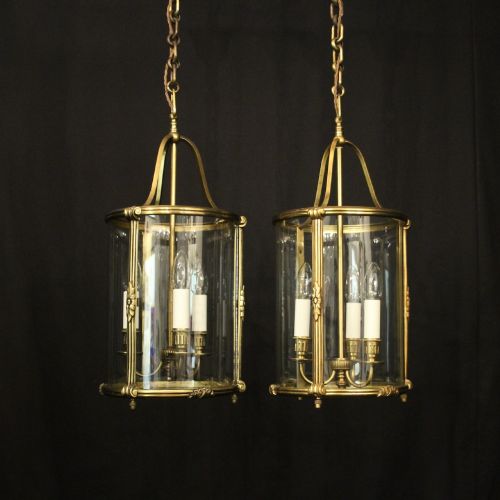
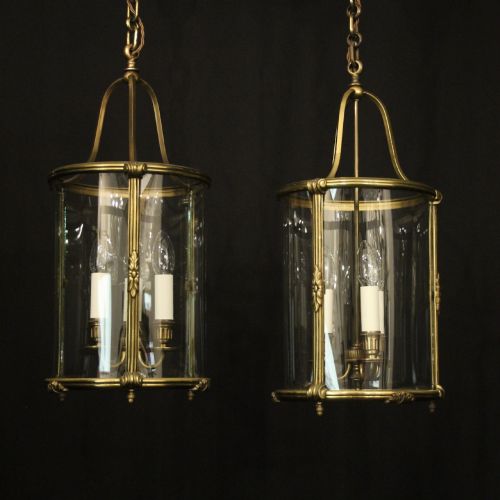
These convex glass hall lantern examples bring striking curved panes and brilliant metalwork to entryways, offering a warm and welcoming illumination.
Convex Glass Hall Lantern
A convex glass hall lantern is a ceiling-suspended lighting fixture designed specifically for entrance halls, corridors and vestibules. The pieces found here date from the 1920 and 1930 periods, encompassing both English and French origins. Buyers frequently encounter French models finished in gilded bronze or gilt brass alongside English brass interpretations.
Forms range from single light versions to grander triple light and four light configurations. Styles span across French Chateau, French Neoclassical, Grand Regency, English Regency, French Louis XV, French Neo-Classical, French Louis XVI Style and French Empire aesthetics. Certain examples feature etched glass panes that soften the output while adding decorative texture to the surround.
The primary object types recorded are hall lanterns, ceiling lights, ceiling lighting and ceiling lanterns. French examples often utilise gilded bronze or gilt brass, whereas English counterparts rely principally on polished brass or gilded metal. These fixtures serve as functional focal points that command attention upon entering a home.
How they were made
The construction of a convex glass hall lantern relies on joining shaped metal frames with curved glass panels. Makers utilised brass, gilt brass, gilded bronze and metal to construct the structural cages and hanging mounts. The application of gilt finishes involved meticulous hand gilding or fire gilding onto bronze and brass bases.
Glass blowing and slumping techniques produced the characteristic curved panes required for the convex profile. Etched decoration on selected glass panels demonstrates surface abrasion or acid treatment to create intricate patterns. Metal components were cast, hand-chased and assembled using traditional mechanical fasteners to secure the heavy glass elements.
Many a Victorian butler polished these brass frames until his reflection showed in the curves.
What varies in quality
The quality of a convex glass hall lantern is dictated by the depth of metal casting and the crispness of the chased detail. Finer examples display sharp definition in the acanthus leaves, bead reels and classical motifs adorning the brass or bronze frames. Thinner metalwork lacks the substantial weight and sculptural presence characteristic of superior workshop production.
Glass quality also divides the range, with thick, clear or evenly etched convex panes representing higher manufacturing standards. Inferior versions may incorporate thin, wavy glass that distorts the interior light unevenly. The richness and durability of the original gilding further distinguish exceptional pieces from standard commercial production.
The Convex Glass Hall Lantern Glossary
- Convex glass
- Curved glass panels that project outward from the frame. This curvature disperses light more widely across an entrance hall.
- Gilt bronze
- Bronze metal that has been coated with a thin layer of gold leaf or gold amalgam. It provides a durable and radiant metallic finish.
- Etched glass
- Glass surface treated with acid or abrasives to form decorative patterns. This technique diffuses the internal bulbs while adding textural interest.
- Hall lantern
- An overhead lighting fixture suspended by a chain or rod in a passageway. These pieces are proportioned specifically for vertical entry spaces.
Convex Glass Hall Lantern: Frequently Asked Questions
Where should a convex glass hall lantern be hung?
These fixtures suit entrance halls, vestibules and high-ceilinged corridors where their suspended profile can be appreciated from multiple angles. Their enclosed design protects the internal illumination from drafts.
Ensure adequate ceiling height for clearance beneath the hanging chain or rod. They create an immediate focal point upon entering the residence.
How do English and French styles differ?
English examples tend to favour restrained brass frameworks reflecting Regency design principles. They prioritise clean lines and structural sobriety.
French versions frequently incorporate elaborate gilded bronze or gilt brass ornaments inspired by Louis XV, Louis XVI and Empire aesthetics. They often feature more flamboyant casting work and richer surface gilding.
What is the difference between single and multi light versions?
Single light fixtures provide focused illumination suitable for compact vestibules or lower ceilings. They offer a simpler interior arrangement.
Triple light and four light configurations distribute greater wattage across multiple candle-style sockets within the glass enclosure. They serve larger spaces requiring stronger ambient light.
Are these lanterns suitable for modern wiring?
Most surviving pieces have been adapted or can be professionally rewired to accommodate contemporary electrical standards. The internal lamp holders are updated during restoration while preserving the exterior historic appearance.
Consult a qualified electrician to verify compatibility with modern household circuits and dimmer switches. This ensures safe operation without altering the visible metalwork.