

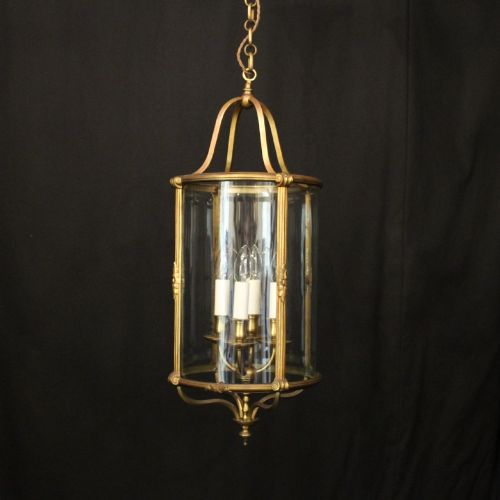
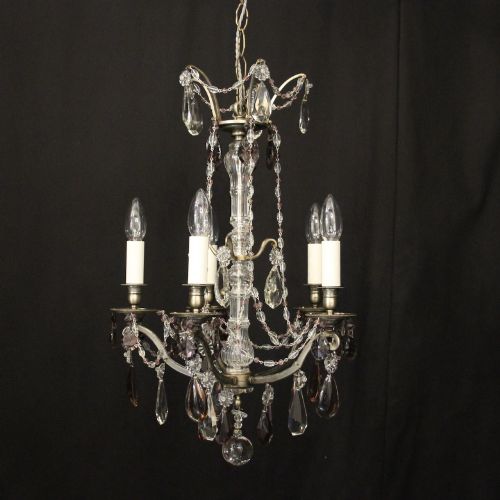
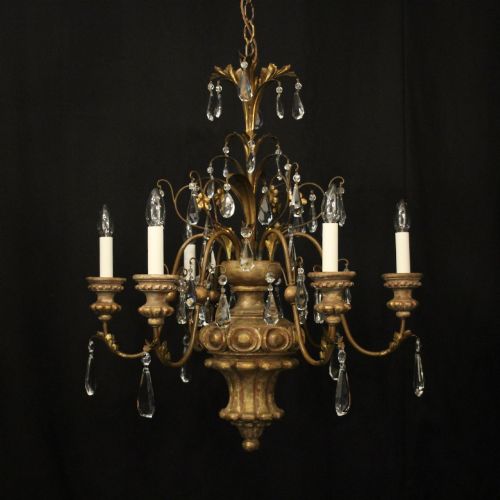
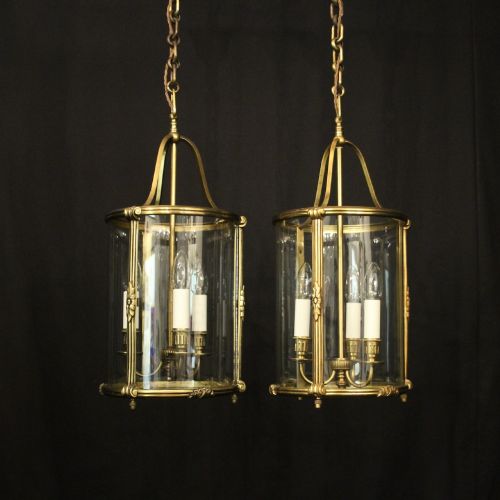
Gilded Bronze Pendant Light
These gilded bronze pendant light pieces bring French and Italian decorative metalwork into domestic rooms, offering both illumination and architectural presence.
Gilded Bronze Pendant Light
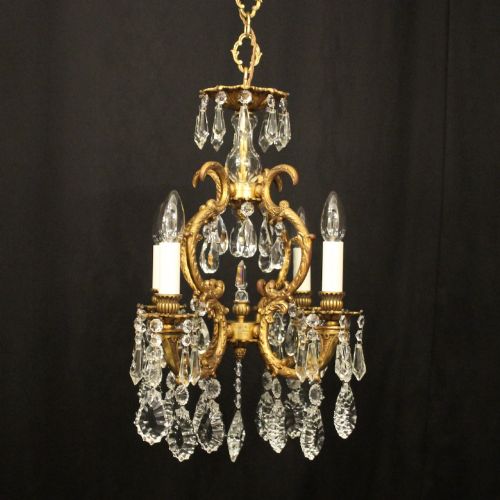
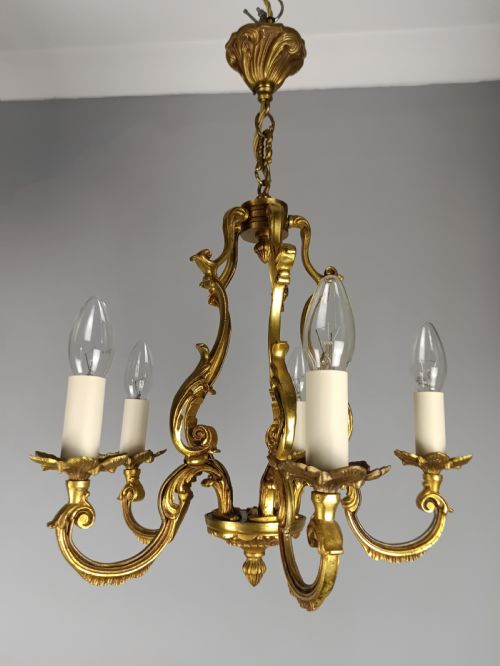
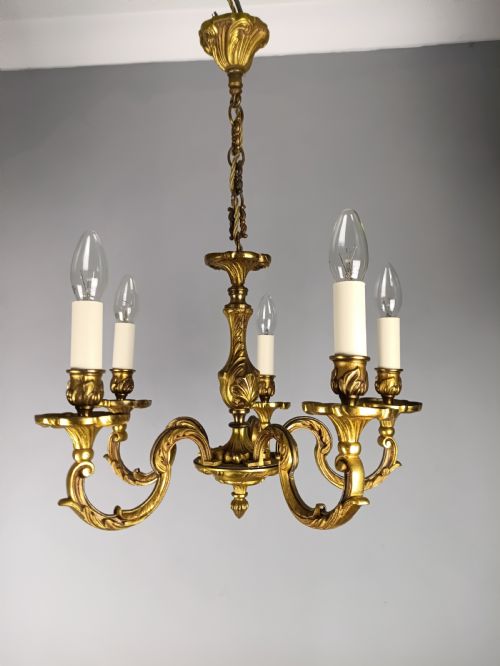
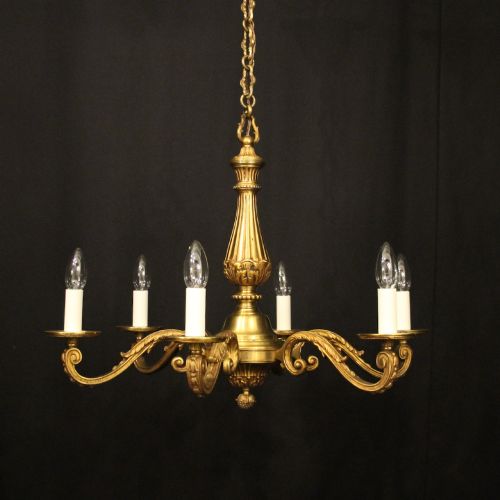
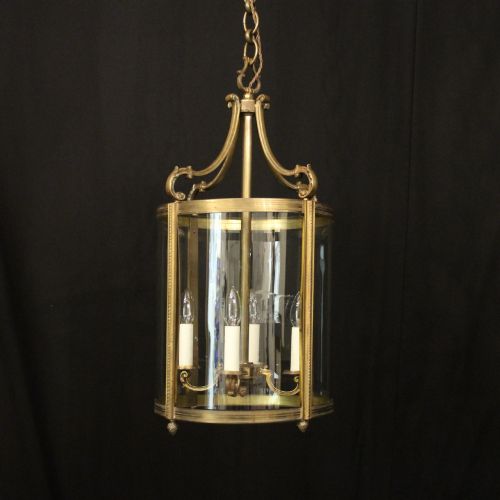
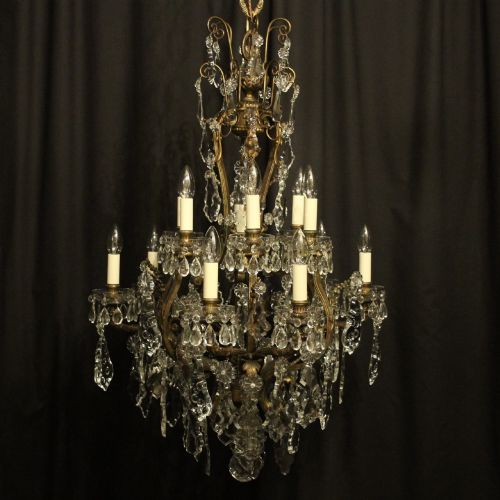
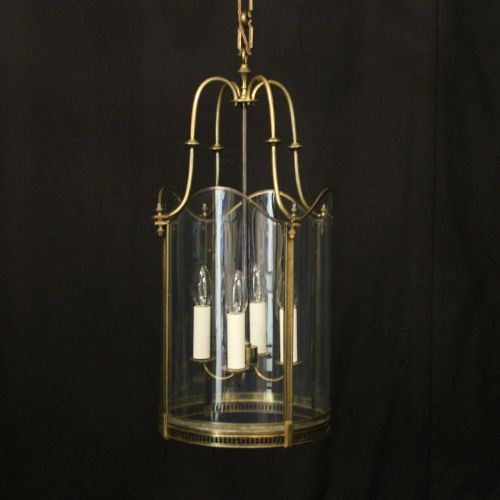
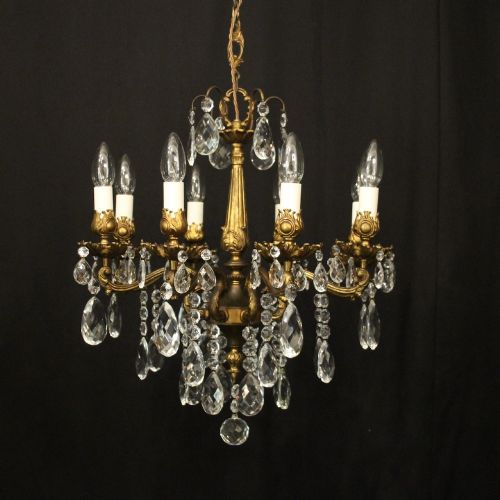
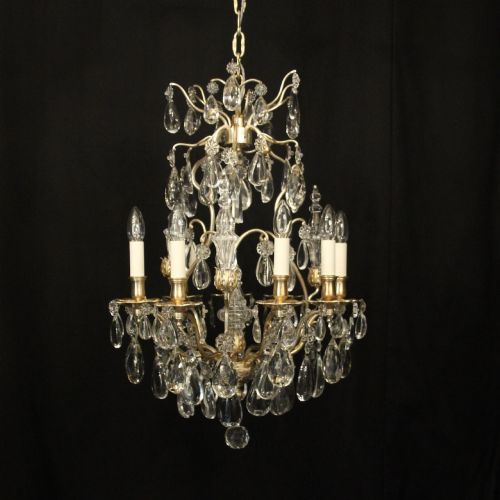
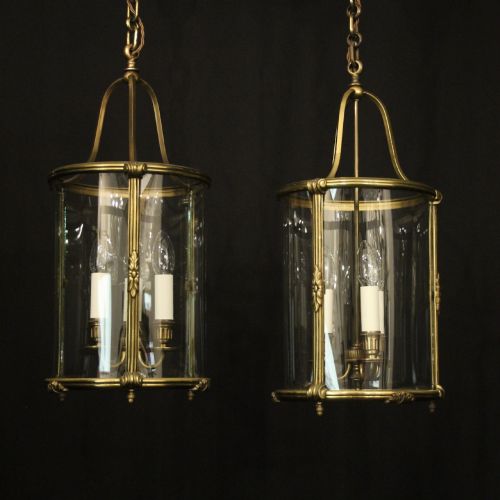
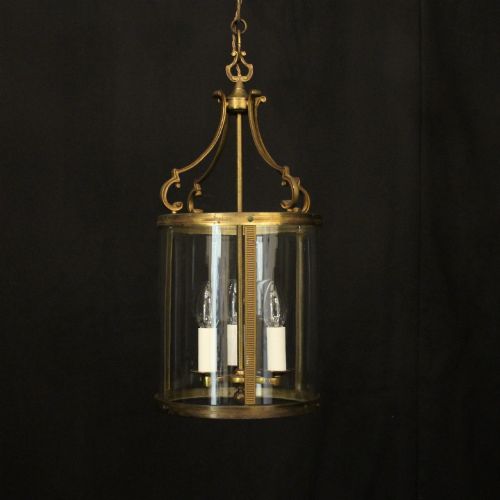
A gilded bronze pendant light sits overhead, suspended by chain or rod to distribute light across a room. The selections here include multi-light chandeliers, hall lanterns, and smaller hanging fixtures originating mostly from French workshops and Italian makers during the nineteenth and early twentieth centuries.
The form adapts to various interior spaces, ranging from compact three-light fixtures to large twelve-light chandeliers adorned with crystal drops. French Rococo, Neoclassical, and Louis styles dominate the designs, alongside Florentine Baroque expressions that emphasise elaborate metalwork and glass integration.
Materials and construction
Foundries cast bronze, brass, and metal into intricate frames before applying gold leaf or gilt surface treatments to achieve a luminous finish. Metal armature supports glass bowls, convex panes, and crystal drops that refract the illumination produced by the internal candles or bulbs.
Makers combined mechanical fastening with traditional casting and chasing techniques to join arms, coronas, and candle nozzles securely. Hand-cut crystals and moulded glass elements were wired or pinned directly into the metal framework.
Object types recorded on this page include multi-light chandeliers, hall lanterns, wall sconces, and ceiling lighting.
Variations in quality
The depth and durability of the gilding separate standard production from superior examples, where hand-applied gold leaf or heavy fire-gilding retains its warmth and texture over centuries. Crispness in the chasing of the bronze casting - evident in sharp acanthus leaves, scrollwork, and facial masks - indicates the skill of the original workshop.
Completeness of the crystal drops and the originality of the glass panels or convex lenses strongly influence the integrity of a fixture. Heavier gauge metal frames and balanced arm distributions ensure the light hangs true without sagging or distortion.
The Gilded Bronze Pendant Light Glossary
- Gilt bronze
- Metal cast and coated with a thin layer of gold or gold leaf to produce a bright, corrosion-resistant surface. This technique provides the characteristic golden sheen seen across period chandeliers and lanterns.
- Convex lantern
- A hanging light featuring curved glass panes that bulge outward from the metal frame. This shape disperses light widely while protecting the internal candle or bulb from draughts.
- Chandelier
- A branched suspended lighting fixture designed to hold multiple light sources. Period examples often incorporate crystal pendants to amplify the illumination.
- Hall lantern
- An enclosed hanging light traditionally placed in entrance halls or corridors. These pieces utilise glass panels and protective metal cages to shield the light source.
- Chasing
- The manual tooling of cast metal surfaces with small punches and hammers to sharpen details and add texture. Fine chasing distinguishes high-grade bronzes from simpler cast items.
Gilded Bronze Pendant Light: Frequently Asked Questions
How do I hang a heavy chandelier safely?
Suspension requires fixing directly into ceiling joists or structural timber using a rated ceiling hook and steel chain capable of supporting the combined weight of the metal and glass.
Professional electrical installation ensures the internal wiring meets current standards while securely anchoring the fixture at the correct height for the room.
How should I clean gilded bronze and crystal?
Dust the metal gently with a soft, dry microfibre cloth to remove surface particles without disturbing the gilt surface. Avoid harsh chemical cleaners that can strip the gold leaf.
Crystal drops can be wiped individually with a mild soapy solution and dried immediately to restore their refractive clarity.
How do I date an antique pendant light?
Dating relies on stylistic markers such as Rococo asymmetry, Neoclassical symmetry, or early twentieth-century proportions, alongside the construction methods used in the metal framing. Wiring style, screw types, and casting marks also provide reliable clues to the period of manufacture.
Comparing the decorative motifs with documented French and Italian design catalogues helps narrow the decade of production.
Can these lights be used with modern bulbs?
Most period fixtures accommodate modern LED candle bulbs provided the lamp holders match standard domestic base sizes. Low-wattage warm white bulbs replicate the soft glow of historical candle or early electric lighting.
Rewiring is often performed by specialists to ensure the internal sockets and wiring safely handle contemporary voltage requirements.