
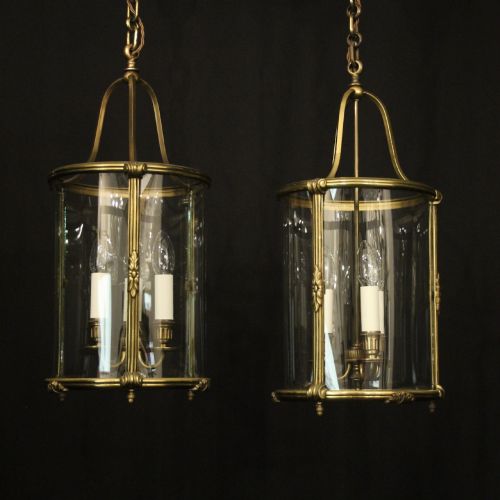
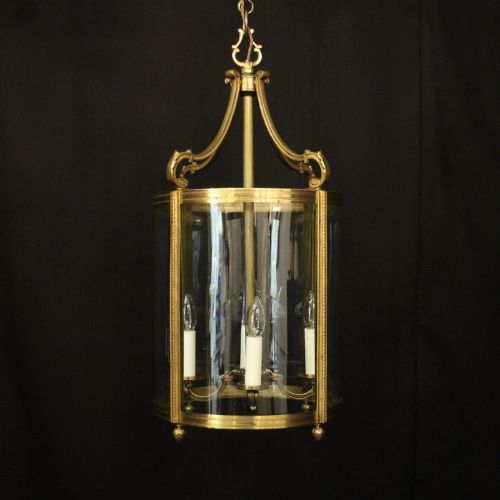


Curved Glass Ceiling Fixture
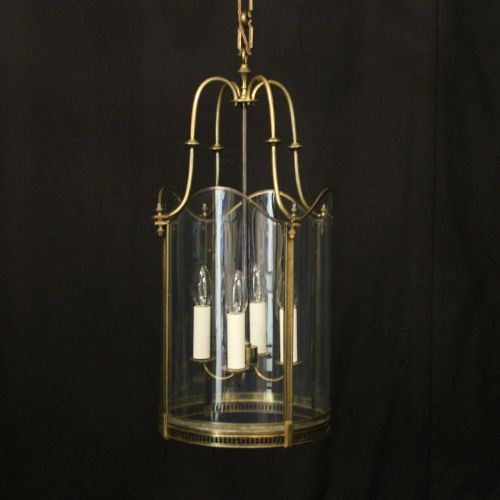
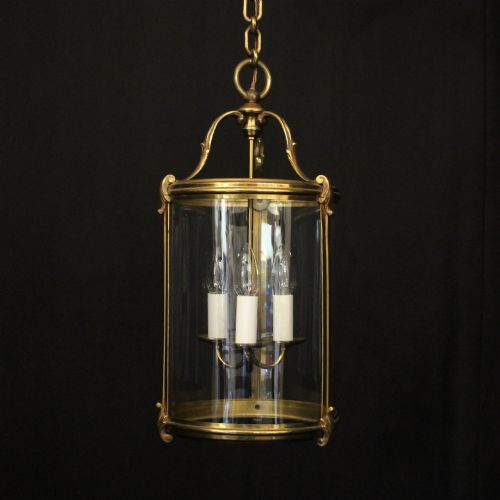
A curved glass ceiling fixture brings warm illumination and classical French character to a hallway or entrance, offering distinct historic forms.
Curved Glass Ceiling Fixture
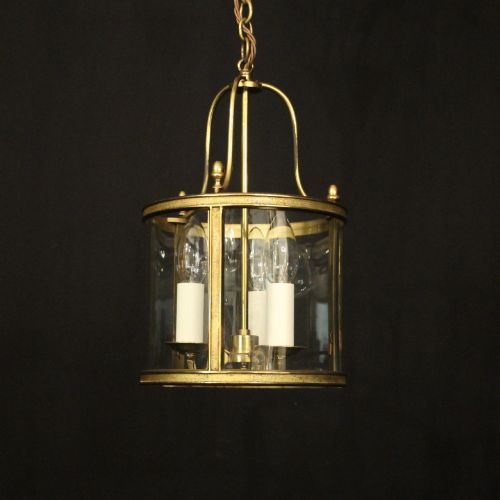
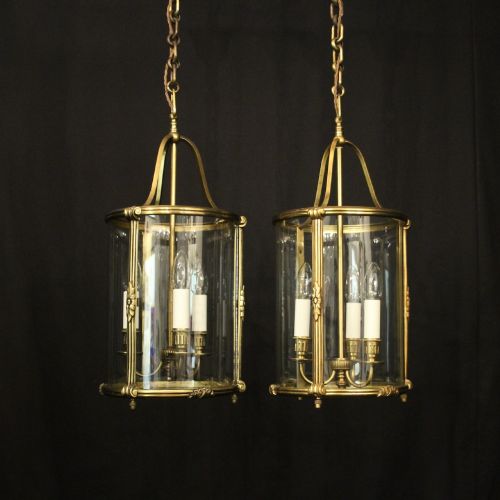
A curved glass ceiling fixture typically takes the form of a hall lantern, ceiling light, or hanging lantern designed to illuminate entrance spaces. Buyers searching for a curved glass ceiling fixture will encounter examples dating from the nineteenth century up through the nineteen-twenties and nineteen-thirties. The selection centres primarily on French lanterns, alongside occasional English pieces.
Most examples feature convex glass panels held within metal frameworks, often arranged to house single or multiple interior lights. Forms range from twin-light fixtures to grander triple and four-light variants. These objects function simultaneously as practical sources of illumination and decorative architectural accents.
How they were made
The construction relies heavily on combinations of glass and metal, specifically utilising brass, gilt brass, gilded bronze, and bronze frameworks. Artisans shaped these metals into robust mounts and frames designed to secure curved or convex glass panes securely.
Makers employed finishing techniques such as gilding to enhance the bronze and brass surfaces, creating a luminous appearance that complements the enclosed light source. Metal components were cast and joined to support the structural weight of the glass and internal light fittings.
Materials documented across the inventory include glass, brass, gilt brass, gilded bronze, gilt bronze, and bronze.
What varies in quality
Quality reveals itself in the fineness of the metal casting and the depth of the gilding applied to the bronze or brass framework. Superior examples demonstrate rigorous attention to detail in the decorative mounts and the precise curvature of the glass panels.
The handling of the metalwork distinguishes standard production from finer pieces, where hand-finishing brings out the ornamental details of styles like French Neoclassical or Rococo Revival. Better pieces maintain harmonious proportions between the heavy glass elements and the supporting metal structure.
The Curved Glass Ceiling Fixture Glossary
- Convex glass
- Glass that curves outward, presenting a rounded exterior surface that diffuses light effectively. This form is characteristic of many period hall lanterns.
- Gilt bronze
- Bronze that has been coated with a thin layer of gold or gold-coloured metal to give a rich finish. It provides durability alongside a decorative sheen.
- Hall lantern
- An enclosed ceiling fixture traditionally hung in corridors or entrance halls. These pieces direct illumination downwards while protecting the flame or bulb.
- Rococo Revival
- A nineteenth-century design style drawing on asymmetrical scrollwork and natural motifs. It appears in the ornate detailing of certain period lantern frames.
Curved Glass Ceiling Fixture: Frequently Asked Questions
Where should I hang a hall lantern?
These fixtures suit entrance halls, corridors, and high-ceilinged landings where they can be viewed from multiple angles. Their enclosed design protects the light source while casting an even glow across the space.
Ensure adequate ceiling height for hanging lanterns so the fixture clears passage areas safely. Positioning them centrally allows the brass and glass elements to act as a focal point upon entry.
How do I date a glass ceiling fixture?
Dating relies on examining the materials, construction methods, and stylistic cues present in the metalwork. Pieces from the nineteenth century often show heavier cast bronze elements, whereas nineteen-twenties and thirties examples may incorporate streamlined French designs.
Comparing the specific shade of gilding and the method used to curve the glass panels helps narrow down the period of manufacture. Hardware details and wiring access points also offer clues regarding the age of the fixture.
Are these lanterns suitable for modern wiring?
Many period fixtures have been adapted to accommodate contemporary electrical standards for safe domestic use. Rewired examples allow buyers to utilise standard modern bulbs while retaining the historic exterior appearance.
Consult a qualified electrician to inspect internal fittings and ensure the fixture integrates safely with domestic power supplies. Professional installation is recommended given the weight of the glass and bronze components.