
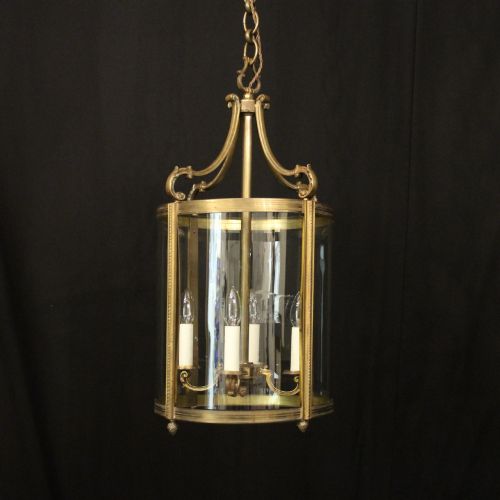
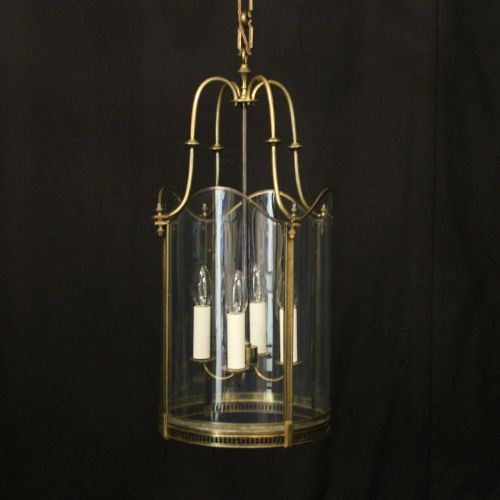
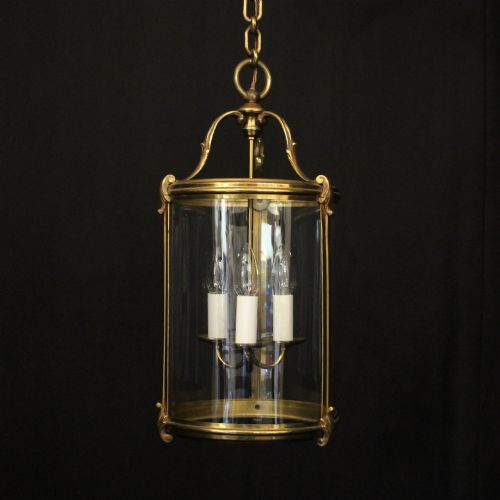
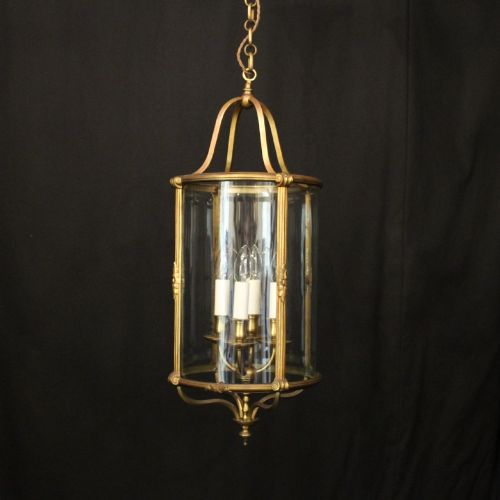
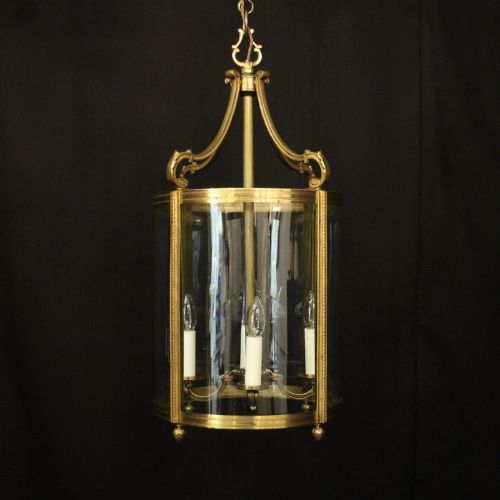


Gilt Brass Ceiling Lantern
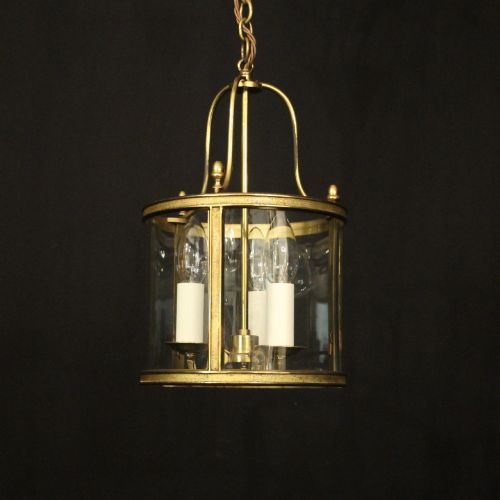
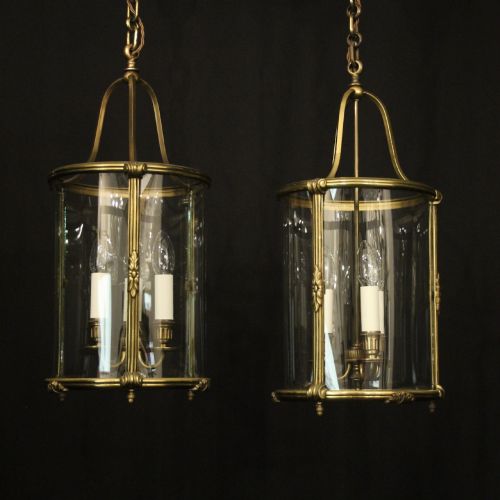
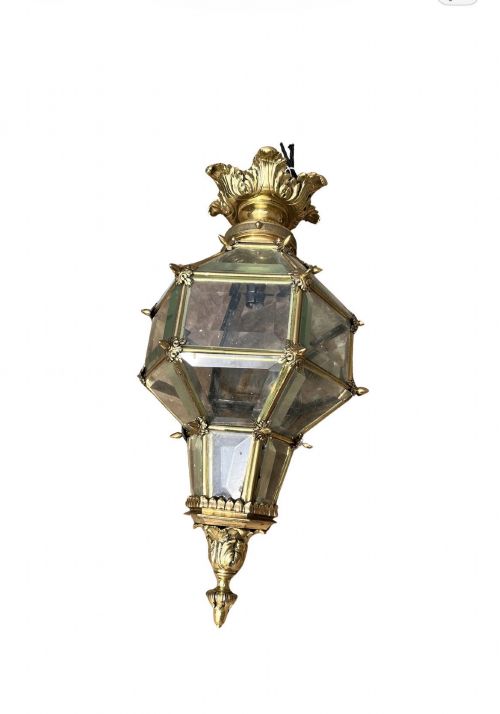
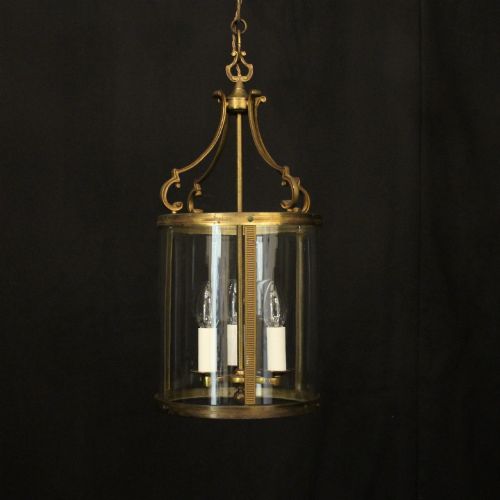
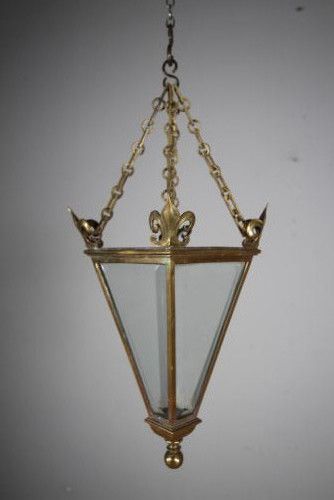
These gilt brass ceiling lanterns are grand French and English hanging lights designed to illuminate hallways and entrance spaces with period elegance.
Gilt Brass Ceiling Lantern
When you search for a gilt brass ceiling lantern, you encounter overhead lighting designed primarily for hallways, vestibules, and grand stairwells. The pieces appearing here span from the nineteenth century into the 1930s, capturing decades of domestic illumination.
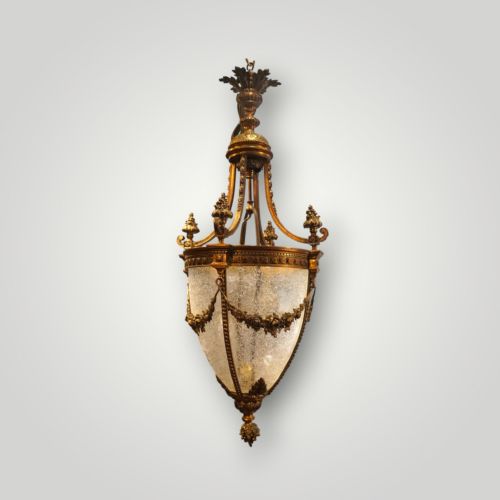
The dominant aesthetic draws heavily from French design traditions, particularly Louis XVI, Neoclassical, and Rococo revival styles. Makers channel the opulence of the Palace of Versailles through hexagonal, convex, and multi-light pendant configurations.
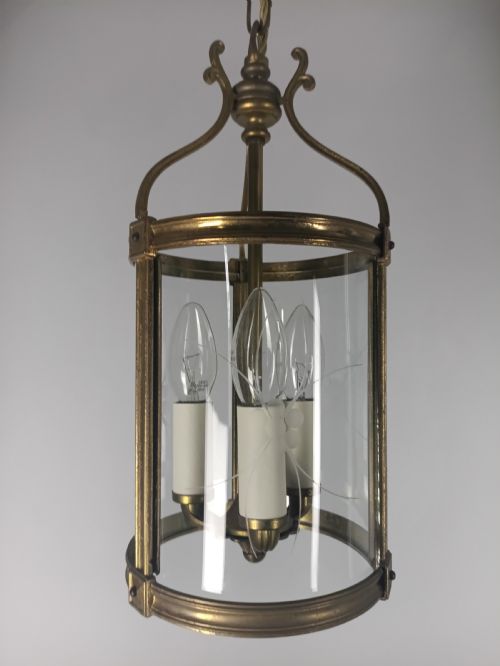
English interpretations also emerge within the selection, alongside occasional Arts and Crafts or Art Deco departures. Most examples operate as hanging lanterns or ceiling lights equipped to diffuse light through various specialised glass panels.
Materials and Construction
Makers utilised cast and chased bronze and brass, applying fire-gilding or surface gilding to achieve a luminous golden finish. This metalwork provides the structural cage that secures the glass components while displaying elaborate ornamental casting.
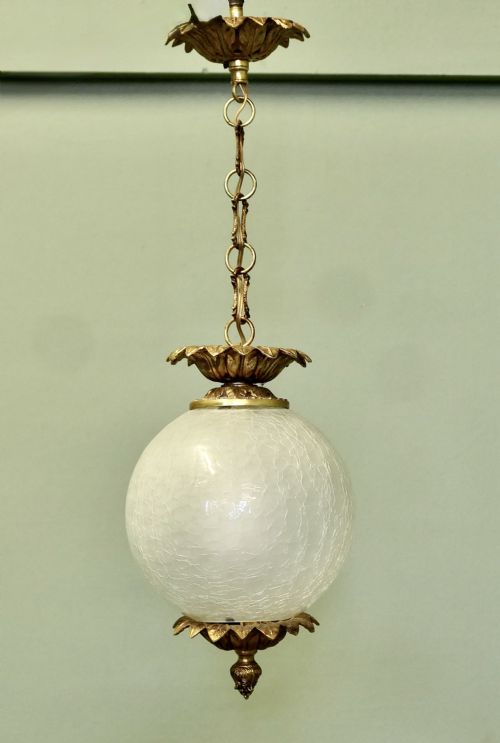
Glass panels form the translucent body of these fixtures, encompassing etched, bevelled, crackle, opaline, and stained varieties. These diverse glass types distribute the interior bulb or candle light effectively throughout an entrance hall.
Listings feature pieces spanning from the nineteenth century through the 1930s, highlighting French revival styles alongside English variants.
Distinctions in Quality
The sophistication of the cast bronze or brass ornament separates standard production from exceptional examples. Finer lanterns display crisp chased detailing on the metal frame, reflecting meticulous craftsmanship akin to palace commissions.
The choice and treatment of the glass panels heavily influence the overall character. Bevelled, convex, or intricately etched panes demand greater skill to produce and fit than flat, plain glass.
Perry & Co
The Gilt Brass Ceiling Lantern Glossary
- Gilt Bronze
- Metal alloy coated with a layer of gold, frequently termed ormolu in French decorative arts. This technique protects the base metal while providing a rich, permanent metallic lustre.
- Convex Glass
- Curved glass panels shaped outward to catch and refract light from multiple angles. This form enhances the visual presence of the lantern body.
- Bevelled Glass
- Glass panes featuring angled, polished edges that create prismatic light refractions. Such detailing adds considerable optical depth to the fixture.
- Opaline Glass
- Opaque white glass developed to diffuse light softly without harsh glare. It yields a smooth, milky appearance when illuminated.
- Ormolu
- French gilding technique utilising finely ground gold mercury amalgams on bronze. It defines high-status decorative metalwork from the eighteenth and nineteenth centuries.
Gilt Brass Ceiling Lantern: Frequently Asked Questions
Where should I hang a ceiling lantern?
These fixtures suit entrance halls, vestibules, and high-ceilinged landings where their pendant drop commands attention. Their downward illumination serves transitional spaces effectively.
Ensure adequate ceiling height allows clearance beneath the hanging chain or flush mount, depending on the specific drop of the lantern.
How do I date a gilt brass lantern?
Dating relies upon stylistic markers such as Louis XVI revival motifs, Arts and Crafts framing, or Art Deco glass forms. Material patination and construction techniques further narrow the period of origin.
Nineteenth-century examples often feature heavier bronze casting, whereas 1920 and 1930 pieces occasionally introduce lighter brass framing and distinct glass textures.
Are these lanterns wired for modern electricity?
Many surviving examples have been adapted for contemporary electrical circuits over time. Some retain multiple internal lamp holders to illuminate large spaces effectively.
Buyers should consult individual listings regarding current wiring standards and bulb capacities to ensure compatibility with domestic electrical systems.
What is the difference between brass and bronze here?
Bronze is an alloy of copper and tin, while brass combines copper and zinc. Both materials appear interchangeably described in historical lighting nomenclature, particularly when gilded.
In marketplace terminology, terms like gilt bronze, ormolu, and gilt brass often denote similar high-status metallic finishes applied to the structural frame.