

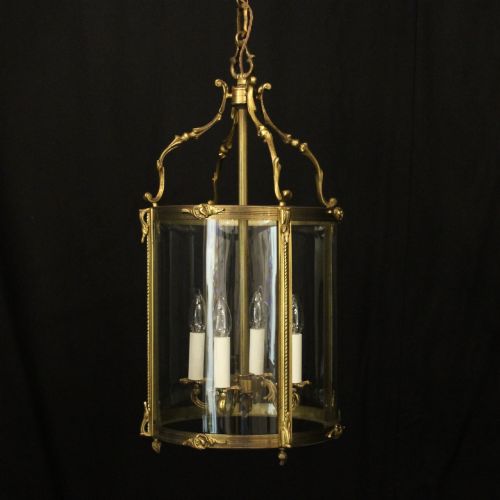
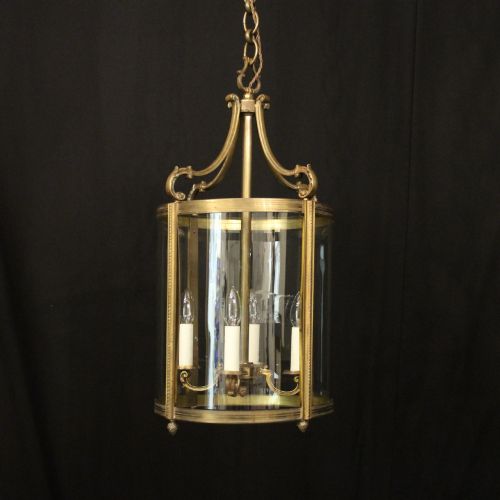
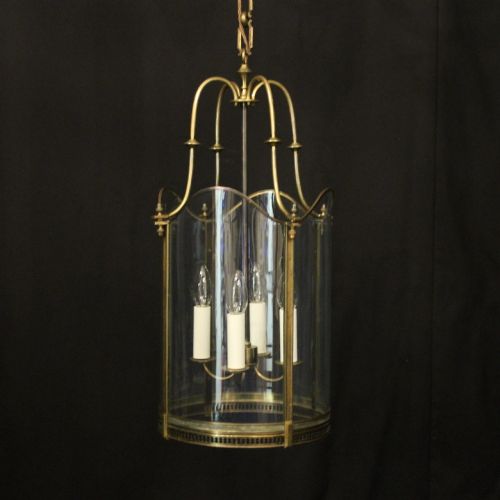
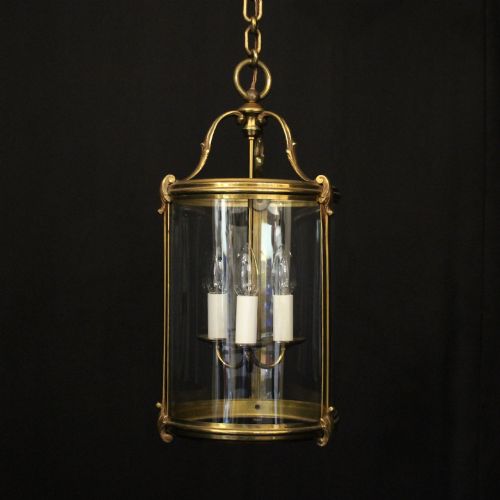



French Entryway Lantern Light
A French entryway lantern light brings a striking presence to a hall, offering decorative illumination shaped by decades of metalwork traditions.
French Entryway Lantern Light
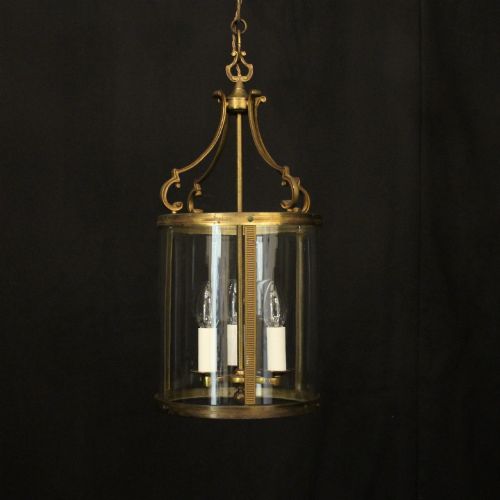
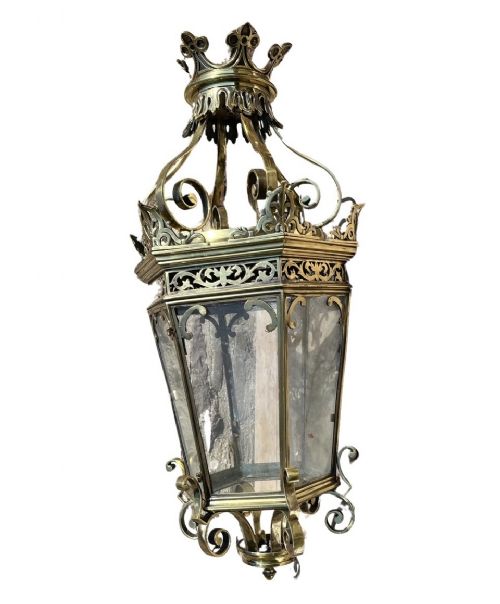
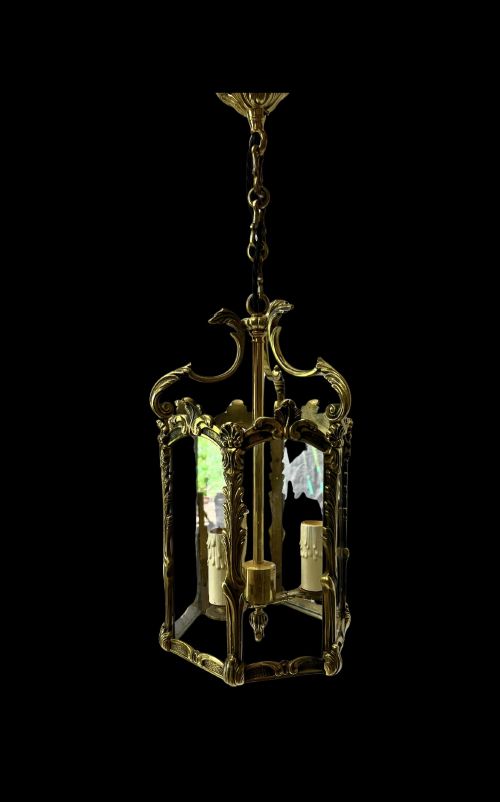
When you search for a French entryway lantern light, you are looking at overhead hanging fixtures designed for corridors and vestibules. These pieces typically take the form of hall lanterns, ceiling lights, and hanging lanterns that suspend from chains or rods.
You are most likely to meet examples from the early twentieth century, particularly the nineteen-twenties, alongside pieces stretching back through the nineteenth century. These fixtures appear in styles such as French Rococo, Neoclassical, Louis XVI, and Arts and Crafts.
The physical forms range from compact single-bulb fixtures to large multi-light chandeliers enclosed in convex or four-sided glass panels. They serve to light hallways while establishing an immediate architectural character as guests enter a home.
Materials and construction methods
These lanterns are built using cast and forged metals combined with glazed panels. Gilded bronze, gilt brass, and standard brass form the primary framework for many pieces, providing a reflective surface that catches interior light.
Wrought iron appears in heavier, more structural designs associated with Arts and Crafts and Gothic Revival influences. Glass panels, often convex to diffuse the internal glow, are secured within metal frames by soldered joints or hinged doors.
French Entryway Lantern Light Retail Price Guide 2026
Typical asking prices for french entryway lantern light among the pieces listed under this phrase on Sellingantiques today, from the lower quarter to the upper quarter. They describe what is for sale here now, not the wider market.
Listings span periods from the mid-nineteenth century through the nineteen-thirties, dominated by nineteen-twenties production in brass, bronze, and wrought iron.
Factors determining quality
The distinction between ordinary and superior pieces rests on the weight of the metal and the crispness of the casting. Heavier bronze and brass frames retain their structural integrity better and allow for deeper, more defined decorative relief.
Glazing also marks a division in execution. Convex glass panels require specialised shaping compared to flat panes, and thicker, clear or bevelled glass reflects light with greater clarity.
The French Entryway Lantern Light Glossary
- Convex glass
- Curved glass panels that project outward from the lantern frame. This shape helps disperse light across a wider angle in a narrow hallway.
- Gilded bronze
- Bronze metal treated with a thin layer of gold leaf or gilt wash. It provides a warm, enduring metallic sheen that resists tarnishing over decades.
- Hall lantern
- An overhead lighting fixture designed specifically for narrow transitional spaces like corridors and entryways. They hang close to the ceiling or suspend on short chains.
- Louis XVI style
- A neoclassical aesthetic characterised by symmetrical geometry, classical motifs, and restrained ornamentation. It appears frequently in twentieth-century revivals of French lighting.
French Entryway Lantern Light: Frequently Asked Questions
How were these lanterns originally lit?
Early examples relied on candles or oil burners placed inside the glass enclosure. Openings or small chimneys at the top allowed heat and smoke to escape.
Over time, many of these fixtures were converted to electricity. Wiring runs through the suspension rods or chains to internal lamp holders.
Where should a hall lantern hang?
These fixtures are proportioned for entryways, corridors, and high-ceilinged vestibules. Their hanging design directs light downward while illuminating the surrounding walls.
When hanging one in a home, ensure adequate clearance beneath the fixture for foot traffic and door swings.
How do I identify the period?
Dating relies on material combinations, manufacturing marks, and stylistic indicators such as cast bronze details or wrought iron forging techniques. Nineteenth-century pieces often show heavier hand-finishing.
Twentieth-century reproductions and revivals adopt earlier Louis styles while utilising standardised electrical components and machine-finished brass.
What maintenance do they require?
Glass panels benefit from regular cleaning with standard glass cleaner to maintain light output. Metal frames should be dusted gently without abrasive polishes that might damage gilt surfaces.
Wiring and lamp holders should be checked periodically by a qualified electrician, particularly on older conversions.