

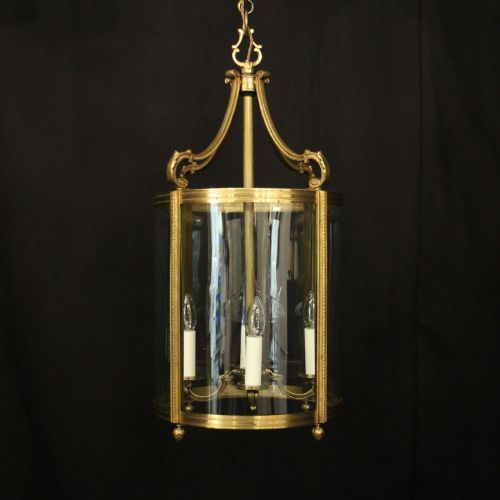


French Ormolu Pendant Lantern
These French ormolu pendant lantern pieces bring classic Parisian hall lighting into modern interiors through ornate bronze frameworks and clear glass.
French Ormolu Pendant Lantern
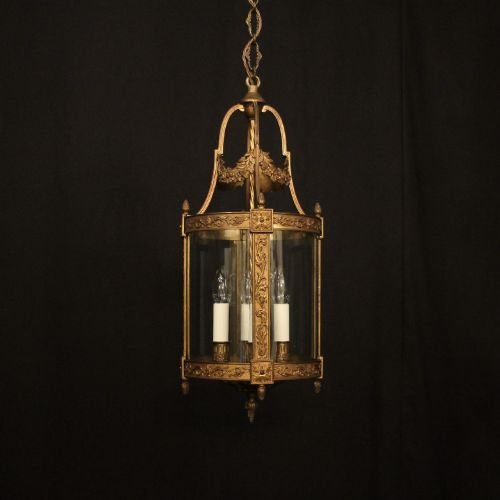
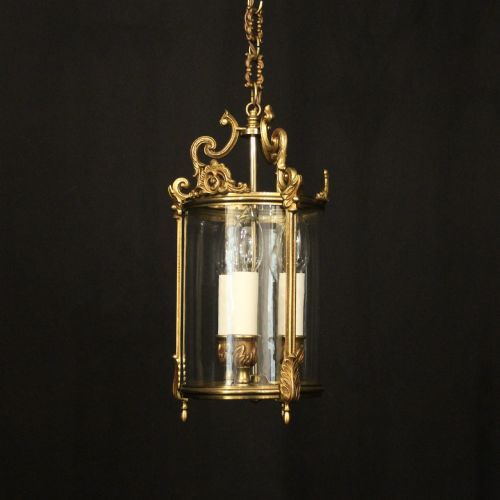
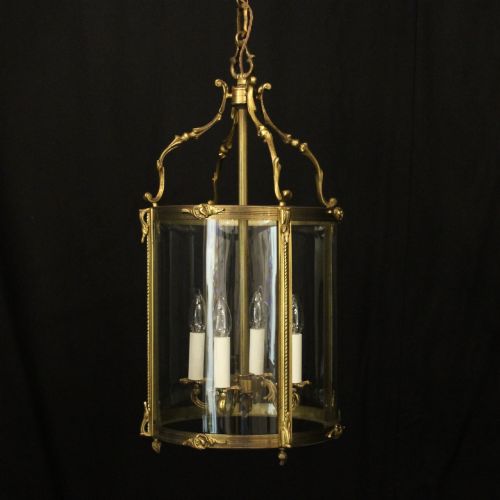
A French ormolu pendant lantern serves as a grand entrance hall light, suspended from the ceiling to illuminate hallways and vestibules with period character. The most common form on this page is the single-light or multi-light hanging fixture enclosed in glass panels.
These fixtures draw upon French Neoclassical, Louis XVI Style, and French Rococo designs, often echoing historical models found in the Palace of Versailles. Makers shaped these pieces during the nineteenth and early twentieth centuries, spanning from the 1880s through the 1930s.
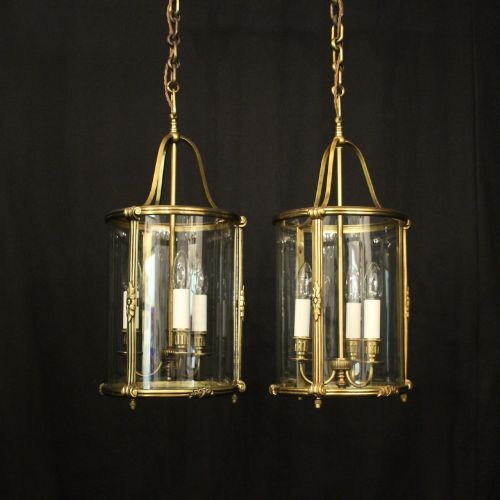
Buyers encounter variations including hexagonal frames, convex glass shapes, and pairs of matching lanterns designed for larger spaces. The metalwork ranges from warm gilt bronze to polished brass and silver gilded bronze.
Materials and construction methods
Craftsmen built these lanterns using bronze or brass frameworks that received a heavy gilt finish, creating the characteristic ormolu appearance. Metal casters chased and detailed the bronze components by hand before assembly.
Panels of glass, including bevelled, etched, frosted, and cut varieties, were fitted directly into the metal frames to enclose the internal light sources. These glass panes were often curved or convex to diffuse the illumination effectively.
French Ormolu Pendant Lantern Retail Price Guide 2026
Typical asking prices for french ormolu pendant lantern among the pieces listed under this phrase on Sellingantiques today, from the lower quarter to the upper quarter. They describe what is for sale here now, not the wider market.
Several pieces proudly copy the Palace of Versailles, letting you bring royal palace illumination right to your hallway ceiling.
What separates the fine examples
The refinement of the cast bronze ornamentation dictates the quality of a piece, with crisper foliage, scrollwork, and neoclassical detailing marking superior execution. Heavier metal gauge and precise joints ensure structural integrity across the frame.
The choice and treatment of the glass panels also define the standard, particularly where bevelled, cut, or etched patterns show clarity and depth. Matching sets and hexagonal geometries require greater joinery skill than standard rectangular four-light configurations.
The French Ormolu Pendant Lantern Glossary
- Ormolu
- Gilded bronze, where a layer of gold is applied to a bronze base using mercury amalgamation or modern electroplating. This technique gives the metal its rich, durable golden sheen.
- Hall lantern
- A ceiling-hung lighting fixture designed specifically for narrow spaces, corridors, and entranceways. They provide enclosed overhead illumination.
- Bevelled glass
- Glass panes featuring an angled edge cut and polished around the perimeter. This treatment catches and refracts light.
- Louis XVI Style
- A neoclassical design movement characterised by straight lines, symmetry, and classical Greek or Roman motifs. It emerged in eighteenth-century France and inspired later nineteenth-century revivals.
- Convex glass
- Curved glass panels that bulge outward from the lantern frame. This shape softens the interior light and adds visual volume to the fixture.
French Ormolu Pendant Lantern: Frequently Asked Questions
How do I hang a french ormolu pendant lantern?
These lanterns suspend from ceilings using matching chains or suspension rods connected to a ceiling canopy. Professional electricians should secure the fixture to a ceiling joist to support the weight of the bronze and glass.
Ensure the hanging height suits the clearance of your hallway or room. Proper positioning allows the fixture to illuminate the entryway without obstructing foot traffic.
What periods do these lanterns come from?
The pieces seen here date from the late nineteenth century through the early twentieth century, spanning the 1880s to the 1930s. Many adopt earlier French Neoclassical and Louis XVI decorative idioms.
Nineteenth-century examples frequently showcase heavier cast bronze work and hand-chased details. Later twentieth-century versions maintain traditional forms while adapting to modern electrical standards.
How do I clean the glass panels?
Remove dust from the ormolu frame using a soft, dry brush before cleaning the glass. Wipe the glass panels with a gentle glass cleaner applied to a cloth rather than sprayed directly onto the metal.
Keep moisture away from the gilded bronze surfaces to protect the finish. Regular gentle dusting preserves both the metal lustre and the clarity of the glass.
Can these lanterns be used with modern bulbs?
Most of these fixtures accommodate standard modern electrical wiring and LED bulbs suited to enclosed lanterns. Consult an electrician to verify that the internal socket and wiring meet current safety codes.
Choose warm-toned bulbs that complement the golden hue of the gilt bronze and highlight the cut or bevelled glass panels effectively.