
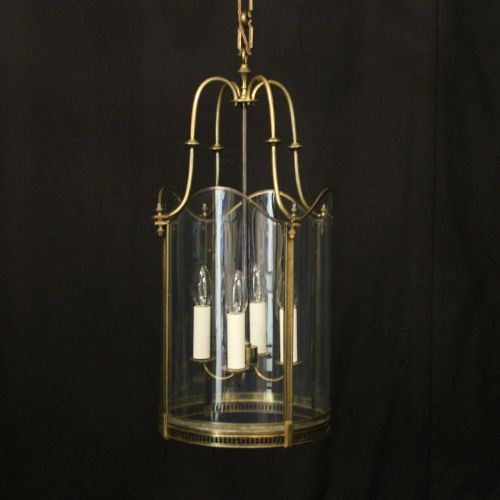
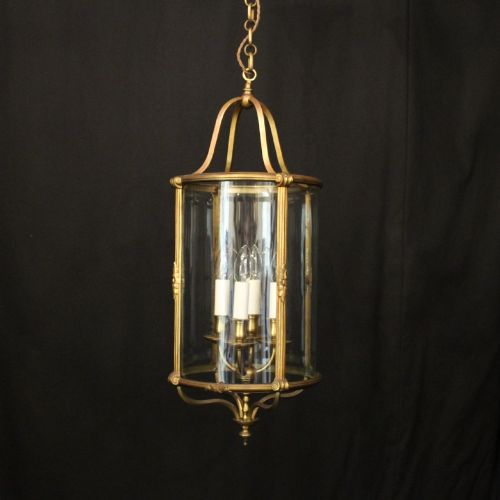
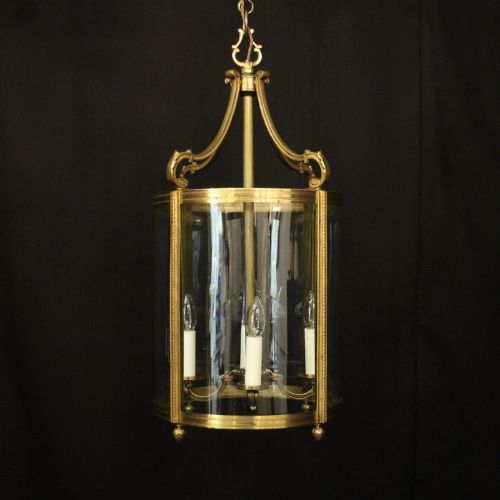


Classic French Hanging Lantern
These classic french hanging lantern pieces bring authentic continental presence to entrance halls, combining glass and metalwork in enduring forms.
Classic French Hanging Lantern
When you search for a classic french hanging lantern, you are looking at overhead illumination designed primarily for hallways, vestibules, and grand stairwells. These fixtures hang from ceilings by chains or rods, casting warm light downward through protective panes of glass.
On this page, you are most likely to meet examples originating from the nineteenth and early twentieth centuries. The forms range from simple single-bulb versions to large oversized multi-light fixtures carrying French Louis XVI, Rococo, or Neoclassical styling.
The objects listed span decades from the early nineteen-hundreds back into the nineteenth century, reflecting enduring design traditions. Their primary purpose remains decorative as much as functional, establishing an immediate focal point upon entering a space.
Materials and construction
Makers constructed these lanterns using metals such as brass, bronze, gilt bronze, and steel to form the structural frames and decorative mounts. These metals provided the necessary strength to support glass panes while accommodating interior electrical fittings or older candle burners.
Glass panels were fitted squarely into the metal frameworks, often featuring convex shapes to diffuse light and alter internal reflections. Gilt finishes and patinated bronze surfaces were applied to enrich the appearance of the metal components.
Casting and assembly techniques varied according to the period, with nineteenth-century examples often showing heavier cast bronze elements. Later twentieth-century pieces incorporated combinations of steel and brass to achieve robust twin-light or four-light configurations.
The listings span from the nineteenth century through the 1930s, featuring materials including glass, brass, gilt bronze, steel, and bronze.
Variations in quality
The standard of a classic french hanging lantern rests heavily on the weight and refinement of its metal framing. Finer examples display crisply cast bronze or gilt brass details with deeply chased ornamentation rather than plain rolled steel.
Proportion and scale also distinguish finer pieces from standard production. Larger lanterns with well-balanced proportions and original convex glass panes demand greater skill in manufacture and command stronger visual presence.
The harmony between the metal structure and the glass elements determines the overall integrity of the piece. Superior lanterns maintain tight joints and carefully finished surfaces that display age without losing structural cohesion.
The Classic French Hanging Lantern Glossary
- Gilt bronze
- Metal alloy treated with a thin layer of gold to produce a rich, luminous surface finish. It appears frequently on French decorative lighting from the nineteenth century onward.
- Convex glass
- Curved glass panes used within lantern frames to soften illumination and create optical distortion. This shape adds depth to the appearance of the internal light source.
- Louis XVI style
- Design movement characterised by classical symmetry, straight lines, and restraint borrowed from ancient Rome. This aesthetic influences many bronze and brass lanterns found on this page.
- Hall lantern
- Tall, narrow ceiling-hung lighting fixture specifically scaled for corridors and entrance spaces. These pieces direct light safely through enclosed glass panels.
- Pendant lighting
- General category for any light fixture suspended directly from the ceiling by a chain, cord, or metal rod. Hanging lanterns form a distinct subset of this broader group.
Classic French Hanging Lantern: Frequently Asked Questions
Where should a hanging lantern go?
These lanterns suit entrance halls, high-ceilinged corridors, and stairwells where overhead suspension creates a strong first impression. Their enclosed design protects the light source while distributing illumination evenly across confined spaces.
Ensure adequate ceiling height before hanging larger models, as oversized four-light versions require substantial clearance to look properly proportioned.
How do I date a lantern?
Dating relies on examining the metal composition, casting quality, and stylistic markers such as Louis XVI or Gothic Revival motifs. Nineteenth-century examples typically feature heavier cast bronze frames, whereas 1930s pieces often incorporate steel and brass combinations.
Look closely at construction methods, screw types, and wiring channels to help establish the approximate decade of manufacture.
Are these lights wired for modern use?
Most antique lanterns arrive adapted for contemporary electrical standards, though rewiring by a qualified professional remains advisable upon purchase. The internal sockets accommodate standard modern bulbs while retaining the original historical frame.
Check the internal cluster capacity, as multi-light versions can take two to four bulbs depending on the physical size of the lantern.
What metals are most common?
Brass, bronze, gilt bronze, and steel appear regularly across the available pieces. Gilt finishes and patinated bronze provide a traditional continental appearance suited to period interiors.
Steel and brass combinations tend to feature in twentieth-century items, offering robust construction for twin-light and larger configurations.