
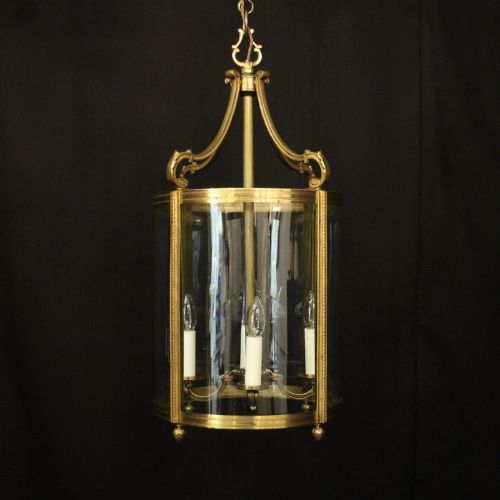
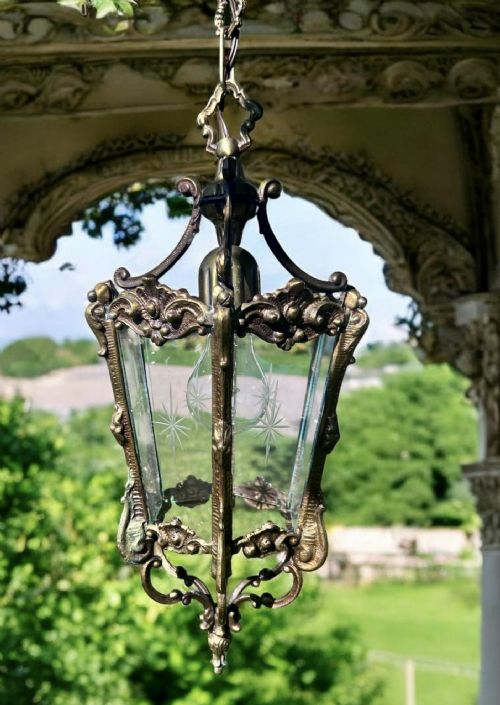


French Chateau Glass Lantern
These heavy glass and metal pieces bring weight and historic presence to corridors, combining brass, bronze and crystal cut glass in classic forms.
French Chateau Glass Lantern
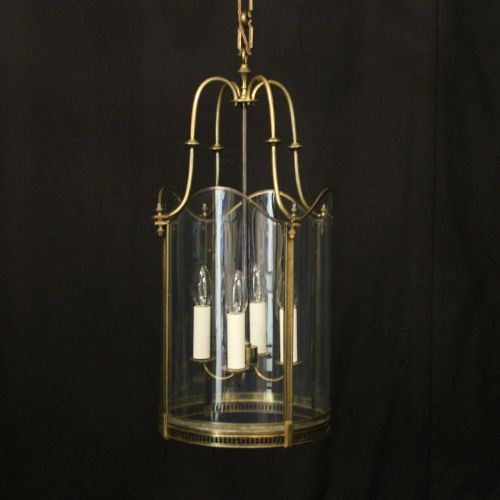
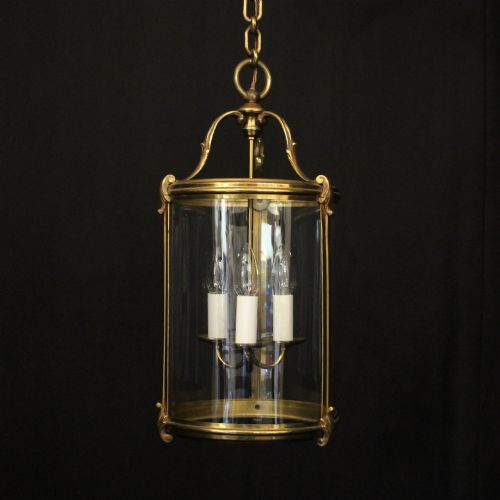
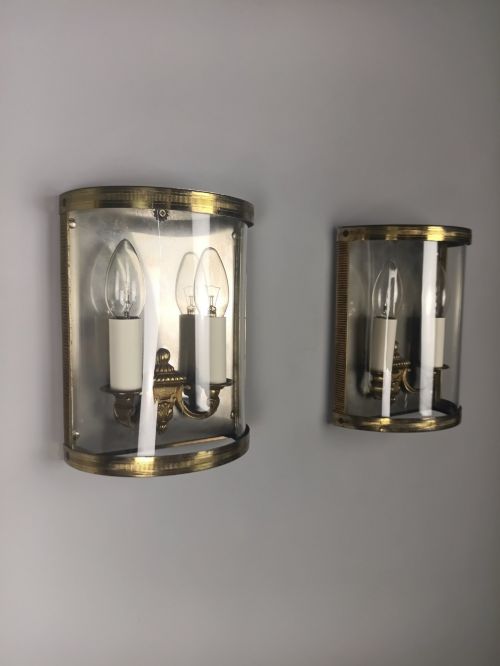
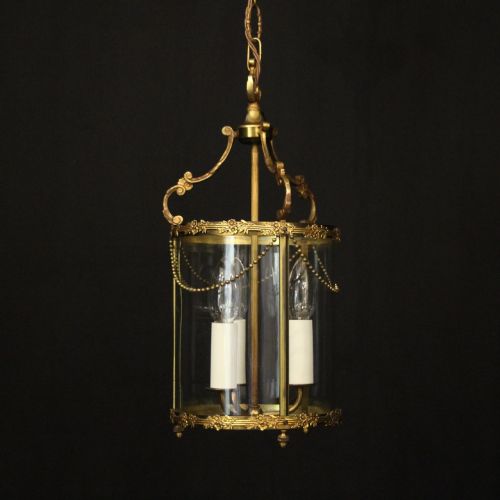
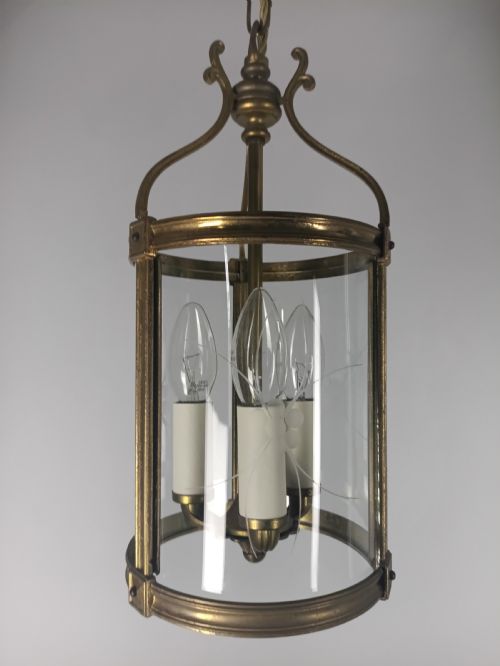
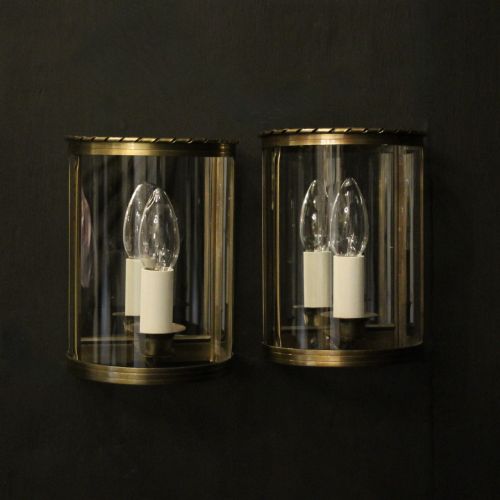
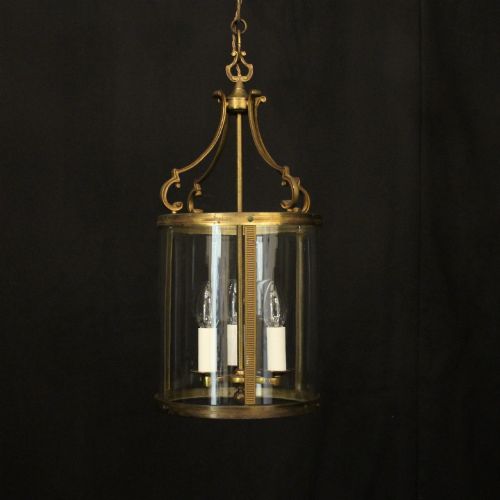
A french chateau glass lantern delivers an immediate sense of grand proportion and architectural presence to a hallway or stairwell. These fixtures span from the late nineteenth century through the 1930s, drawing upon classic decorative vocabularies like Louis XVI and Rococo revival. They hang on drop chains or mount directly as half lanterns against wall panels.
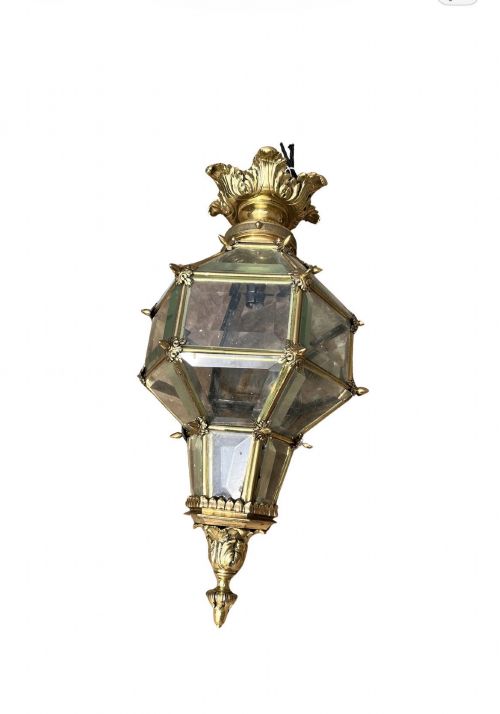
Most examples found here date from the early twentieth century, particularly the 1920s and 1930s, alongside nineteenth-century expressions in gilt bronze and cut glass. Forms vary from single light hall pendants to substantial triple and quadruple light fixtures enclosed in curved or convex glass. Toleware, steel, wrought iron and brass dominate the framing choices.
Originating primarily from French workshops, these fixtures served grand domestic entrances, exterior porches and reception halls. The selection includes both hanging ceiling lanterns and matching pairs of wall sconces or half lanterns. Their scale ranges from compact vestibule lights to oversized pieces intended for high ceilings.
Materials and construction
Makers utilised cast bronze, gilt brass, copper and wrought iron to construct the rigid skeletal frames that support the glass panes. Metal components often received a gilt finish or patination to emulate grander palace interiors. Structural integrity depended on sturdy brass collars, tension screws and robust hanging loops.
Panes of glass were hand cut, sometimes etched or curved into convex profiles to diffuse light evenly across a hallway. Lead came and brass glazing bars secured the individual glass panels within the metal framework. Heavier nineteenth-century iterations incorporate cut crystal elements and elaborate cast bronze mounts.
The listings span periods from the nineteenth century through the 1930s, featuring materials such as wrought iron, gilt bronze and etched convex glass.
Assessing quality and execution
Superior examples display crisp chasing on gilt bronze mounts, heavy gauge brass frames, and thick, distortion-free convex glass panels. Lesser pieces rely on lighter pressed metal and simpler soldering without hand finishing on the decorative cast elements. The weight of the metal and the depth of the gilding set the baseline for execution.
Proportion and the integration of secondary elements like internal candle tubes and decorative coronas distinguish finer production. Original patination and intact etched or cut glass details elevate the historical integrity of a piece. The presence of matching pairs provides greater utility for symmetrical architectural schemes.
The French Chateau Glass Lantern Glossary
- Convex glass
- Curved glass panels that bulge outward to maximise light diffusion and create a softer visual profile. This technique requires skilled glassblowing or slumping.
- Gilt bronze
- Bronze metal treated with a thin layer of gold or gold-coloured alloy to impart a rich, reflective surface. Often found on nineteenth-century chateau fixtures.
- Toleware
- Painted or lacquered sheet metal, frequently decorated in polychrome schemes. It appears on provincial French lanterns of the early twentieth century.
- Half lantern
- A light fixture split vertically to mount flush against a wall surface. These serve narrow corridors and stair landings where hanging pendants obstruct passage.
- Louis XVI style
- A neoclassical aesthetic characterised by straight lines, symmetry and classical architectural motifs such as acanthus leaves and urns. It heavily influences French lantern design.
French Chateau Glass Lantern: Frequently Asked Questions
Where should I hang a hall lantern?
These fixtures suit high-ceilinged entrance halls, grand stairwells and long corridors where their substantial drop creates a strong focal point. Ensure you measure the vertical clearance so that people can pass comfortably underneath.
For narrower hallways or landings, matching pairs of half lanterns mounted directly to the wall provide adequate illumination without encroaching on walking space.
How do I date a brass lantern?
Dating relies on examining the construction methods, metal alloys, and stylistic vocabulary present in the frame. Nineteenth-century examples typically feature heavier cast bronze and hand-chased ornamentation, whereas 1920s and 1930s pieces often utilise bright brass, steel, and simpler soldered joints.
Wiring methods and bulb holders also offer clues, though many antique fixtures have undergone rewiring to meet modern safety standards for domestic use.
Can these lanterns be used outdoors?
Most antique interior lanterns lack modern weatherproofing seals and are designed for protected indoor spaces like porches, vestibules or interior halls. Exposing antique brass, gilt surfaces and unsealed electrical components to rain will cause rapid corrosion.
If you plan to install a piece in a semi-exterior porch, consult an electrician to assess whether the specific housing tolerates sheltered outdoor conditions.
How are antique lanterns wired?
Many period lanterns arrive rewired with modern flexible cable and standard lamp holders to facilitate straightforward installation by a qualified electrician. Older fixtures originally held candles or early gas burners before conversion to electricity during the twentieth century.
It is standard practice to inspect the internal wiring upon delivery to ensure it complies with current domestic electrical regulations in your region.