

Curved Front Storage Chest
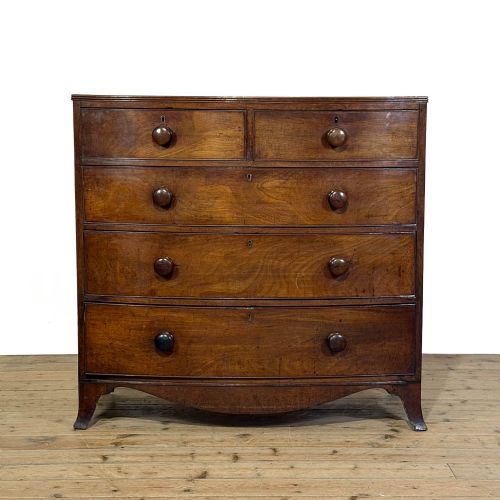
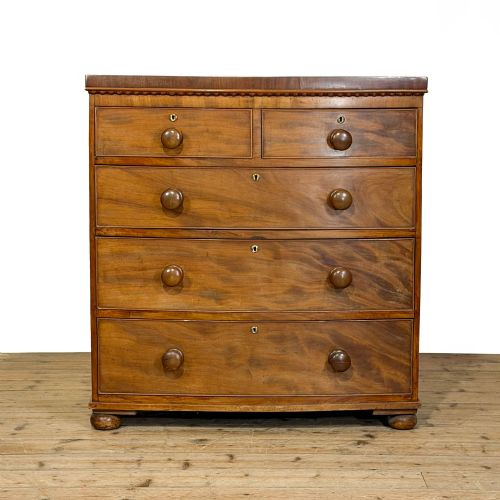
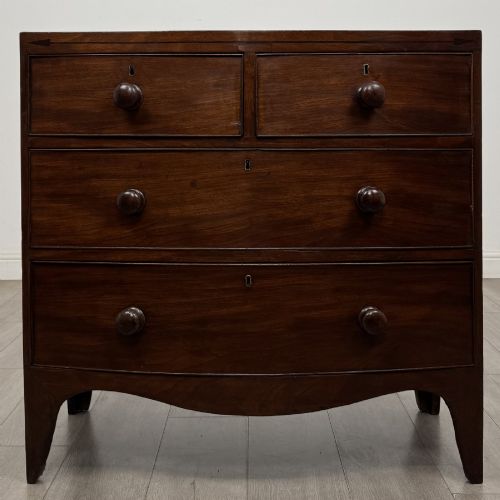
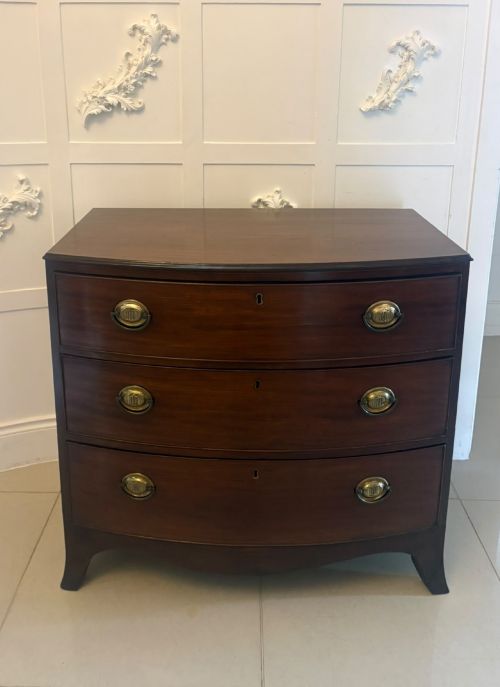
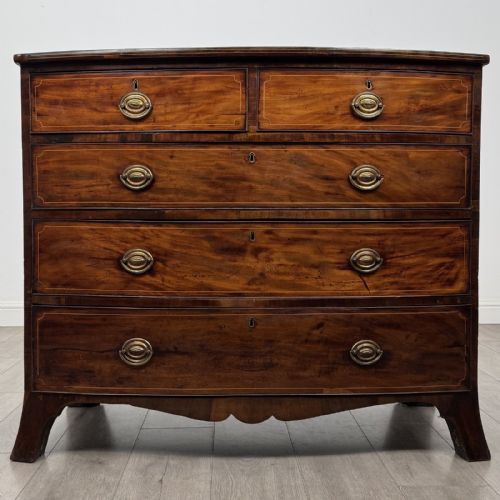
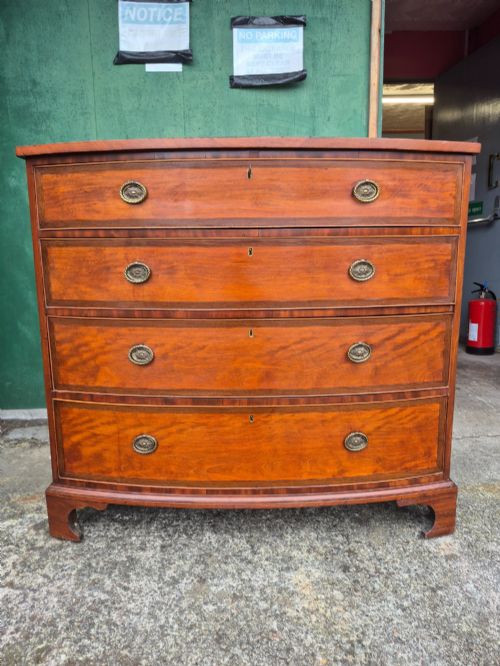
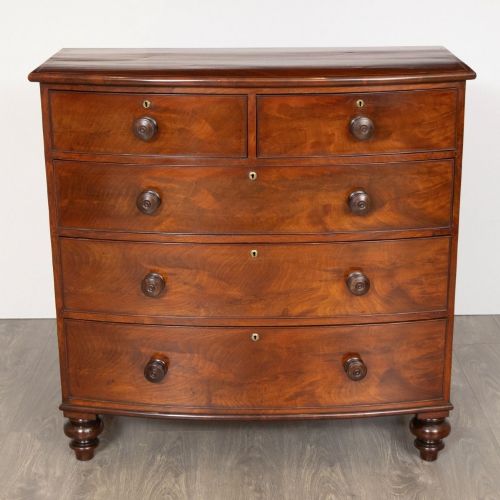
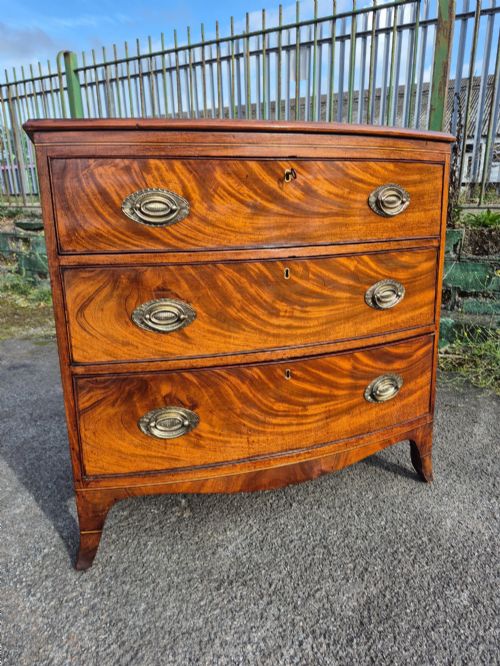
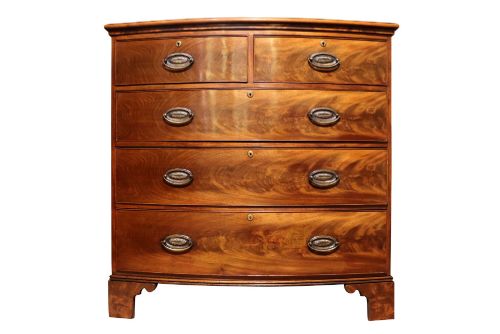
A curved front storage chest commands attention through its swelling contour, offering generous proportions and refined timber grain for everyday utility.
Curved Front Storage Chest
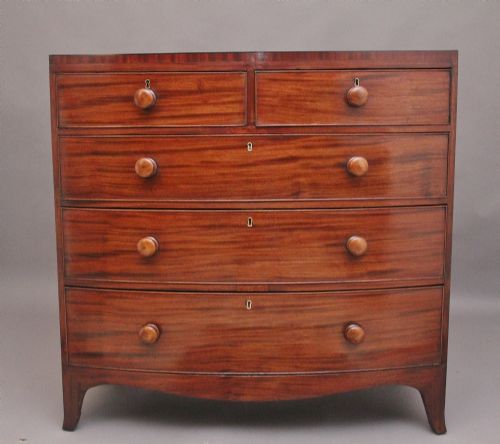
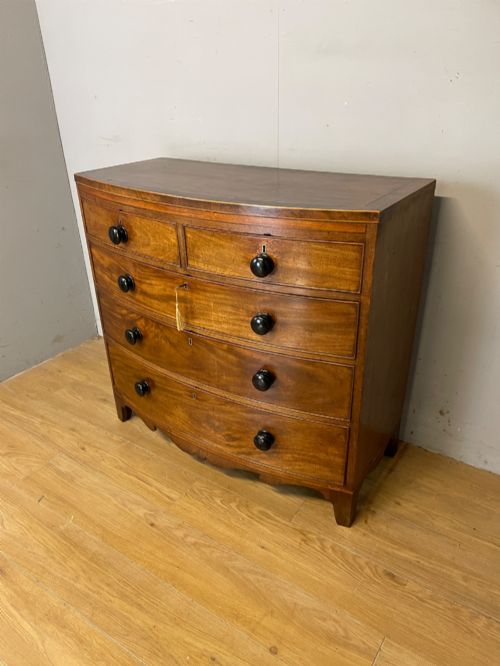
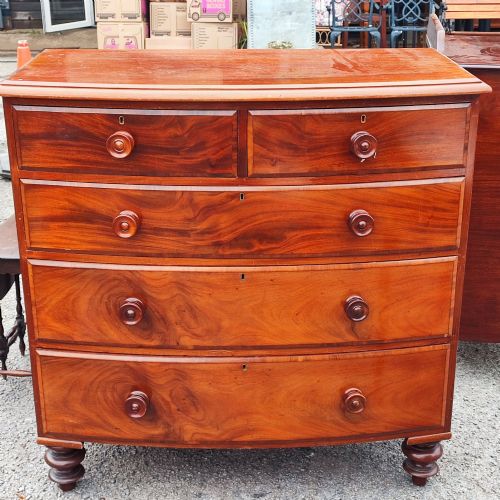
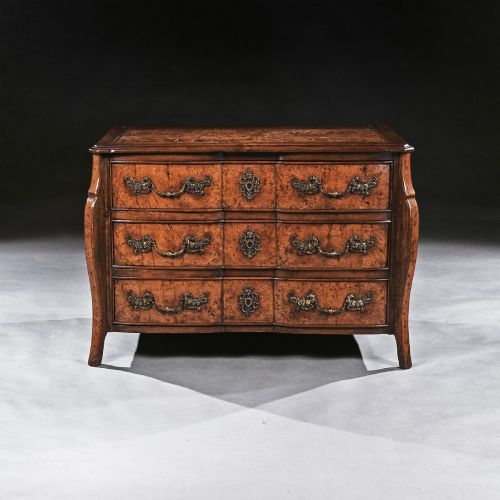
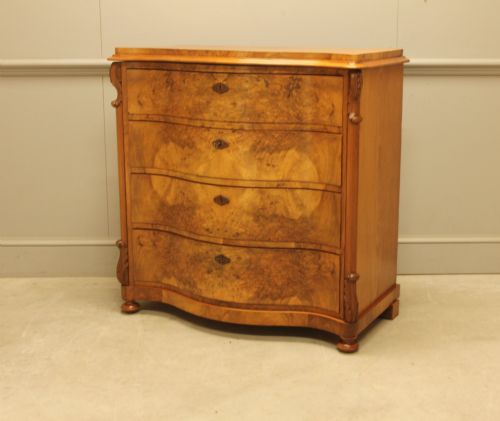
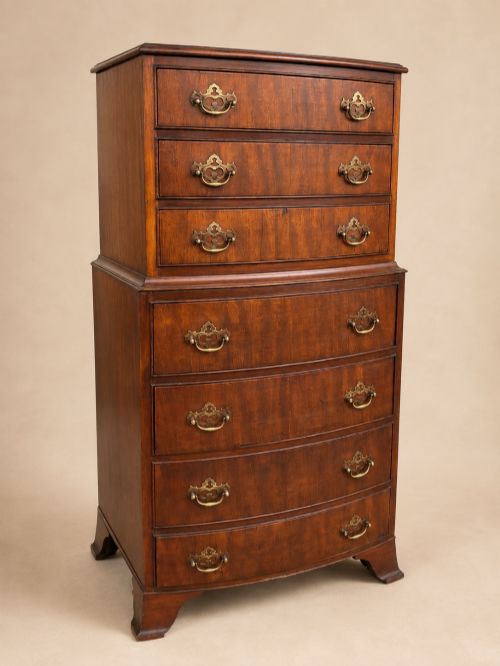
A curved front storage chest encompasses forms such as bow front chests of drawers, tallboys, sideboards, and commodes originating from periods spanning the eighteenth century to the twentieth century. These pieces combine domestic utility with pronounced frontal curves, appearing frequently in Georgian, Regency, and Victorian iterations.
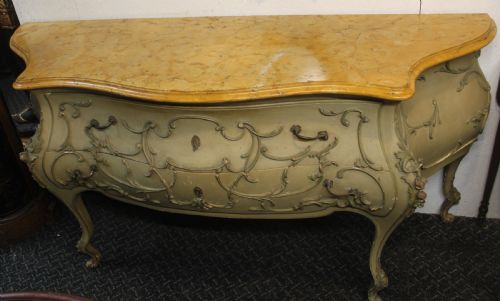
The primary examples met on this page are mahogany bow front chests of drawers, alongside occasional walnut, oak, and satinwood variants. Structural silhouettes range from restrained bow fronts to dramatic serpentine and bombe shapes influenced by French and Dutch cabinet-making traditions.
Materials and construction methods
Cabinet-makers constructed these carcasses predominantly from solid timbers like mahogany, oak, and walnut, frequently applying decorative veneers such as flame mahogany, burr walnut, and satinwood to the primary surfaces. Crossbanding and contrasting stringing lines defined the borders of drawers and tops.
Curving the timber required specialised bending techniques or careful cutting of solid wood and laminated framing to achieve the desired bow or serpentine profile. Brass hardware, including drop handles and escutcheons, completed the functional assembly.
Curved Front Storage Chest Retail Price Guide 2026
Typical asking prices for curved front storage chest among the pieces listed under this phrase on Sellingantiques today, from the lower quarter to the upper quarter. They describe what is for sale here now, not the wider market.
Listings feature mahogany, oak, walnut, and satinwood across Georgian, Regency, Victorian, and Edwardian periods.
Assessing craftsmanship and condition
The distinction between tiers rests on the choice of timber and the precision of the veneering, where finely figured flame mahogany or burr walnut elevates a piece above plain stock. Crispness in the execution of edge banding and dovetail joints signals superior workshop standards.
Proportion and integrity of the curved facade dictate visual balance, while original brasses and undisturbed timber surfaces preserve the historical character of the piece.
The Curved Front Storage Chest Glossary
- Bow front
- A convex curved frontal profile that projects outward in an arc. This shape became a defining characteristic for chests of drawers and sideboards during the Georgian and Regency periods.
- Serpentine
- A wave-like frontal shape featuring a convex centre flanked by concave sides, or vice versa. This sophisticated contour demands advanced carpentry skills.
- Crossbanding
- A strip of veneer applied to the border of a surface where the grain runs at right angles to the main panel. It provides a neat, contrasting frame.
- Commode
- A decorative low storage chest or cabinet, often of French or continental origin. These frequently feature marble tops and elaborate marquetry.
- Dovetail
- An interlocking joint used in drawer construction, formed by fan-shaped tenons and mortises. Hand-cut dovetails help indicate age and traditional craftsmanship.
Curved Front Storage Chest: Frequently Asked Questions
How do I date a bow front chest?
Dating a chest involves examining the secondary timbers inside the drawers, the style of the brass hardware, and the construction methods used for the joints. Georgian and Regency pieces typically show hand-cut dovetails and native woods like oak or pine linings.
Later Victorian and Edwardian examples often incorporate machine-sawn elements and different framing techniques. Comparing the specific veneer types and proportions against known stylistic periods helps narrow the origin.
Where should I place a serpentine chest?
A serpentine chest functions effectively in hallways, living rooms, or bedrooms where its distinct profile can be appreciated without obstruction. Because the front undulates, placing it against a flat wall allows the architectural lines to stand out.
Ensure adequate clearance around the piece so the drawers operate smoothly and the curved woodwork remains visible from multiple angles.
How do I maintain wood veneer?
Maintaining veneer requires keeping the timber away from direct heat sources and strong sunlight to prevent warping and fading. Regular dusting with a soft, dry cloth preserves the polished surface.
Applying a traditional beeswax polish occasionally nourishes the grain without building up heavy chemical residues. Avoid excessive moisture on antique polished finishes.