

Curved Front Commode
A curved front commode offers a sweeping silhouette and generous drawer storage, uniting practical utility with decorative distinction across Georgian, Regency, and Victorian periods.
Curved Front Commode
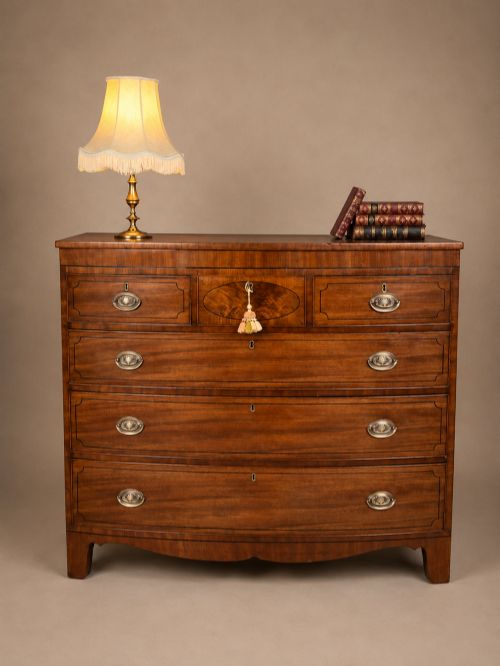
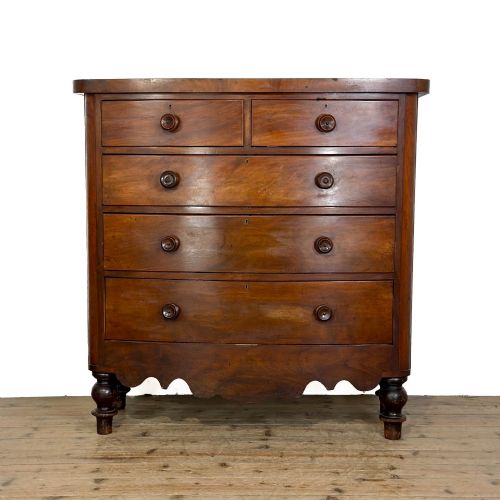
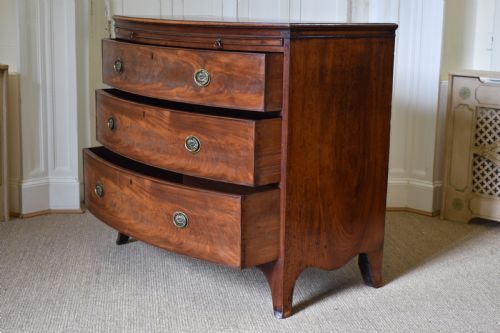
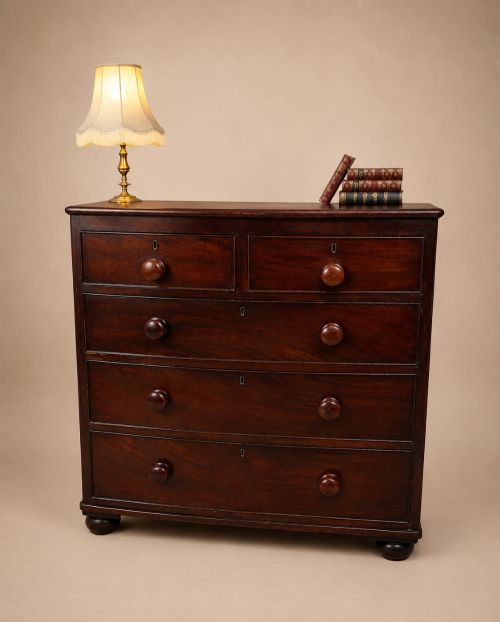
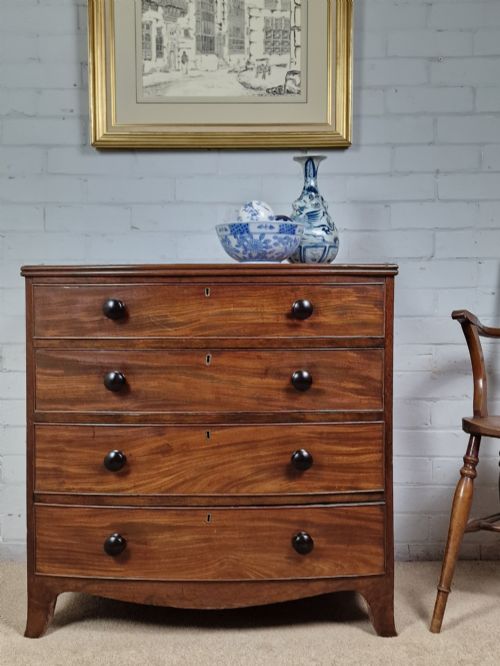
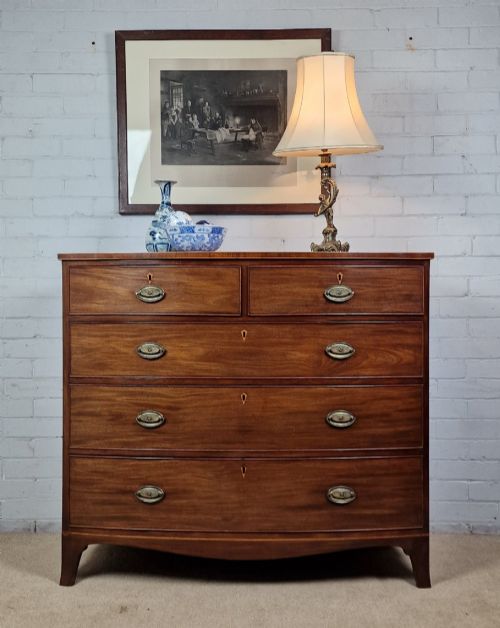
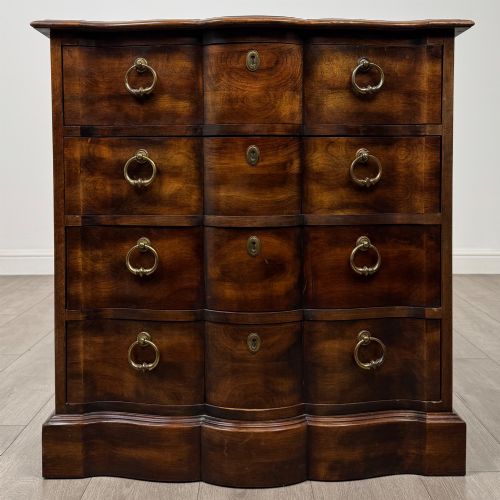
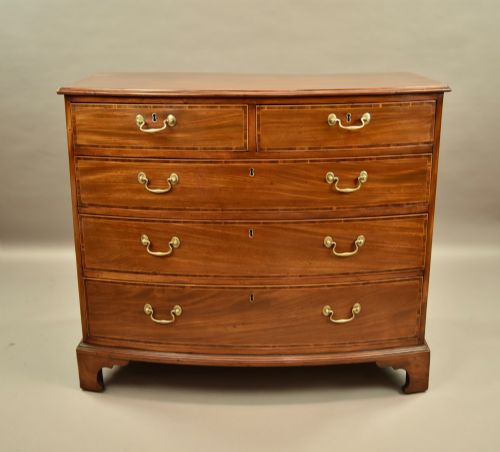
A curved front commode presents a rounded or serpentine facade that softens the rigid lines of traditional case furniture. These pieces primarily take the form of chests of drawers and sideboards originating from Georgian, Regency, and Victorian eras.
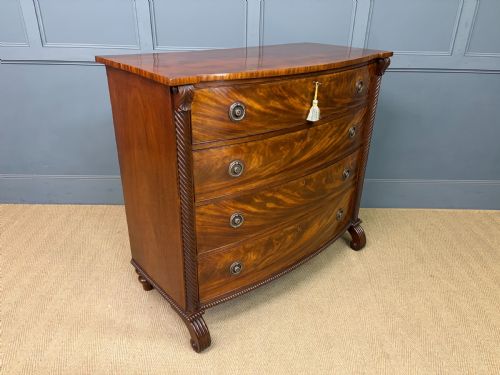
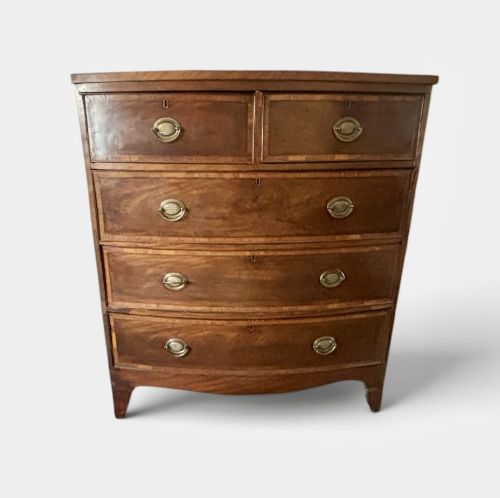
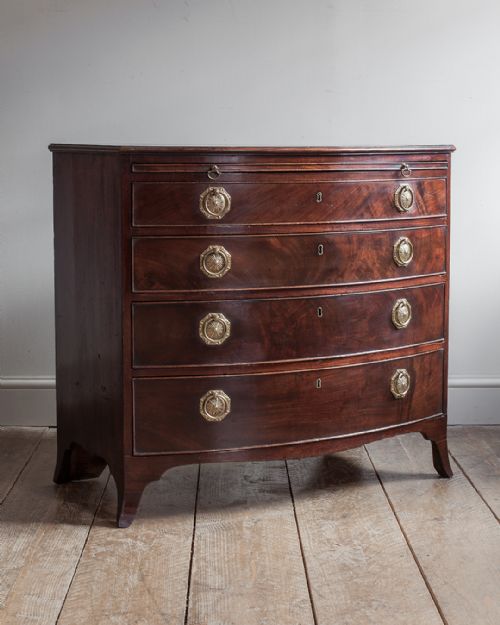
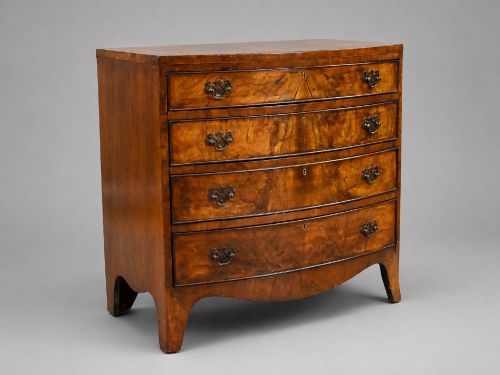
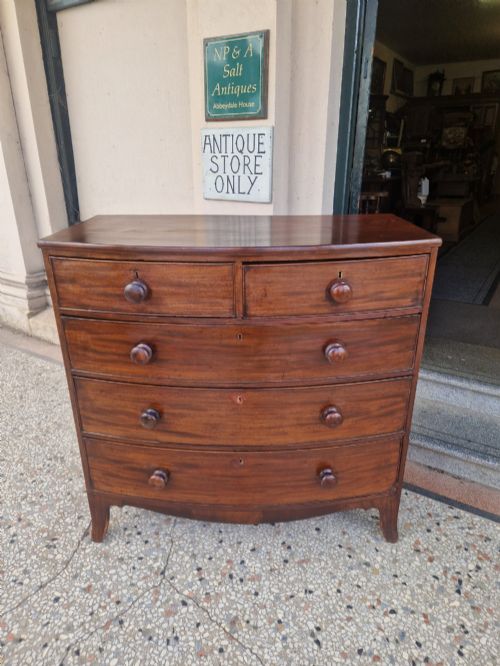
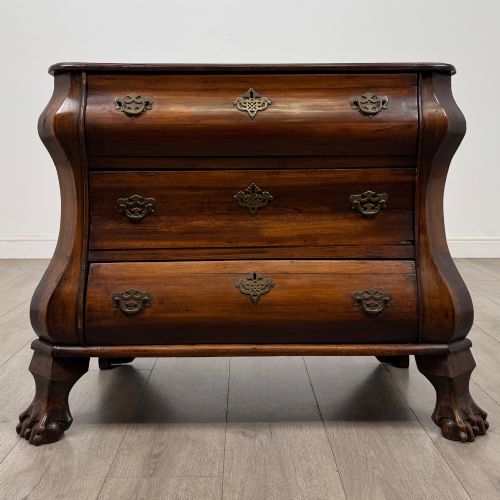
The version most commonly met on this page is the mahogany bow front chest of drawers, often dating from the late eighteenth or early nineteenth century. Examples also appear in walnut, oak, and painted wood, with French and Dutch variations introducing serpentine profiles and bombe shapes.
Craftsmen built these forms to command attention in principal rooms while offering deep, accessible storage. Their rounded outlines require precise carpentry to ensure the drawers operate smoothly within a non-linear frame.

Distinctions in craftsmanship
The refinement of the curved facade dictates much of the visual success, separating masterwork joinery from standard production. Grain matching across multiple drawer fronts indicates an artisan who planned the piece with care.
The quality of secondary timbers used inside the drawer linings and backboards reveals the original tier of manufacture. Crispness in the boxwood inlay and the retention of original brass pulls further distinguish superior examples.
Curved Front Commode Retail Price Guide 2026
Typical asking prices for curved front commode among the pieces listed under this phrase on Sellingantiques today, from the lower quarter to the upper quarter. They describe what is for sale here now, not the wider market.
Cabinetmakers solved the geometry of curved drawers long before power tools, ensuring centuries of smooth sliding without a single straight line.
The Curved Front Commode Glossary
- Bow front
- A convex curved cabinet front that projects outward in an arc. This shape dominates the English pieces found in this selection.
- Serpentine
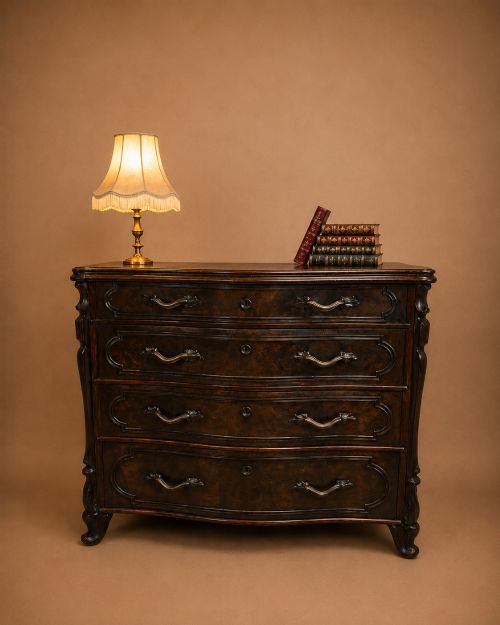
- A furniture front curved in a wave pattern, concave in the centre and convex at the sides. It demands advanced woodworking skill to execute properly.
- Bombe
- A bulging, outward-curving chest profile associated with continental European design. Dutch and French examples frequently employ this dramatic silhouette.
- Satinwood
- A durable tropical wood with a lustrous, golden sheen. Cabinetmakers utilised it for banding and decorative veneers.
- Marquetry
- The art of applying pieces of veneer to a structure to form decorative patterns. Dutch pieces in the collection use this technique extensively.
Curved Front Commode: Frequently Asked Questions
What is a curved front commode?
A curved front commode is a case piece featuring a rounded, bowed, or serpentine facade designed to hold drawers. These items served primarily as refined storage units in bedrooms and reception rooms.
They combine practical utility with sophisticated silhouettes developed by cabinetmakers during the Georgian and Regency periods.
How do I date a bow front chest?
Dating relies on examining construction methods, timber choices, and hardware styles across the piece. Georgian and Regency examples often feature hand-cut dovetails and specific proportions.
Later Victorian and Edwardian reproductions or adaptations adopt heavier timbers and altered internal framing methods.
Where were these commodes placed historically?
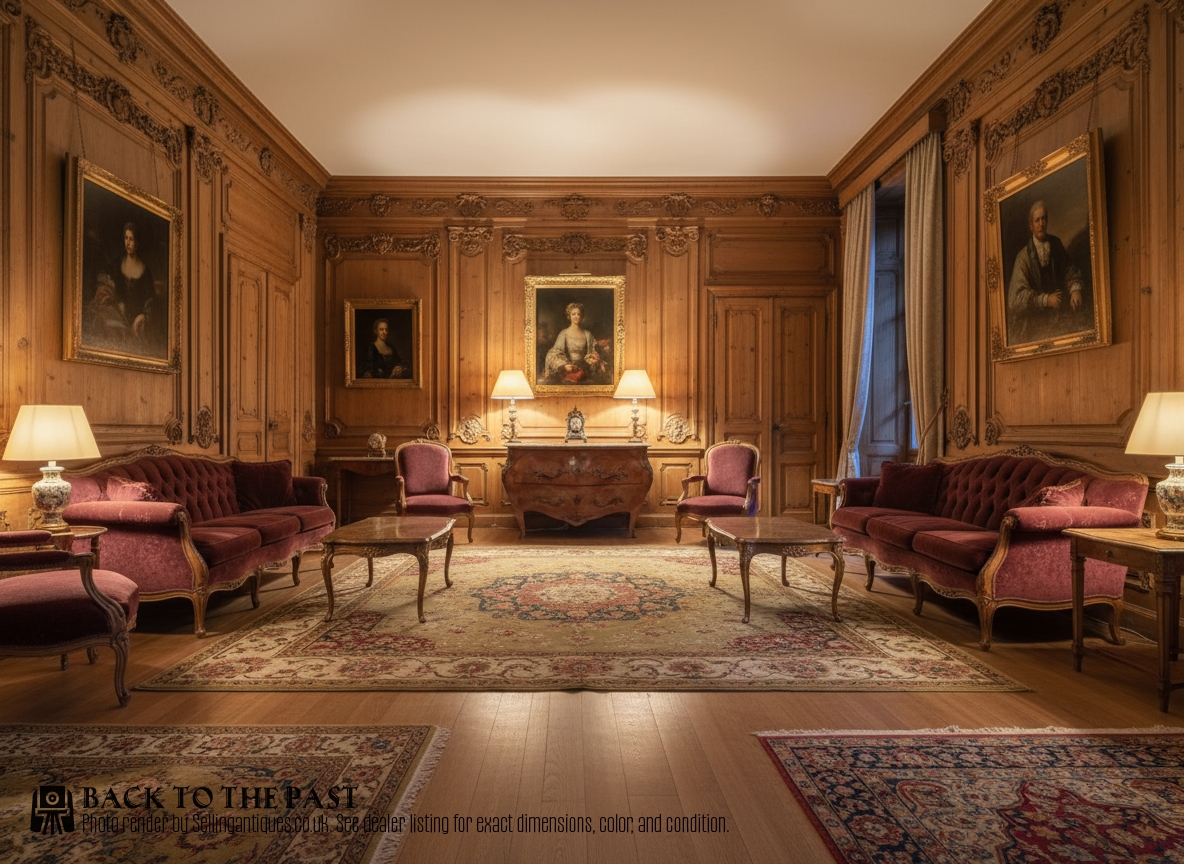
These pieces occupied prominent positions in principal bedchambers, dressing rooms, and formal parlours. Their decorative fronts ensured they contributed to the overall aesthetic of the interior.
They held linens, clothing, and personal documents while serving as a surface for mirrors and decorative objects.
How do I care for antique wood furniture?
Maintain stable humidity levels and keep wooden furniture away from direct heat sources to prevent veneer lifting. Regular dusting with a soft cloth preserves the historic finish.
Avoid modern silicone polishes and instead rely on traditional beeswax applications to nourish the timber surfaces.
What is the difference between English and continental pieces?
English examples on this page typically favour restrained mahogany bow fronts with clean geometric lines. Continental pieces often display dramatic bombe shapes and elaborate marquetry.
French and Dutch makers embraced more undulating profiles and marble tops compared to their British counterparts.