


Antique German Furniture
Antique german furniture brings solid walnut timber, precise marquetry and restrained Biedermeier lines into a room with quiet authority.
Antique German Furniture
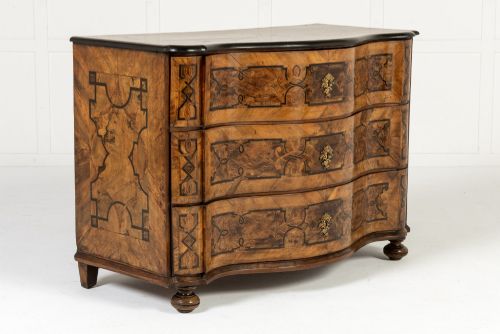
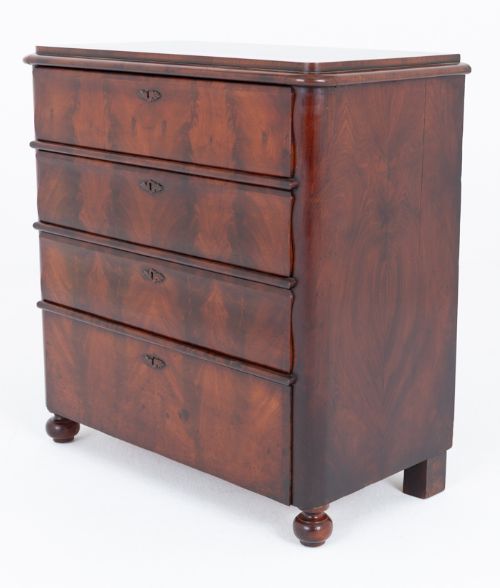
Antique german furniture encompasses substantial case pieces, writing desks and seating produced across the seventeenth, eighteenth and nineteenth centuries. Buyers searching this phrase most frequently encounter walnut Commodes and mahogany Biedermeier chests of drawers originating from regional workshops.
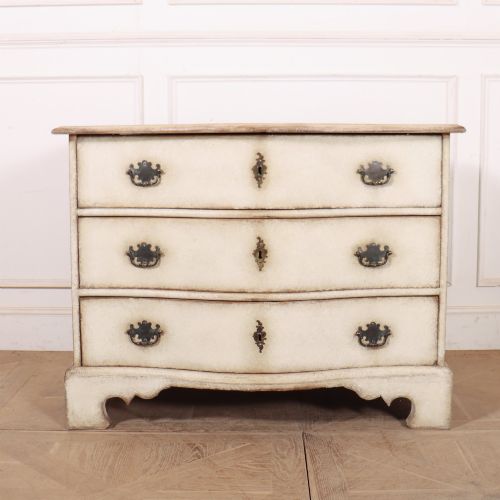
The selection includes serpentine fronted cabinets alongside architectural armoires and console tables in burr walnut, fruitwood and flame mahogany veneer. Stylistic expressions range from exuberant baroque and rococo pieces to the clean, architectural geometry of the nineteenth century.
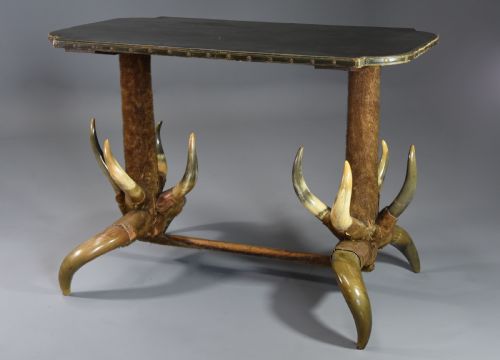
Smaller items such as inlaid side cabinets, writing tables and specialised seating appear alongside larger storage furniture. Each piece reflects the particular regional tastes and cabinet-making traditions of central and southern European makers.
What varies in quality
Quality rests on the selection of timber veneers and the precision of the underlying construction. Top-tier pieces display exceptionally figured burr walnut or flame mahogany matched symmetrically across the grain.
The crispness of carved details and the accuracy of geometric marquetry separate superior examples from more vernacular work. Original brass mounts, working locks and stable timber movement further distinguish the finest items.
Listings feature walnut, mahogany, fruitwood and burr walnut across pieces spanning the seventeenth to the nineteenth centuries.
The Antique German Furniture Glossary
- Commode
- A decorative chest of drawers or cabinet standing on legs or feet. Eighteenth-century examples often feature serpentine fronts and elaborate walnut marquetry.
- Biedermeier
- A dominant style in central Europe during the nineteenth century characterised by clean lines, minimal ornamentation and figured veneers such as birch and mahogany.
- Marquetry
- The art of applying pieces of veneer to a structure to form decorative patterns and pictures. Craftsmen used various coloured woods and brass to create intricate surface designs.
- Serpentine
- A furniture front or table edge curving outward at the centre and inward at the sides. This contour requires skilled carpentry to shape timber accurately.
- Armoire
- A large freestanding wardrobe or cupboard used for hanging clothes or storing textiles. German examples often feature panelled doors and robust architectural cornices.
Antique German Furniture: Frequently Asked Questions
What is Biedermeier furniture?
Biedermeier is a central European style dating from the nineteenth century that favours plain architectural forms and figured timbers over heavy ornamentation.
Pieces from this period rely on the natural grain of woods like birch and mahogany to provide visual interest.
How do I identify an 18th century commode?
Eighteenth-century commodes typically feature serpentine or bombe fronts, rich walnut veneers and traditional hand-cut dovetail joints in the drawer construction.
They often display baroque or rococo carving styles particular to southern German workshops.
Where was this furniture made?
Items originate from various regions including southern Germany, East Germany and neighbouring Alpine areas where local cabinet-making guilds flourished.
Different regions developed distinct preferences for specific fruitwoods, marquetry patterns and structural proportions.
How should I care for walnut and mahogany surfaces?
Protect antique timber surfaces from direct sunlight and maintain stable room humidity to prevent the wood or veneer from splitting.
Apply traditional beeswax polish sparingly and buff with a soft cloth to preserve the natural lustre of the finish.