
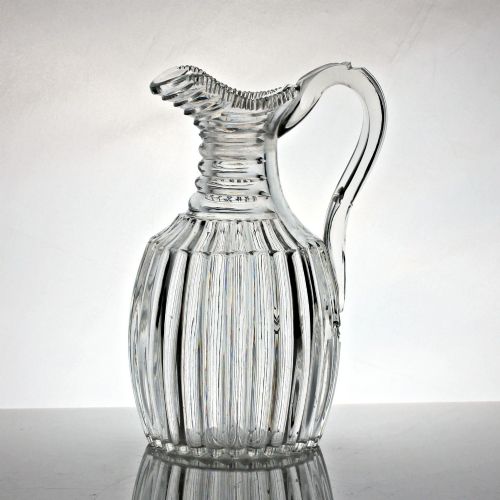

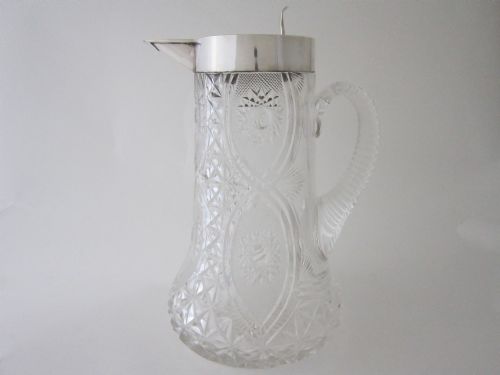
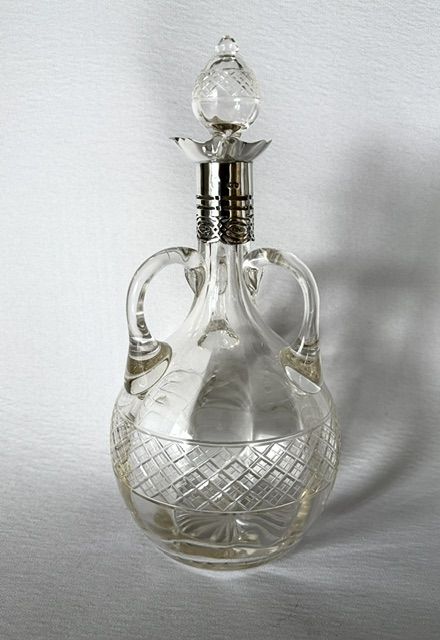
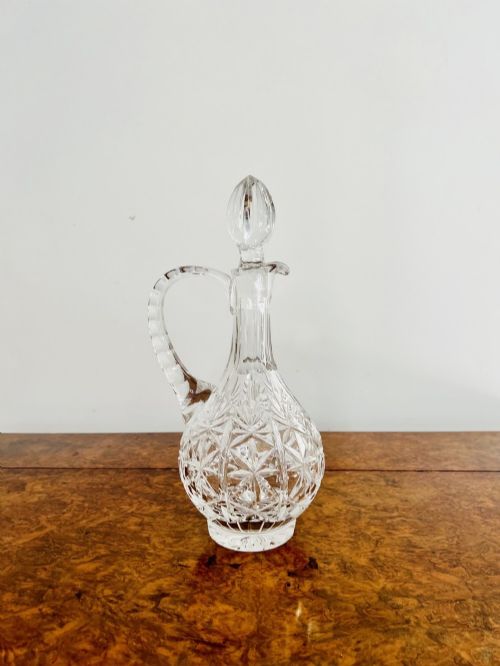


Crystal Claret Jug
A crystal claret jug brings weighty cut glass and gleaming silver together to serve wine with period ceremony.
Crystal Claret Jug
A crystal claret jug is a vessel designed for pouring wine at the dining table, combining a glass body with metal mounts, hinges, and handles. These pieces frequently appear in Victorian and Edwardian iterations, spanning the nineteenth and early twentieth centuries.
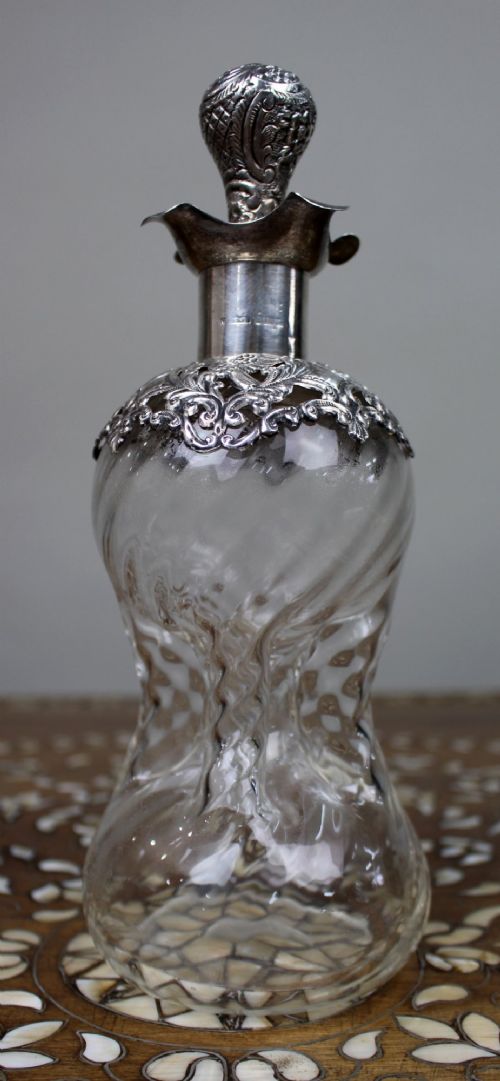
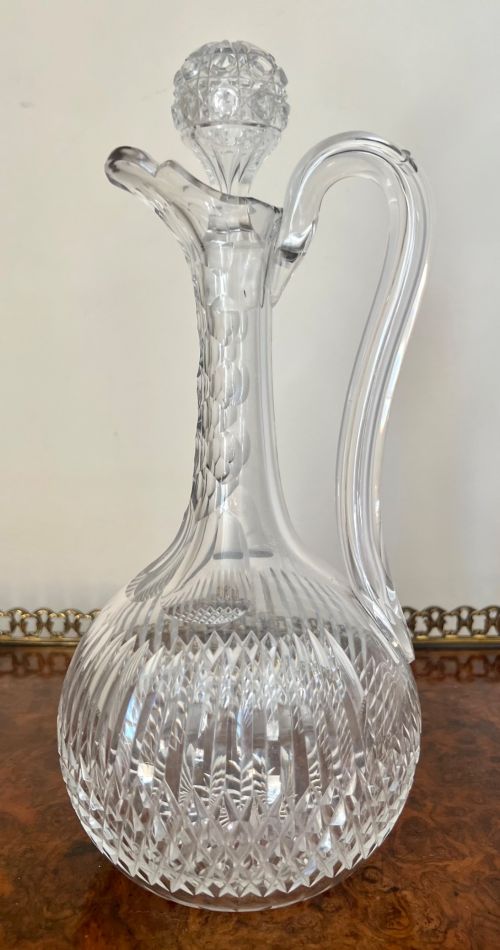
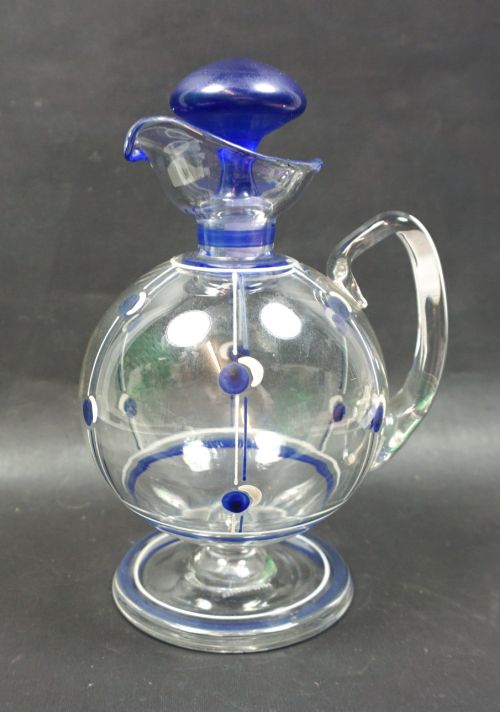
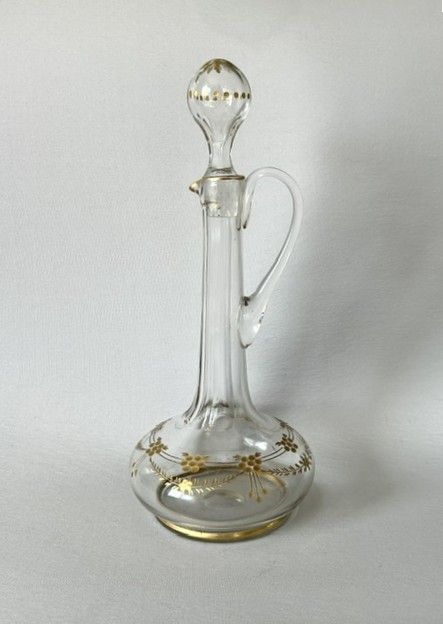
The body of a crystal claret jug takes the form of ewers, decanters, and pitchers shaped from clear or coloured glass. Many examples feature tall, slender profiles or bulbous bases suited for aerating wine during formal meals.
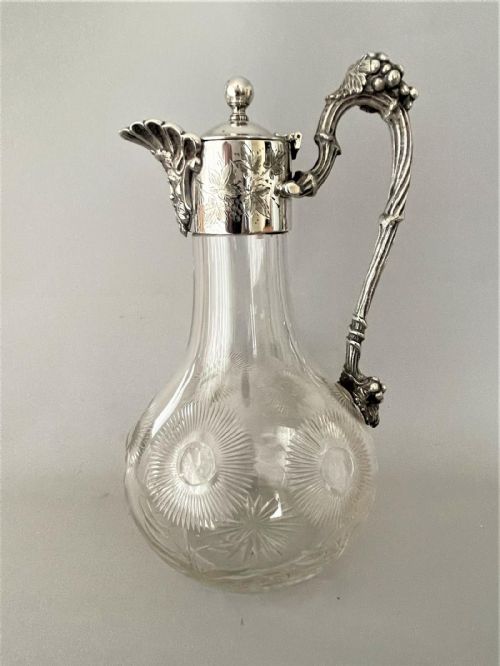
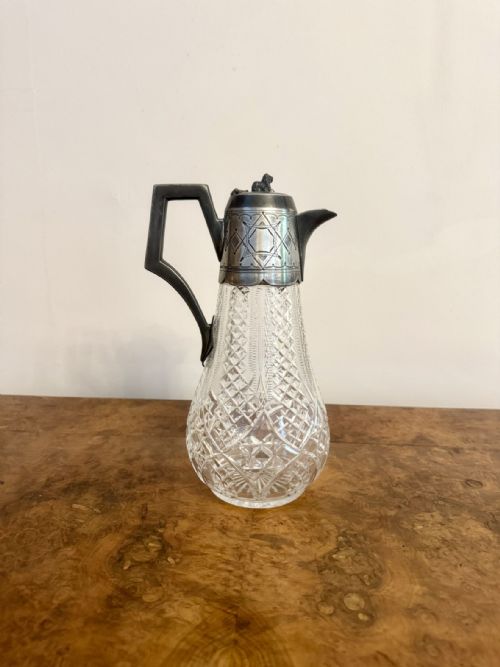
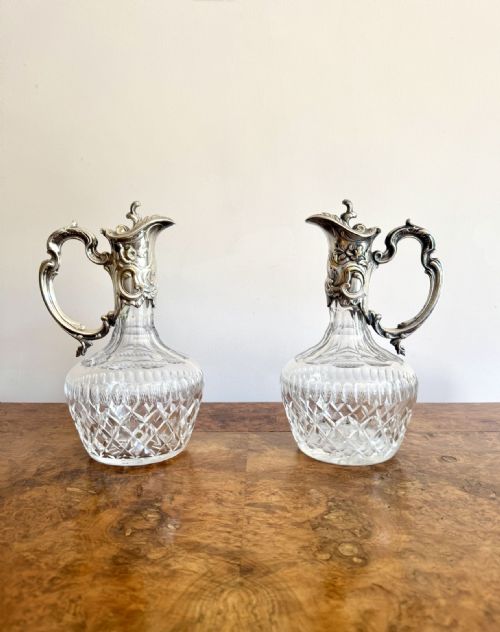
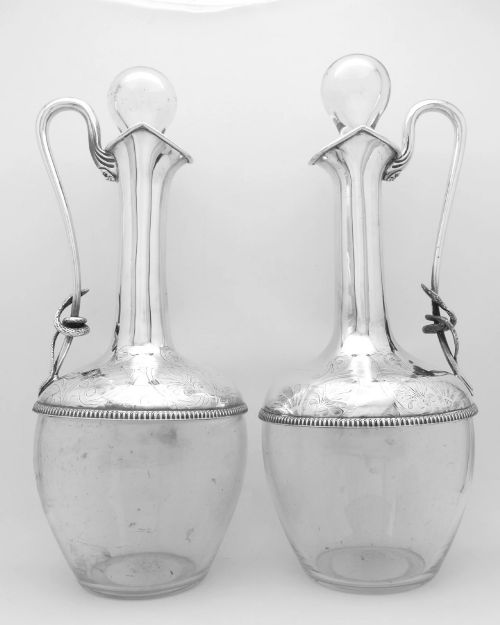
Makers utilised various decorative techniques on the glass, ranging from geometric pillar and prism cutting to delicate engravings of fruiting vines and dolphins. The mountings often incorporate detailed castings such as Bacchus masks or serpent handles.
Materials and Technique
The manufacture of a crystal claret jug relies on heavy lead crystal or clear glass, shaped by blowing and then heavily cut with wheel-engraved geometric patterns or naturalistic motifs. This deep cutting refracts light and provides a tactile grip on the vessel.
Metals such as sterling silver, silver gilt, and silver plate form the hinged mounts, lips, and handles attached to the glass necks. These metal components require precise silversmithing to secure tightly around the glass body without causing stress fractures.
Listings feature periods spanning from the mid-nineteenth century through the Art Deco era, incorporating both sterling silver and silver-plated mounts.
Assessing Quality
Quality in a crystal claret jug rests upon the depth and crispness of the glass cutting, where sharper facets and clearer material distinguish superior vessels from plain moulded alternatives. The weight of the piece and the resonance of the crystal indicate the lead content and overall substance.
The standard of the metal mountings dictates the tier of the piece, with solid sterling silver and heavy silver plating showing finer chased details and more secure construction than basic utility wares. Maker marks from established workshops further elevate the status of the finished object.
Asprey and Co. Ltd·Richardsons·Baccarat·Fenton Brothers·Edgar Finley and Hugh Taylor·Elkington and Co.·W and G Sissons·Hukin and Heath·William Hutton
The Crystal Claret Jug Glossary
- Bacchus mask
- A decorative metal casting depicting the face of the classical god of wine, commonly found adorning the spout of a jug.
- Latticinio
- A glassmaking technique involving fine white or coloured glass threads twisted within the clear body during formation.
- Ewer
- A large jug with a wide spout and a curved handle, sharing a similar silhouette with many formal wine vessels.
- Sterling silver
- An alloy containing ninety-two point five percent silver, utilised for the hallmarked mounts and covers on high-end pieces.
- Silver plate
- A layer of silver fused to a base metal substrate, providing the appearance of solid silver on domestic dining wares.
Crystal Claret Jug: Frequently Asked Questions
How do I clean a crystal claret jug safely?
Wash the vessel by hand using warm water and mild detergent, avoiding sudden temperature changes that might crack the glass. A bottle brush with soft bristles helps reach interior residue without scratching the cut facets.
Dry the metal mounts promptly to preserve the silver and prevent tarnishing around the hinges.
Can I use an antique jug for serving wine?
These vessels were originally manufactured for serving claret and other table wines during formal nineteenth-century meals. Modern use remains entirely practical provided the interior is thoroughly cleaned before pouring.
Inspect the collar and handle security prior to filling to ensure the heavy glass body remains stable.
How do I tell Victorian jugs from Edwardian ones?
Victorian examples tend to display heavier, deeply cut geometric patterns and ornate cast mounts, often reflecting revival styles. Edwardian pieces frequently exhibit lighter proportions and cleaner neoclassical influences.
Silver hallmarks provide the most reliable dating evidence, recording the exact assay office and year of manufacture.