
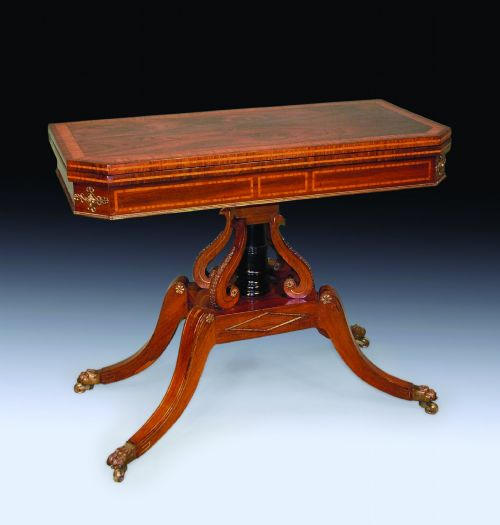

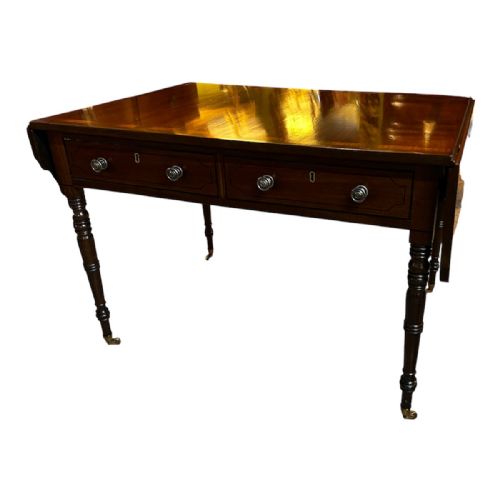

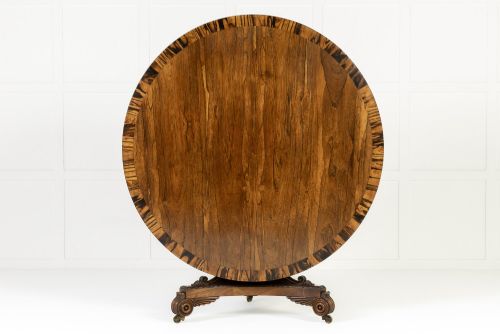


Crossbanded Rosewood Table
A crossbanded rosewood table brings dense grain and contrasting timber borders together, turning practical furniture into a focal point.
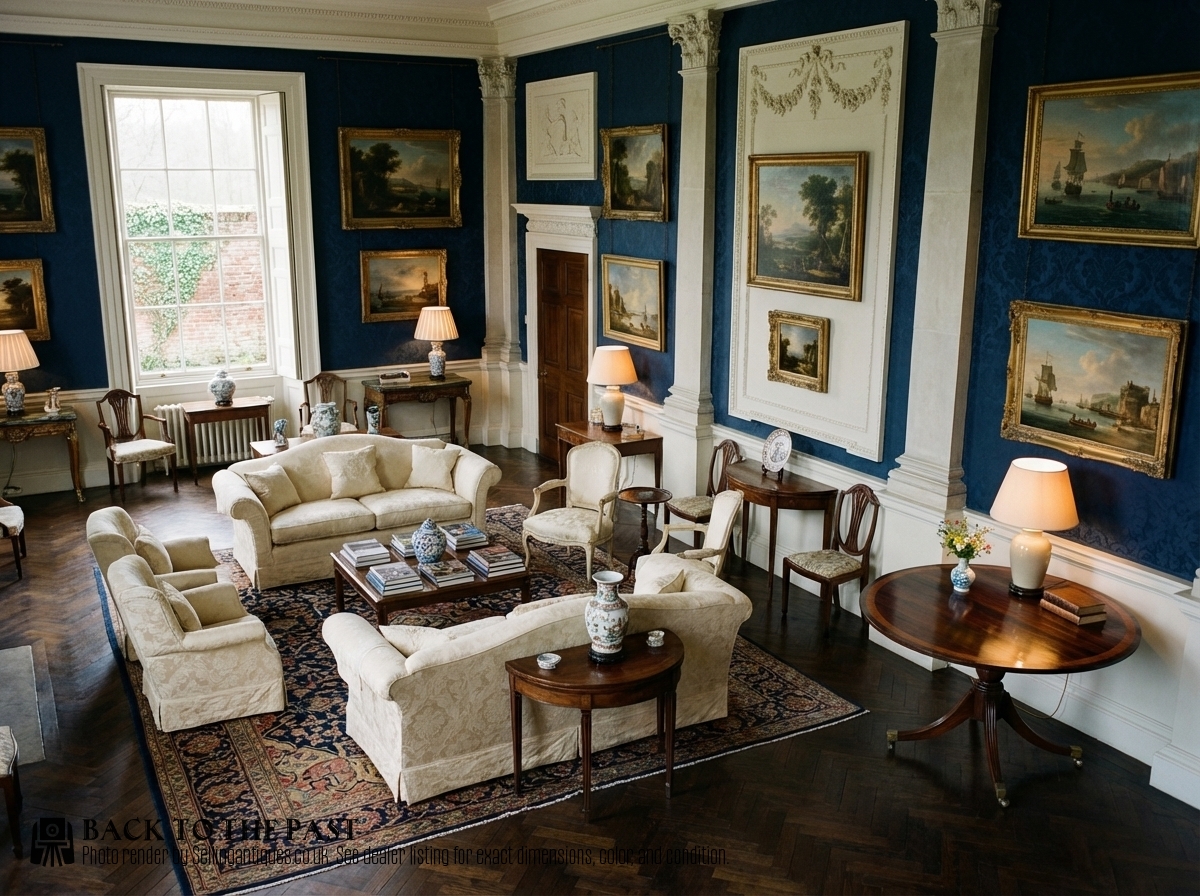
Crossbanded Rosewood Table
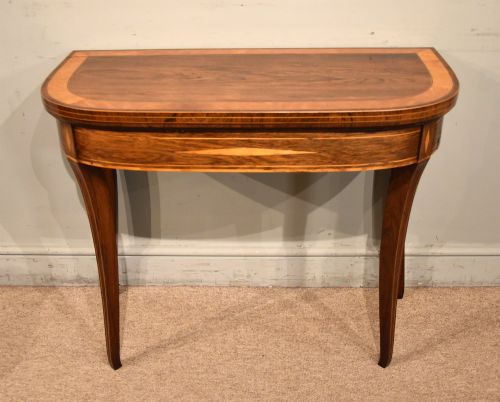
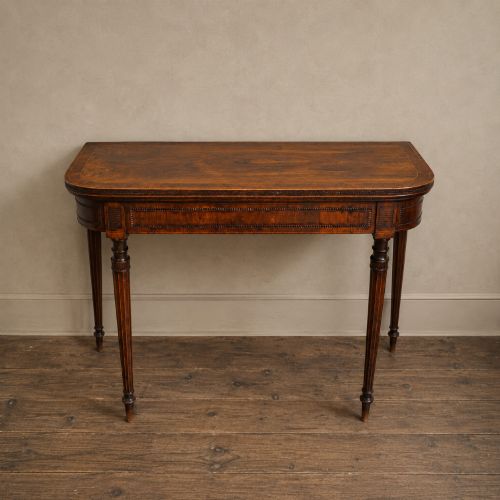
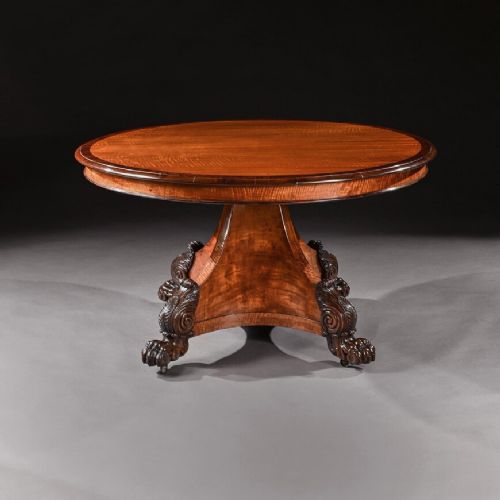
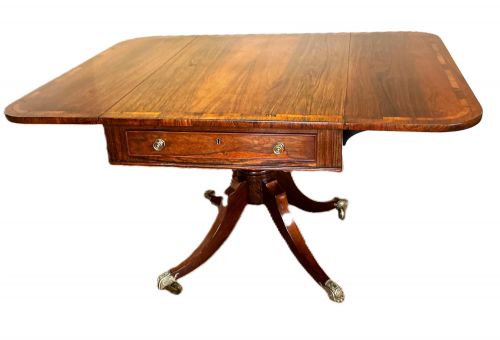
A crossbanded rosewood table takes many forms across this selection, appearing most frequently as card tables, centre tables, sofa tables, and games tables. These pieces span periods from the Georgian and Regency eras through the Victorian period and into the early twentieth century.
Card tables and folding tables dominate the available items, often combining rosewood with satinwood, mahogany, or kingwood. Makers utilised these timbers to create folding tops for gaming and entertaining in formal reception rooms.
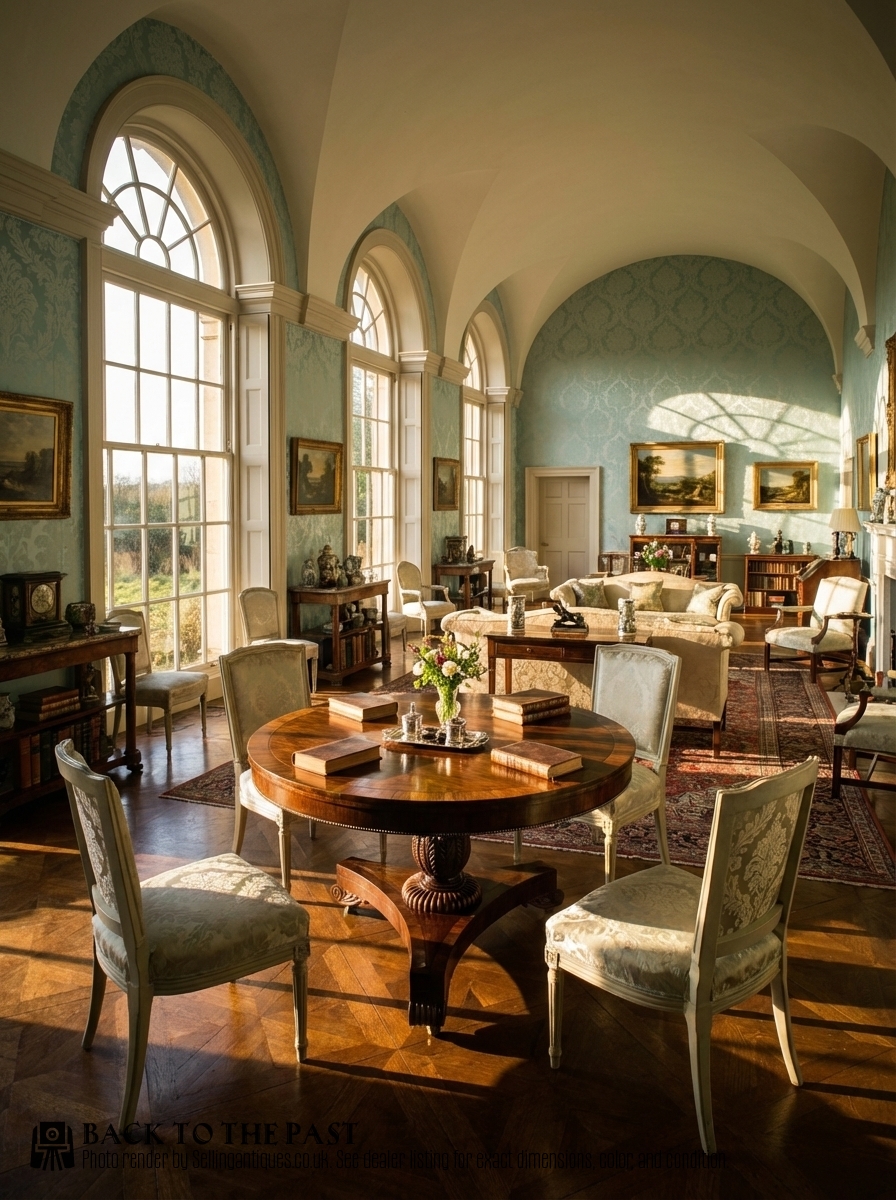
Materials and construction
Cabinet makers applied fine veneers of rosewood over subsidiary timbers like mahogany, incorporating contrasting borders of satinwood, boxwood, and ebony. Crossbanding involves laying veneer strips perpendicularly to the main grain direction, framing the top.
Pedestal bases, scroll supports, and drop flaps require precise joinery and turning. Brass fittings, castors, and inlay stringing complete the construction of these tables.
Crossbanded Rosewood Table Retail Price Guide 2026
Typical asking prices for crossbanded rosewood table among the pieces listed under this phrase on Sellingantiques today, from the lower quarter to the upper quarter. They describe what is for sale here now, not the wider market.
Listings feature rosewood, satinwood, mahogany, kingwood, boxwood, and ebony across Georgian, Regency, and Victorian periods.
Distinctions in craftsmanship
Quality rests in the selection of the timber figures, such as flame mahogany or burr yew, and the precision of the crossbanded borders. Expert alignment of grain patterns along the edges distinguishes superior cabinet work from simpler output.
The integrity of the structural framing and the crispness of inlaid stringing indicate the standard of execution. Pieces retaining original pedestals, brass mounts, and stable folding mechanisms hold greater authority.
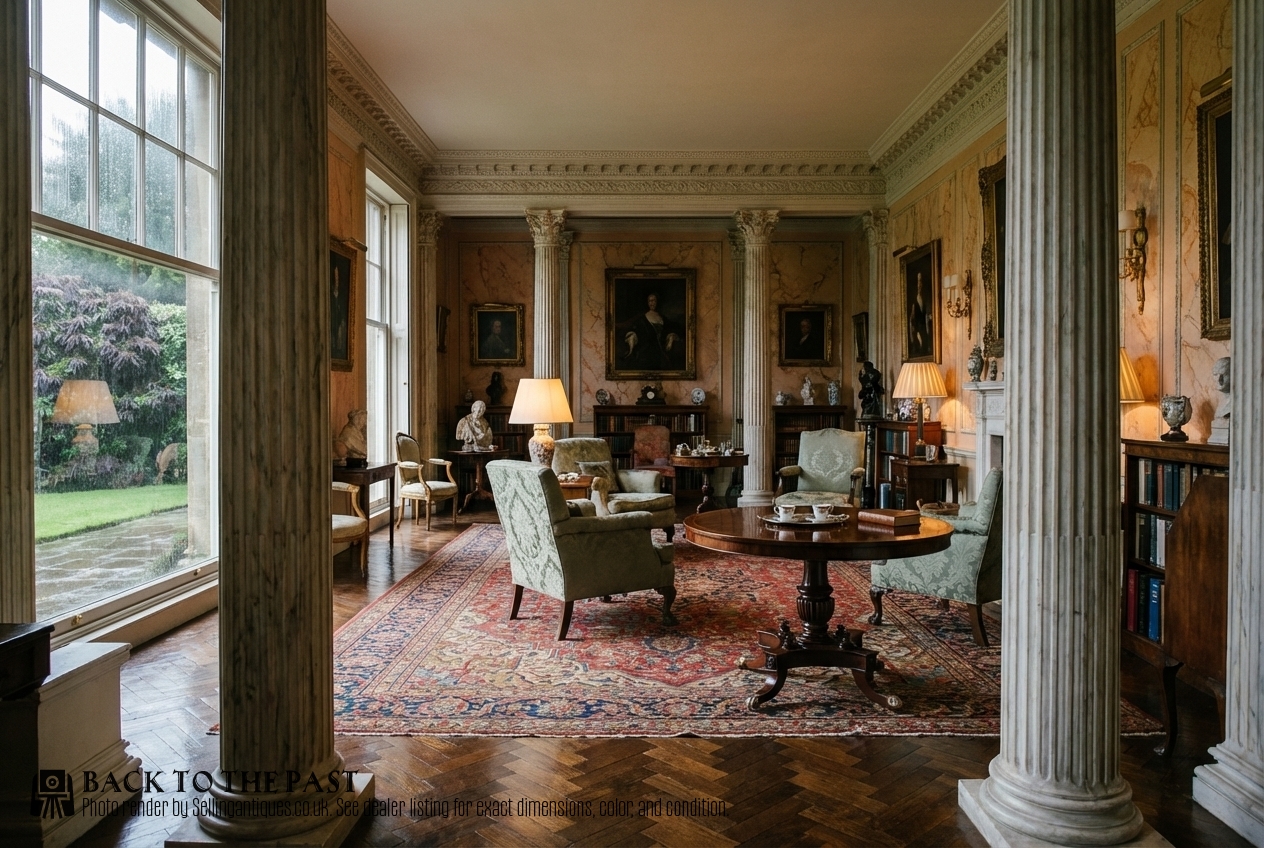
Peters of Genoa·James Mein Kelso
The Crossbanded Rosewood Table Glossary
- Crossbanding
- A border of veneer laid with the grain running perpendicular to the main surface. This technique frames the top of the table.
- Veneer
- A thin slice of figured timber applied to a core structure. It allows makers to display rich grain patterns economically.
- Card table
- A folding table designed for gaming and social evenings. The top opens to reveal a baize-lined playing surface.
Crossbanded Rosewood Table: Frequently Asked Questions
What is a crossbanded rosewood table used for?
These tables served specific domestic functions in period interiors, acting as surfaces for card games, tea service, or general display. Many incorporate folding tops or drop leaves designed to adapt to different social occasions.
In contemporary spaces, they function as centre tables, side tables, or lamp tables. Their decorative borders make them suitable for placement in hallways, drawing rooms, or studies.
How do I identify a Regency period table?
Regency pieces often display classical architectural influences, including pedestal bases, scroll supports, and brass paw castors. The timber selection typically pairs dark rosewood with contrasting satinwood or mahogany.
Proportions tend to be balanced and restrained, reflecting the aesthetic of the early nineteenth century. Maker details or specific construction traits can further confirm the era.
How do I care for rosewood furniture?
Protect the timber by keeping tables away from direct sunlight and heat sources, which can dry out the veneer. Dust regularly with a dry cloth and avoid silicone-based polishes.
Maintain stable indoor humidity levels to prevent the timber and veneer from splitting or warping. Professional waxing preserves the finish without building up residue.