





Crimson Woven Textile
When you handle a crimson woven textile, you touch tribal rugs, storage bags and silk panels born from nomadic traditions across Central Asia and Persia.
Crimson Woven Textile
A crimson woven textile encompasses tribal rugs, storage bags like torbas and chuvals, and wall hangings originating from regions such as Turkmenistan, Persia, and Central Asia. These items span from the eighteenth century through the early twentieth century, reflecting the domestic and nomadic lives of the makers.
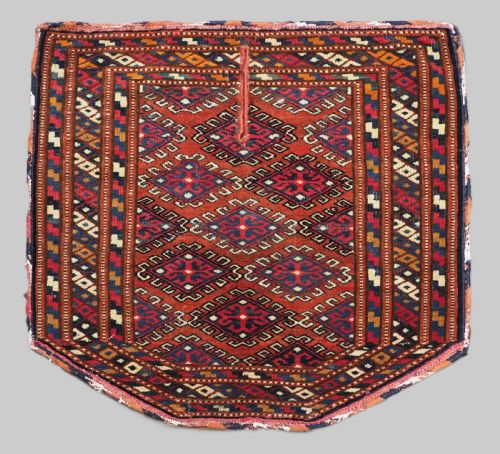
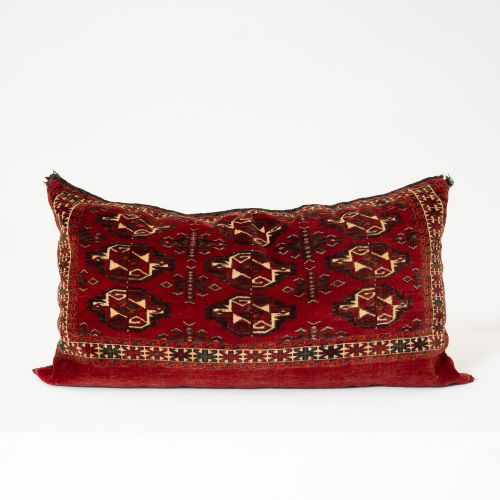
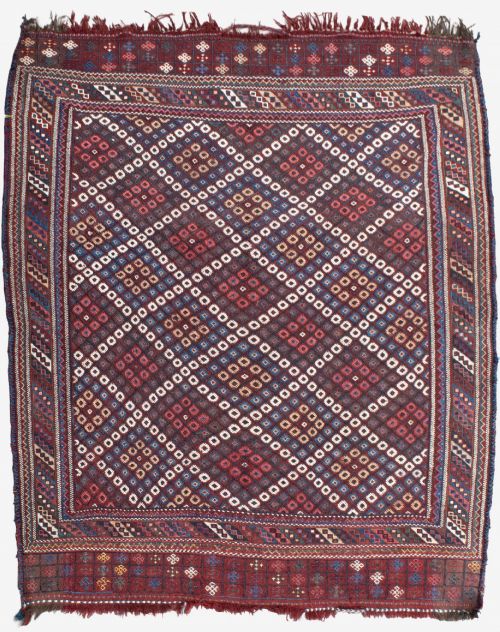
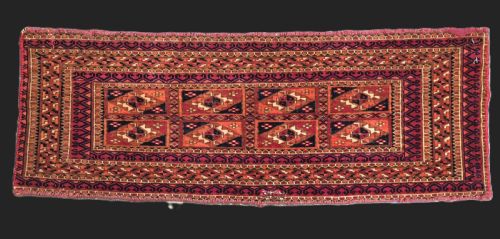
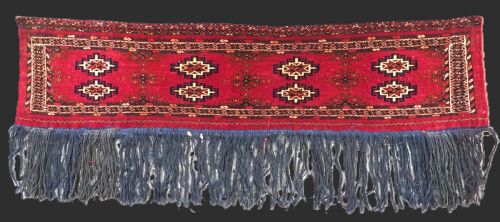
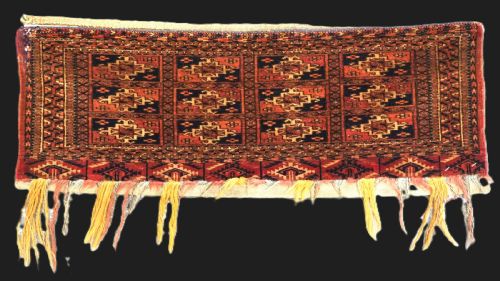
The pieces on this page are predominantly tribal weavings, including Yomut, Tekke, Saryk, and Ersari tribal items alongside Uzbek ikat panels and silk velvet hangings. Buyers will frequently encounter bag faces, cushion covers, and fragment pieces intended for utilitarian tent storage or decorative display.
Forms vary from small personal bags and saddle covers to large storage sacks and pilaster hangings. Each object carries traditional tribal motifs and deep red dye palettes that define this specific category of antique textile.
How they were made
Makers utilised wool, hand-spun wool, cotton, and silk, often combining natural dyes to achieve rich crimson and madder tones. Some panels introduce velvet and gold thread for textural contrast and decorative depth.
Weaving techniques range from fine pile knots on nomadic bag faces to supplementary warp-faced structures on torbas and ikat resist-dyeing on semi-silk adras fabrics. Many retain their original plain weave backs or hanging loops.
The integration of natural dye stuffs with hand-spun materials created durable, dense structures designed for rigorous daily use within nomadic settlements and settled towns.
The listings span periods from the eighteenth century through the early twentieth century, incorporating wool, cotton, silk, and natural dyes.
What varies in quality
Knot density and structural fineness separate standard utility pieces from exceptional dowry items. A very fine weave demonstrates greater control by the weaver over the repeating guls and borders.
The depth, saturation, and consistency of the natural dyes influence the visual impact of the piece. Superior examples exhibit vibrant, harmonious crimson hues without muddiness across the field.
Preservation of original borders, complete backs, and intact hanging loops elevates the integrity of tribal bags and wall hangings compared to heavily restored fragments.
The Crimson Woven Textile Glossary
- Chuval
- A large tent storage bag used by nomadic tribes for bedding and household goods. These pieces are frequently found as separated bag faces.
- Torba
- A smaller storage bag than the chuval, traditionally hung against the lattice walls of a yurt. They display intricate guls and banded border designs.
- Gul
- A medallion or repeated octagonal motif characteristic of Turkmen and Central Asian tribal weaving. Different tribes utilised distinct gul forms to signal lineage.
- Ikat
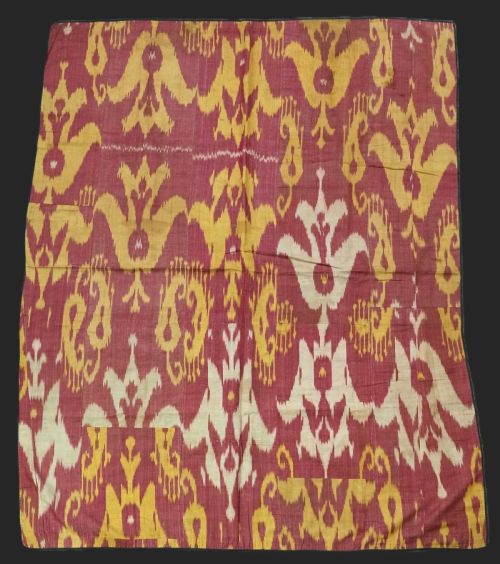
- A dyeing technique where bundles of threads are tightly wrapped and dyed prior to weaving to create blurred, intricate patterns. Semi-silk adras fabrics often showcase this method.
- Mafrash
- A rectangular storage bale face or end panel used in pairs for transporting household items on pack animals. They exhibit dense geometric layouts.
Crimson Woven Textile: Frequently Asked Questions
What is a crimson woven textile used for?
Nomadic tribes originally utilised these woven pieces as storage sacks, saddle covers, bedding bags, and tent hangings for daily domestic life.
Today, collectors mount these textiles on walls, place them on furniture as cushions, or use smaller bag faces as decorative floor accents.
How do I care for an antique textile?
Keep these historic wool and silk pieces away from direct sunlight to protect the natural crimson dyes from fading over time.
Vacuum gently with low suction through a mesh screen and avoid harsh chemical cleaning methods to preserve the delicate hand-spun fibres.
How can I tell tribal groups apart?
Tribal attribution relies on the specific gul motifs, colour combinations, and structural weaving habits unique to groups like the Tekke, Yomut, and Ersari.
For example, Tekke pieces often feature precise repetitive guls in deep madder red, whereas Ersari examples frequently incorporate larger scale secondary patterns.
What does a bag face fragment mean?
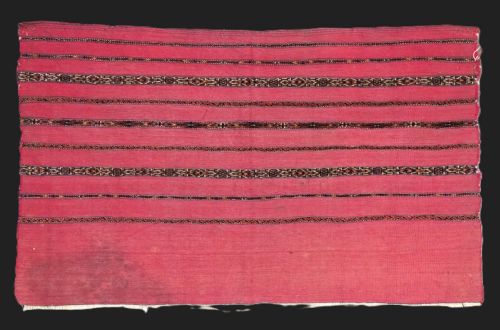
A bag face is the decorative front portion of a nomadic storage sack that has been separated from its plain weave back over decades of use.
These panels survive because the front pile or embroidery was robustly made, allowing them to be preserved independently as flat decorative textiles.