



Crimson Wool Turkmen Rug
These crimson wool turkmen rug pieces are hand-woven tribal textiles originating from Central Asian nomadic weaving traditions.
Crimson Wool Turkmen Rug
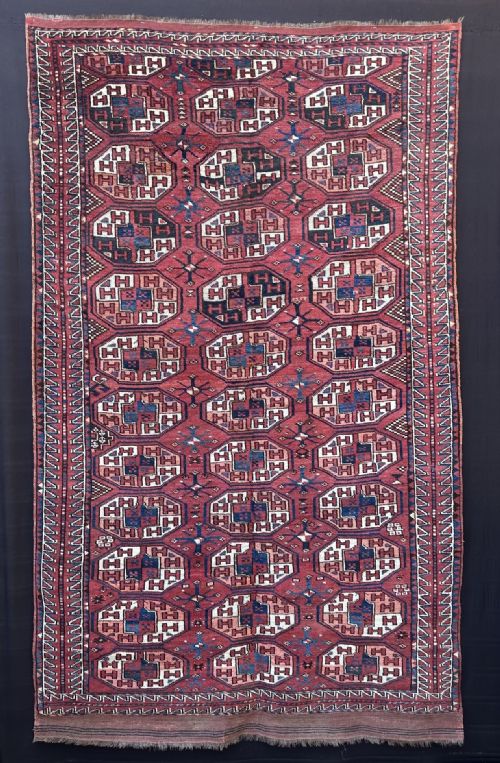
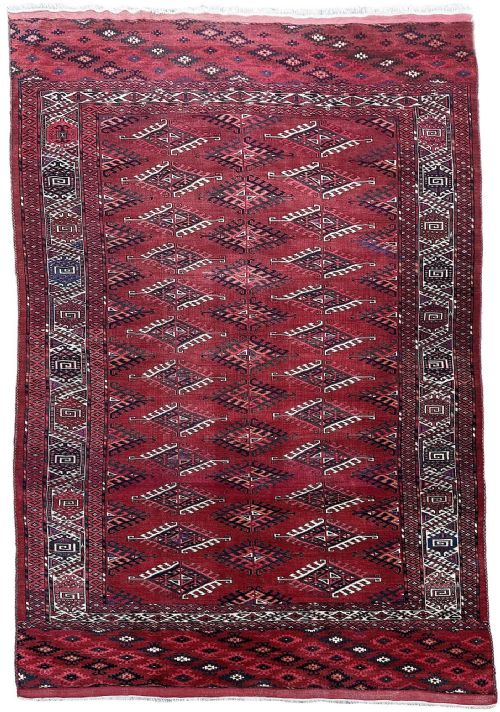
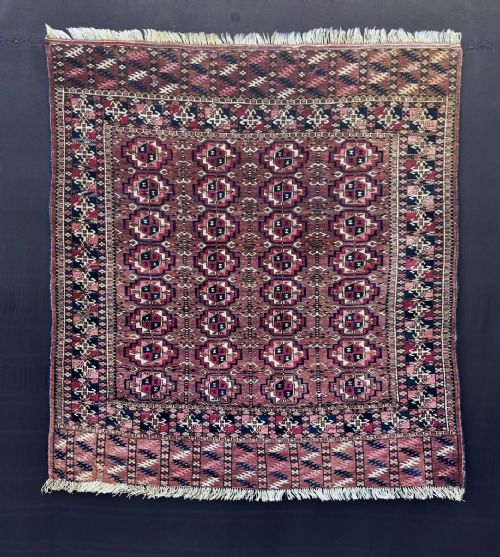
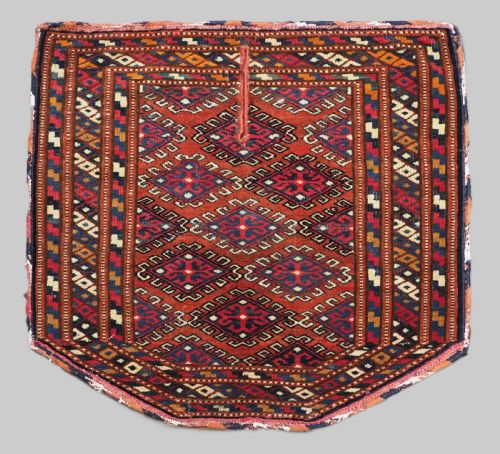
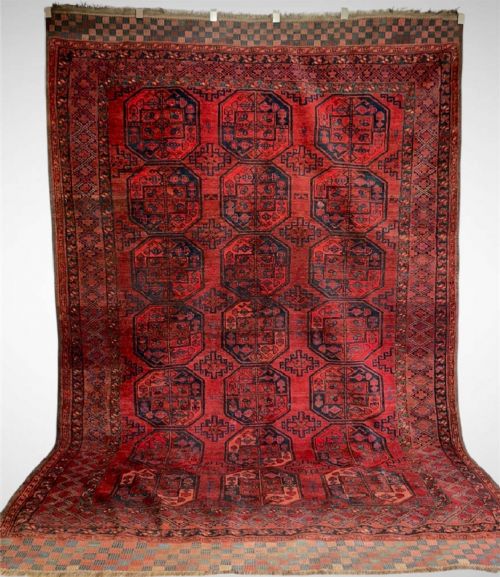
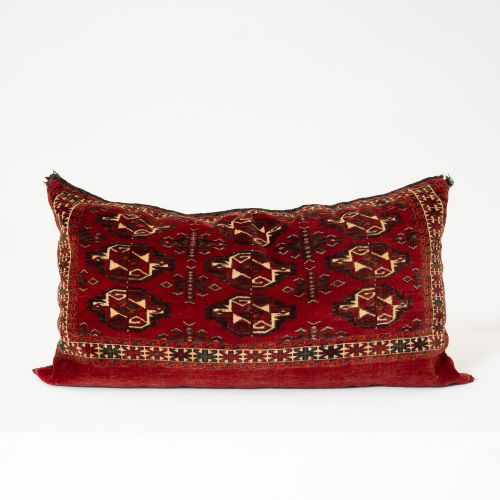
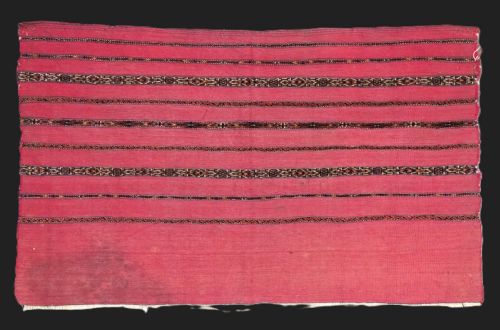
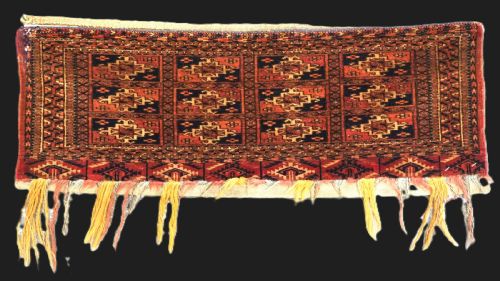
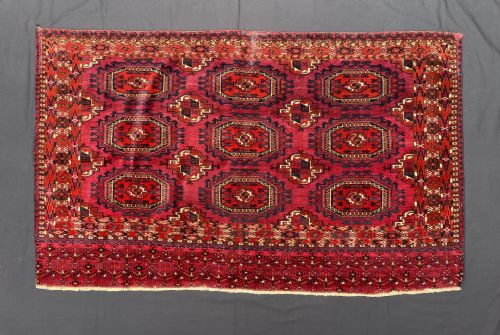
A crimson wool turkmen rug encompasses various forms such as large main carpets, wedding rugs, and smaller utility bags like torbas and chuvals. These pieces originate from distinct tribal groups including the Tekke, Yomut, Ersari, Saryk, and Kizil Ayak across Central Asia.
Makers produced these woven objects primarily during the nineteenth and early twentieth centuries, spanning periods from the seventeen-fifties through to nineteen-twenty. Buyers will most frequently encounter nineteenth-century Tekke and Yomut bag faces and carpets on this page.
Materials and construction
Weavers relied principally on hand-spun wool for the foundation and pile, frequently combining linen and cotton for structural integrity. Natural dyes provided the deep crimson tones and secondary hues characteristic of these Central Asian tribal textiles.
Craftisans employed knotting techniques on vertical looms, producing dense pile surfaces designed for heavy domestic wear. Many utility bags and storage faces retain their original plain weave backs and hanging loops, evidencing complete nomadic household objects.
Listings feature wool, natural dyes, and cotton across nineteenth-century and early twentieth-century Turkmen, Afghan, and Central Asian tribal textile forms.
Evaluating craftsmanship
Knot density and structural tightness determine the refinement of the weave, separating everyday utility objects from finer dowry pieces. Artisans achieving exceptional precision in their drawing display superior technical command over the geometric motifs.
The vibrancy and saturation of the natural dyes influence the visual depth of the wool surface, distinguishing standard textiles from those possessing exceptional colour. Preservation of the complete structure, including original backs and hanging loops, contributes to the integrity of the piece.
Tekke Tribes·Yomut Tribes·Ersary Tribes·Kizil Ayak Tribe·Saryk Turkmen
The Crimson Wool Turkmen Rug Glossary
- Gul
- The primary octagonal medallion motif repeated across Turkmen carpets and bag faces. This design element often identifies the specific tribe that produced the weaving.
- Torba
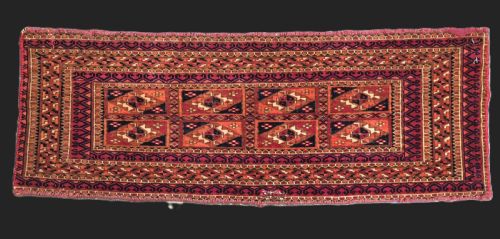
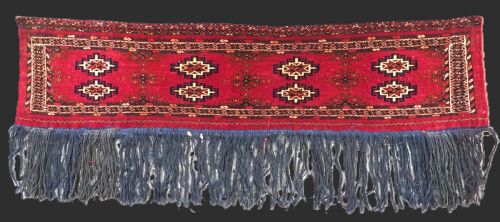
- A small rectangular storage bag traditionally hung inside a nomad tent. These pieces frequently feature multiple guls and elaborate border designs.
- Chuval
- A large tent bag utilised for bedding and household storage by nomadic tribes. They often display numerous guls and survive as complete pouches or individual faces.
- Mafrash
- A rectangular storage box or bedding bag panel woven in matching tribal techniques. These textile faces demonstrate the intricate geometric patterning typical of Central Asian nomadic work.
Crimson Wool Turkmen Rug: Frequently Asked Questions
What is a turkmen rug?
A turkmen rug is a hand-knotted tribal textile produced by nomadic groups in Central Asia, characterised by wool foundations and geometric medallion designs.
These weavings served practical domestic purposes within tents, ranging from floor coverings to large storage sacks and camel trappings.
How were torbas used?
Torbas functioned as smaller storage bags hung against the lattice walls inside nomadic tents to hold personal possessions and household items.
Weavers decorated the visible faces with traditional tribal guls and geometric borders while leaving the backs plain.
What are guls?
Guls are repeating octagonal medallions that form the core decorative motif across Turkmen carpets and storage bags.
Different tribal groups utilised distinct drawing styles and arrangements of these medallions to signify their specific heritage.
How do I care for wool rugs?
These wool textiles require gentle vacuuming without rotary brushes and professional cleaning when necessary to protect the natural pile.
Keeping them away from direct sunlight preserves the saturation of the natural crimson dyes over time.