
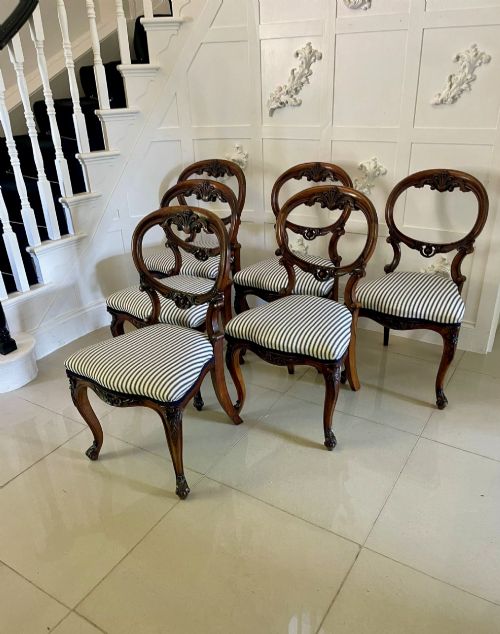
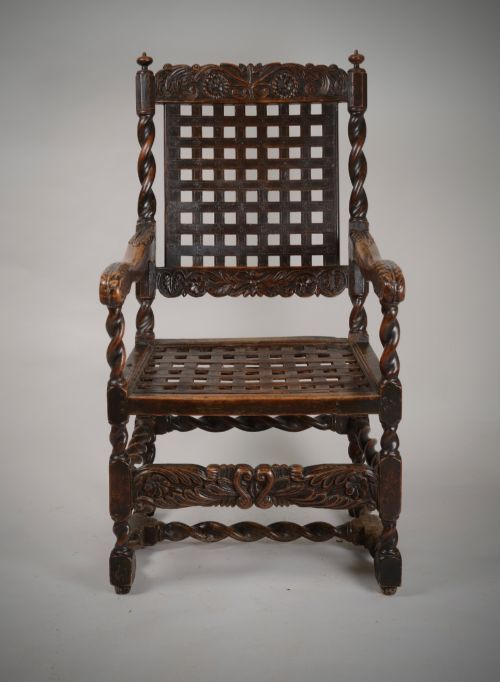

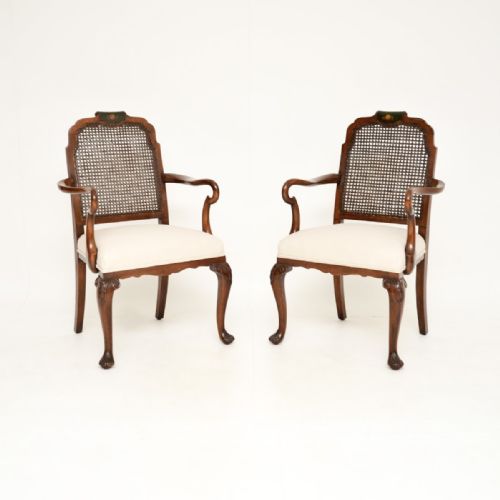


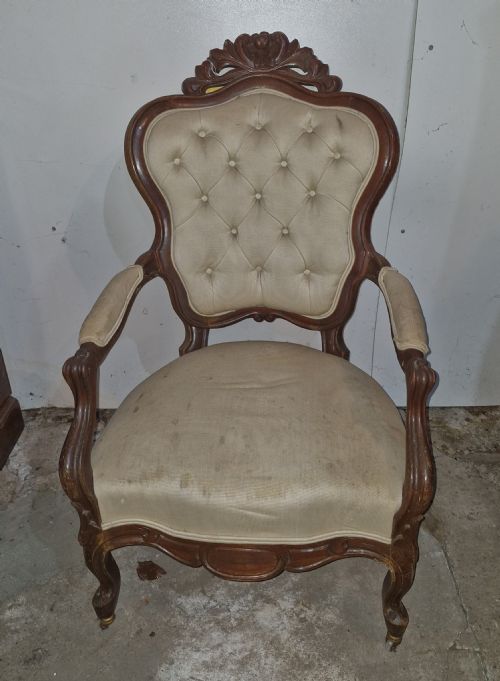


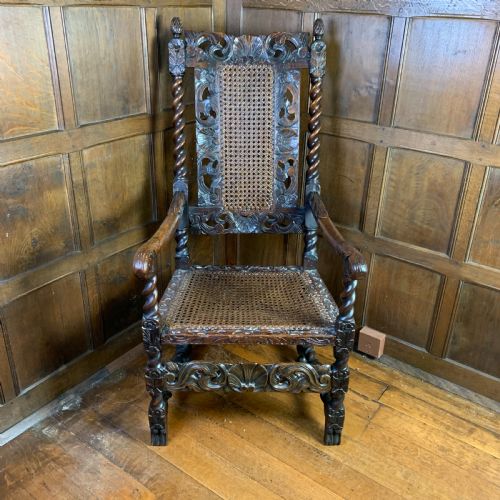
Crested Walnut Chair
A crested walnut chair brings substantial wood and carved ornament to a room, ranging from early caned armchairs to later dining sets.
Crested Walnut Chair
A crested walnut chair is defined by its prominent upper rail, often carved with scrolls, crowns, or foliage, executed in walnut across several centuries. The selection spans the seventeenth century up to the Edwardian period, encompassing armchairs, side chairs, dining chairs, and hall seats. Buyers searching for a crested walnut chair will encounter diverse forms, from robust Charles II armchairs to ornate Victorian nursing chairs and Edwardian dining sets.
The styles recorded in the inventory range from Carolean and William and Mary to George I, Rococo Revival, and Victorian interpretations. Walnut serves as the primary timber, occasionally paired with cane panels, brass details, or textile upholstery such as tapestry fabric and contemporary fabric covers. Pieces originate from domestic workshops and notable firms, offering distinct interpretations of high-backed seating.
Materials and construction
Makers utilised walnut for its rich grain and suitability for intricate carving, often selecting it for formal dining and reception seating. Construction methods combined traditional joined frames with decorative elements such as pierced carved crest rails, fluting, and applied bone button decorations. Caned panels appear in early examples, providing resilient seating surfaces within wooden frames.
Upholstered variants incorporate textiles, fabric, and traditional stuffing techniques to create padded seats and backs. Brass fittings and components support folding or structural elements in specific pieces like campaign chairs. Lacquer finishes appear on later Edwardian examples, altering the surface texture while preserving the timber beneath.
Listings span periods from the seventeenth century through to 1910, showing walnut combined with cane, brass, and tapestry fabric.
Assessing quality and execution
The refinement of the carving on the crest rail and legs distinguishes one piece from another, separating standard production from exceptional craftsmanship. Crisp detailing in foliage, crowns, and scrollwork indicates a high level of hand skill during the manufacturing process. The choice of walnut timber, particularly figured grain sections, also influences the overall visual impact of the chair.
Structural integrity and the retention of original elements, such as canework, upholstery fabric, or bone button decorations, determine the standing of an individual example. Proportion and balance between the high back and the seat frame reveal the maker's adherence to period proportions, whether referencing seventeenth-century Carolean models or later Victorian revivals.
Waring & Gillow
The Crested Walnut Chair Glossary
- Crest rail
- The top horizontal member of a chair back, frequently carved with ornament or shaped profiles.
- Carolean
- A seventeenth-century English style associated with the reign of Charles II, known for rich carving and caning.
- Cane
- Woven rattan or plant material used for chair seats and backs, particularly in seventeenth and early twentieth-century seating.
- Campaign chair
- A portable folding chair designed for travel, often featuring specialised brass or bone hardware.
Crested Walnut Chair: Frequently Asked Questions
How do I date a crested walnut chair?
Dating relies on stylistic clues, construction methods, and timber choice. Seventeenth-century pieces typically feature high, caned backs and vigorous baroque carving, while Victorian and Edwardian examples show revival motifs and machine-assisted joinery.
Examining the wear patterns, joint construction, and upholstery methods helps confirm whether a chair belongs to its purported period or represents a later nineteenth-century revival.
Are these chairs suitable for daily use?
Many walnut chairs remain structurally sound for everyday seating, provided the joints are stable and the frame is well maintained. Dining and hall chairs are generally built for regular use.
Antique armchairs and caned pieces from the seventeenth century require more careful placement and gentler use to preserve delicate woodwork and historic cane panels.
What is the difference between Carolean and William and Mary styles?
Carolean chairs display high, ornate backs with exuberant scrollwork, crown motifs, and rich carving reflecting the Restoration period. William and Mary pieces often introduce refined turned legs, shaped stretchers, and slightly more restrained vertical proportions.
Both styles utilise walnut extensively, but the decorative vocabulary shifts from openwork foliage to geometric turned elements and marquetry accents.
How should I clean a walnut frame?
Dusting with a dry, soft cloth prevents particle buildup on carved walnut surfaces. Avoid harsh chemical cleaners that can strip historic finishes or damage exposed timber.
Applying microcrystalline wax periodically nourishes the wood and maintains a soft sheen without creating a heavy buildup on intricate carvings.