
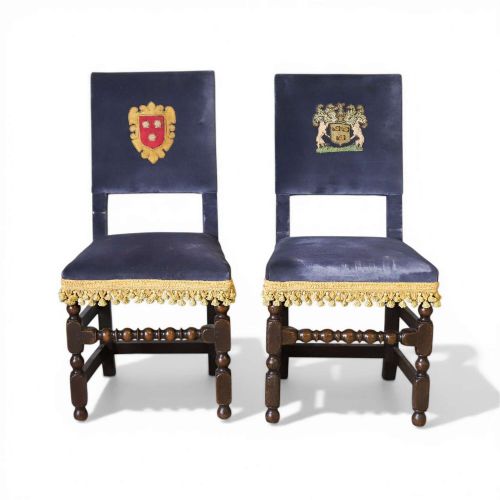
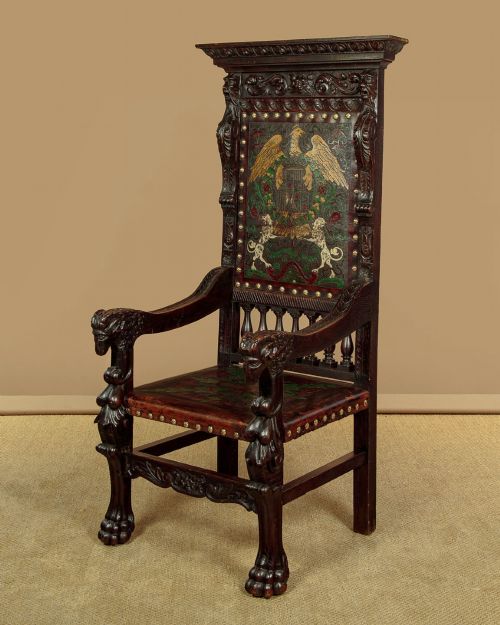
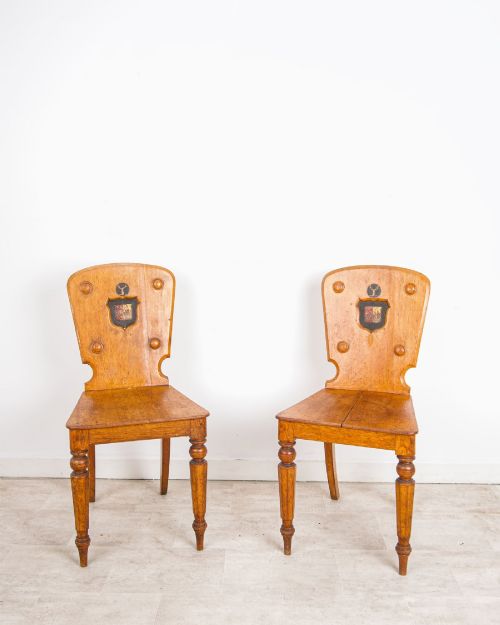


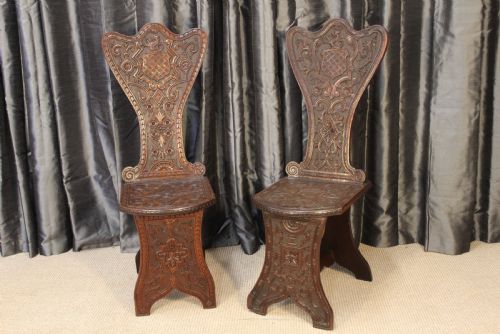


Heraldic Hall Chair
A heraldic hall chair carries family crests and armorial bearings, offering a bold statement piece for any entranceway.
Heraldic Hall Chair
A heraldic hall chair is a distinctive seating form designed for grand entrances, typically featuring carved wood and armorial crests.
When searching for a heraldic hall chair, buyers encounter various forms from stiff-backed wooden seats to upholstered armchairs.
The selections available span multiple periods, with Victorian and nineteenth-century pieces frequently appearing alongside older examples.
Materials and Construction
Cabinet makers utilised dense hardwoods such as mahogany and oak to construct these robust hall seats.
Details include carved wooden shields, painted armorial panels, and occasional leather or velvet upholstery.
Visitors waiting in cold entrance halls relied on these rigid wooden seats to maintain an upright and dignified posture.
Assessing Quality
The distinction between ordinary and exceptional examples rests upon the depth of the carving and the clarity of the painted crests.
Proportion and timber selection heavily influence the character of each piece, distinguishing utilitarian hall seats from grand commission work.
The Heraldic Hall Chair Glossary
- Hall Chair
- A stiff wooden seat designed for a hallway or entrance lobby, rarely used for long periods of sitting. These pieces frequently display family crests or armorial shields.
- Armorial
- Relating to heraldry and family coats of arms. This term describes the painted or carved crests found on the backs of these chairs.
- Sgabello
- An early Italian Renaissance chair type with a polygonal wooden base and a high back. They often feature carved panels similar to later hall chairs.
- Regency
- A British stylistic period spanning the early nineteenth century. Furniture from this era often incorporates classical revival motifs.
- Carving
- The technique of cutting into wood to form decorative patterns or heraldic emblems. High-quality pieces show crisp, deep relief work.
Heraldic Hall Chair: Frequently Asked Questions
Where were hall chairs placed?
These chairs stood in entrance halls and reception rooms, serving visitors waiting to be announced.
They functioned primarily as formal statements rather than comfortable daily seating.
What is an armorial crest?
An armorial crest is a distinct heraldic symbol representing a specific family lineage or title.
Cabinet makers painted or carved these emblems directly onto the wooden backs of the seats.
Are these chairs comfortable?
Most historic hall chairs feature upright wooden backs and solid timber seats built for posture rather than relaxation.
Some examples include padded leather or velvet upholstery for added comfort.
How do I date a hall chair?
Dating relies upon timber choice, joinery techniques, and the prevailing stylistic revival of the period.
Victorian interpretations often mimic earlier seventeenth or eighteenth-century designs.