
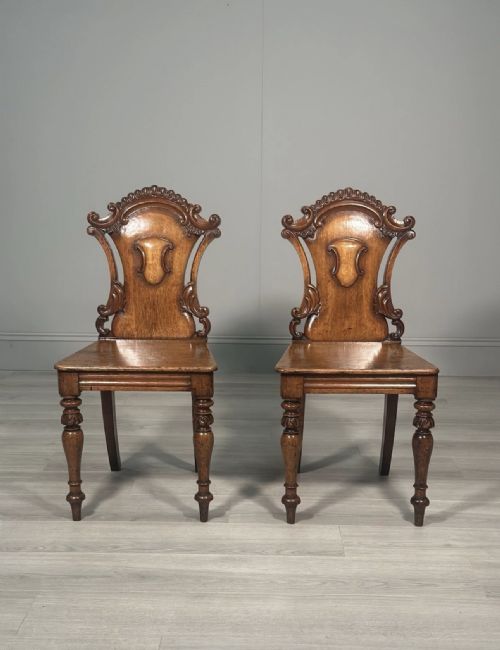


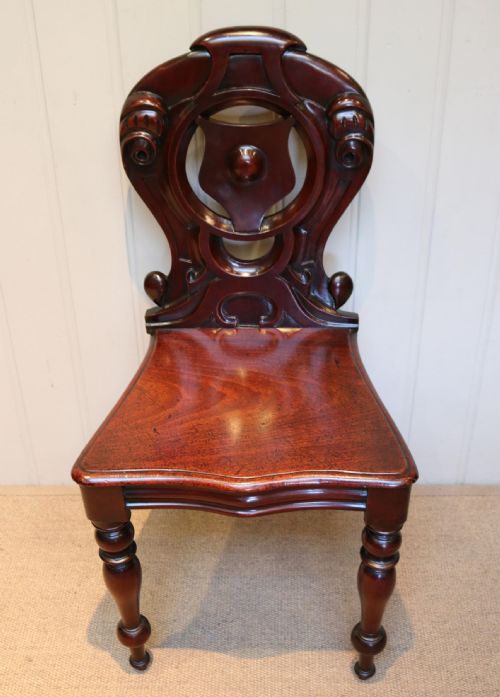

Mid Victorian Hall Chairs
Mid victorian hall chairs are solid timber entrance seating built to impress visitors, combining sturdy construction with architectural style.
Mid Victorian Hall Chairs
Mid victorian hall chairs comprise timber entrance seating shaped by Victorian tastes during the nineteenth century. These items appear in walnut, mahogany, oak, and rosewood, often taking the form of hall chairs, side chairs, or high-back parlour chairs.
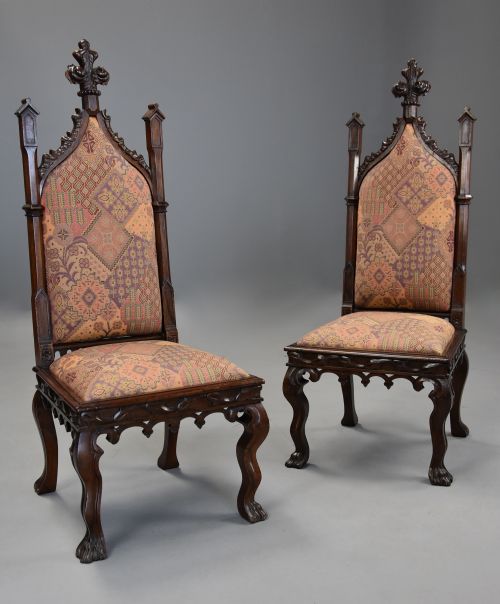
The styles recorded on this page range from plain Victorian designs to ornate Gothic revival and Victorian Gothic revival pieces. Many examples arrive as pairs or sets, featuring heraldic crested details or carved elements suited for grand reception areas.
How they were made
Cabinetmakers utilised hardwoods such as mahogany, walnut, rosewood, and oak to build these rigid entrance seats. Construction relied on traditional joinery methods, shaping dense timber into high backs and solid wooden seats designed for minimal daily comfort and maximum durability.
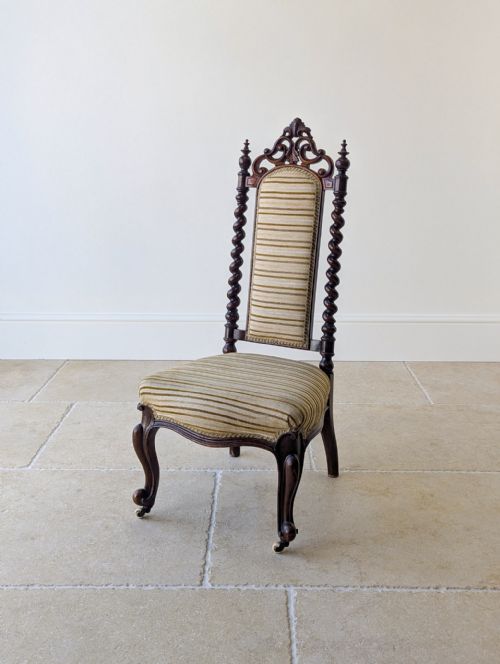
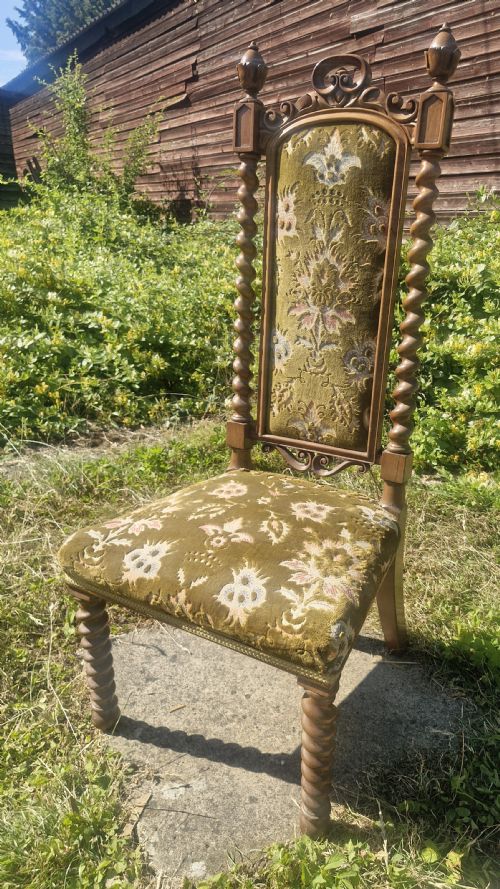
Carving and applied brass details frequently augmented the timber frames, reflecting prevailing Gothic revival influences. Certain pieces incorporated fabric or textile upholstery, hessian, and maker labels attached to the underside or frame.
Listings feature four primary timber materials: mahogany, rosewood, walnut, and oak.
What varies in quality
The calibre of a piece rests upon the selection of timber, whether dense rosewood, figured mahogany, or solid oak. Superior examples exhibit crisper hand-carving and well-executed heraldic crests rather than plain, repetitive factory output.
Structural integrity and original makers' labels elevate certain items above standard utilitarian seating. The distinction often lies in the ambition of the design, moving from simple wooden boards to complex Gothic revival high-back forms.
W A Willcocks
The Mid Victorian Hall Chairs Glossary
- Hall chair
- Rigid wooden seating placed in entrance hallways, typically featuring a solid wooden seat and an upright carved back. These items were designed for brief waiting periods rather than lounging.
- Gothic revival
- An architectural and decorative style drawing inspiration from medieval forms, featuring pointed arches, tracery, and heavy carved ornament. This aesthetic heavily influenced nineteenth-century furniture makers.
- Heraldic crest
- An emblem or coat of arms carved into the timber cresting rail or back panel of a chair. Such details usually denoted the lineage or property of the original owner.
- High-back chair
- Seating characterised by an elongated vertical back panel that towers above the seat level. These forms often appeared in reception rooms or law chambers.
- Hessian
- A coarse woven fabric typically utilised as internal upholstery support or backing material within nineteenth-century seating. It provides a sturdy foundation for padded elements.
Mid Victorian Hall Chairs: Frequently Asked Questions
Where were hall chairs placed?
These chairs stood in the entrance halls, lobbies, and reception rooms of grand nineteenth-century houses and law chambers. They served as temporary seating for guests waiting to be received by the household.
Because they were intended for brief use in draughty hallways, comfort was secondary to architectural presence and the display of family crests.
How do you identify Gothic revival pieces?
Gothic revival pieces display architectural motifs borrowed from medieval buildings, including pointed arches, quatrefoils, and deep relief carving. The timber frames often look heavier and more imposing than standard Victorian designs.
Makers working in this style utilised oak, walnut, and rosewood to emphasise structural gravity and solemnity.
Are these chairs comfortable?
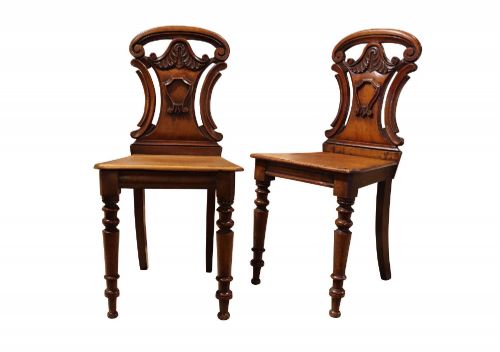
Mid victorian hall chairs are typically constructed entirely from solid wood with upright backs and unpadded seats. They were built for posture and durability in entranceways rather than long periods of relaxation.
Some related parlour and reception variants incorporate fabric or textile padding, but traditional hall chairs remain firm wooden seats.