


Solid Wood Corridor Chair
These solid wood corridor chairs bring formal seating into narrow spaces, offering sculptural backs and sturdy frames for any hallway.
Solid Wood Corridor Chair
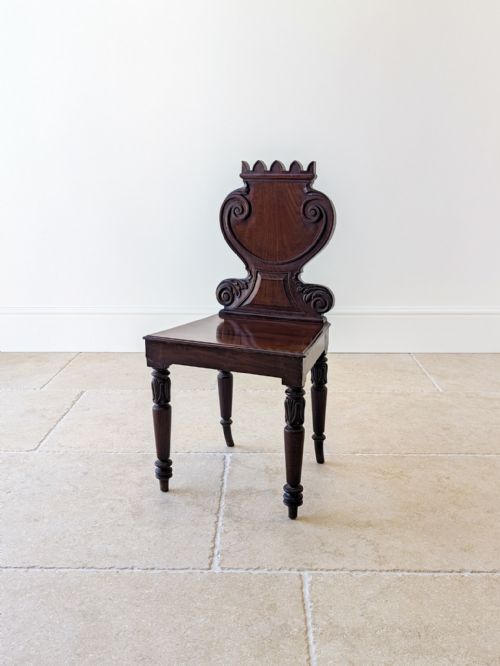
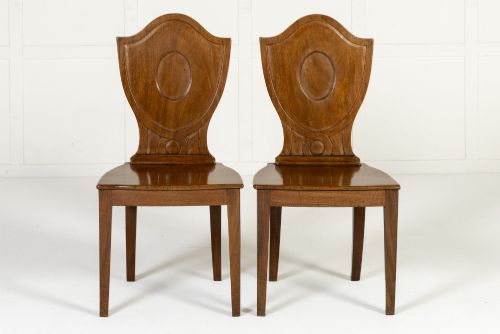
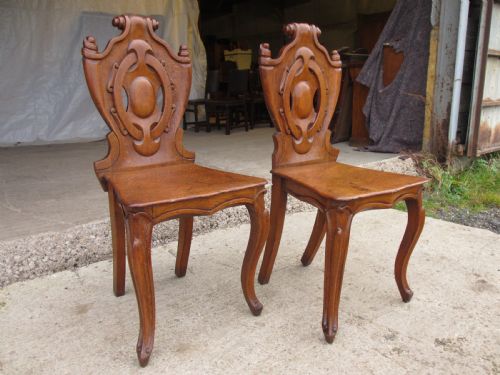
A solid wood corridor chair provides firm, upright seating designed specifically for entryways, halls, and narrow thoroughfares rather than long hours of parlour lounging. These pieces range from Georgian and Regency examples to later Victorian interpretations, each sharing a rigid wooden seat and an expressive, shaped back.
Most entries encountered on this page belong to the mahogany family, often shaped into shield backs or panelled designs. Makers built them to impress visitors upon arrival, prioritising strong silhouettes and durable construction over cushioned comfort.
How these chairs were made
Cabinetmakers utilised dense timbers like mahogany, walnut, and golden oak, selecting solid boards capable of enduring heavy daily foot traffic in busy hallways. Sections of the frame often incorporated carved details, such as Prince of Wales feathers or cabriole legs, carved directly into the structural wood.
Joinery techniques relied on rigid frame construction without upholstery, mounting shaped wooden backs securely onto turned or tapering legs. Selected pieces incorporated subtle inlay work to add visual depth to the flat wooden surfaces.
Some Victorian visitors had to admire carved Prince of Wales feathers while waiting stiffly in the hall.
What varies in quality
The standard of a solid wood corridor chair depends heavily on the crispness of the timber carving and the architectural balance of the backrest. Superior examples display deep, deliberate chisel work on shield backs and smooth, integrated grain across the seat.
Weight and structural integrity also divide the range, as heavier hardwoods with minimal repairs hold their posture better over centuries of use. Finer proportions separate simpler utility seating from the elevated designs commissioned for grand reception rooms and law chambers.
The Solid Wood Corridor Chair Glossary
- Shield back
- A chair back shaped in the outline of a heraldic shield, popular during the Georgian and Victorian periods. This form allows for intricate pierced carving in the central splat.
- Cabriole leg
- A furniture leg that curves outward and then tapers inward, mimicking an animal's limb. It commonly terminates in a simple pad or scroll foot on mid-Victorian seating.
- Hall chair
- An upright wooden seat designed for an entrance hall or corridor, typically lacking arms and upholstery. They frequently display family crests or decorative carving on the back.
- Inlay
- A decorative technique where contrasting strips of wood or other materials are inserted into recessed portions of the base timber. This adds geometric or floral patterns to flat surfaces.
Solid Wood Corridor Chair: Frequently Asked Questions
Where did people put corridor chairs?
These chairs stood along the walls of grand entryways, hallways, and reception rooms where visitors waited briefly before entering the main house.
Because they were meant for short intervals of sitting, their upright posture kept guests formal and ready.
Why are most hall chairs un-upholstered?
Makers left the wooden seats bare so the chairs could withstand dust, heavy outdoor coats, and frequent movement in drafty corridors.
Without fabric, the timber surfaces remained durable and easy to clean in high-traffic entrance spaces.
How do I date a mahogany hall chair?
Dating relies on stylistic clues like shield-back proportions, leg shapes, and carved motifs such as Prince of Wales feathers.
Georgian and Regency versions tend to feature lighter, sharper lines, while Victorian examples often show heavier proportions and golden oak alternatives.
Can I use these chairs daily?
Solid wood construction makes these pieces remarkably sturdy for regular use in modern hallways or as decorative side seats.
Their narrow footprint allows them to fit neatly against walls without obstructing narrow passages.