


Crested Oval Mirror
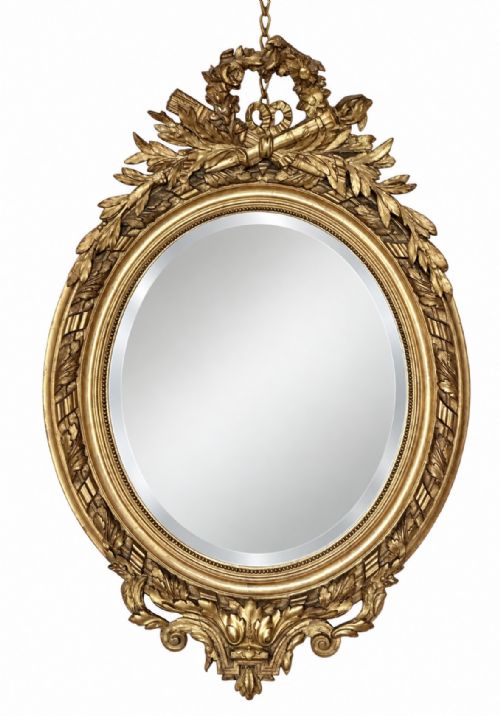
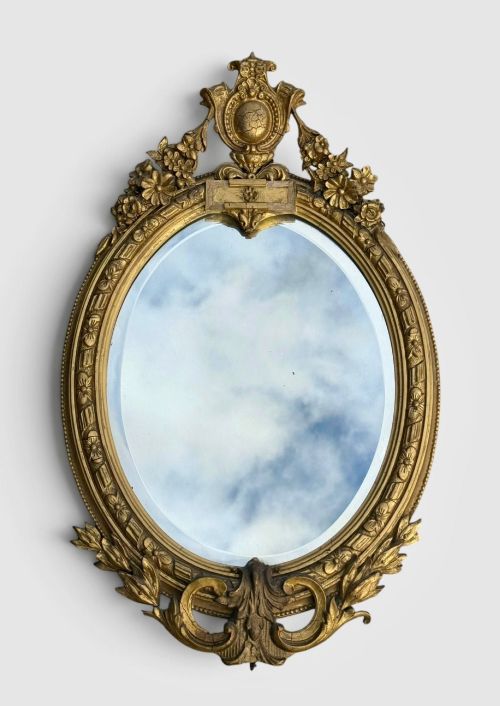
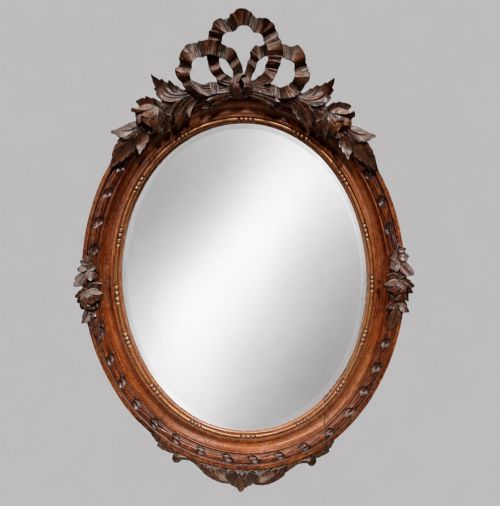
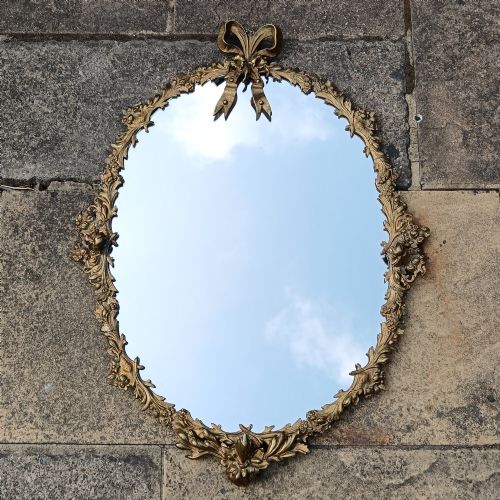
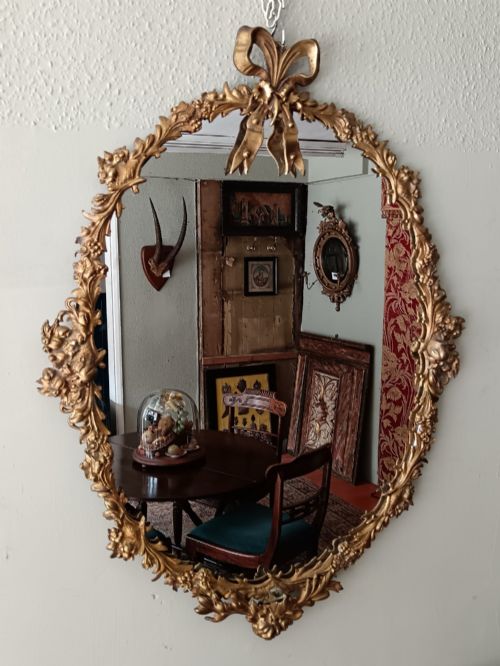
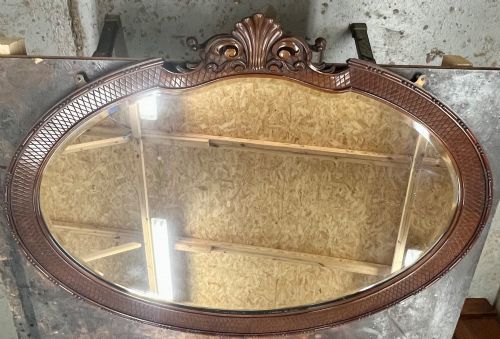
A crested oval mirror brings vertical elegance and reflected light to a room, drawing the eye upwards with its ornate top ornament.
Crested Oval Mirror
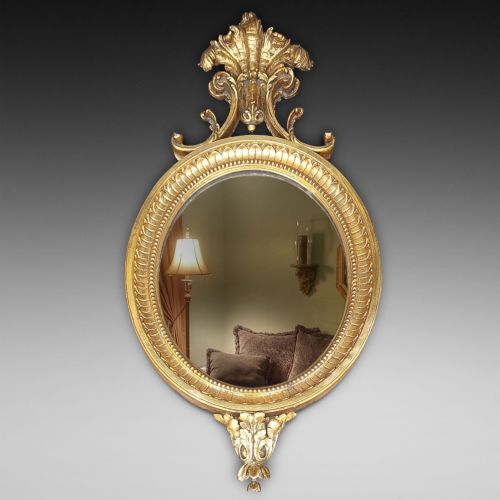
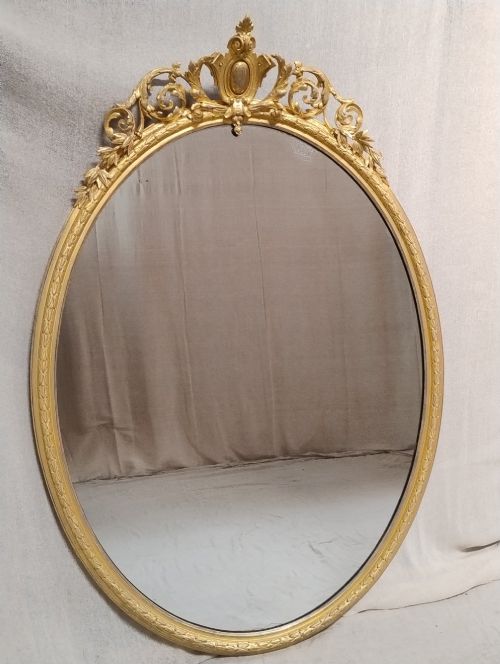
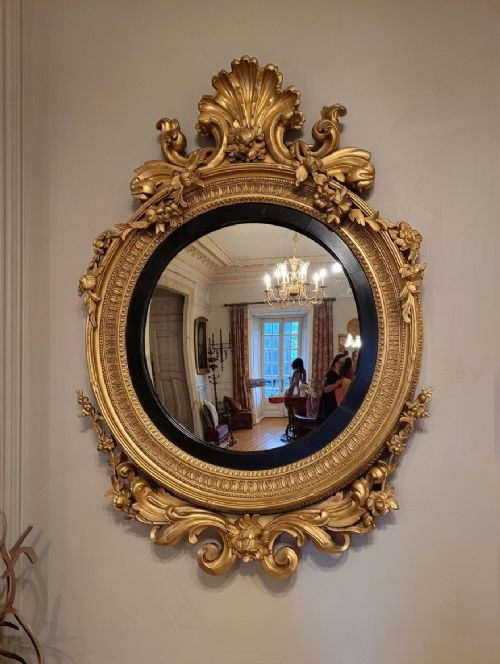
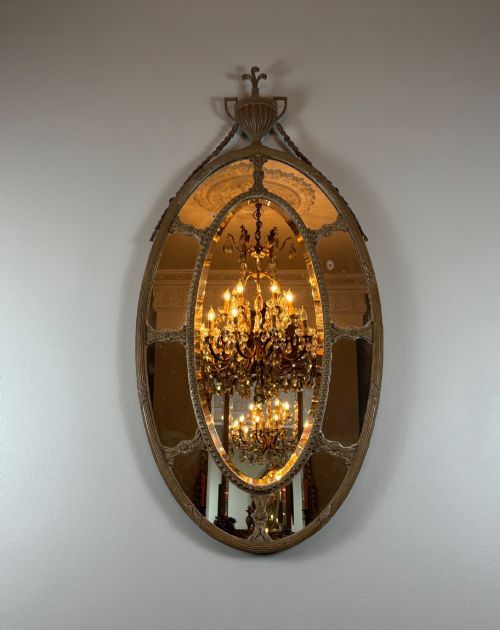
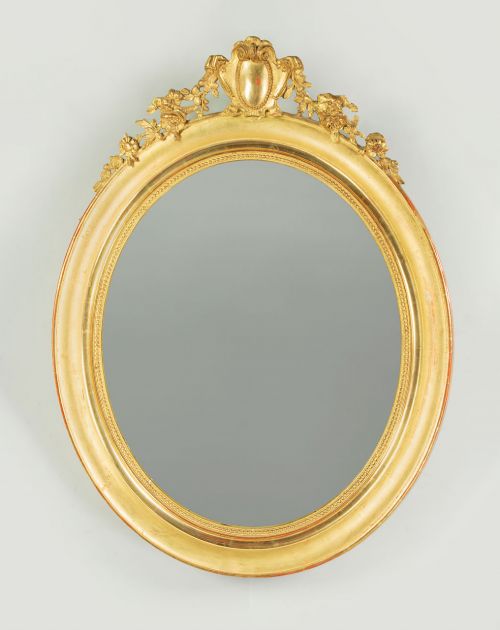
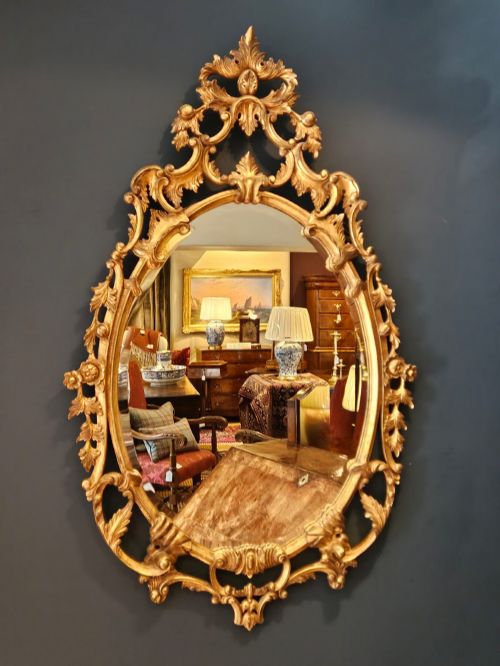
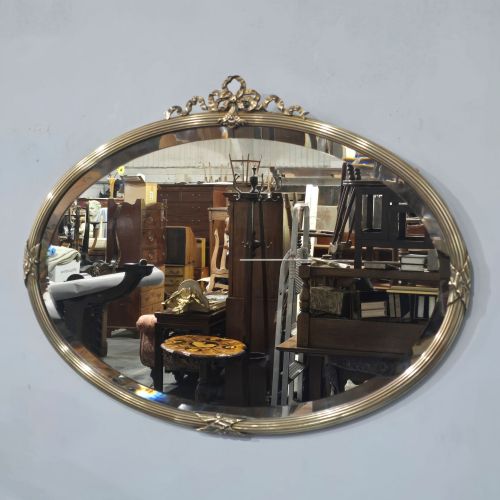
A crested oval mirror combines a curved frame with a decorative upper cartouche, crest, or carving, forming a distinct silhouette for wall display. The pieces on this page span the nineteenth and early twentieth centuries, taking the form of wall mirrors, overmantels, and hall mirrors.
Victorian and Regency examples dominate the selection, often carrying revival influences such as Rococo, Louis XVI, or Adam styles. These mirrors served as focal points above mantelpieces, in hallways, and on drawing room walls.
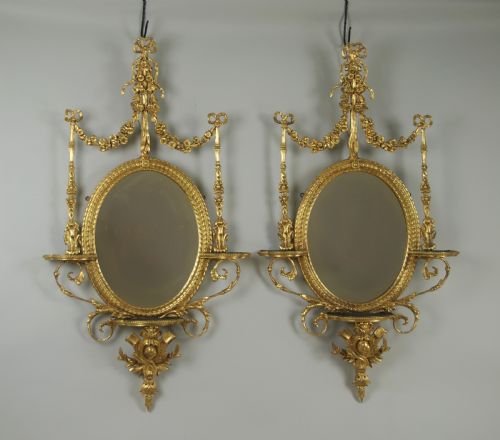
Makers and designers drew on French and classical motifs, producing frames topped with ribbons, bows, urns, swags, or carved eagles. The resulting objects range from restrained ebonised wood frames to heavily gilded compositions.
Materials and Construction
Frames rely on a wooden carcase, frequently carved from mahogany, oak, or softwoods, which provides structural support for the reflective glass. Giltwood and gesso techniques were applied to create elaborate surface ornament, building up layers of plaster and gold leaf.
Moulded composition, often known as compa, allowed workshops to produce repetitive decorative swags, urns, and crests with considerable detail. Mercury plates appear alongside standard mirror glass in earlier pieces, yielding a softer, mottled reflection.
An eighteenth-century house guest once used the crest of a hall mirror to hang their pocket watch every evening before dinner.
Judging Quality and Finish
The crispness of the hand-carved detail in the wooden frame or the modelled relief of the gesso crest separates finer examples from standard production pieces. Superior gilt surfaces show depth and warmth through the application of genuine leaf over bole.
The integrity of the original mirror plate contributes heavily to character, where age-related foxing and silvering wear attest to period authenticity. A well-proportioned frame maintains balance between the oval glass aperture and the decorative crest above.
The Crested Oval Mirror Glossary
- Gesso
- A plaster-based material applied to the wooden frame to receive gilding or paint. It allows for intricate relief moulding.
- Giltwood
- Wood that has been coated with gold leaf. It forms the primary finish for many classical and revival mirrors.
- Mercury Plate
- An older type of mirror glass backed with a mercury and tin amalgam. It produces a distinctive, deep reflection with subtle tonal variations.
- Overmantel Mirror
- A large mirror designed to hang specifically above a fireplace mantel. These pieces often feature extended horizontal or vertical proportions.
Crested Oval Mirror: Frequently Asked Questions
Where should I hang a crested oval mirror?
These mirrors suit spaces where vertical emphasis is needed, such as above a fireplace mantelpiece, in a narrow hallway, or between windows. Their curved shape softens straight architectural lines in a room.
Ensure the wall fixings match the weight of the piece, particularly for heavily carved giltwood and gesso examples that incorporate substantial wooden frames.
How do I date a crested oval mirror?
Dating relies on stylistic clues, framing materials, and the construction of the backboards. Victorian and Regency pieces often show specific revival motifs like Louis XVI ribbons or Adam swags.
Examining the mirror plate for bevels, mercury backing, or hand-drawn distortions also helps establish the period of manufacture.
What is the difference between gesso and carved wood?
Carved wood involves shaping the actual timber frame using chisels and gouges to form the desired relief and decorative patterns. It represents a higher level of manual craftsmanship.
Gesso is a plaster mixture applied over a simpler wooden base and moulded or carved once set, allowing for intricate surface decoration on production pieces.
How do I care for antique gilt frames?
Dust the frame gently with a soft, dry brush to prevent the accumulation of dirt within the carved crevices of the gesso or wood. Avoid using liquid cleaners or polishing agents on gilded surfaces.
Keep the mirror away from direct sunlight and areas of high moisture to protect the gold leaf and prevent the wooden substrate from warping.