
Crested Arch Mirror
When you search for a crested arch mirror, you are looking at substantial wall and overmantel pieces designed to anchor a room.
Crested Arch Mirror
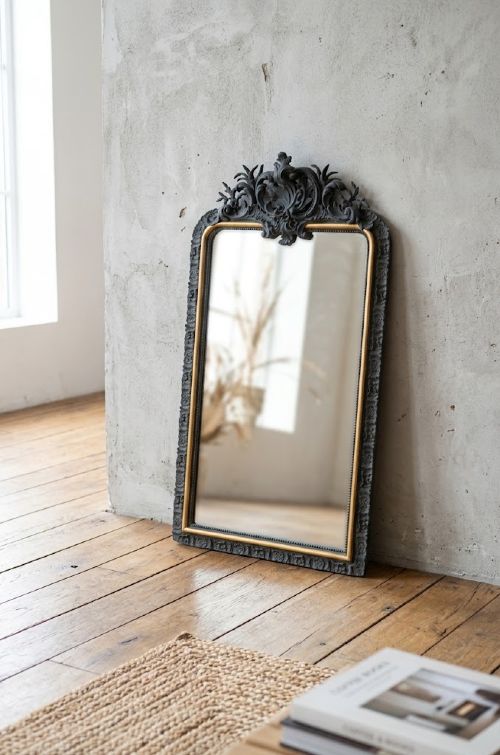
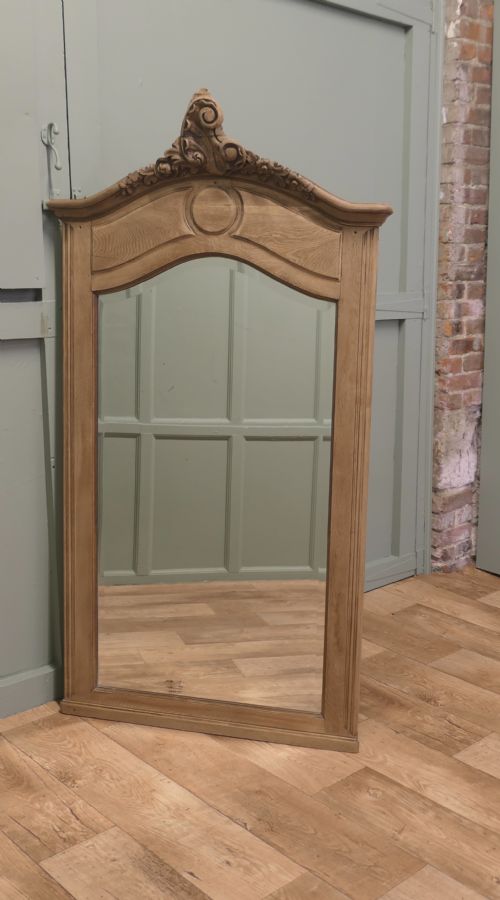
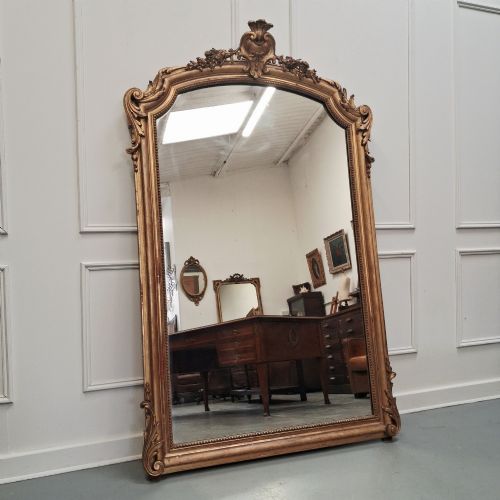
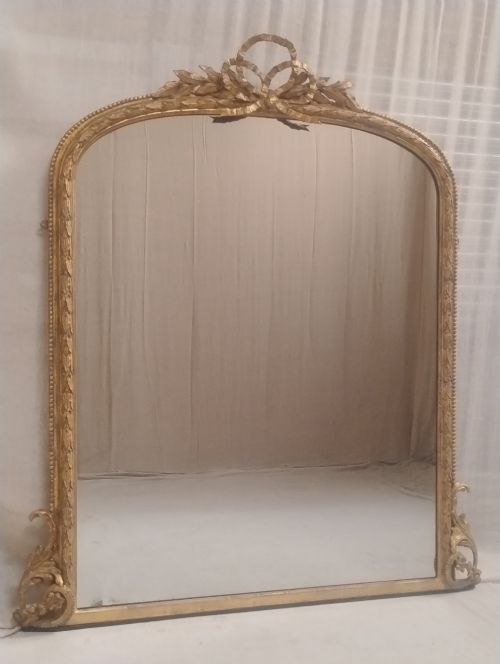
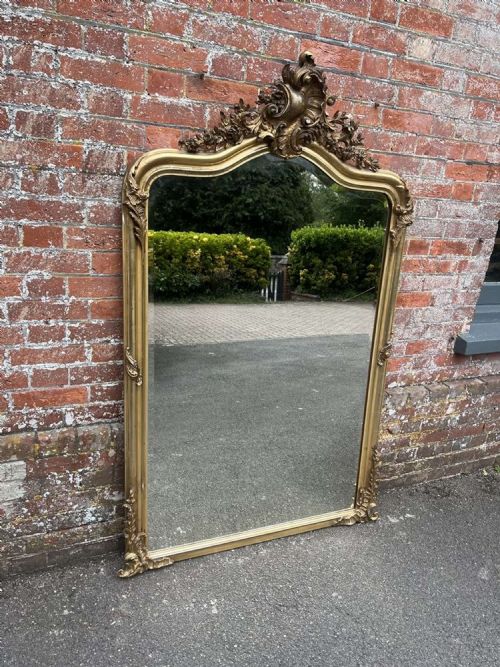
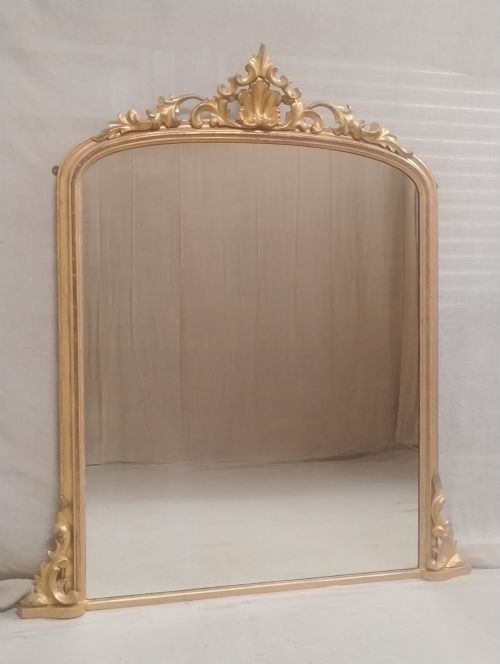
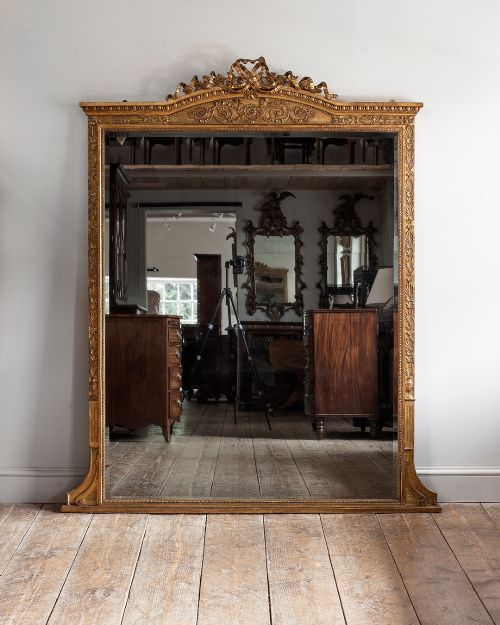
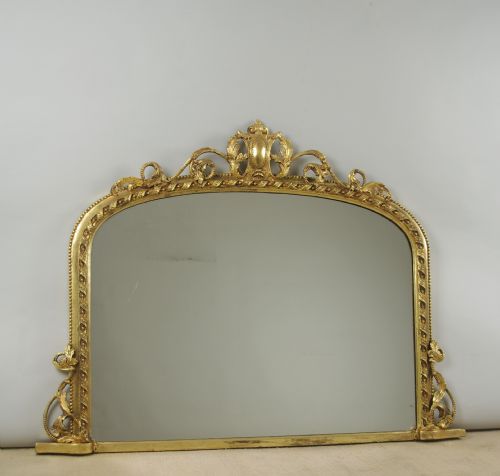
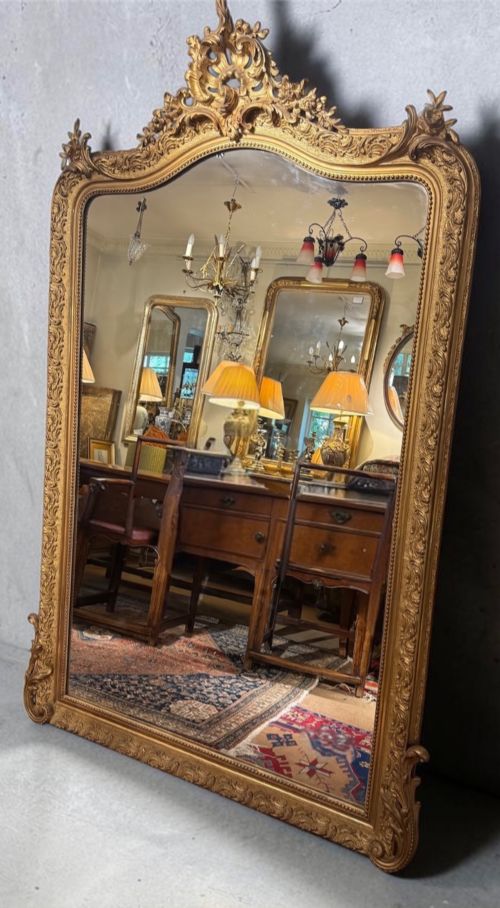
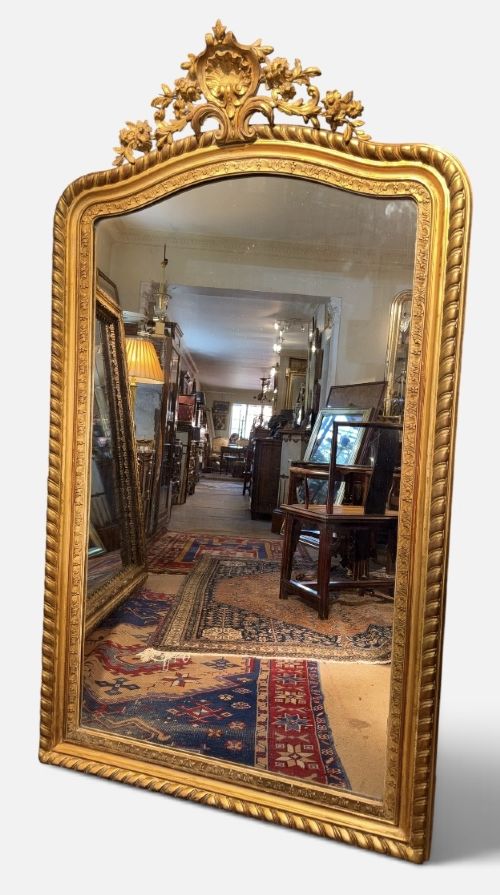
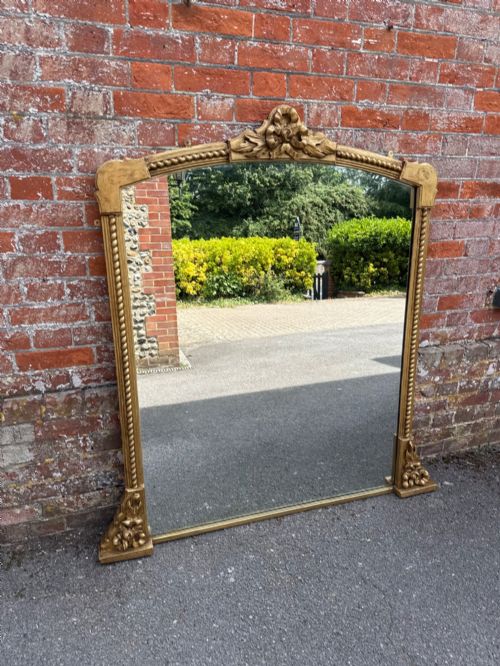
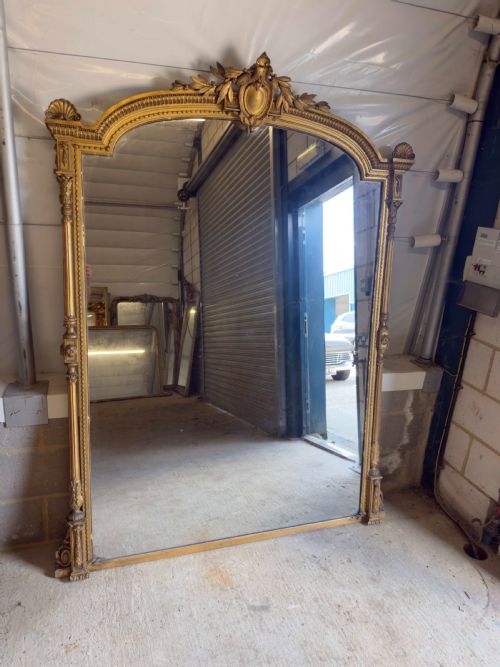
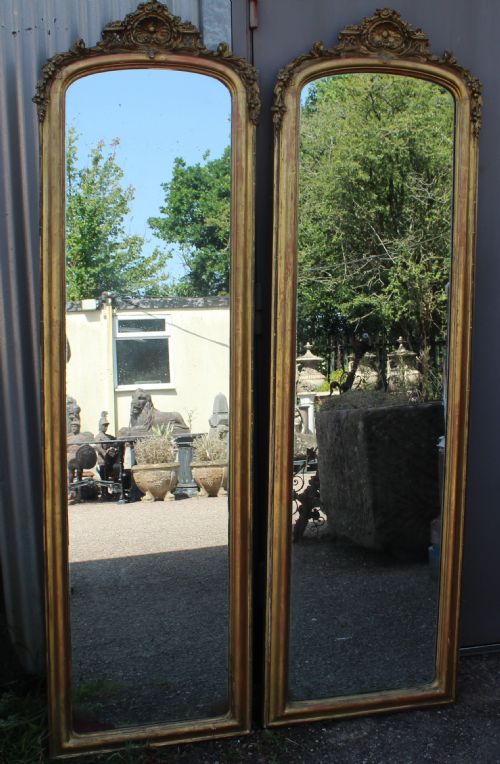
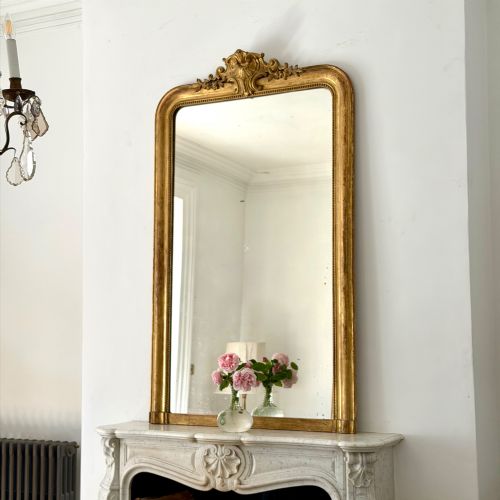
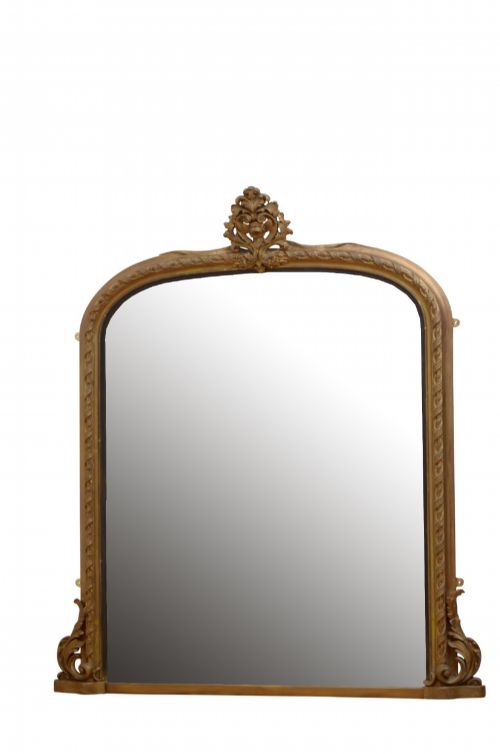
A crested arch mirror brings vertical emphasis and decorated upper framing to a room, most commonly seen here as nineteenth-century overmantel or wall mirrors. These pieces originate from English and French traditions, spanning styles from Victorian and Louis Philippe to Rococo Revival and French Empire. You will frequently encounter large giltwood and gesso examples designed to sit above a fireplace or function as principal wall hangings.
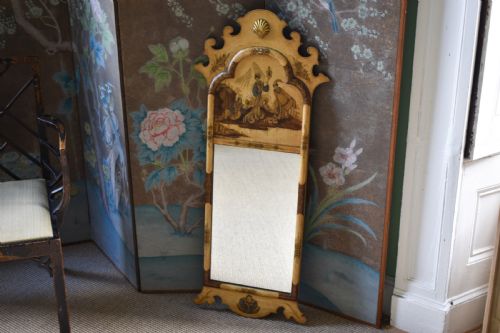
The form relies on an arched upper profile topped with a decorative crest or cartouche, which draws the eye upward and adds architectural weight. Many listings show rectangular bodies with shaped or arched tops, sometimes paired with rope twist details, carved foliage, or painted finishes. While French examples often lean toward clean Louis Philippe lines or ornate provincial carving, English pieces tend to favour robust gesso work over carved wood.
How they were made
Makers built the foundational frames of these mirrors using timber such as oak, mahogany, walnut, or softer woods, shaped into structural arches and straight members. Over these wooden skeletons, artisans applied layers of gesso - a mixture of chalk and binder - to build up intricate surface ornamentation, including crests, cartouches, and scrolls.
Surface finishes relied heavily on gold leaf, liquid gilt, silvering, and paint applied directly to the wood or gesso ground. Glaziers set mirror glass into the rebated frames, often retaining original silvered plates that show characteristic age spots and foxing.
Some nineteenth-century mirrors hide small chalk inscriptions left behind by frame-makers on their internal wooden backboards.
What varies in quality
The distinction between standard examples and the finest pieces lies in the crispness and depth of the gesso and wood carving on the crest. Superior mirrors exhibit hand-tooled details with sharp relief on central cartouches and foliage, whereas lesser examples rely on shallower, heavily moulded composition ornament.
Proportion and originality also govern quality, particularly in how cleanly the arched top integrates with the main body of the frame. Original gilding and untouched mirror plates hold greater integrity than pieces that have undergone heavy regilding or plate replacement.
The Crested Arch Mirror Glossary
- Giltwood
- Wood that has been coated with thin sheets of gold leaf over a prepared base. It provides the bright, reflective finish seen on many nineteenth-century frames.
- Gesso
- A plaster-like mixture applied to wooden frame foundations and carved or moulded into decorative motifs. It forms the raised ornamentation found beneath the gilding on arched mirrors.
- Overmantel mirror
- A large mirror specifically proportioned to hang on the wall directly above a mantelpiece or fireplace. These pieces often feature wide horizontal or vertical formats designed to reflect light across a room.
- Cartouche
- An ornamental tablet or frame resembling a rolled-up scroll, frequently placed at the apex of a mirror crest. It serves as a focal point for carved detail.
- Louis Philippe
- A mid-nineteenth-century French style characterised by restrained architectural lines, softly rounded upper corners, and minimal ornamentation. These mirrors balance simplicity with elegance.
Crested Arch Mirror: Frequently Asked Questions
Where should I hang a crested arch mirror?
These mirrors work best mounted above a fireplace mantel or as a primary focal point on a large expanse of living room wall. Their height naturally draws the eye upward, making them effective for enhancing vertical space.
Ensure the wall construction can support the substantial weight of carved wood, gesso, and glass assemblies, anchoring securely into studs or masonry.
How do I identify a French Louis Philippe mirror?
Look for a distinct arched top paired with clean, unpretentious framing and softly rounded upper corners. This style avoids heavy carving in favour of understated elegance.
They frequently feature subtle beading or simple margin lines rather than elaborate rococo scrolls or prominent crests.
What is the difference between a pier mirror and an overmantel mirror?
Pier mirrors are traditionally proportioned to hang on the narrow wall space between two windows, often stretching quite tall and narrow. Overmantel mirrors are wider formats built to span the width of a fireplace opening.
Both utilise arched tops and decorative crests, but their intended architectural placement dictates their overall dimensions.
Are the mirror plates original?
Many nineteenth-century pieces retain their original glass, which often displays foxing, dark spots, and slight distortion. These signs confirm age rather than diminishing the historical integrity of the piece.
Replacements occur when old glass suffered irreversible damage, so checking the backboards and silvering helps determine originality.