
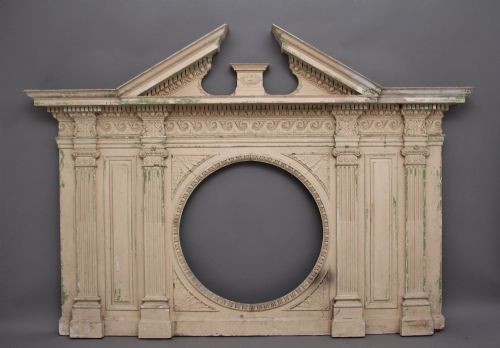
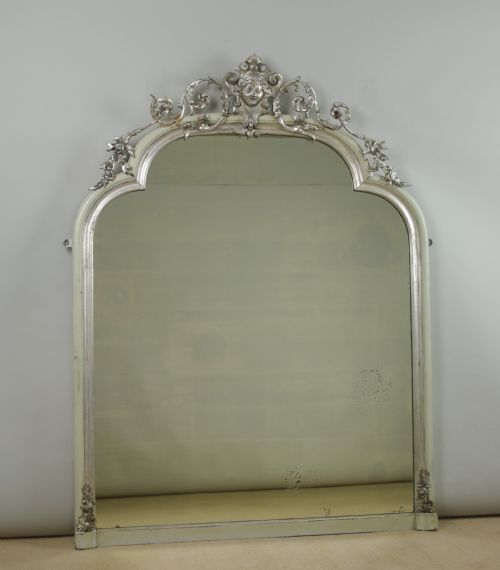
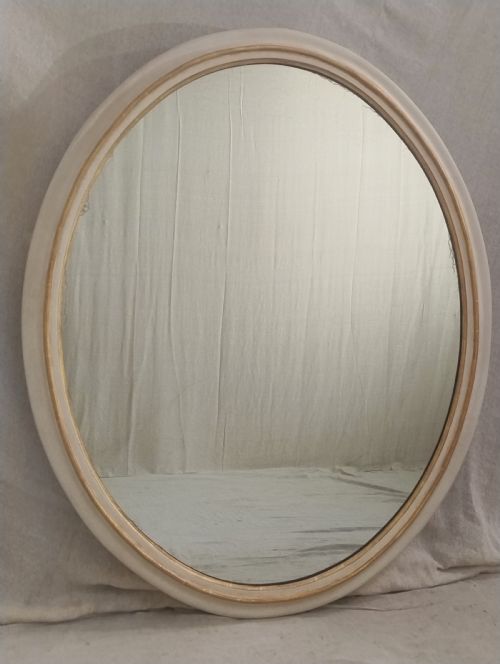


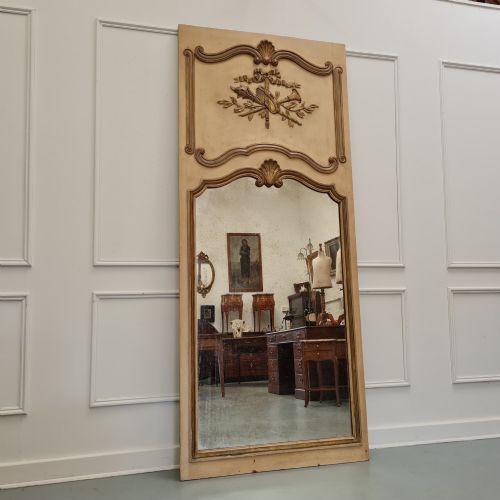


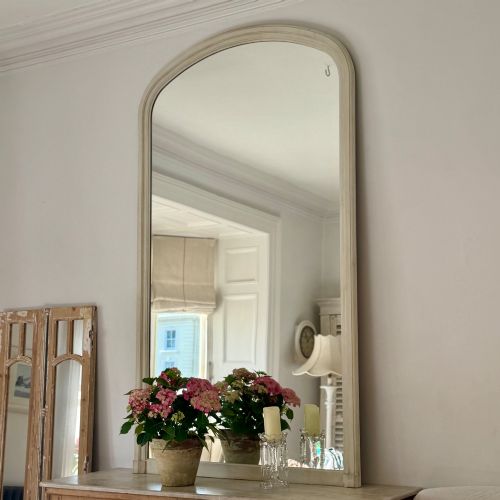
Cream Painted Overmantel
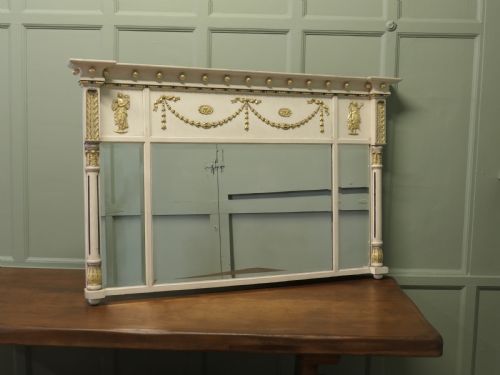
A cream painted overmantel sits above a fireplace to anchor a room and reflect light, combining scale with architectural presence.
Cream Painted Overmantel
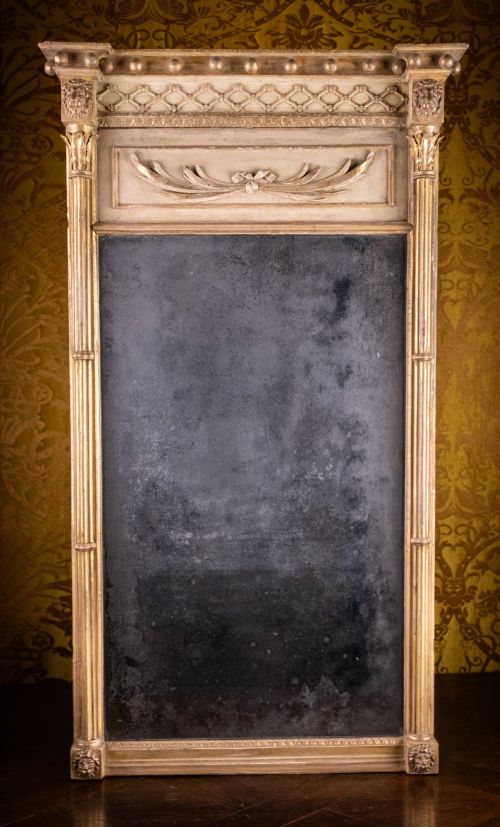
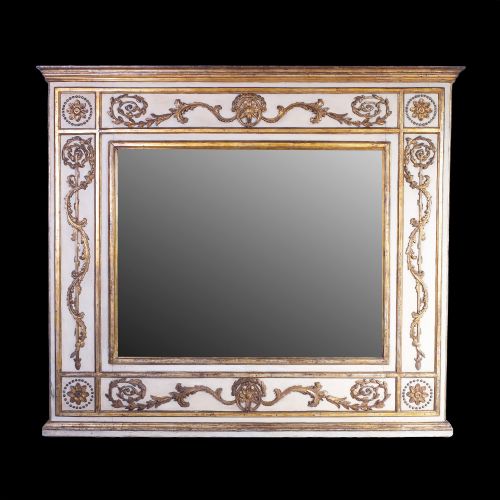
A cream painted overmantel is a large mirror designed to hang above a mantelpiece, bringing height and proportion to a chimney breast. When you search for a cream painted overmantel, you encounter substantial architectural frames shaped with arches, columns, or crestings.
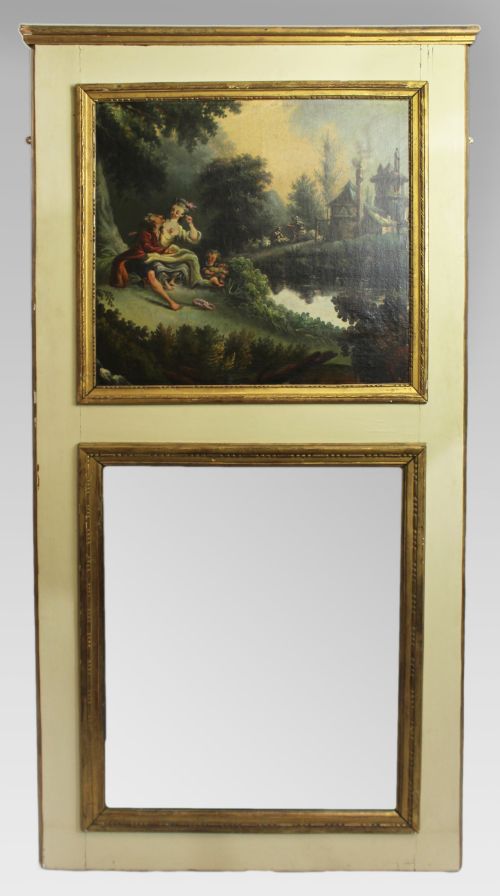
The pieces on this page span the eighteenth, nineteenth, and early twentieth centuries, drawing on Georgian, Regency, Victorian, and French provincial styles. Many examples combine painted surfaces with parcel gilt details, gesso ornamentation, or inset oil paintings.
While some items take the form of trumeau mirrors or pier mirrors, the dominant format is the wide horizontal or arched overmantel designed specifically for domestic hearths. These objects served to brighten period interiors by multiplying the natural light from windows and candles.
How they were made
Makers constructed these frames from pine or hardwoods, applying layers of gesso to build up high-relief mouldings and decorative scrolls before painting. Gold leaf or parcel gilt was frequently added to highlight carved details like lion masks or vitruvian scrolls.
The reflective components rely on original or historic mirror glass plates, sometimes showing subtle foxing and craquelure from age. Frames were finished with lead-based or oil paints in soft cream tones, often showing distress or layers of subsequent overpainting.
Materials recorded across these items include carved pine, gesso, gold leaf, and painted wood paired with heavy mirror glass.
What varies in quality
Quality rests in the crispness of the carved wood and gesso ornament, where hand-modelled enrichment outlasts mass-produced composition ornament. The depth of the moulding and the integrity of the original joints determine the structural stability of large frames.
The quality of the mirror plate itself matters greatly, distinguished by heavy bevelling, distortion-free reflection, or genuine age in the silvering. A superior piece retains its original painted surface without inappropriate modern intervention.
The Cream Painted Overmantel Glossary
- Overmantel
- A mirror or decorative panel specifically proportioned to hang on the wall directly above a fireplace mantelpiece. These items typically measure wider than they are tall or feature an arched top to match the fireplace surround.
- Gesso
- A plaster-like mixture applied to wood frames and carved or moulded into intricate relief designs before gilding or painting. It provides a smooth, hard surface that takes fine detail well.
- Trumeau
- A decorative wall mirror incorporating an oil painting or carved wooden panel within the upper section of the frame. Originating in France, these pieces served as formal architectural fixtures in grand salons.
- Parcel Gilt
- A finish where portions of an object are selectively gilded with gold leaf while the remaining areas are painted or left as exposed wood. This technique highlights specific architectural motifs like scrolls and floral carvings.
- Craquelure
- A fine network of minute cracks appearing in the paint or gesso layer due to the natural ageing of the materials. It serves as an indicator of age on nineteenth-century and earlier surfaces.
Cream Painted Overmantel: Frequently Asked Questions
How do I hang a heavy overmantel?
Large overmantels require secure fixing directly into masonry or heavy wall studs using substantial brackets that can support the considerable weight of wood, gesso, and glass.
Professional installation is recommended to distribute the load safely across the wall above the fireplace.
Are the mirror plates original?
Many nineteenth-century pieces retain their original glass, which often exhibits characteristic foxing, minor speckling, and slight distortions from early manufacturing methods.
Replacement glass is occasionally fitted during conservation when the original plate has suffered unrecoverable damage.
What is the difference between an overmantel and a pier mirror?
Overmantels are specifically designed to sit horizontally or vertically above a fireplace opening, while pier mirrors were historically built to hang on the narrow wall space between windows.
Despite their original placement differences, both forms share similar nineteenth-century decorative vocabularies.