


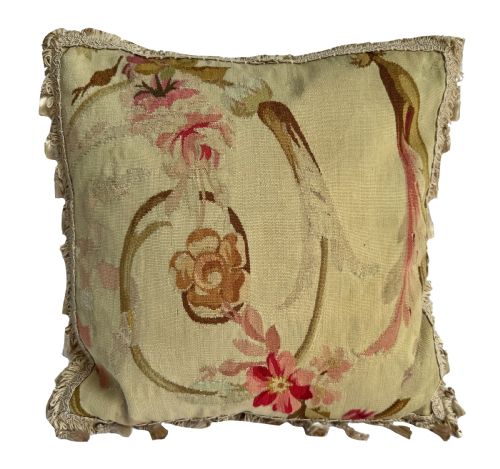
Cream Wool Tapestry
A cream wool tapestry brings historic texture into a room, offering tactile warmth and patterned depth shaped by centuries of textile tradition.
Cream Wool Tapestry
When you search for cream wool tapestry, you encounter a varied group of textiles spanning wall hangings, rugs, cushions, and framed panels. These pieces draw upon styles such as French Chateau, Persian, Jacobean, and Victorian, reflecting diverse regional textile traditions.
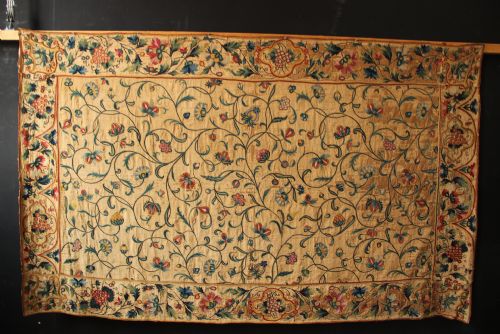
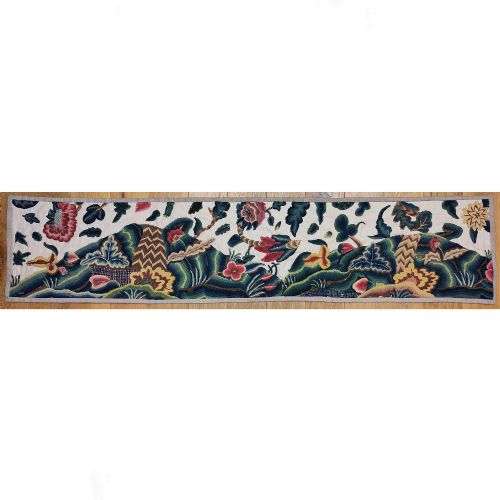
The materials frequently combine wool with cotton, silk, linen, and canvas, sometimes mounted on wooden frames or walnut structures. Pieces range from seventeenth century English crewelwork to nineteenth century Aubusson panels and twentieth century Portuguese needlepoint.
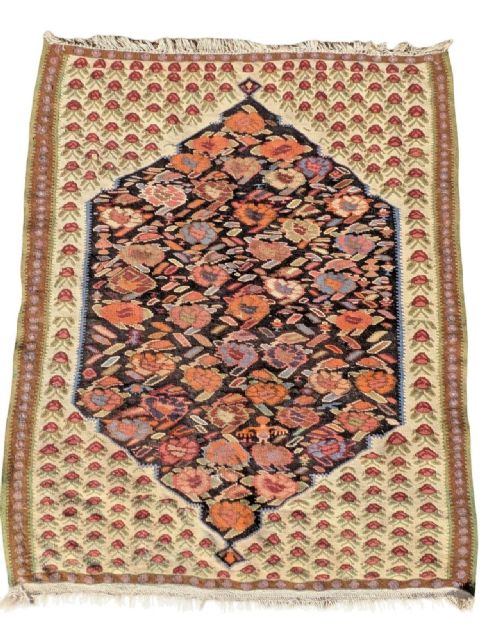
You are likely to meet floor coverings like Bessarabian and Senneh kilims alongside smaller decorative cushions and pictorial needlework pictures. Each type demonstrates how wool was worked across different centuries to create durable domestic furnishings.
Distinctions in Quality
The standard of a piece rests upon the density of the stitching and the precision of the design execution, whether in crewelwork panels or woven kilims. Finer examples display intricate pictorial detail, such as figurative needlework and carefully shaded wool yarns.
Materials also differentiate the range, with superior items employing fine silk highlights alongside high grade wool on sturdy canvas or linen foundations. The integrity of the wooden frames and the preservation of the textile surface further mark out the upper tier of pieces.
Listings feature textiles spanning from the seventeenth century through the Victorian era and into the twentieth century, utilising wool, cotton, silk, and canvas.
Mohtasham Kashan
The Cream Wool Tapestry Glossary
- Crewelwork
- Embroidery executed with wool yarn on a linen or cotton ground, frequently seen in seventeenth and twentieth century English wall hangings and panels.
- Aubusson
- Woven tapestries and rugs produced in France, typically featuring floral, architectural, or figurative designs characteristic of nineteenth century French workshops.
- Kilim
- A flatwoven carpet or rug lacking a pile, produced across regions including Persia, Bessarabia, and the Balkans with distinct banded or geometric patterns.
- Needlepoint
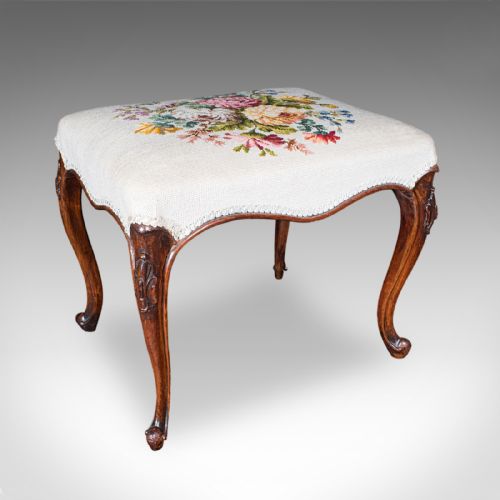
- Embroidery stitched onto a stiff open weave canvas foundation, creating durable surfaces for cushions, footstools, and framed pictures.
- Gros point
- A coarse type of needlepoint worked with thick wool yarn, often utilised for nineteenth century chair seats, footstools, and decorative panels.
Cream Wool Tapestry: Frequently Asked Questions
How do I care for a wool tapestry?
Keep textile pieces away from direct sunlight to protect the natural wool and silk fibres from fading over time. Gentle surface cleaning helps maintain the integrity of the weave.
Avoid hanging heavy wall pieces by single points to prevent distortion of the canvas or linen backing. Professional textile conservation ensures older items remain stable.
Where were these textiles made?
The pieces originate from diverse European and Middle Eastern centres, including England, France, Portugal, and Persia. Each region developed distinct aesthetic traditions using local wool and weaving techniques.
French workshops specialised in woven Aubusson designs, while English makers focused on crewelwork and needlepoint. Persian and Balkan traditions contributed flatwoven kilims and tribal bands.
How are wall hangings mounted?
Many wall hangings and tapestries utilise discreet fabric sleeves sewn along the reverse to support a hanging rod evenly. This distributes the weight across the entire textile rather than stressing individual stitches.
Heavier framed tapestries rely on secure wall brackets attached to the wooden structure. Proper mounting protects the wool fibres from unnecessary tension and sagging.
What is the difference between a kilim and a tapestry?
A kilim is a flatwoven carpet or rug constructed without a pile by interlocking warp and weft threads. These pieces were traditionally used on floors or as tent bands.
Tapestries and wall hangings are typically worked in needlepoint, crewelwork, or weaving specifically designed for vertical display or decorative furnishing. Both utilise wool as a primary material but serve different functional roles.