

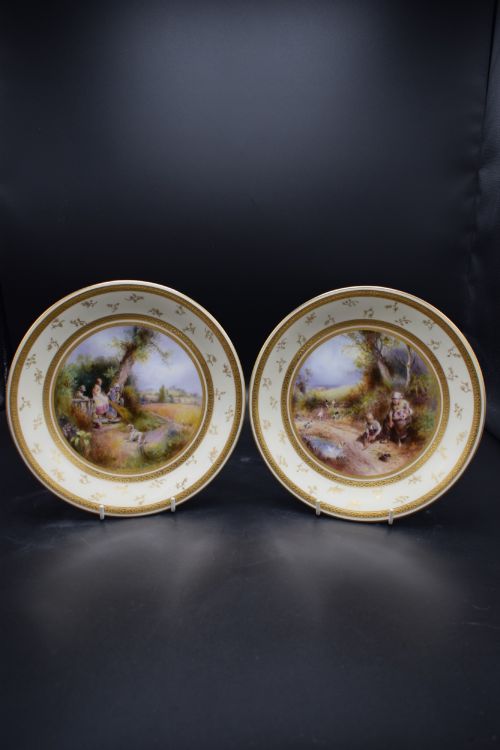
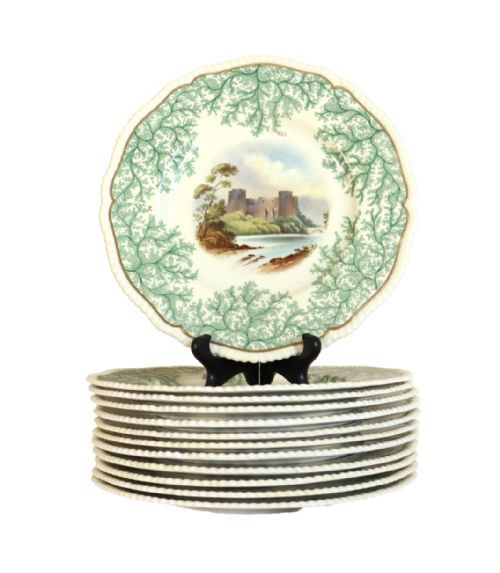
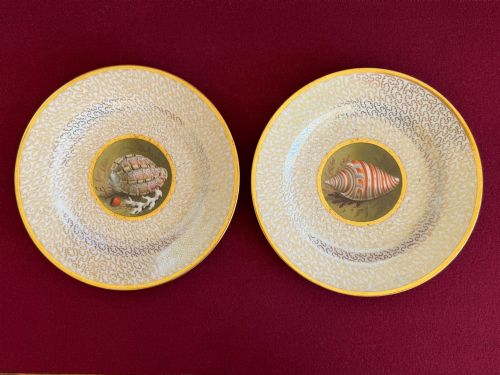


Cream Porcelain Cabinet Plates
Cream porcelain cabinet plates are decorative ceramics designed for display, bringing historic artistry and painted scenes straight into your home.
Cream Porcelain Cabinet Plates
Cream porcelain cabinet plates are decorative ceramics intended primarily for display rather than everyday dining use. When you search for cream porcelain cabinet plates, you encounter pieces spanning from the eighteenth century through the Edwardian era and the early twentieth century.
The selections available here showcase distinct periods including Georgian, Victorian, and Edwardian designs, alongside English Rococo Revival and Meiji period examples. Forms range from dedicated cabinet plates and decorative dishes to dinner plates and ribbon dishes.
Makers represented in these listings include Spode, Bow, James Rouse Jnr., Copeland, Satsuma, Wedgwood, Mintons, and Royal Worcester. These pieces frequently feature hand-painted artistry, gilt accents, and enamel detailing on soft-paste porcelain, earthenware, and standard porcelain bodies.
Materials and manufacture
Makers utilised fine porcelain and soft-paste porcelain bases, sometimes supplemented by earthenware bodies, shaping them into octagonal, shaped, or round plates and dishes. Artisans applied smooth glazes to create the characteristic cream ground before adding intricate painted details.
Decoration relied heavily on hand-painted enamel scenes, delicate gilding, and gold leaf applications. Techniques such as pate-sur-pate allowed makers to build up raised white porcelain relief designs over coloured slip backgrounds.
Cream Porcelain Cabinet Plates Retail Price Guide 2026
Typical asking prices for cream porcelain cabinet plates among the pieces listed under this phrase on Sellingantiques today, from the lower quarter to the upper quarter. They describe what is for sale here now, not the wider market.
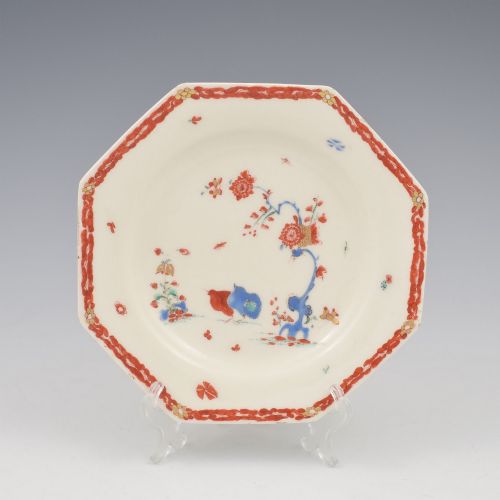
Two quail watch over an eighteenth-century octagonal plate, bringing a touch of feathered observation to the collection.
Distinctions in quality
Quality in these plates rests upon the precision of the hand-painted brushwork and the complexity of the artistic composition. Pieces featuring detailed pictorial scenes or specialised techniques like pate-sur-pate demonstrate superior craftsmanship compared to simpler decorated wares.
The application of gold leaf and gilding also dictates the tier of the piece, with heavier, burnished gold work indicating higher manufacturing investment. Furthermore, the renown of the producing factory or individual artist elevates the standing of the plate within its period.
Spode·Bow·James Rouse Jnr.·Copeland·Wedgwood·Mintons·Royal Worcester
The Cream Porcelain Cabinet Plates Glossary
- Cabinet plate
- A decorative ceramic plate intended for display in a cabinet or on a wall rather than for table service. These pieces usually feature elaborate painted scenes or rich gilding.
- Pate-sur-pate
- A ceramic decoration technique where liquid clay is applied layer upon layer in successive brushstrokes to create a cameo-like relief. This method requires immense skill and patience from the artisan.
- Soft-paste porcelain
- An early ceramic composition fired at lower temperatures than hard-paste porcelain, resulting in a warmer texture and softer glaze. It was widely utilised by eighteenth-century English potteries.
- Gilding
- The application of gold leaf or gold powder to the surface of porcelain to highlight rims, borders, and motifs. Burnishing this gold adds a bright metallic sheen.
- Enamel
- Opaque vitreous compositions fired onto the porcelain surface to provide vibrant colours for hand-painted decoration. These pigments remain durable and bright over centuries.
Cream Porcelain Cabinet Plates: Frequently Asked Questions
How were cabinet plates used historically?
Cabinet plates were created primarily for visual display in drawing rooms, dining parlours, and specialised wall cabinets. Wealthy households used them to showcase artistic taste, painted scenes, and fine ceramic manufacturing.
Unlike standard dinner services, these plates bypassed the dining table to prevent wear on delicate hand-painted enamels and intricate gold leaf borders.
How do I display these plates safely?
Displaying these ceramics requires secure wall hangers designed specifically for porcelain or dedicated plate stands within enclosed cabinets. Ensuring stable support protects the edges and prevents accidental tipping.
Keep display locations away from direct sunlight to preserve the vibrancy of hand-painted enamel colours and prevent delicate gilding from fading over time.
How can I tell different periods apart?
Differentiating periods relies on observing stylistic markers, such as the ornate curves of eighteenth-century English Rococo Revival or the distinct motifs of Meiji period Satsuma ware. Examining the paste composition, glaze texture, and backstamps provides further chronological clues.
Georgian and Victorian pieces often exhibit specific hand-painted portrait or landscape themes, whereas Edwardian items frequently favour lighter ribbon dishes and shaped decorative forms.
What is soft-paste porcelain?
Soft-paste porcelain is an artificial porcelain mixture developed by European and English potteries before the discovery of native hard-paste deposits. It combines white clay with glass frit and other materials to achieve a translucent body.
This composition absorbs glazes differently than hard-paste porcelain, giving eighteenth-century pieces a characteristic warmth and softer visual depth.