
Cream Pearl Jewellery
Cream pearl jewellery brings together lustrous organic spheres and precious settings, offering timeless elegance across multiple historical decades.
Cream Pearl Jewellery
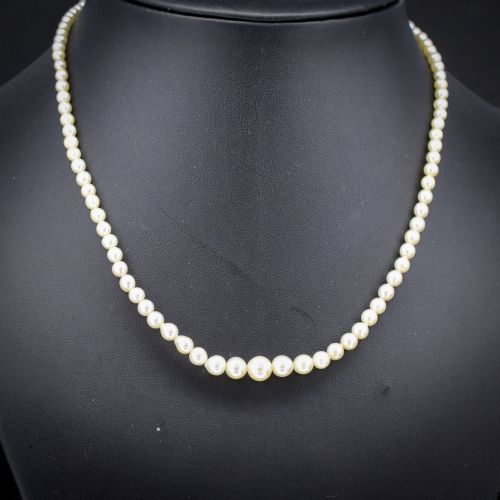
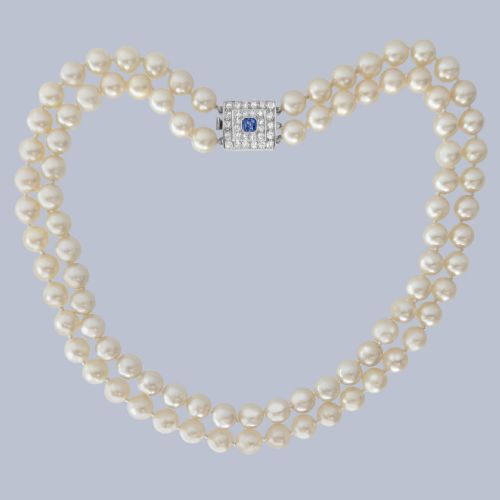
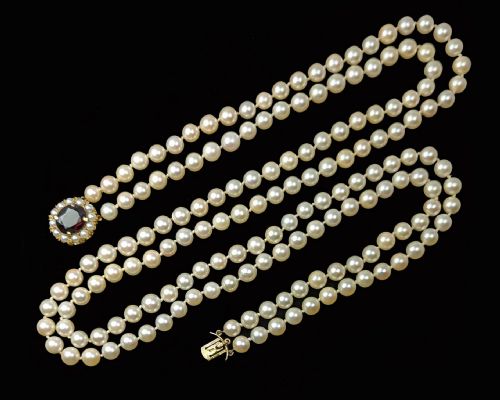
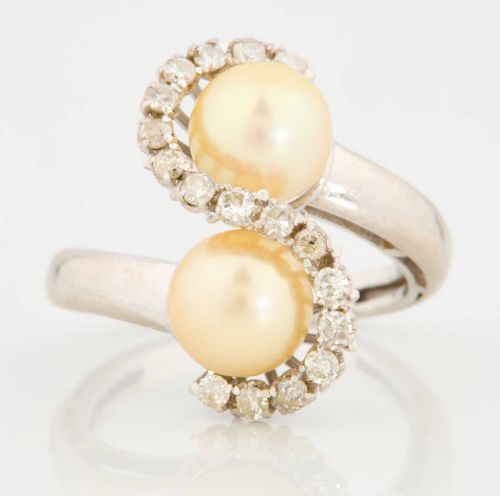
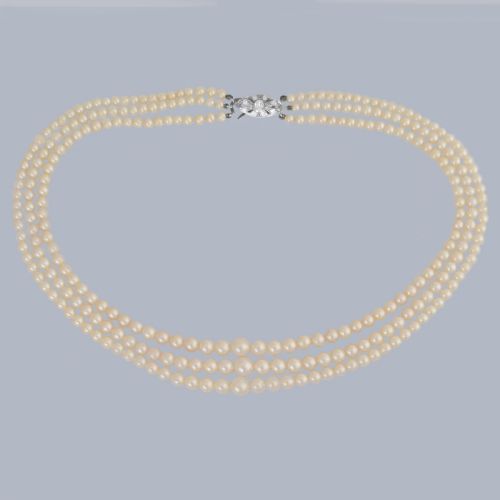
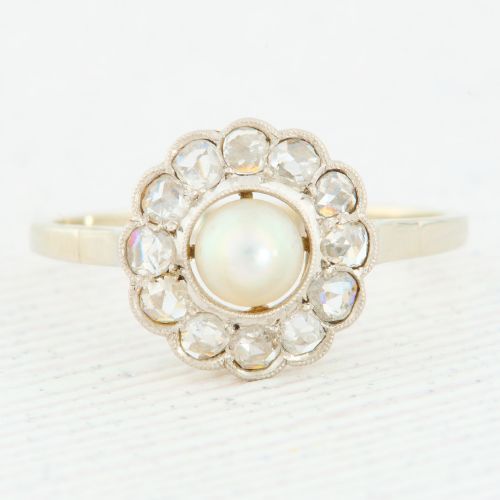
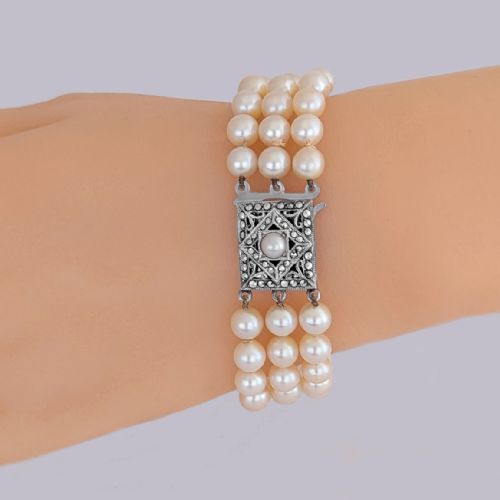
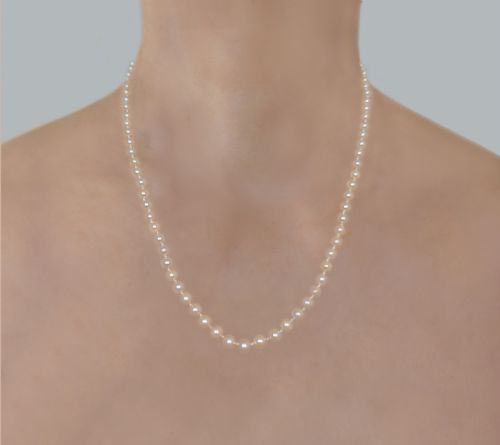
Cream pearl jewellery encompasses necklaces, rings, bracelets, pendants and earrings created across the 19th Century, Edwardian era, Art Deco period and Mid-Century decades. Buyers searching for cream pearl jewellery often encounter single, double or triple strand necklaces alongside cocktail rings and decorative clips.
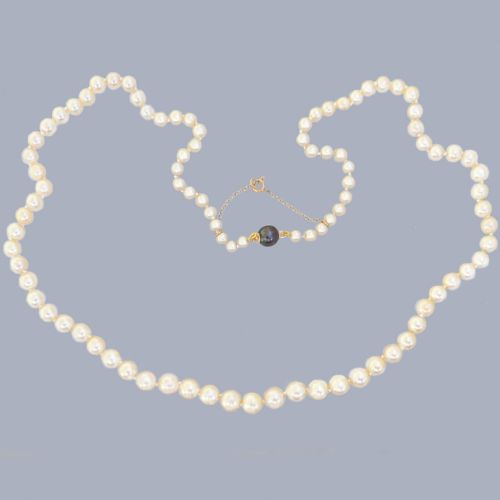
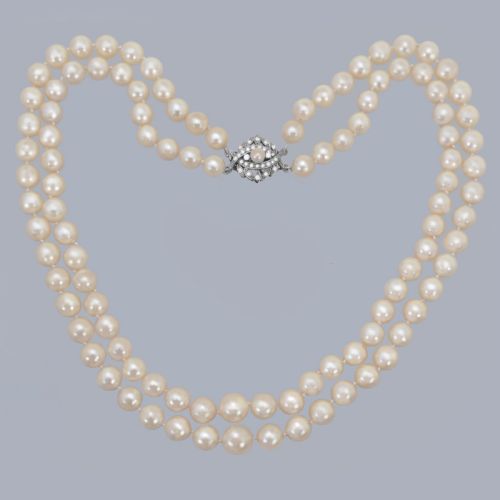
The selections span from dainty faux pieces to certified natural saltwater pearls and cultured varieties mounted in gold or platinum. Shorter chokers sit alongside long rope lengths and multi-strand designs secured by ornate clasps.
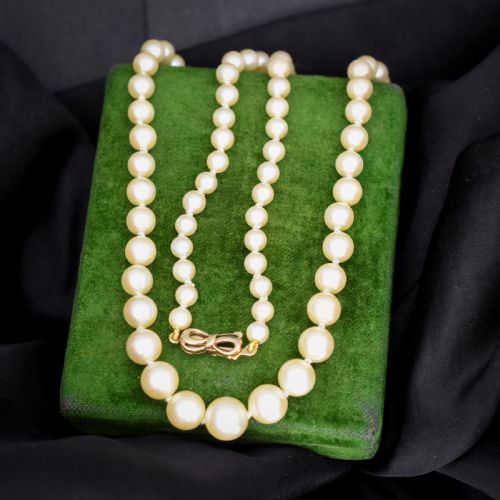
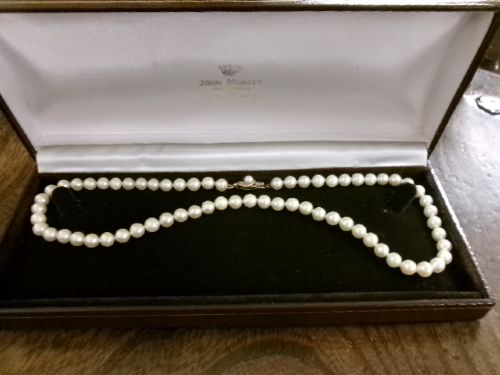
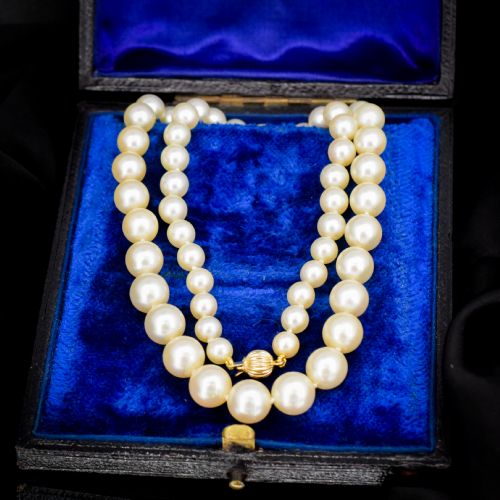
Many strands preserve original boxes and British hallmarked gold settings from the 1950s and 1960s. These items reflect the enduring appeal of lustrous nacre paired with precious metals and gemstones.
Materials and construction
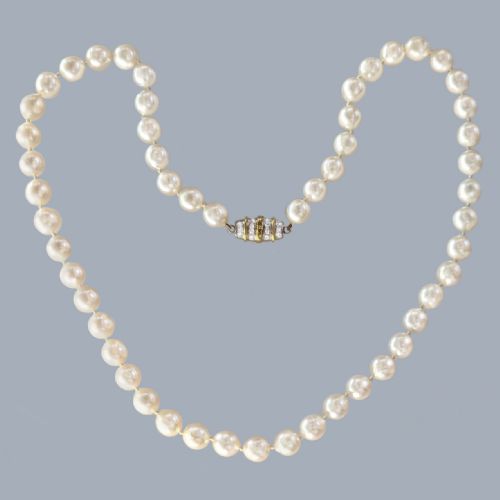
Construction relies heavily on hand-knotting techniques to secure pearls along silk or thread strands, preventing friction between individual spheres. Clasps utilise 9ct gold, 18ct white gold, platinum or sterling silver, frequently incorporating box fasteners or safety catches.
Gemstones such as diamonds, sapphires, rubies, garnets and amethysts are flush-set or claw-set into the clasps and ring mountings. Pearls themselves range from natural saltwater origins to cultured varieties and historic paste or faux alternatives.
One exceptional mid-century choker pairs lustrous cream pearls with a carved onyx horse head cameo.
Markers of quality
Quality rests upon the uniformity of the nacre, the depth of lustre, and the matching of size and tone across multi-strand layouts. Superior examples display smooth surfaces with minimal blemish and intense iridescent reflection.
The complexity and material of the clasp elevate a piece, particularly when set with high-grade diamonds, sapphires or precious metals bearing clear Birmingham or London hallmarks. Evidence of professional restringing ensures the structural integrity of older beaded lengths.
Chaumet·Cropp & Farr
The Cream Pearl Jewellery Glossary
- Cultured pearl
- A pearl formed with human assistance by inserting a nucleus into an oyster or mollusc. They dominate mid-century and later jewellery production.
- Graduated pearl
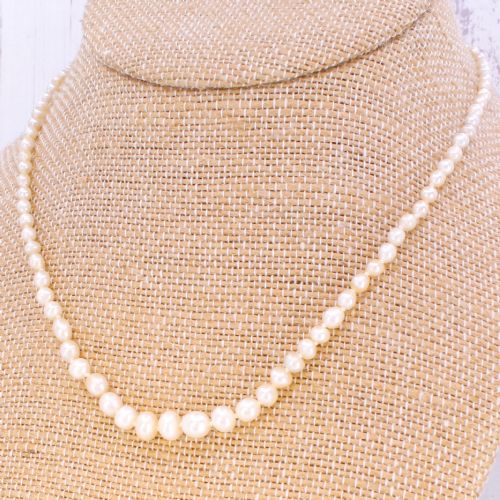
- A strand where pearls increase progressively in size from the clasp to the centre front. This traditional layout requires careful sorting for symmetry.
- Nacre
- The iridescent organic-inorganic composite substance secreted by molluscs that forms the pearl. Thicker nacre produces greater durability and deeper lustre.
- Saltwater pearl
- A pearl grown in marine environments, encompassing natural specimens and saltwater cultured varieties. They often command attention for their orient and deep lustre.
- Clasp
- The mechanical closure of a necklace or bracelet, frequently designed as an ornate focal point set with diamonds or coloured stones. Many vintage iterations double as decorative brooches.
Cream Pearl Jewellery: Frequently Asked Questions
How should I store cream pearl jewellery?
Store pearls separately in soft pouches or lined boxes to prevent scratching from harder gemstones and metals. Avoid exposing them to perfumes, cosmetics or household chemicals that can damage the delicate nacre surface.
Lay necklaces flat when possible rather than hanging them, which stretches the silk thread over time. Regular inspection of the stringing prevents accidental breakage during wear.
What is the difference between cultured and natural pearls?
Natural pearls form entirely without human intervention when an irritant enters a mollusc in the wild. Cultured pearls begin with a human-inserted nucleus, allowing oysters to coat it with layers of nacre.
Both types appear across vintage and antique pieces, with certified natural saltwater examples representing significant rarity. X-ray examination or gemological testing typically determines their exact origin.
How do I date a vintage pearl necklace?
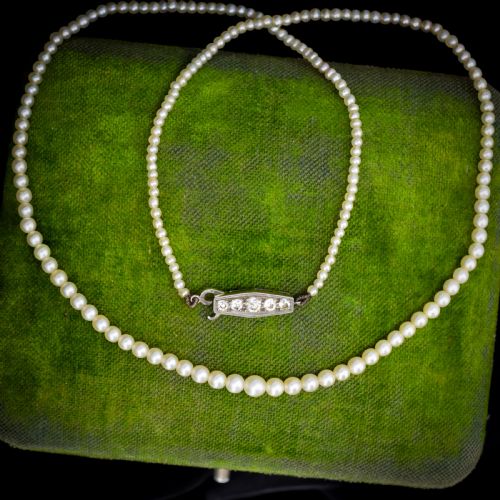
Dating relies on clasp styles, metal purity hallmarks, box inscriptions and manufacturing techniques. Art Deco pieces from the 1920s often feature geometric white gold clasps with rose-cut diamonds, while 1950s and 1960s items frequently display British hallmarks and safety chains.
Graduation patterns and the presence of maker marks also help narrow the specific decade of creation. Certified laboratory reports sometimes accompany older saltwater strands to verify their era.
Are multi-strand pearl necklaces original?
Many multi-strand necklaces retain their original configuration and fitted clasps designed to hold two or three parallel strings. Over decades of use, older pieces often require professional restringing to maintain correct tension and spacing.
Examining the clasp construction and the uniformity of the pearls confirms whether the strands belong together. Original boxes from retailers further support the authenticity of the layout.