





Edwardian Diamond Clasp
An edwardian diamond clasp is a brilliant focal point that secures fine pearl strands with undeniable elegance.
Edwardian Diamond Clasp
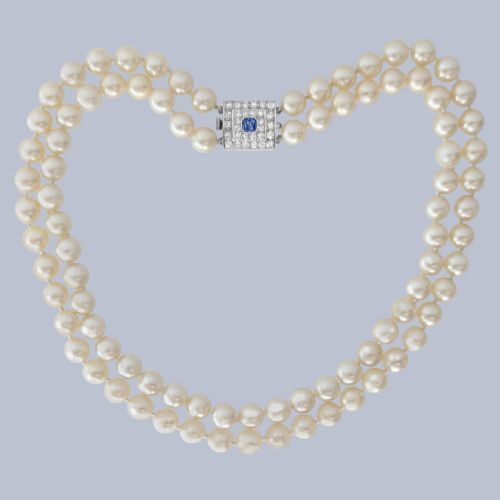
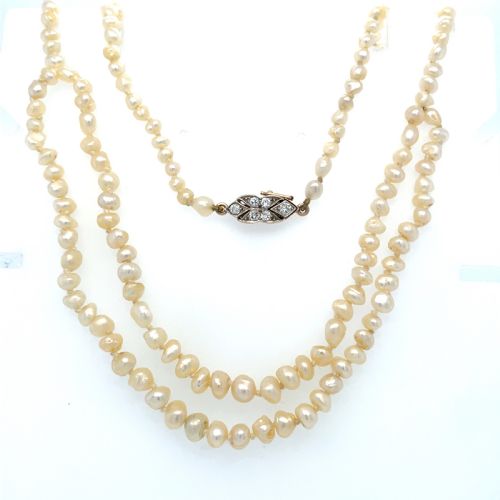
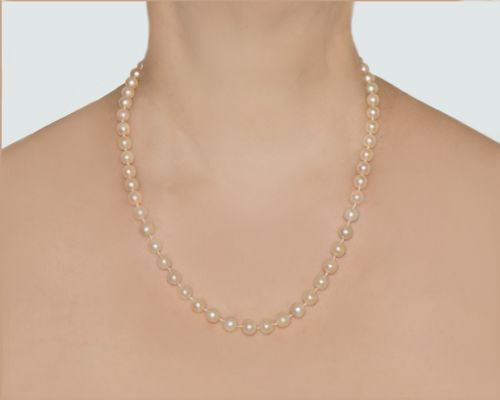
An edwardian diamond clasp is the intricate fastening mechanism that anchors multi-strand pearl necklaces and chokers. These pieces frequently emerge from the Edwardian and Art Deco periods, securing single, double, triple, and five-strand pearl necklaces.
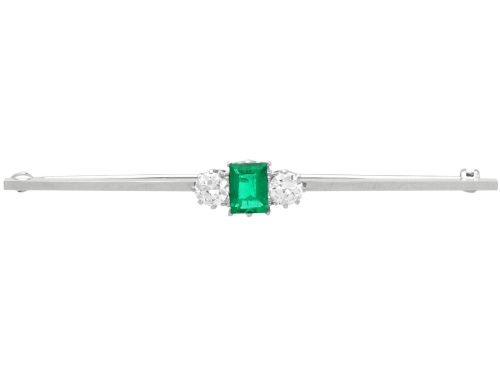
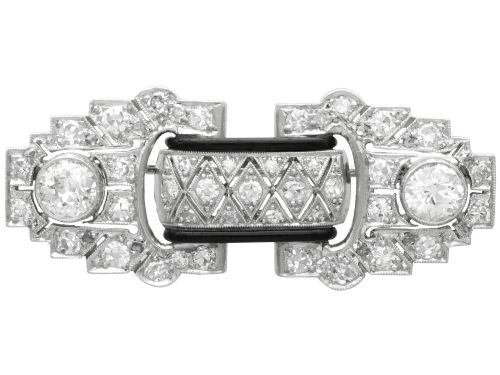
Buyers encounter these items functioning primarily on pearl necklaces, though similar gem-set designs appear on charm pendants and bracelets. The forms span delicate floral motifs and heart padlocks alongside geometric geometric arrangements.
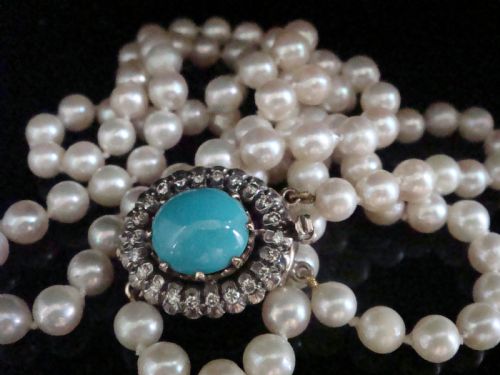
The material combination typically unites diamonds with pearls, supported by gold, platinum, or white gold. Pieces range from straightforward single-strand pearl necklaces to elaborate chokers featuring rubies, sapphires, or emeralds.
How they were made
Goldsmiths utilised platinum and various carats of gold, including nine carat, fifteen carat, and eighteen carat white and yellow gold, to mount old cut diamonds securely. These precious metals were shaped by hand to house the stones in intricate gallery work.
Natural saltwater pearls and cultured pearls were strung carefully to complement the gemstone-set closures. Jewellers incorporated supplementary coloured gems such as sapphires, rubies, emeralds, and turquoise alongside the primary diamonds.
Edwardian Diamond Clasp Retail Price Guide 2026
Typical asking prices for edwardian diamond clasp among the pieces listed under this phrase on Sellingantiques today, from the lower quarter to the upper quarter. They describe what is for sale here now, not the wider market.
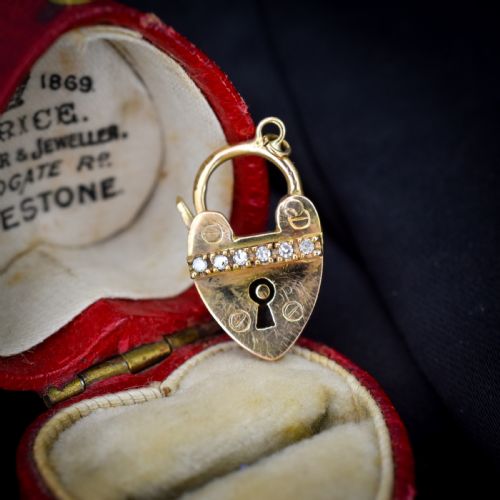
Heart-shaped gold padlocks keep watch over antique chains, locking up secrets from nineteen hundred and seven.
What varies in quality
Quality depends upon the skill of the metalwork and the presence of certified natural saltwater pearls rather than cultured alternatives. Finer examples display superior old cut diamond carat weights and detailed floral or geometric designs.
The Edwardian Diamond Clasp Glossary
- Edwardian
- A period spanning the early twentieth century known for delicate platinum and diamond jewellery design. This era favoured light, lace-like metalwork supporting pearls and precious gems.
- Old cut
- A vintage diamond cutting style characterised by a small table, high crown, and open culet. These stones catch candlelight differently than modern brilliant cuts.
- Natural saltwater pearl
- A pearl formed organically in ocean molluscs without human intervention. These pearls are documented through specialised gem lab reports.
- Cultured pearl
- A pearl created with human assistance by inserting an irritant into the mollusc. They appear frequently alongside antique clasps.
- Padlock charm
- A small padlock-shaped pendant often functioning as a clasp or charm on nineteenth and twentieth-century gold chains. They frequently feature surface engraving and flush-set diamonds.
Edwardian Diamond Clasp: Frequently Asked Questions
What is an edwardian diamond clasp?
An edwardian diamond clasp is the decorative fastening mechanism found on antique pearl necklaces and chokers. It combines precious metals with diamonds to secure strings of pearls.
These functional ornaments often double as the visual centrepiece when a necklace is worn rotated to the front.
How do I care for my pearl necklace?
Pearls require gentle treatment because organic gems are softer than diamonds and precious metals. Wipe them clean with a soft cloth after wearing to remove oils and cosmetics.
Store pearls flat away from other hard jewellery to prevent scratching the surface and weakening the silk thread.
Are the pearls natural or cultured?
Listings include both natural saltwater pearls and cultured pearls depending on the specific piece. Gem lab certificates often accompany higher-value items to verify their origin.
Examining the laboratory report is the most reliable method to confirm whether saltwater pearls formed naturally or through cultivation.
What metals were used?
Jewellers utilised platinum alongside various purities of gold for these clasps. Yellow gold and white gold appear frequently in nine, fifteen, and eighteen carat compositions.
Platinum gained popularity during the Edwardian era for its strength, allowing delicate filigree work without adding excessive weight.
How many pearl strands are typical?
Necklaces range from single strands to elaborate multi-strand chokers containing up to five rows of pearls. Double and triple strand configurations appear regularly in the inventory.
More strands create a wider collar effect that places greater emphasis on the diamond-set clasp at the back or side.