




Cream Gilt Porcelain Urns
Cream gilt porcelain urns bring together pale ceramic bodies and bright metallic highlights across various Victorian and Edwardian forms.
Cream Gilt Porcelain Urns
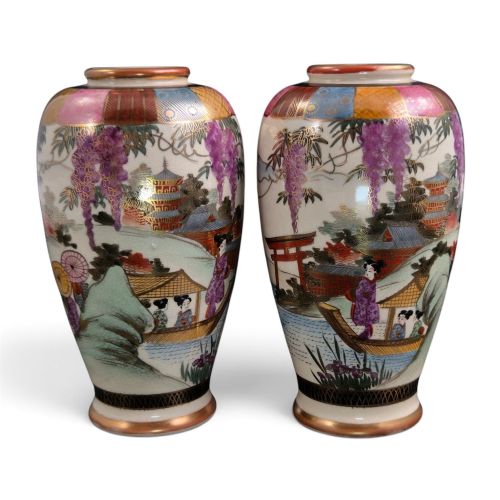
Cream gilt porcelain urns encompass decorative vases, table lamps, and garniture sets originating primarily from the nineteenth and early twentieth centuries. Buyers searching this phrase encounter both European porcelain works and Japanese ceramic pieces that utilise pale bodies and metallic accents.
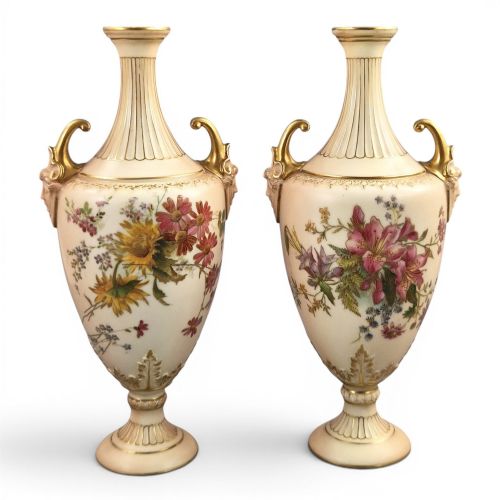
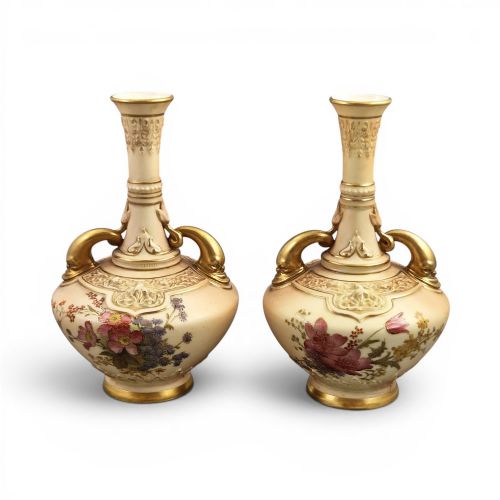
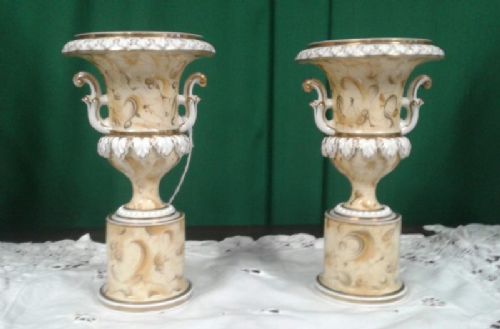
The selection frequently includes blush ivory wares, campana shapes, and classical forms produced across the Victorian, Edwardian, and Meiji periods. Makers such as Royal Worcester and Kinkōzan dominate the offerings, spanning centuries from the 1850s through the 1920s.
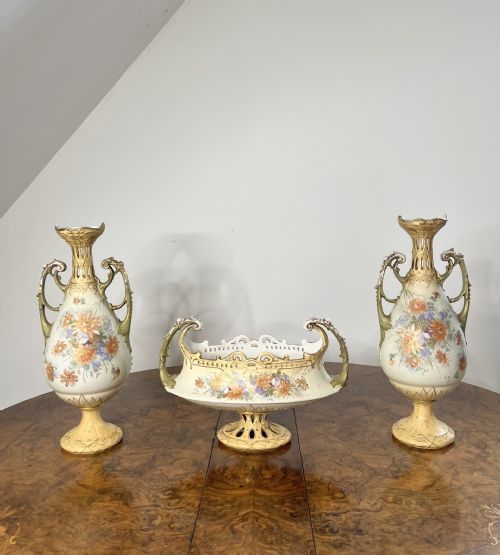
Vessels range from miniature display items to monumental centrepieces and lidded pairs. These decorative objects serve as mantel ornaments, accent lamps, and focal points for traditional interiors.
Materials and production methods
Makers shaped these pieces from fine porcelain and earthenware, applying enamel colours and hand-painted scenes directly to the ceramic ground. Artisans utilised gold leaf and delicate gilding to accentuate handles, rims, and figural processions.
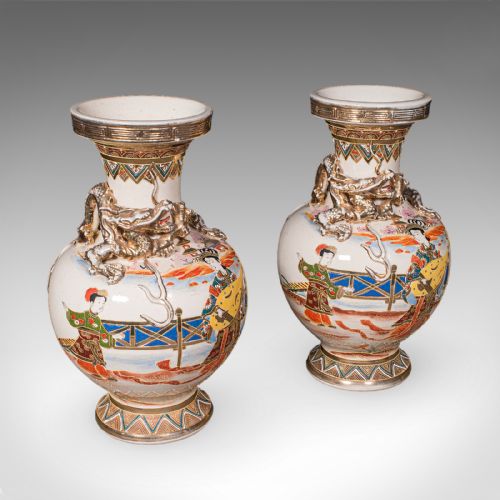
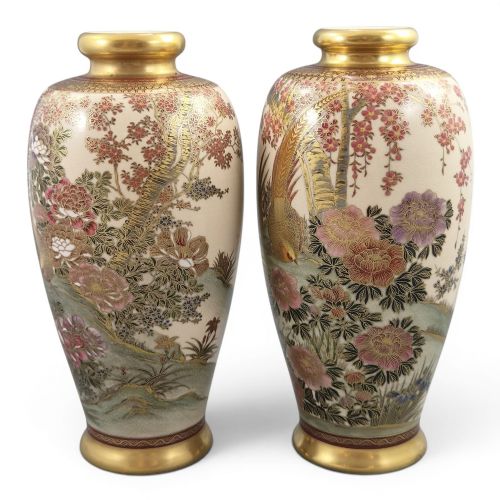
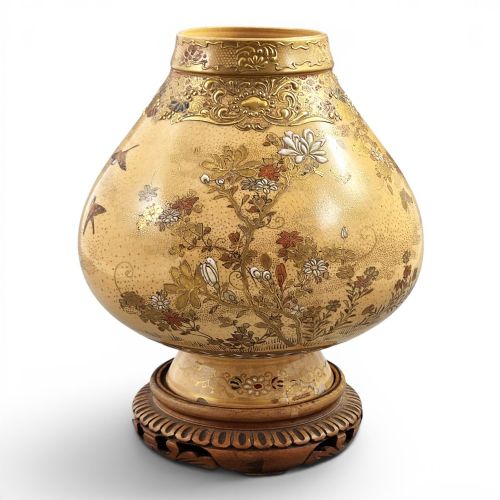
European factories employed specialised painting techniques for floral motifs, bird studies, and landscapes, often marking individual artists on the base. Japanese workshops combined crackle-glaze ceramic bodies with raised moriage decoration and intricate gilt line work.
Highland cattle stare out from miniature porcelain panels with surprising dignity.
Distinguishing quality factors
The standard of painting defines the division between ordinary items and superior works, visible in the precision of brushwork on animal and landscape scenes. Hand-painted botanical studies by recognised artists command greater regard than standard transfer-printed patterns.
The density and preservation of the gold leaf indicate the original workshop investment, where thick, burnished gilding outlasts thin surface washes. Intricate applied elements such as dolphin handles, pierced mounts, and bamboo forms demonstrate higher manufacturing ambition.
Royal Worcester·Kinkozan Workshop·Flight Barr and Barr·Manpei Kobe·Chosei Kyoto
The Cream Gilt Porcelain Urns Glossary
- Campana
- A bell-shaped vessel with a flared rim and footed base. This classical silhouette appears frequently in nineteenth-century decorative urns and vases.
- Garniture
- A set of three or more matching vases or vessels designed to stand together on a mantelpiece. These matching groups usually comprise a central urn flanked by side vases.
- Moriage
- A Japanese ceramic technique using layered slip to create raised, textured decoration. This slip is often highlighted with gold enamel.
- Blush ivory
- A tinted ceramic ground developed by Royal Worcester featuring a soft, warm cream tone. It serves as a background for delicate hand-painted floral motifs.
- Shimazu mon
- The heraldic crest of the Shimazu clan featuring a circle enclosing a cross. This mark identifies Satsuma wares produced under the patronage of that domain.
Cream Gilt Porcelain Urns: Frequently Asked Questions
What distinguishes Satsuma from European porcelain?
Satsuma pieces feature earthenware bodies with a characteristic fine crackle glaze rather than hard-paste European porcelain. They rely on dense enamel work and extensive gilding rather than classical European shapes.
Japanese Satsuma items often incorporate specific family crests and figural processions unique to Meiji period production. European pieces typically focus on botanical painting or classical revival silhouettes.
How should I clean gilt porcelain safely?
Dust these decorative objects gently with a soft, dry brush to prevent accumulating dirt on textured surfaces. Avoid abrasive cloths and chemical cleaners that damage delicate gold leaf.
Moisture can weaken aged enamels and exposed earthenware bodies, so wet cleaning should be approached with extreme caution. Professional conservation advice is recommended for heavily soiled or damaged pieces.
Where were blush ivory vases made?
Blush ivory vases were produced primarily by the Royal Worcester factory in England during the late Victorian and Edwardian eras. This distinctive ceramic body provided a warm matte background for hand-painted florals.
Painters such as the Stinton family decorated these vessels with naturalistic bird and cattle studies. The factory marked these items with specialised date codes stamped on the underside.
How do I identify a clock garniture set?
A clock garniture set consists of a central mantel clock accompanied by matching side vases or urns. These three pieces share identical decorative motifs, colour palettes, and material finishes.
Victorian drawing rooms displayed these matched groupings on mantelpieces as balanced decorative centrepieces. The side urns often repeat the handles and gilding patterns found on the main clock case.