
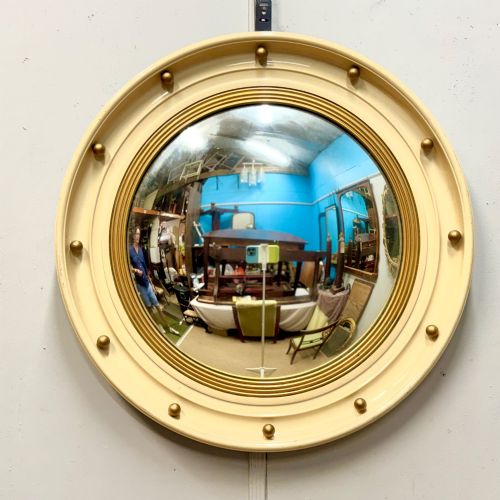
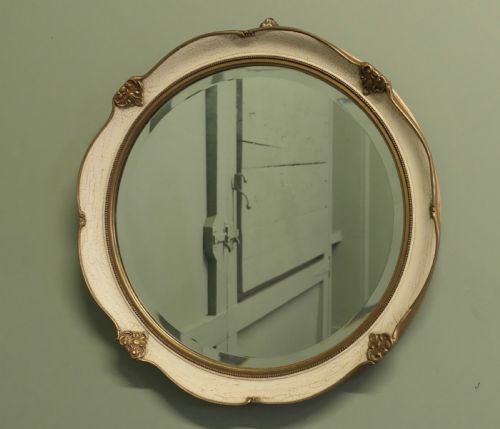
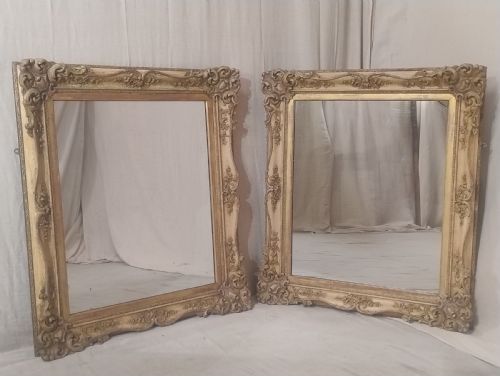
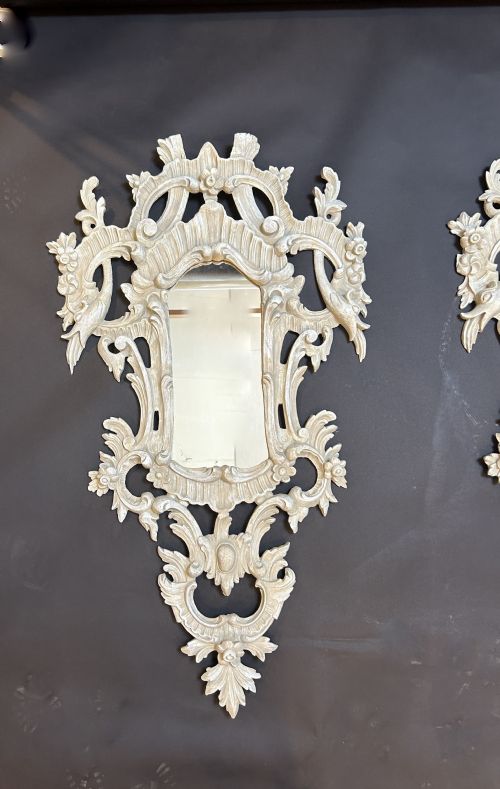


Cream Decorative Wall Mirror
A cream decorative wall mirror brings architectural grace and reflected light to a room, spanning French chateau styles and Victorian overmantels.
Cream Decorative Wall Mirror
When you search for a cream decorative wall mirror, you encounter pieces designed to reflect light and ornament a room, predominantly originating from the nineteenth century alongside examples from the eighteenth and early twentieth centuries. The selection encompasses forms ranging from grand overmantels and architectural trumeaux to smaller pier glasses, round convex formats, and delicate fretwork frames.
French and Italian influences dominate the selection, showcasing distinct aesthetic movements such as Rococo revival, Neoclassical design, French chateau, and French Art Deco. You frequently meet pieces finished in cream paint paired with parcel gilt, gold leaf, or polychrome details, often carrying elaborate carvings or moulded motifs.
The objects serve both functional and decorative purposes, functioning equally well above a fireplace mantel, within a hallway, or as a focal point on a principal living room wall. Their presence bridges domestic utility and artistic expression, utilising painted wood surfaces to soften the grandeur of traditional giltwood.
How they were made
The construction of these frames relies heavily on traditional carpentry techniques utilising carved wood, gesso, and painted wood surfaces. Artisans applied layers of gesso over carved wooden foundations to build up intricate relief ornaments, including floral mouldings, scrolls, and figurative elements.
Finishing techniques combined cream paint with gold leaf, parcel gilt, or silvered borders to create layered polychrome effects. Glass plates were housed within these robust wooden carcasses, featuring either flat or convex surfaces depending on the specific period and stylistic requirements of the mirror.
Several past pieces feature whimsical carved details, including doves, flames, and cherubs peering down from the crest of the frame.
What varies in quality
The distinction between tiers of quality rests upon the depth and dexterity of the carving within the wood and gesso. Superior examples display crisp, hand-carved relief work and subtle interplay between the cream ground and gilding, whereas simpler versions rely on heavier, less defined mouldings.
The integrity of the original surface finish dictates the standing of a piece within the market. Frames retaining their original layered paint and gilt schemes without extensive later repainting command greater appreciation among collectors seeking authentic period character.
The Cream Decorative Wall Mirror Glossary
- Trumeau mirror
- A decorative wall mirror designed to fit into the wooden paneling of a room, often featuring painted or carved scenes above the glass.
- Overmantel mirror
- A large horizontal mirror specifically scaled to hang directly above a fireplace mantelpiece.
- Gesso
- A plaster-like mixture applied to wood frames to create a smooth surface for subsequent carving, painting, or gilding.
- Parcel gilt
- A decorative technique where only specific raised portions of an object are covered in gold leaf while the rest remains painted.
- Convex glass
- A curved glass plate that projects outward, designed to capture a wide-angle reflection of the interior space.
Cream Decorative Wall Mirror: Frequently Asked Questions
Where should I hang a cream decorative wall mirror?
These mirrors suit placement above a drawing room fireplace, along a hallway, or facing a window to maximise natural light reflection.
Their scale allows them to function as primary focal points within traditional and eclectic interiors alike.
How do I identify a nineteenth-century frame?
Nineteenth-century frames typically exhibit hand-carved wood and gesso construction, displaying surface patination that reveals age beneath the cream paint.
Stylistic cues often point toward Rococo revival, Neoclassical, or French chateau aesthetics characteristic of that era.
Are these mirrors suitable for modern interiors?
The neutral cream tones and ornate frames provide a sophisticated contrast against contemporary minimalist walls or neutral colour schemes.
They introduce historic texture and a sense of architectural depth to newly decorated spaces.
What is the difference between an overmantel and a pier mirror?
Overmantel mirrors are traditionally built wider to span the horizontal space above a fireplace, while pier mirrors are proportioned to fit narrow wall spaces between windows.
Both formats utilise decorative frames of carved wood, gesso, and painted finishes.