




Cranberry Glass Pitcher
A cranberry glass pitcher is a striking table vessel combining rich pink-red hues with transparent clarity, desired for its distinctive warmth.
Cranberry Glass Pitcher
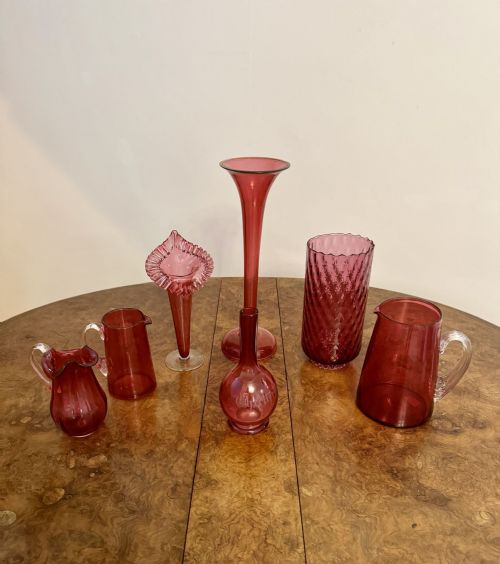
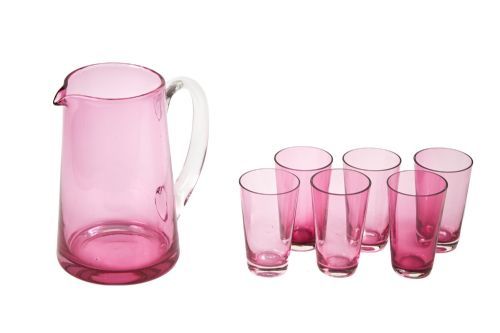
A cranberry glass pitcher takes the form of a jug or water vessel, created during the Victorian and Edwardian eras. These pieces range from small cream jugs to large water jugs designed for table service.
The objects seen here date across the late nineteenth and early twentieth centuries, specifically spanning the Victorian period through to 1900. Forms include standard jugs, cream jugs, and dedicated water jugs.
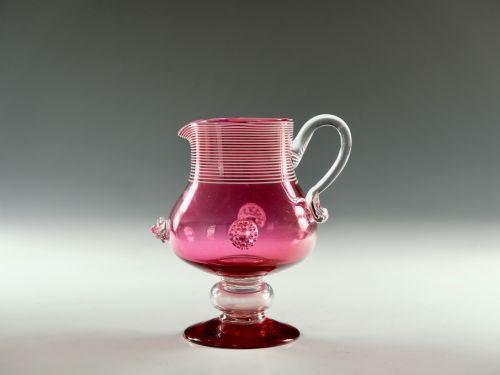
Makers utilised characteristic colouration alongside applied elements such as white piping. The pieces reflect the domestic tableware styles popular in Britain during the late 1800s and early 1900s.
Materials and construction
The primary material is glass, specifically coloured using a gold salt additive to achieve the distinct pinkish-red cranberry shade. This chemical process requires precise heat control during the glassblowing phase.
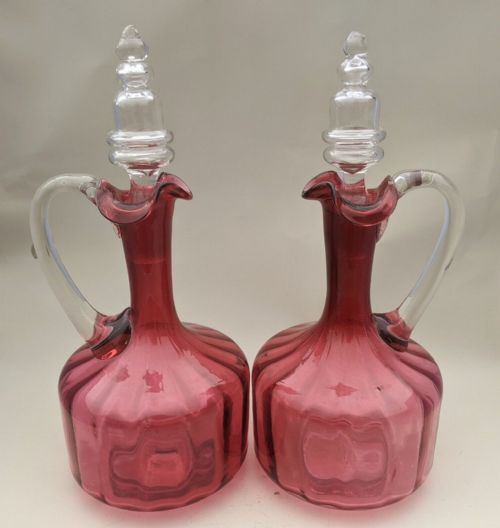
Clear glass is frequently incorporated into handles or decorative accents to contrast with the rich body colour. Additional decorative techniques include applied white piping, which stands out against the translucent body.
Current listings feature items from the Victorian and Edwardian periods, dating between 1880 and 1900.
Assessing quality
Quality in these vessels is determined by the depth and evenness of the cranberry colouration, achieved through the skilful introduction of gold salts to the molten glass batch. Superior examples display a vibrant, consistent hue without muddy patches or uneven saturation.
Refinement of form and decorative execution separate standard production from finer pieces. The application of contrasting elements, such as white piping, requires steady handwork that dictates the visual success of the finished jug.
The Cranberry Glass Pitcher Glossary
- Cranberry glass
- A transparent pink-red glass coloured by adding gold chloride or gold salt to the molten batch. It gained immense popularity during the Victorian period for decorative tableware.
- Gold salt additive
- The metallic compound mixed into the glass formula to produce the signature red-pink tint. Without gold, the distinct cranberry shade cannot form.
- White piping
- A raised line of opaque white glass applied as decoration to the exterior of a vessel. This technique creates a sharp textural and visual contrast.
- Victorian
- The period of British history spanning the reign of Queen Victoria from 1837 to 1901. Objects from this era often feature rich colours and ornate domestic styling.
Cranberry Glass Pitcher: Frequently Asked Questions
What is a cranberry glass pitcher used for?
These vessels were originally designed to serve liquids at the table, functioning as water jugs, cream jugs, or general beverage pitchers during Victorian and Edwardian meals.
Today, they are frequently displayed as decorative objects or used to hold fresh flowers, bringing historic colour into domestic interiors.
How do I date a cranberry glass pitcher?
Dating relies on stylistic clues, form, and known manufacturing periods such as the Victorian or Edwardian eras.
Examining the handle attachment, pontil mark, and decorative details like white piping helps align the piece with late nineteenth or early twentieth-century production.
How do I care for antique cranberry glass?
Wash these pieces gently by hand using lukewarm water and mild soap, avoiding harsh abrasives that could scratch the surface.
Keep them away from extreme temperature changes to prevent thermal shock and preserve the historic glass structure.
Why is the glass pink-red?
The distinctive colour comes from mixing a gold salt additive into the molten glass before blowing and shaping.
Reheating the glass triggers a chemical reaction that develops the rich cranberry hue characteristic of these antique items.