

Crafting Stand Table
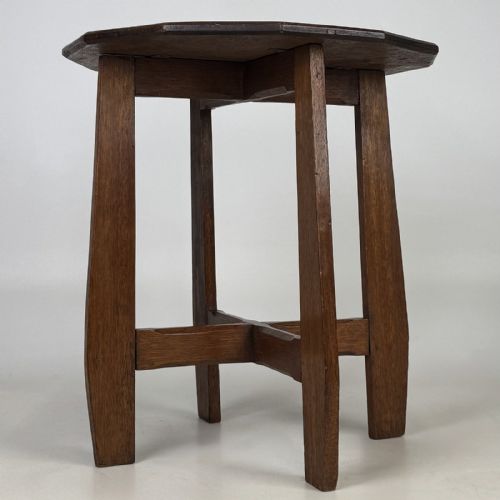
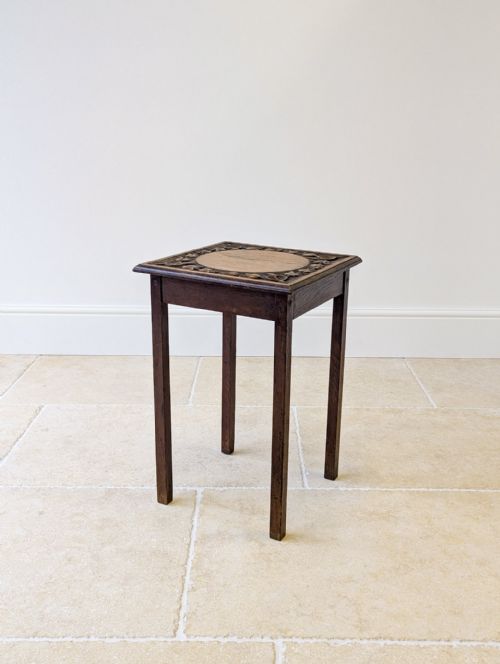
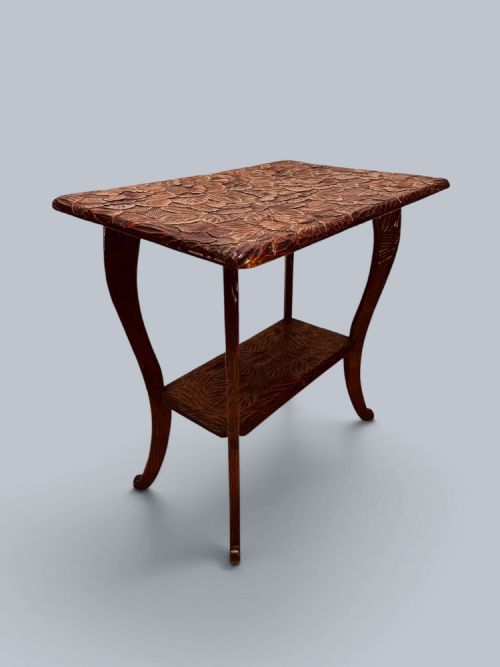
These crafting stand table pieces bring together solid oak forms and tile tops from the late nineteenth and early twentieth centuries.
Crafting Stand Table
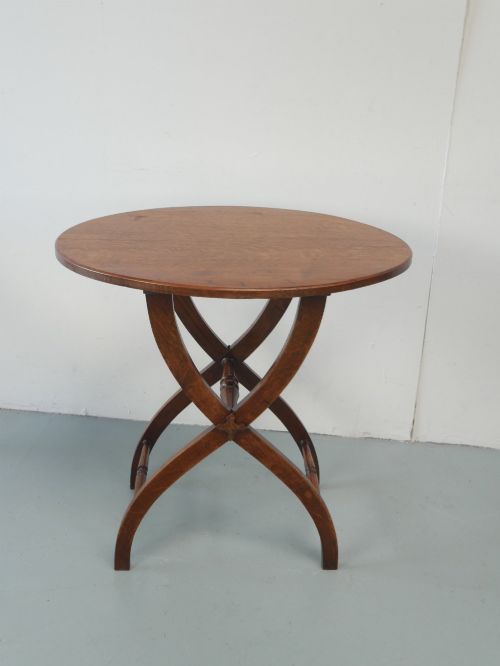
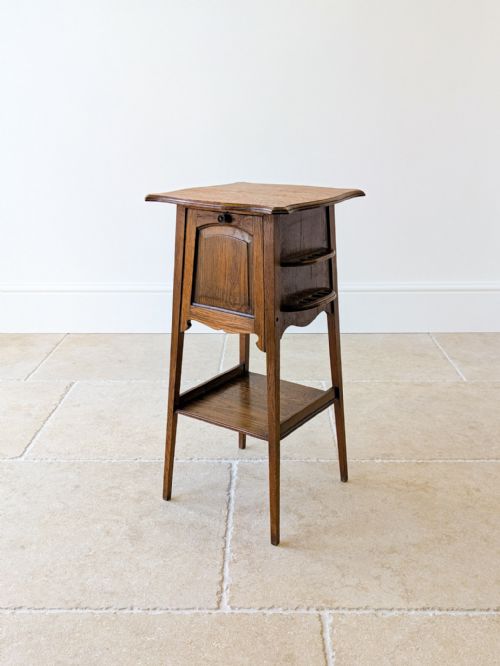
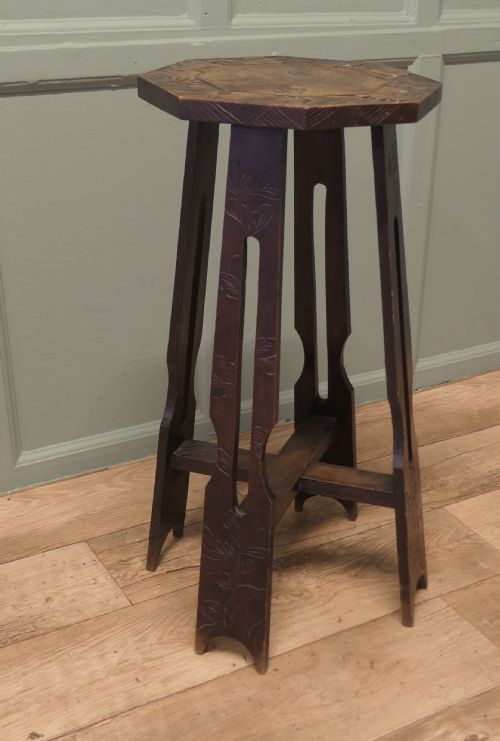
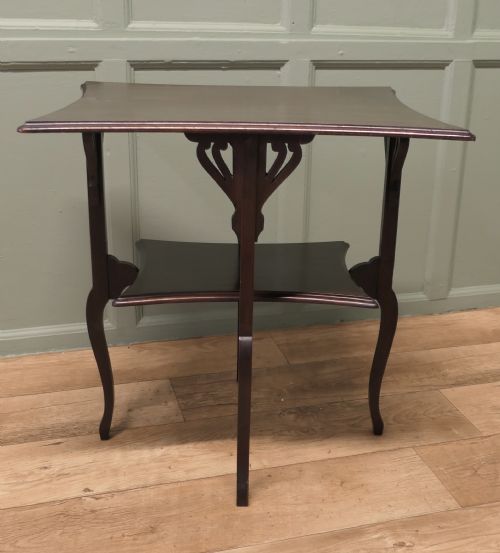
A crafting stand table encompasses sturdy occasional pieces, plant stands, and side tables produced during the Arts and Crafts and Edwardian periods. Buyers searching this phrase meet practical domestic furniture designed with straightforward utility in mind, often taking octagonal or round formats.
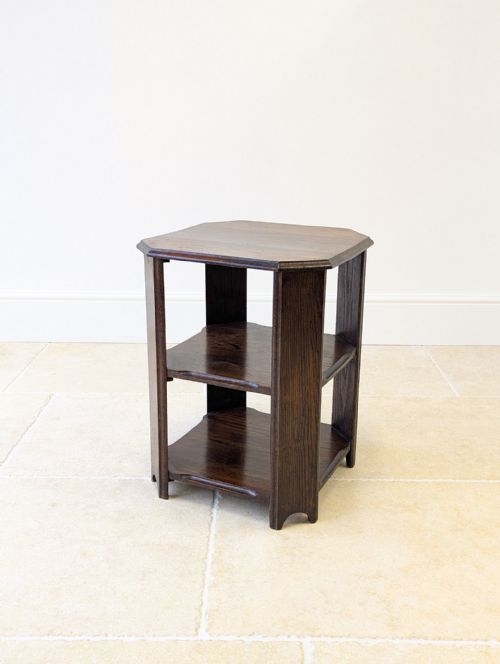
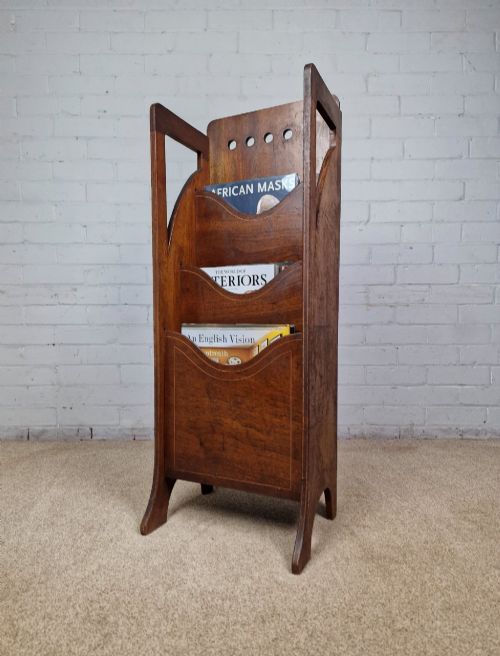
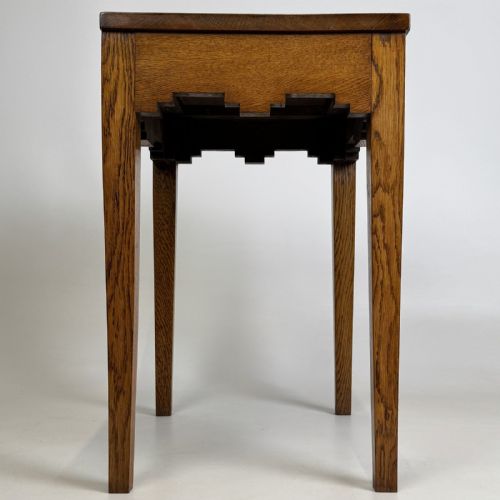
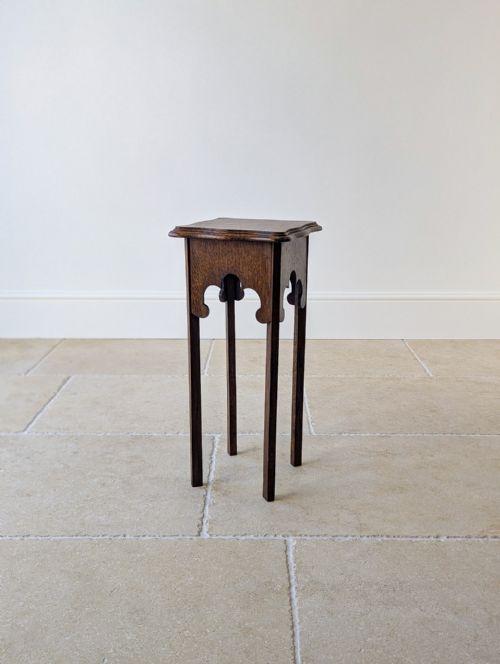
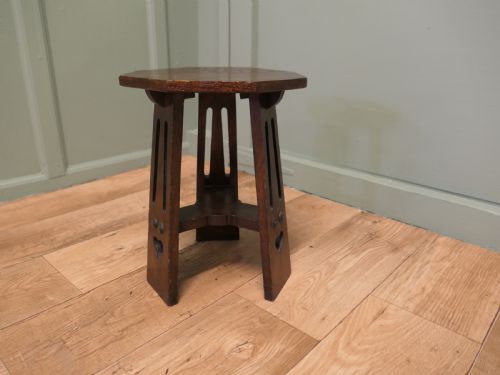
The most common examples on this page are constructed from oak, ranging from simple single-tier plant stands to multi-tier occasional tables and tile-top variants. These items reflect the domestic crafts revival, prioritising honest construction over elaborate decorative veneers.
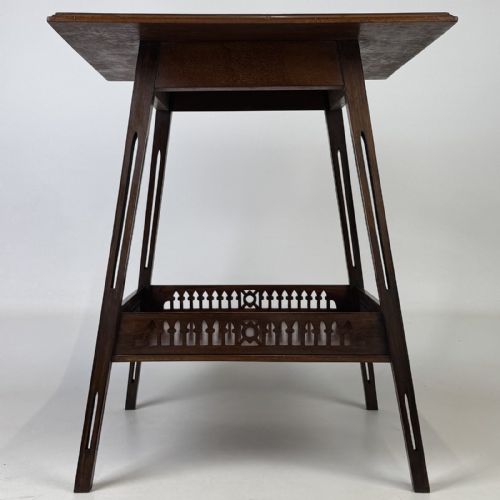
Origins stretch across British workshops from the late nineteenth century into the 1930s, taking in styles such as the Cotswold School and Glasgow School. Pieces also appear with influences from the Aesthetic Movement, Anglo-Japanese design, and Art Nouveau.
Materials and construction methods
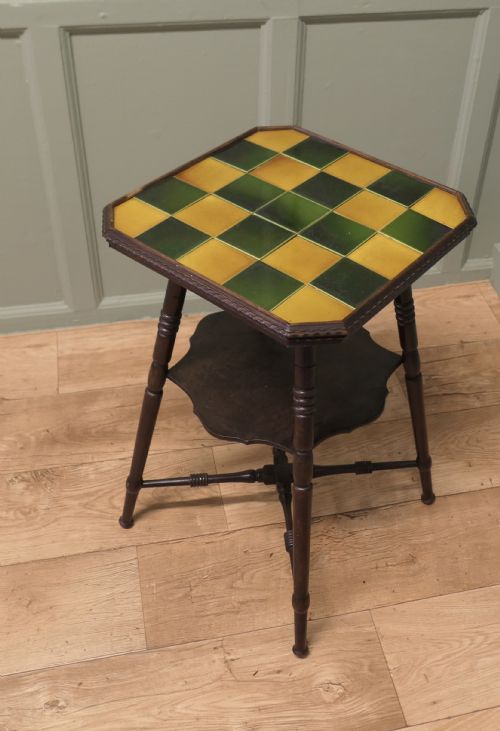
Makers relied heavily on solid oak, walnut, and ebonised wood, sometimes incorporating carved hardwoods or cast iron. Ceramic tiles frequently form the inset tops of side tables, providing a heat-resistant surface for plants or tea.
Crafting Stand Table Retail Price Guide 2026
Typical asking prices for crafting stand table among the pieces listed under this phrase on Sellingantiques today, from the lower quarter to the upper quarter. They describe what is for sale here now, not the wider market.
Listings feature oak predominantly, alongside walnut, ebonised wood, and ceramic tiles spanning the late nineteenth century to the 1930s.
Assessing quality in crafting stand tables
Superior examples demonstrate thoughtful proportion and integrity in the timber selection, utilising solid oak or walnut with well-fitted joints. The integration of decorative elements like glazed ceramic tiles or subtle inlay elevates a standard occasional table into a distinct piece of design.
The distinction between ordinary workshop output and superior production lies in the sharpness of the carving and the stability of the frame. Tables attributed to notable retailers or schools often show greater refinement in their structural lines and surface finishing.
Shapland & Petter·Liberty & Co.·William Birch·Baillie Scott·Hubert Simpson·Archibald Knox
The Crafting Stand Table Glossary
- Arts & Crafts
- A design movement promoting handcraftsmanship and simple forms over mass production. This style influences the majority of tables on the page.
- Ebonised Wood
- Timber treated to resemble ebony through a staining and finishing process. It appears on several late nineteenth-century side tables.
- Jardiniere Stand
- A tall stand specifically designed to hold a plant pot or flower bowl. These share forms with plant stands and occasional tables.
- Cotswold School
- A regional offshoot of the Arts and Crafts movement focusing on traditional woodworking. Pieces from this tradition utilise solid oak and visible joinery.
Crafting Stand Table: Frequently Asked Questions
What is a crafting stand table used for?
These pieces function primarily as side tables, plant stands, or occasional surfaces for holding lamps and books.
Their sturdy construction suits daily domestic placement in hallways or living spaces.
How do I date an oak plant stand?
Dating relies on examining the construction methods, hardware, and stylistic indicators such as tile designs or carved motifs.
Pieces originating in the Edwardian era often feature simpler geometry compared to earlier Aesthetic Movement examples.
Are tile top tables heat resistant?
The ceramic tiles set into the tabletops provide a durable surface that handles hot pots and plant moisture.
This practical feature made them popular for holding indoor plants and tea accessories.
What is the Cotswold School style?
This design tradition emphasises honest woodwork, solid timber construction, and minimal applied decoration.
Tables from this background showcase the natural grain of oak across tiered or occasional formats.